
5 Signs of a Leaking Tile Roof in North Miami
What does a tile roof leak actually look like before water starts dripping on your floor? The honest answer: often nothing visible at all, until the damage is severe. North Miami homeowners deal with a climate that puts tile roofs under constant stress, from hurricane-season downpours to daily afternoon thunderstorms that push water sideways under tiles. This checklist helps you catch the warning signs early, before a small fix becomes a full replacement.
Why Tile Roof Leaks Hide So Well
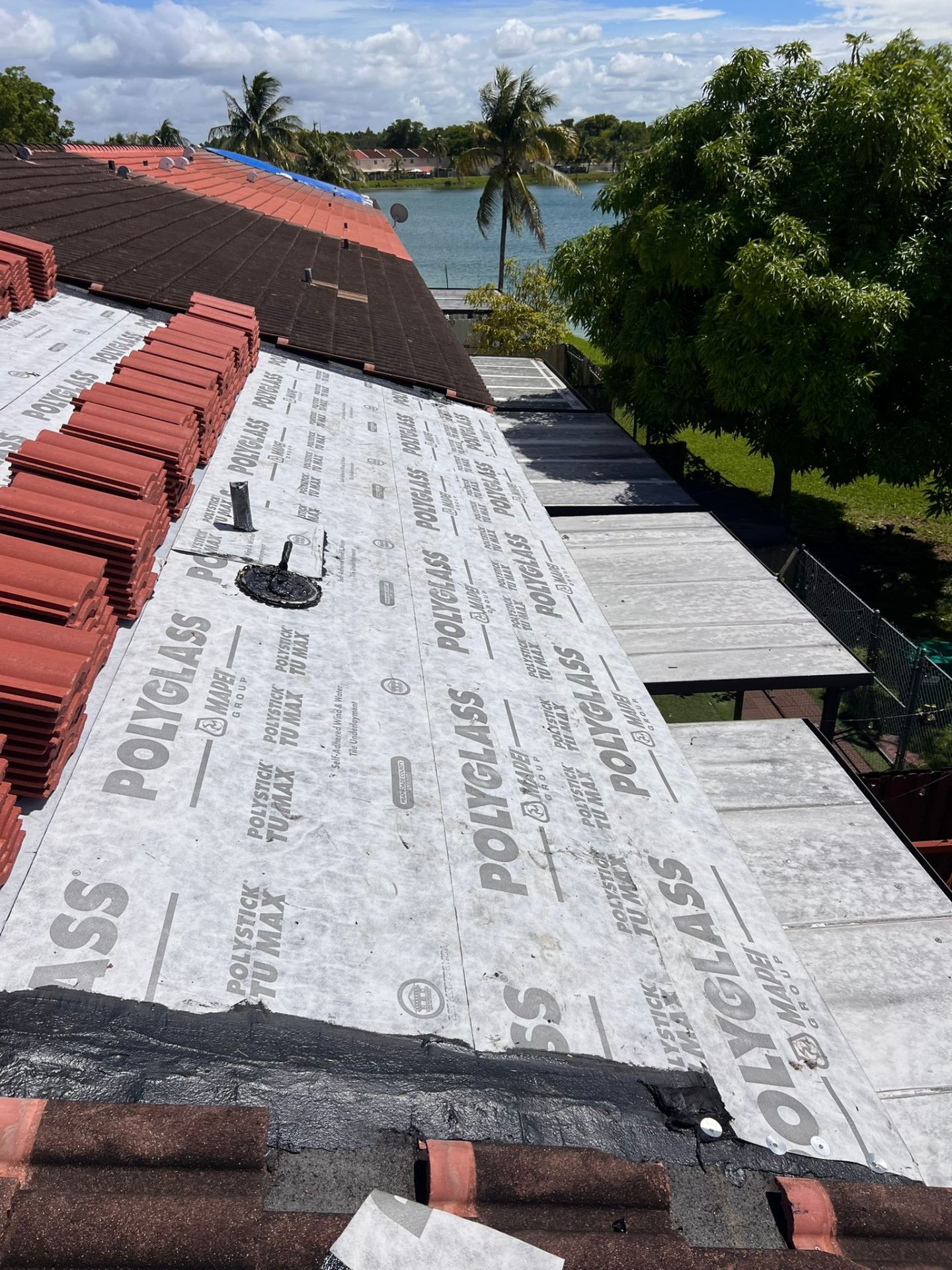
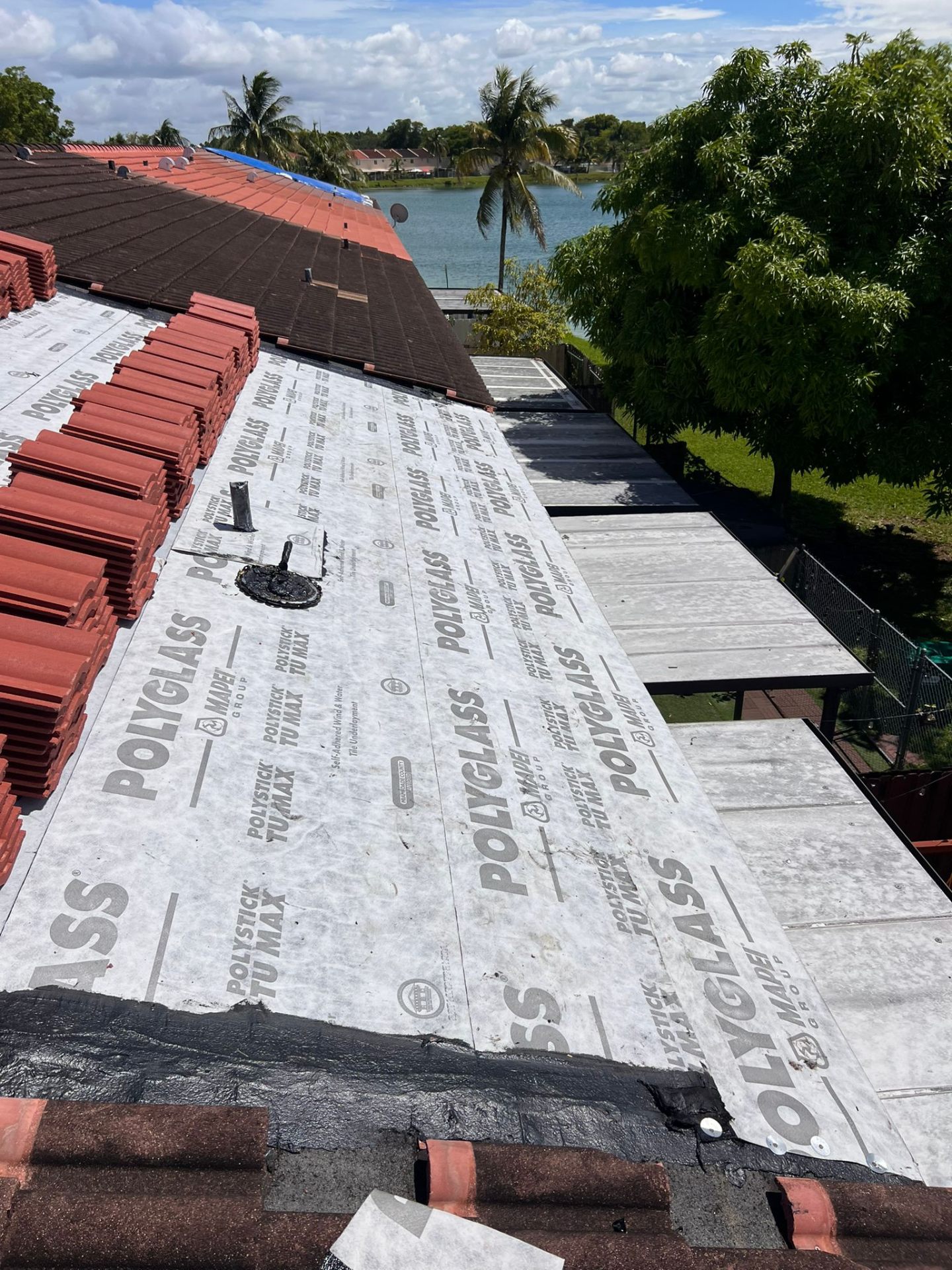
Clay and concrete tile systems are built in layers. The tiles themselves are the outermost armor, but the real waterproofing lives in the underlayment beneath them. When that membrane degrades or a tile cracks, water infiltrates slowly, traveling along rafters and deck boards before it ever shows up on your ceiling. By the time you see a stain inside, the leak has usually been active for weeks or months.
Understand that tiles and underlayment are two separate systems, both must be intact for the roof to stay dry.
Recognize that South Florida's UV intensity degrades underlayment faster than in cooler climates, even when tiles look fine from the street.
Accept that interior water stains are a lagging indicator, not the first sign of trouble.
Know that wind-driven rain during tropical systems can force water into gaps that perform fine during calm showers.
Note that flat or low-slope tile sections on North Miami homes (common on 1970s-era CBS construction) are especially prone to ponding and slow seepage.
Sign 1: Cracked, Slipped, or Missing Tiles
A broken or displaced tile is the most visible entry point for water. In North Miami's older neighborhoods, Biscayne Gardens, Ives Dairy Road corridors, and the streets east of I-95, many homes carry original clay tile from the 1980s and 1990s. Age, impact from falling coconuts or debris, and foot traffic from prior service visits all contribute to cracking.
Walk the perimeter of your home after any storm and look up the roof plane for obvious gaps or displaced tiles.
Check gutters and downspout areas for tile fragments, small chips signal impact damage higher up.
Look for tiles that appear lower than their neighbors, indicating they have slipped off their battens.
Inspect ridge caps and hip tiles separately; these high-exposure pieces take the most wind load and crack first.
Note that a single cracked tile does not always mean immediate interior leakage, but it does mean the underlayment beneath is now exposed to UV and rain.
Schedule a professional inspection if you spot even one broken tile, see what broken roof tiles really mean for your home for a deeper look at impact patterns.
Sign 2: Water Stains or Discoloration on Ceilings and Walls
If you want it handled correctly the first time, consider professional roof repair in North Miami.
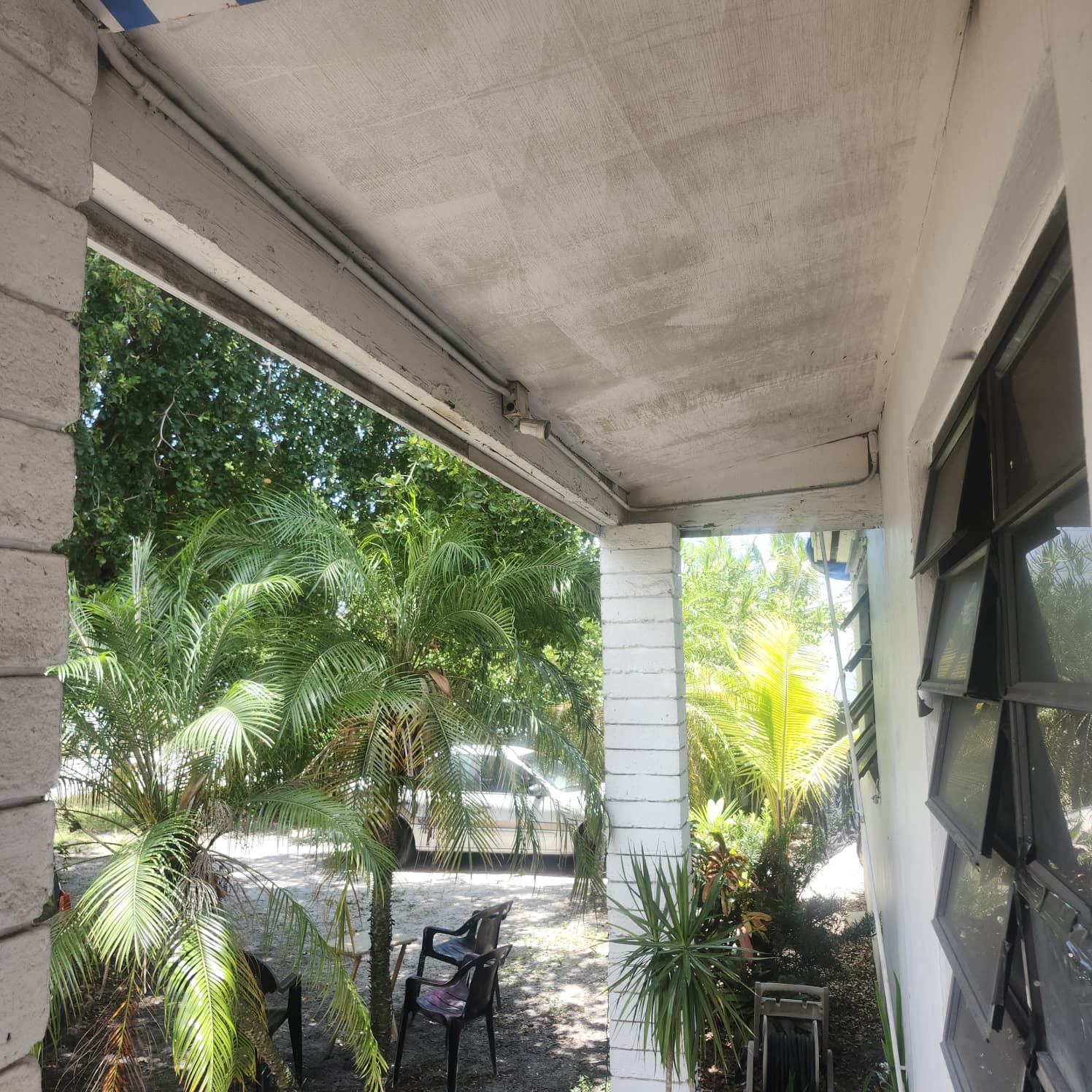
Brown or yellowish rings on interior ceilings are the classic leak signal, but the stain's location rarely matches the leak's origin. Water travels along roof decking, rafters, and insulation before dripping down, so the wet spot in your living room may trace back to a failed flashing point near your chimney or a skylight curb twenty feet away.
Map every stain in the home and note whether it grows after rain events, active growth confirms an ongoing leak rather than an old, repaired one.
Check the attic with a flashlight during or immediately after heavy rain; look for wet wood, drip trails on rafters, or damp insulation batts.
Feel along the tops of interior walls near exterior corners, moisture often wicks down from the roof deck into wall cavities before appearing on ceilings.
Inspect around any penetrations: plumbing vents, HVAC curbs, and exhaust fans are common leak paths on North Miami flat-to-low-slope tile sections.
Photograph and date every stain so a roofing professional can assess whether the pattern points to a single source or multiple failure points.
Sign 3: Deteriorated or Exposed Flashing
Flashing is the metal work that seals the joints between your tile field and vertical surfaces: chimneys, dormers, skylights, parapet walls, and plumbing stacks. In South Florida's salt-air environment, galvanized steel flashing corrodes faster than in inland markets, and the sealants used around it dry out and crack under intense UV exposure. Flashing failures account for a significant share of the leaking tile roof calls PSR Roofing receives across North Miami and the surrounding area.
From the ground or a safe vantage point, look for flashing that appears lifted, buckled, or separated from the surface it seals against.
Check chimney counter-flashing for rust streaks running down the masonry face, a reliable sign the cap flashing has failed.
Inspect any roof-to-wall transitions where a tile section meets a vertical stucco or CBS wall; these step-flashing joints are common failure points.
Look for dried, cracked, or missing sealant beads around pipe boots and vent flashings.
Never attempt to re-seal or reposition flashing yourself without understanding the tile system's layering, improper sealing can trap moisture rather than expel it.
Sign 4: Moss, Algae, or Dark Streaking on Tile Surfaces
North Miami's humidity and year-round warmth create ideal conditions for algae and moss growth on both clay and concrete tiles. While surface algae is primarily a cosmetic issue, moss is more serious: its root-like structures (rhizoids) work into small cracks and grout lines, widening them over time and lifting tile edges enough to allow water intrusion. Dark streaking from Gloeocapsa magma algae also signals moisture retention that accelerates underlayment degradation.
Look for green or black patches concentrated in shaded areas, particularly on north-facing roof planes or beneath overhanging trees.
Check whether moss growth appears raised or puffy, thick moss mats can physically lift tile edges off their seating.
Note dark vertical streaks running down from ridge tiles; these indicate algae colonies that have established near the peak and are spreading downslope.
Avoid pressure-washing tiles yourself at high settings, this strips surface coatings from concrete tiles and can dislodge clay tiles entirely; see safe roof tile cleaning methods for Miami homes for guidance on what's appropriate.
Treat moss growth as a sign that your tile surface is retaining moisture longer than it should, which warrants an underlayment inspection.
Many North Miami homeowners rely on expert roof repair in North Miami for exactly this.
Sign 5: Granule Loss, Spalling, or Surface Erosion on Concrete Tiles
Concrete tile is the dominant material on North Miami residential roofs built since the mid-1990s, largely because it met post-Hurricane Andrew code requirements for wind resistance. Over time, however, concrete tiles lose their surface coating through UV exposure and thermal cycling. Once the outer layer erodes, the tile becomes more porous, absorbs more water, and loses some of its resistance to freeze-thaw stress (rare in Miami, but temperature swings still matter). Spalling, where chunks of the tile surface flake away, is a sign the tile is nearing end of serviceable life.
Look for tiles that appear lighter or more chalky in color than surrounding tiles, this indicates coating loss.
Check gutters for fine grit or sandy residue after rain; this granule runoff comes from eroding concrete tile surfaces.
Run your hand carefully along a tile edge (from a safe position) and feel for roughness or flaking that wasn't there before.
Inspect the underside of any tiles that have been removed during prior repairs, if the concrete looks chalky or crumbles at the edges, widespread replacement may be more cost-effective than repeated patching.
Pair this inspection with a review of your roof's age; most concrete tile systems in North Miami installed after Hurricane Andrew are now approaching or past the 25-30 year mark where underlayment replacement becomes necessary regardless of tile condition.
North Miami-Specific Considerations for Tile Roof Owners
North Miami's housing stock and climate create a specific set of conditions that affect how tile roof leaks develop and how quickly they escalate. These factors are worth keeping in mind when evaluating any warning sign above.
Post-Andrew building codes (enforced after 1994) require enhanced fastening patterns and hip/ridge detailing, homes built before 1994 may have older installation methods that are more vulnerable to wind uplift and water infiltration.
Miami-Dade County's Notice of Acceptance (NOA) system requires that roofing products meet specific wind and impact standards; when replacing tiles, verify that any new tile carries a current Miami-Dade NOA to stay compliant with local permit requirements.
Salt air from Biscayne Bay and the Atlantic accelerates corrosion of metal components, flashing, fasteners, and drip edges on homes east of US-1 and in areas like North Miami Beach degrade faster than inland counterparts.
The urban heat island effect in denser North Miami neighborhoods raises rooftop temperatures, which shortens the service life of underlayment membranes and sealants compared to manufacturer estimates based on cooler climates.
Flat-roof sections are common on 1960s-1980s CBS homes throughout North Miami; these sections often use a different waterproofing system than the sloped tile field and require separate inspection.
Florida's homeowner insurance market has tightened significantly, carriers now frequently require a roof inspection report before binding or renewing coverage, making documented maintenance records more valuable than ever.
Local permit requirements for roof repair vary by scope; in Miami-Dade County, replacing more than 25% of a roof's area typically triggers a permit and full code-compliance review, check with a licensed contractor before beginning any significant work.
What to Do After You Spot a Warning Sign
Ready for the next step? Learn how roof repair services in North Miami can help and reach out to the team.
Identifying a potential leak is the first step. Acting on it correctly is what prevents a manageable repair from becoming a full roof replacement. The checklist below outlines the right sequence.
Document everything with dated photos before touching anything, this protects you with your insurance carrier and gives any roofing contractor a baseline.
Place buckets or absorbent material under active drips inside the home to protect flooring and prevent mold growth in the short term.
Do not attempt to walk the roof yourself to investigate, tile roofs are fragile underfoot, and a misstep can crack additional tiles or damage the underlayment.
Contact a licensed roofing contractor for a professional inspection; PSR Roofing offers free estimates for North Miami homeowners and can assess whether the issue is isolated or systemic.
Ask the inspector specifically about underlayment condition, not just visible tile damage, the underlayment is the real waterproofing layer and its condition determines whether you need a repair or a full re-roof.
Review the complete North Miami tile roof repair guide for a full breakdown of repair options, from single-tile replacement to underlayment restoration.
If the leak is active and water is entering the structure, treat it as an emergency; PSR Roofing provides 24/7 emergency roofing services across North Miami and the surrounding area.
Get a written scope of work before any repair begins, this should specify materials, fastening methods, and whether a permit is required for the scope of work proposed.
Frequently Asked Questions
Can a tile roof leak even if no tiles appear broken or missing?
Yes, and this is one of the most common situations PSR Roofing encounters in North Miami. The tiles themselves may be fully intact while the underlayment beneath them has cracked, shrunk, or separated at seams. Water enters through hairline gaps at flashing joints or around penetrations and travels along the deck before appearing inside. An inspection that includes an attic check and a review of all penetration flashings is the only reliable way to find this type of leak.
How urgent is a leaking tile roof repair in South Florida's climate?
More urgent than in most other regions. North Miami's combination of high humidity, heavy rainfall, and warm temperatures means that any moisture that enters the roof assembly creates ideal conditions for mold and wood rot to develop quickly. What might stay a contained issue for months in a dry climate can cause significant structural and air-quality problems in a matter of weeks here. Addressing even a slow or intermittent leak promptly is the most cost-effective approach.
Does filing a homeowner's insurance claim make sense for a tile roof leak?
It depends on the cause. Sudden storm damage, wind-driven rain from a named storm, or impact damage from debris are typically covered events under Florida homeowner policies. Gradual deterioration, deferred maintenance, or age-related underlayment failure are generally excluded. A licensed roofing contractor can help you document the cause accurately; see what affects tile roof repair costs in Miami for more context on how repair scope and insurance intersect.
Catching a leaking tile roof early is almost always less disruptive and less expensive than waiting for interior damage to appear. If any of the signs above look familiar on your North Miami home, a professional inspection is the right next step. Contact PSR Roofing Company of Miami for a free estimate and get a clear picture of your roof's condition before the next storm season arrives.
Continue reading
Need help with Roof Repair?
PSR Roofing is Miami's licensed & insured expert for roof repair. Free estimates, honest pricing, and 24/7 emergency response.