
Clay vs Concrete Roof Tiles: How to Choose the Right Material for Your North Miami Home
Most North Miami homeowners assume that clay and concrete roof tiles are essentially the same product in different colors. That assumption can lead to costly mismatches between a tile's real-world performance and the demands of South Florida's climate. The two materials behave differently under hurricane-force winds, relentless UV exposure, and the salt-laden air that rolls in off Biscayne Bay, and choosing the wrong one during a partial restoration can create new problems even after the old ones are fixed. Whether you are replacing a handful of cracked tiles or planning a full reroof, this guide walks you through every factor that matters for North Miami roofs specifically.
Before You Start: What You'll Need to Know
Your roof's current slope (tiles require a minimum pitch, and some profiles need steeper decks)
The age and condition of your existing underlayment (a tile swap is a good time to inspect it)
Your home's structural load capacity (clay and concrete have meaningfully different weights per square foot)
Whether your neighborhood falls under a homeowners association with approved material or color lists
Local building permit requirements, which vary by municipality even within Miami-Dade County
Your insurance carrier's preferences, since some policies treat material changes as a modification requiring re-underwriting
If any of these points are unclear, a professional tile roof repair and inspection can surface the answers before you commit to a material.
Step 1: Understand What Each Material Is Actually Made Of
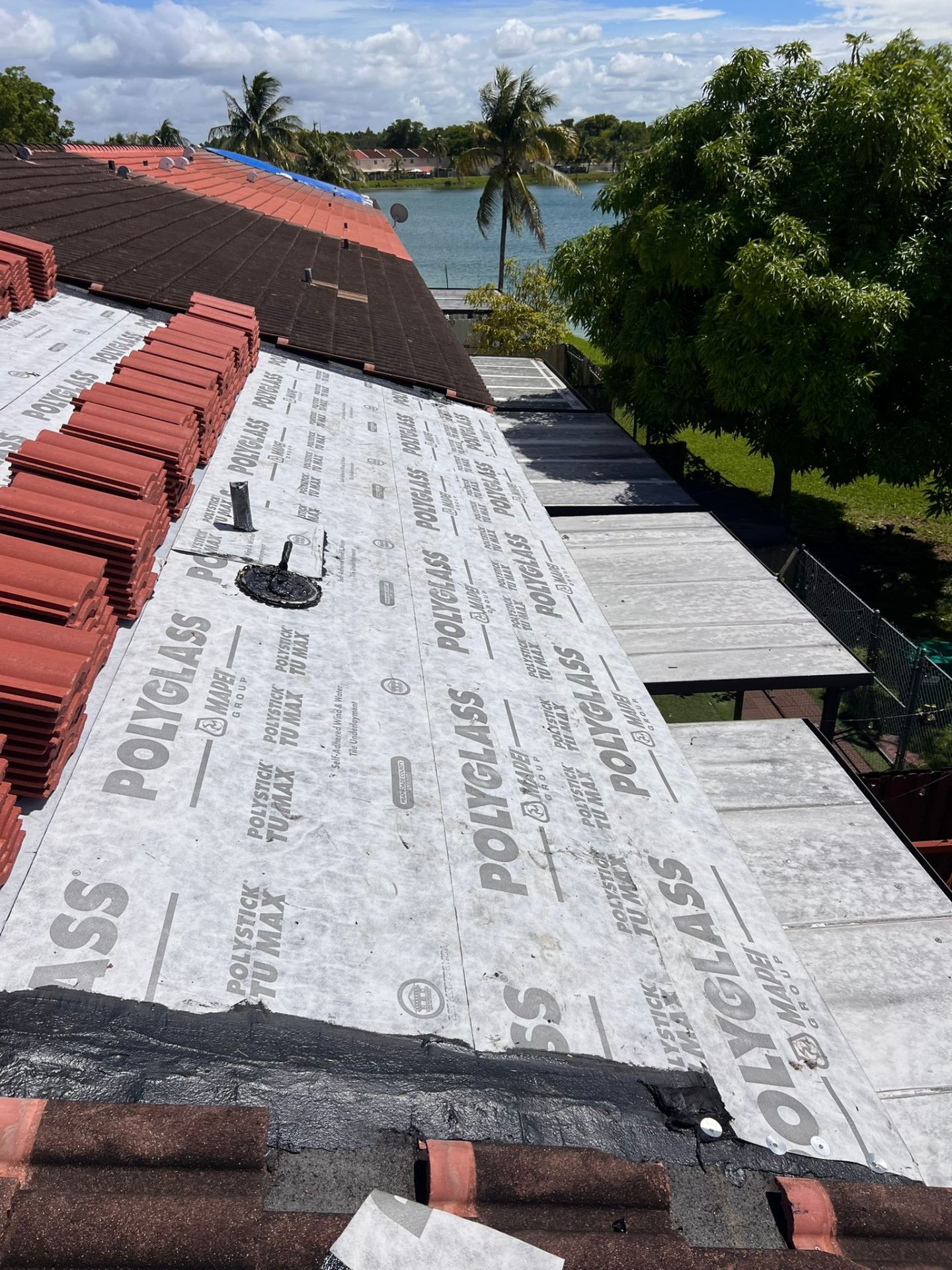
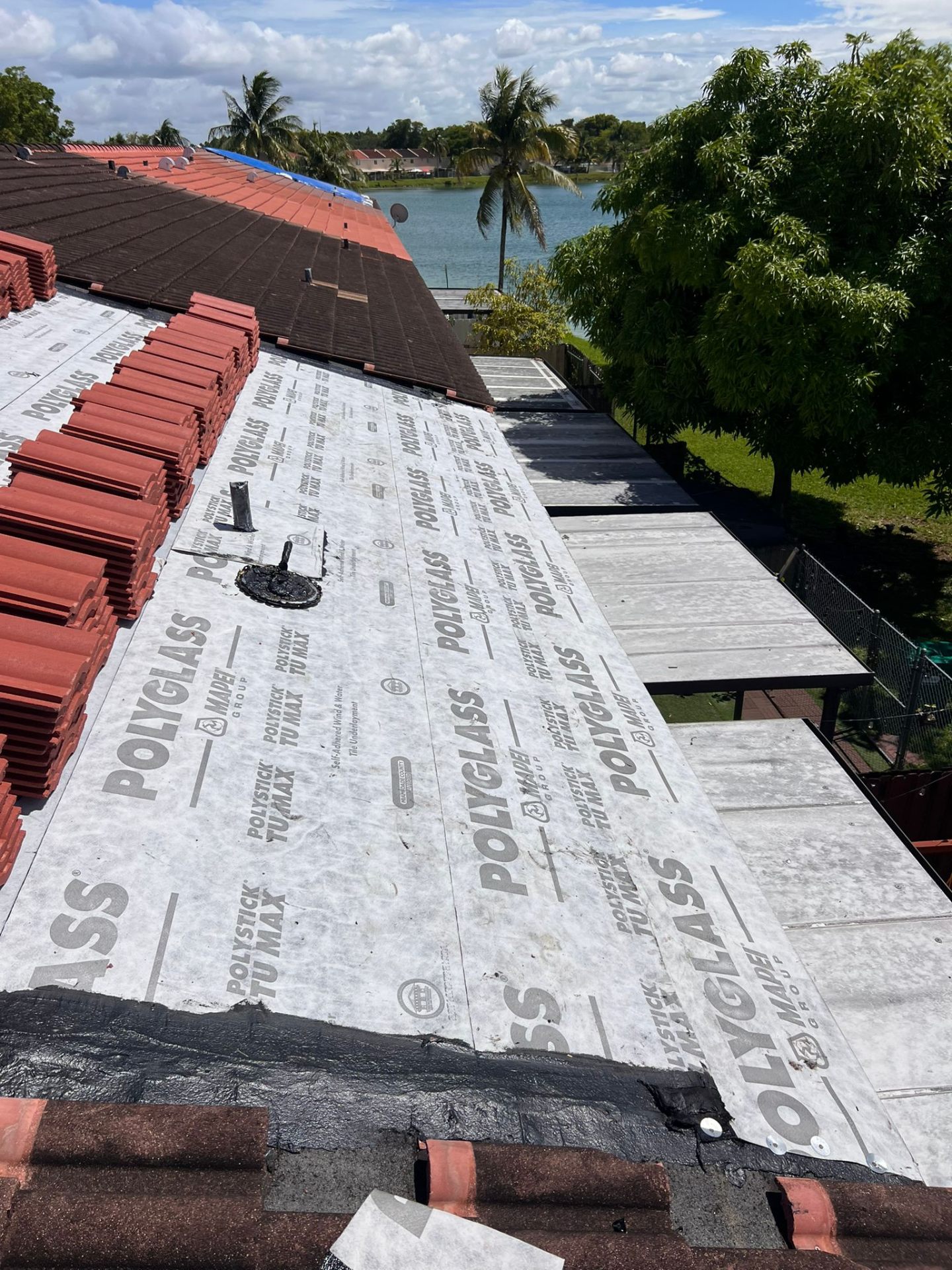
Clay tiles are kiln-fired from natural earthen clay, a process that produces the terracotta and earth-tone hues common across older North Miami neighborhoods built before the 1980s. The firing process creates a dense, low-absorption ceramic body. Concrete tiles are cast from a mixture of Portland cement, sand, and pigment, then cured under pressure. They can be molded to mimic clay barrel profiles, flat slate looks, or wood-shake textures, which makes them versatile for homeowners who want a specific aesthetic without the weight or cost associated with the natural material. Knowing the composition matters because it directly affects how each tile responds to Miami-Dade's high humidity and frequent rain cycles.
Step 2: Compare Weight and Structural Load
This is the step most homeowners skip, and it is one of the most consequential. Concrete tiles typically weigh more per square (100 square feet of roof surface) than clay tiles, though exact figures vary by profile and manufacturer. Clay tiles, despite their reputation for fragility, are often lighter than concrete alternatives in the same profile. If your North Miami home was originally built with a lighter roofing material, such as three-tab asphalt shingles, and you are considering a tile upgrade, a structural engineer should verify that the roof deck and trusses can support the added load before any materials are ordered. Homes built in North Miami during the post-war boom of the 1950s and 1960s are particularly worth scrutinizing here, as their framing was sized for much lighter roofing systems. Skipping this evaluation and installing heavy concrete tiles on an undersized structure can cause deck deflection and, over time, framing stress that no tile repair will fix.
Step 3: Evaluate Durability Under South Florida Conditions
Both clay and concrete tiles outperform asphalt shingles in longevity under South Florida conditions, but they age differently. Clay's fired ceramic body is highly resistant to moisture absorption, which means it resists the algae and mold growth that North Miami's humidity encourages. It also retains its color without surface coatings because the pigment runs through the body of the tile. Concrete tiles, by contrast, are more porous and absorb more moisture over time. That porosity can accelerate surface fading and, in areas with standing water or poor drainage, contribute to algae staining. The trade-off is that concrete tiles are generally less brittle underfoot, which matters during maintenance visits when a technician needs to walk the roof. Clay tiles can crack under foot traffic if the walker does not step on the correct load-bearing point. For North Miami roofs where annual inspections are recommended given hurricane season, this is a practical consideration worth discussing with your contractor.
Speaking of inspections, early signs of tile roof leaks often appear at the ridge cap or hip sections regardless of tile material, so knowing what to look for between professional visits helps catch small problems before they grow.
If you want it handled correctly the first time, consider professional roof repair in North Miami.
Step 4: Factor In the North Miami Climate and Building Code Environment
North Miami sits within Miami-Dade County's High Velocity Hurricane Zone (HVHZ), one of the most stringent building code environments in the United States. Any roofing material installed or replaced here must carry a Miami-Dade Notice of Acceptance (NOA), which certifies the product has been tested to withstand the wind uplift pressures associated with major hurricane events. Both clay and concrete tiles from reputable manufacturers carry NOA approvals, but the specific fastening system, underlayment specification, and installation method must also comply. A tile that is approved in Broward County but lacks a Miami-Dade NOA cannot legally be installed in North Miami, and an inspector will flag it. This is not a technicality to gloss over: improper tile selection or installation in the HVHZ can void your homeowner's insurance claim after a storm. Always verify NOA documentation before materials are ordered, and check with your local building department since permit requirements can differ even between neighboring municipalities.
The salt air from Biscayne Bay also plays a role. Coastal exposure accelerates corrosion of metal fasteners, so both clay and concrete tile installations in North Miami should use stainless steel or hot-dipped galvanized fasteners rated for the coastal environment. A contractor unfamiliar with South Florida's specific exposure categories may underspecify the hardware, which leads to fastener failure long before the tiles themselves wear out.
Step 5: Assess Color Retention and Long-Term Appearance
Clay tiles hold their color because the pigment is integral to the fired clay body. Decades of UV exposure, tropical rain, and heat cycling will not bleach a clay tile the way they can fade a surface-coated product. Concrete tiles are factory-coated with a color slurry that, over time, weathers away to reveal the gray cement beneath. This is not a defect; it is an expected characteristic of the material. Some North Miami homeowners prefer the weathered look, while others find it inconsistent with the original appearance of their roof. If color consistency over a long service life matters to you, clay has a clear advantage. If you are replacing only a section of an existing concrete tile roof, matching the weathered field tiles with new ones can be challenging, and a roofing professional experienced with partial restorations can advise on color blending strategies.
Step 6: Compare the Cost Relationship Between Materials
Without naming specific figures, the general relationship between the two materials holds fairly consistently in the North Miami market: clay tiles carry a higher material cost than comparable concrete profiles, and that gap widens with specialty shapes such as double-barrel mission tiles. Installation labor is similar for both, though clay's brittleness can add time if tiles crack during handling. Over a long service life, clay's lower maintenance demands (less algae treatment, no recoating) can offset some of the upfront premium. Concrete tiles may need periodic cleaning and, in some cases, resealing to maintain their appearance. For a detailed look at how material choice affects overall project pricing, what drives tile roof repair costs in Miami breaks down the variables worth understanding before you get quotes.
Step 7: Match the Tile Profile to Your Roof's Architecture
Tile profile, the cross-sectional shape of the tile, affects both appearance and water-shedding performance. The main profiles you will encounter in North Miami are:
Barrel (S-tile or mission): The classic South Florida look, with alternating ridges and valleys. Available in both clay and concrete. Excellent water channeling in heavy rain.
Flat or low-profile: A more contemporary appearance that mimics slate or wood shake. Almost exclusively concrete in this market. Works well on lower-slope roofs that meet the minimum tile pitch.
High-profile double barrel: Traditional Spanish colonial aesthetic. Typically clay. Heavier and more expensive, but historically common in North Miami's older Mediterranean Revival homes.
Profile choice should respect the original architectural intent of the home. Swapping a barrel-tile profile for a flat tile on a 1940s Mediterranean Revival changes the character of the structure and may conflict with local historic preservation guidelines in certain North Miami neighborhoods. When in doubt, a roofing contractor familiar with the local housing stock can advise on what profiles are appropriate and what is commonly accepted by inspectors in the area.
Many North Miami homeowners rely on expert roof repair in North Miami for exactly this.
Step 8: Understand Repairability and Matching Considerations
One underappreciated factor in the clay-versus-concrete decision is how easy it will be to match replacement tiles years down the road. Concrete tile lines are occasionally discontinued by manufacturers, which can make matching a specific profile and color difficult after a decade or more. Clay tiles from established manufacturers tend to have more consistent long-term availability, partly because the product has been in production for centuries and the profiles are more standardized. If you are doing a partial repair rather than a full replacement, bring a sample tile to your supplier before ordering. Even within the same product line, dye lot variations can create visible color differences between old and new tiles. A thorough tile roof repair assessment by an experienced contractor includes evaluating whether matching tiles are available before committing to a partial repair versus a full section replacement.
Keeping tiles clean also extends their life and makes color matching easier at repair time. Safe roof tile cleaning practices for Miami homes covers what methods work without damaging the tile surface or voiding manufacturer warranties.
Step 9: Make the Final Decision Based on Your Priorities
Run through this checklist before finalizing your material choice:
Does your roof structure support the weight of your preferred tile?
Does the tile carry a Miami-Dade NOA?
Does the profile match your home's architecture and any HOA requirements?
Are replacement tiles readily available in your chosen line for future repairs?
Have you accounted for long-term maintenance differences in your budget?
Has a professional confirmed the underlayment condition before new tiles go down?
If you can answer yes to all six, you have done the homework. If any point is unclear, that is the cue to bring in a licensed roofing contractor before placing a material order. Changing course after tiles are delivered is expensive and sometimes impossible if the supplier's return window has closed.
When to Call a Professional in North Miami
The comparison above is designed to help you arrive at an informed conversation with a contractor, not to replace that conversation. Certain situations in North Miami specifically call for professional involvement before any material decision is finalized:
Your home was built before 1994 and has never had a structural load assessment for tile roofing
You are replacing tiles after hurricane damage and need documentation for an insurance claim
Your existing tiles are a specialty profile that may be discontinued
You have visible sagging, soft spots, or deck damage beneath the tile layer
You are unsure whether your current underlayment meets current Miami-Dade code
You have noticed cracked or broken tiles in multiple locations, which may signal an underlying structural or fastener issue rather than isolated impact damage
Ready for the next step? Learn how roof repair services in North Miami can help and reach out to the team.
PSR Roofing Company of Miami handles tile roof repair, inspection, and replacement for North Miami homeowners and can advise on material selection based on your specific roof structure, architecture, and budget priorities. Reach out for a professional assessment before your next tile purchase.
Frequently Asked Questions
Can I mix clay and concrete tiles on the same roof?
Mixing the two materials on the same roof plane is generally not recommended. Beyond the aesthetic mismatch, the two materials expand and contract at different rates under South Florida's temperature swings, which can create stress points at the seam between them. If you are doing a partial replacement, match the existing material as closely as possible.
How long do concrete tile roofs typically last in the Miami area?
Concrete tiles in South Florida commonly reach 30 to 50 years of service life when properly installed and maintained, though the underlayment beneath them often needs replacement before the tiles themselves wear out. Regular inspections help identify when the underlayment is approaching the end of its useful life so it can be replaced without a full tile tear-off.
Does tile color affect energy performance in North Miami?
Lighter tile colors reflect more solar radiation than dark ones, which can reduce attic heat gain during North Miami's long, intense summers. Both clay and concrete tiles are available in light, reflective colors that meet Florida Energy Code cool-roof requirements. The air gap created by the raised tile profile also provides passive ventilation that improves on flat-membrane systems regardless of color.
Do I need a permit to replace roof tiles in North Miami?
Permit requirements vary by scope and municipality. A full reroof in North Miami typically requires a permit and inspection, while a minor repair involving only a few tiles may fall below the permit threshold. Requirements can differ even between adjacent cities within Miami-Dade County, so confirm with your local building department or ask your contractor, who should be familiar with the local process.
What happens if I install a tile without a Miami-Dade NOA?
Installing a non-approved product in the HVHZ can result in a failed inspection, a requirement to remove and replace the material at your expense, and potential issues with your homeowner's insurance coverage. Always request proof of NOA from your contractor and verify it on the Miami-Dade product approval database before installation begins.
The Right Tile for Your North Miami Roof
Clay and concrete tiles are both proven performers in South Florida, but they serve different priorities. Clay rewards homeowners who value long-term color stability, lower moisture absorption, and a lighter weight profile. Concrete rewards those who need profile flexibility, a lower upfront material cost, or a tile that holds up better under foot traffic during maintenance. Neither is universally superior; the right answer depends on your home's structure, your neighborhood's character, and how you plan to maintain the roof over the coming decades.
What both materials share is a need for skilled installation and periodic professional attention to stay performing at their best in North Miami's demanding climate. If you are ready to move from research to action, contact PSR Roofing Company of Miami for a roof inspection and material consultation tailored to your home.
Continue reading
Need help with Roof Repair?
PSR Roofing is Miami's licensed & insured expert for roof repair. Free estimates, honest pricing, and 24/7 emergency response.