
The North Miami Homeowner's Guide to Comparing Roof Estimates
Getting three quotes for a new roof sounds straightforward until you open the envelopes and realize each one reads like it was written in a different language. Line items vary, material specs differ, and the prices can swing wildly. For North Miami homeowners navigating hurricane season, flat-roof quirks, and Florida's strict building codes, choosing the wrong estimate is more than a financial mistake. This guide breaks down exactly how to read, compare, and evaluate every proposal so you can make a confident, informed decision.
Why Roof Estimates in North Miami Look So Different From Each Other
South Florida's Climate Adds Complexity
North Miami sits in a high-velocity hurricane zone, which means roofing work here must meet Florida Building Code requirements that are stricter than most of the country. A proper estimate should account for wind uplift ratings, secondary water barriers, and specific fastening patterns. When one quote is significantly lower than the others, the most common reason is that one of those code-required steps has been quietly omitted. A contractor who skips a secondary water barrier saves time and material costs, but leaves you exposed to both storm damage and a failed inspection.
Material Choices Drive the Biggest Cost Swings
Asphalt shingles, flat TPO membranes, modified bitumen, metal panels, and concrete tile are all common in this area, and each carries a very different price point and lifespan. Two estimates that both say "shingles" may be quoting a 3-tab product versus a 30-year architectural shingle. Ask every contractor to specify the exact product name, manufacturer, and warranty tier. If one proposal lists a generic material description and another lists a named product with a manufacturer code, that difference tells you something about how each company operates.
Labor and Overhead Are Rarely Transparent
Some roofing contractors present an all-in number. Others break out tear-off, disposal, underlayment, flashing, and labor as separate line items. Neither format is inherently dishonest, but the itemized version gives you much more to work with when comparing. Ask any contractor who gives you a lump-sum quote to break it into at least four categories: materials, labor, permits and inspections, and disposal. That alone will reveal whether the numbers are genuinely comparable.
The Estimate Checklist: What Every Quote Should Include
Scope of Work, Written in Plain Language
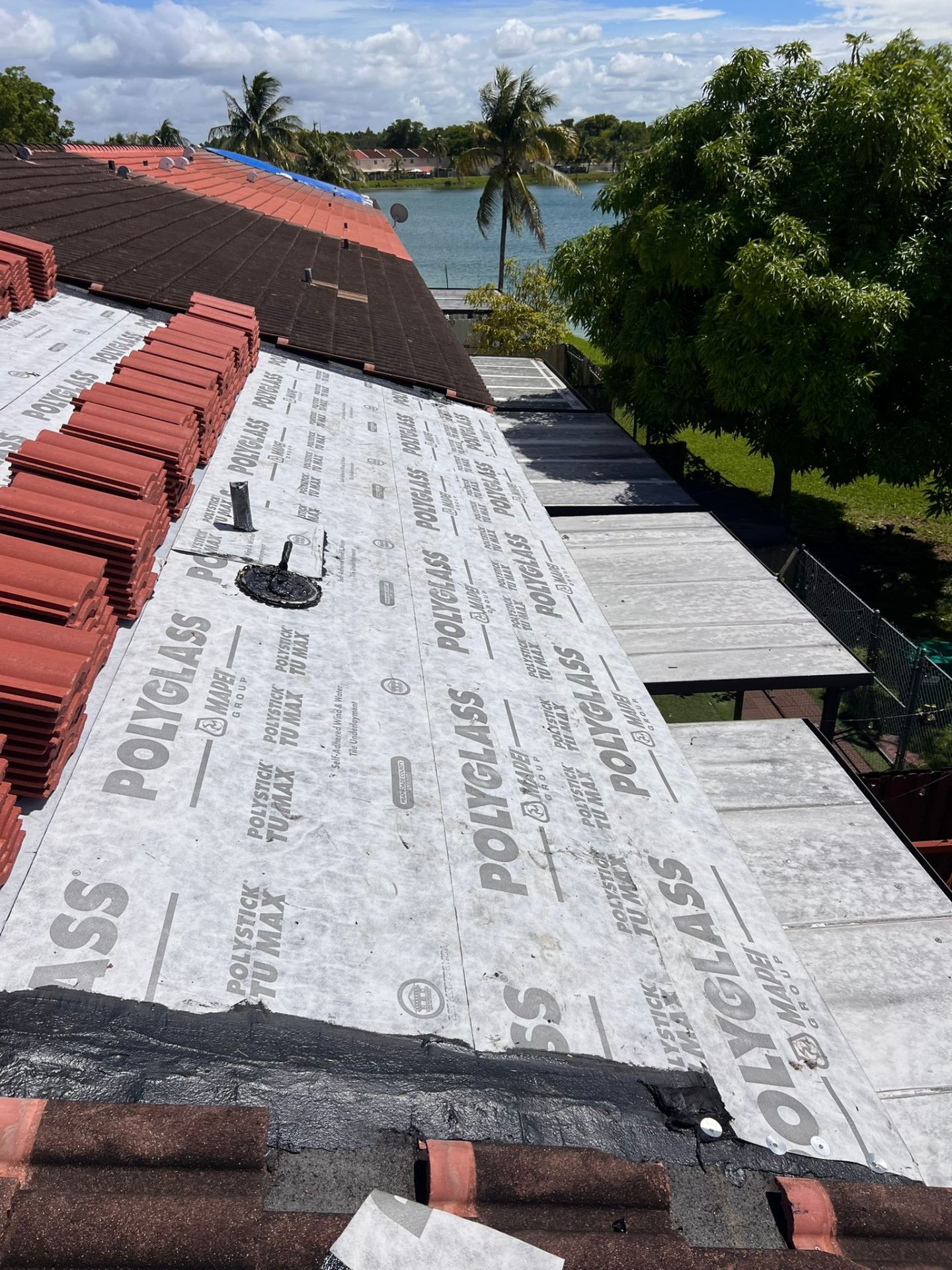
A professional estimate describes what is being removed, what is being installed, and what is being left in place. For a full roof replacement in North Miami, that scope should include: complete tear-off of existing layers (or a clear explanation of why a re-cover is being proposed), installation of code-compliant underlayment, new flashing at all penetrations and transitions, ridge ventilation, and final inspection scheduling. If a proposal simply says "replace roof," ask for a written scope before you sign anything.
Permits and Inspections
In Miami-Dade County, a roofing permit is required for virtually all replacement work and most significant repairs. Any estimate that does not include permit fees, or that suggests permits are optional or unnecessary, is a serious warning sign. Unpermitted roofing work can void your homeowner's insurance, create problems at resale, and leave you personally liable for code violations. Confirm that the permit will be pulled in the contractor's name, not yours, and that the final inspection is included in the scope.
Warranties: Two Types, Both Matter
There are two separate warranties to evaluate. The manufacturer's warranty covers the roofing material itself, typically ranging from 10 years on basic products to lifetime coverage on premium lines. The workmanship warranty covers the contractor's installation. A manufacturer's warranty can be voided if the product is installed incorrectly, so a strong workmanship warranty from a reputable contractor is arguably more important in the short term. Ask each company what their workmanship warranty covers, how long it lasts, and whether it transfers if you sell the home.
Red Flags That Should Stop You Cold
Pressure to Decide Before the Estimate Expires
A contractor who tells you a quote is only valid for 24 or 48 hours is using a sales tactic, not reflecting a genuine supply constraint. Material prices do fluctuate, and a contractor can reasonably note that quotes are subject to supplier pricing, but a hard deadline designed to prevent you from getting competing bids is a pressure tactic worth noting. A company confident in its work and pricing does not need to rush you.
Requesting Full Payment Upfront
A reasonable deposit to secure a project start date is standard practice. Asking for full payment before work begins is not. In Florida, the contractor licensing board has specific rules about deposit amounts for home improvement contracts. If a company asks for more than a reasonable deposit before a single shingle has been touched, that is a sign worth heeding. Structure your payments to align with project milestones: deposit at signing, a payment at material delivery, and final payment after the inspection passes.
No Physical Address or Verifiable License
Florida requires roofing contractors to hold a state-issued license, and that license number should appear on every estimate and contract. You can verify any license through the Florida Department of Business and Professional Regulation website. A contractor who cannot provide a license number, or whose number does not match the company name when you look it up, should be disqualified immediately regardless of price.
A Side-by-Side Comparison Framework
Use this table when you have two or more estimates in hand. Score each contractor on every row before making a decision.
| Evaluation Factor | What to Look For | Red Flag |
|---|---|---|
| License and Insurance | Florida CCC or CGC license, general liability, workers' comp | No license number provided, or asks you to verify "later" |
| Permit Inclusion | Permit fee itemized, contractor pulls in their name | Permit listed as optional or not mentioned at all |
| Material Specification | Named product, manufacturer, and warranty tier | Generic descriptions like "architectural shingles" with no brand |
| Scope Detail | Tear-off, underlayment, flashing, ventilation all listed | Single-line "replace roof" with no breakdown |
| Workmanship Warranty | At least 2-5 years written, ideally transferable | Verbal only, or absent from the written proposal |
| Payment Structure | Deposit plus milestone payments tied to progress | Full payment required before work starts |
| Timeline | Specific start date and estimated completion window | Vague "we'll start soon" with no written commitment |
| References or Reviews | Verifiable Google or other platform reviews, local project examples | No online presence or reviews that cannot be independently verified |
What Affects the Final Number: Understanding Cost Drivers
Roof Geometry and Accessibility
A simple gable roof on a single-story home takes less labor than a complex hip roof with multiple valleys, dormers, and penetrations. Steeper pitches require additional safety equipment and slow installation. In North Miami, many older homes also have flat or low-slope sections that require membrane systems rather than shingles, which changes the material and labor calculation entirely. When you get an estimate, confirm that the contractor has measured your actual roof, not estimated from satellite imagery alone. A contractor who has physically walked your roof will give you a more accurate number.
Existing Damage and Decking Condition
Tear-off sometimes reveals rotted or damaged decking underneath. Responsible contractors note this in their proposals with a per-sheet cost for deck replacement, so you know the range of potential additional expense before work begins. A quote that makes no mention of potential deck repairs is either from a contractor who has not thought it through, or one who plans to add it as a surprise change order once the job is underway. Ask directly: "What happens if you find damaged decking, and what will that cost per sheet?"
Disposal and Haul-Away
Tearing off an old roof generates significant debris. Disposal fees, dumpster rental, and haul-away costs are real line items that should appear in any complete estimate. If a proposal does not mention disposal, ask whether it is included. Some contractors quietly exclude it and then charge separately when the job ends. Others include a dumpster in the base price. Either approach is fine, as long as it is disclosed upfront.
The Insurance Claim Angle: What Changes When a Storm Is Involved
How Insurance Estimates Interact With Contractor Quotes
After a significant storm, many North Miami homeowners file insurance claims before getting contractor quotes. The insurance adjuster's estimate and a contractor's estimate are two separate documents, and they often differ. Your contractor's quote should reflect the actual scope of work needed to restore your roof to code, not simply match the adjuster's number. If there is a gap, a reputable roofing contractor can help you document the discrepancy and submit a supplement to your insurer. This is a normal part of the storm-damage repair process in South Florida.
Assignment of Benefits: Proceed Carefully
Some contractors ask homeowners to sign an Assignment of Benefits (AOB) form, which transfers the right to collect your insurance payment directly to the contractor. Florida has passed legislation to limit AOB abuse, but the arrangement still exists. Before signing any AOB, consult with your insurance agent and read the document carefully. A contractor who pressures you to sign an AOB before the scope of work is agreed upon in writing deserves extra scrutiny. For straightforward repair work, you generally do not need to sign over your benefits to get quality service.
Supplemental Claims and Change Orders
Storm damage is not always visible from the ground. Once work begins, additional damage may be uncovered. A transparent contractor will document any newly discovered damage with photos, provide a written change order for your approval, and communicate with your insurer if the work is claim-related. Ask each contractor you are evaluating how they handle unexpected discoveries mid-project. The answer tells you a great deal about how they operate.
How PSR Roofing Company of Miami Approaches Estimates
Local Knowledge Matters in North Miami
PSR Roofing Company of Miami operates specifically in North Miami and the surrounding South Florida area, which means every estimate reflects local building code requirements, typical material performance in a coastal climate, and the permit process specific to Miami-Dade County. A contractor who primarily works in another region of Florida may not be familiar with local wind-load requirements or the inspection process here. Local experience is not just a convenience, it is a factor that directly affects whether your roof passes inspection and holds up through hurricane season.
What a PSR Estimate Looks Like
When you request an estimate through PSR Roofing's roof inspection and estimate process, a technician physically inspects the roof, measures the actual square footage, and documents existing conditions with photos. The written proposal itemizes materials by product name, lists the permit fee, specifies the workmanship warranty terms, and outlines the payment schedule. There are no vague line items designed to create room for later surprises. If decking replacement is a possibility based on what the inspector observes, that contingency is noted in the proposal before any work begins.
Transparency Through the Entire Project
From permit pull to final inspection, PSR Roofing Company of Miami keeps homeowners informed at each stage. The permit is pulled in the company's name. The final inspection is scheduled and attended by a company representative. Homeowners receive documentation of the completed work, which is useful both for insurance purposes and for future resale. That level of process is not unusual in the industry, but it is worth confirming with any contractor you consider, because not all of them follow through consistently.
Frequently Asked Questions
How many estimates should I get before choosing a roofing contractor?
Three is a practical number for most North Miami homeowners. One estimate gives you no reference point. Two creates a binary choice. Three gives you enough data to identify an outlier and understand the reasonable range for your specific project. Going beyond three rarely changes the outcome and delays your project start.
Is the lowest estimate always the riskiest choice?
Not always, but a significantly lower estimate deserves a direct explanation. Ask the contractor specifically what allows them to come in lower. Sometimes the answer is legitimate: lower overhead, a supplier relationship, or scheduling flexibility. Other times the answer reveals omitted scope, inferior materials, or unlicensed labor. The explanation itself tells you whether the low number is a value or a warning.
What documents should I ask for before signing a roofing contract?
At minimum: a copy of the contractor's Florida license, a certificate of insurance showing general liability and workers' compensation, the written scope of work, the payment schedule, and the warranty terms in writing. If the contractor cannot produce all five before you sign, the contract is not ready to sign.
Can a roofing contractor in North Miami start work without a permit?
Legally, no. Miami-Dade County requires permits for roof replacements and most significant repairs. A contractor who suggests skipping the permit to save time or money is asking you to accept the legal and financial risk of unpermitted work. Requirements can vary by specific project type, so confirm with your local building department if you have any doubt, but the general rule in this area is clear: permitted work is required.
How long does a typical roof replacement take in North Miami?
Most residential replacements in the area take one to three days of active installation, depending on roof size and complexity. Permitting, material delivery, and inspection scheduling add time on either side. A realistic total project timeline from contract signing to final inspection is often two to four weeks, though that varies based on permit office volume, material availability, and weather.
What is the difference between a roof repair estimate and a replacement estimate?
A repair estimate addresses specific damaged areas without touching the full roof system. A replacement estimate covers the complete tear-off and reinstallation of the entire roofing assembly. Some contractors may recommend replacement when a targeted repair would genuinely suffice, and vice versa. A professional roof inspection before committing to either path gives you an independent baseline for that decision.
Conclusion
Reading roof estimates carefully is one of the most valuable hours you can spend as a North Miami homeowner. The right contractor is not always the cheapest or the fastest. They are the one whose proposal is complete, whose license checks out, and whose process holds up to scrutiny. When you are ready to see what a thorough, transparent estimate looks like for your specific roof, schedule your free roof estimate with PSR Roofing Company of Miami and get a written proposal you can actually compare.
Need help with Roof Repair?
PSR Roofing is Miami's licensed & insured expert for roof repair. Free estimates, honest pricing, and 24/7 emergency response.