
What to Expect From a Roofing Contractor in North Miami, FL
Hiring a roofing contractor is one of the most consequential home decisions you'll make. A roof handles South Florida's relentless sun, hurricane-season winds, and sudden afternoon downpours, so the contractor you choose matters as much as the materials they install. This guide walks you through the full picture: how the process works, what separates a reliable contractor from a risky one, and how PSR Roofing Company of Miami approaches every project in North Miami and the surrounding area.
Why North Miami Roofs Face Unique Challenges
A Climate That Tests Every Material
North Miami sits squarely in a humid subtropical zone. That means UV radiation strong enough to degrade poorly chosen materials within a few years, humidity levels that encourage mold and algae growth under shingles, and a hurricane season that runs from June through November. A contractor who works exclusively in South Florida understands these stressors in a way that a generalist from another region simply cannot replicate.
Flat and low-slope roofs are especially common here, used on both residential and commercial buildings. Modified bitumen, TPO, and built-up roofing systems each behave differently under Miami heat, and the correct choice depends on your building's structure, drainage capacity, and long-term maintenance plan.
Building Code Requirements in Miami-Dade County
Miami-Dade County enforces some of the most rigorous building codes in the country, largely shaped by lessons learned from past hurricane seasons. Roofing materials installed here must meet specific wind-resistance ratings, and the fastening schedules for decking and underlayment are more demanding than what you'd find in most other states. Requirements can vary by municipality, so always verify with your local building department and ensure your contractor pulls the appropriate permits before work begins. A licensed contractor handles that paperwork as a matter of course.
The Role of Proper Drainage
Flat roofs without adequate drainage can pool water after heavy rain, which accelerates membrane degradation and increases the risk of interior leaks. A qualified roofing contractor evaluates slope, drain placement, and gutter capacity as part of any installation or replacement project. Ignoring drainage is one of the most common reasons a relatively new roof fails prematurely in this climate.
The Full Scope of Roofing Services a Contractor Should Offer
Inspection and Assessment First
A thorough roof inspection is the starting point for any honest recommendation. Rather than arriving with a predetermined solution, a reputable contractor examines the decking, underlayment, flashing, field membrane or shingles, and all penetrations (vents, pipes, HVAC curbs) before quoting any work. At PSR Roofing Company of Miami, inspections are treated as diagnostic, not as a sales pitch. The goal is an accurate picture of what's actually happening up there.
If you want to understand what inspectors look for, this guide on what to look for when vetting a roofing company covers the key questions to ask before anyone gets on your roof.
Repair vs. Replacement: Making the Right Call
Not every leak requires a full replacement, and not every aging roof can be patched indefinitely. The honest answer depends on the extent of decking damage, the remaining service life of the existing system, and whether the current materials are compatible with a repair approach. A contractor who automatically recommends replacement on a roof that has several good years left is not serving your interests. Equally, one who patches a roof with widespread deck rot is setting you up for a much larger problem later.
As a general framework, consider these factors when weighing repair against replacement:
Age of the system: Most asphalt shingle roofs have a finite service life; flat membrane systems vary by material and maintenance history.
Extent of damage: Isolated flashing failure or a few missing shingles favor repair. Widespread granule loss, multiple leak points, or soft decking favor replacement.
Insurance involvement: Storm damage claims sometimes cover full replacement; your contractor should document damage thoroughly for the adjuster.
Energy performance: Older, dark-colored roofs can raise cooling costs. A replacement with a reflective membrane or cool-roof shingle may offset some of the investment over time.
Emergency Roofing Response
A tree limb through a section of roof during a tropical storm cannot wait for a scheduled appointment. Emergency roofing services exist specifically for those situations, providing temporary weatherproofing (tarping, board-up) that prevents interior damage until a permanent repair can be completed safely. PSR Roofing Company of Miami offers emergency response for North Miami homeowners who need fast, reliable help after storm events.
What Separates a Reliable Roofing Contractor From a Risky One
Licensing, Insurance, and Permits
Florida requires roofing contractors to hold a state-issued license. Before signing anything, ask for the license number and verify it through the Florida Department of Business and Professional Regulation's online lookup tool. General liability insurance and workers' compensation coverage protect you if something goes wrong on your property. A contractor who hesitates to provide proof of either is a contractor worth walking away from.
Permits matter, too. Unpermitted roofing work can create problems when you sell the home, void manufacturer warranties, and leave you liable if the roof fails inspection later. A legitimate contractor in North Miami pulls the permit, schedules the inspection, and closes it out properly.
Written Contracts and Transparent Scope
A verbal agreement is not enough for a roofing project. Your contract should specify the materials by manufacturer and product line, the fastening schedule, how the contractor handles decking damage discovered mid-project, the payment schedule, and the warranty terms for both materials and workmanship. If a contractor resists putting specifics in writing, that reluctance tells you something important.
Workmanship warranties vary widely. Manufacturer warranties cover material defects but typically require installation by a certified applicator. The contractor's own workmanship warranty covers installation errors. Ask how long each lasts and what the claim process looks like.
Local Reputation and Verifiable Reviews
A contractor who has worked in North Miami for years has a verifiable track record. Check Google reviews, look at how the company responds to criticism, and notice whether reviewers mention specific details about the work rather than generic praise. PSR Roofing Company of Miami holds a 4.7-star rating on Google, and the reviews reflect real project experiences from homeowners in the area.
Referrals from neighbors who had similar work done are also valuable. A roof is visible, and a neighbor can tell you firsthand how the crew behaved, whether the site was left clean, and whether the contractor followed up after the job.
The Roofing Installation Process, Step by Step
Pre-Project Planning and Material Selection
Before a single nail is pulled, a good contractor walks you through material options appropriate for your roof type and budget. For sloped roofs in North Miami, asphalt architectural shingles and metal panels are common choices; for flat roofs, modified bitumen and TPO membranes dominate. Each has different maintenance requirements, reflectivity ratings, and wind-resistance certifications. The contractor should explain the trade-offs clearly, not just recommend the highest-margin product.
Material lead times can affect scheduling, especially after a major storm when regional supply tightens. Your contractor should confirm availability before committing to a start date.
Tear-Off, Decking Inspection, and Underlayment
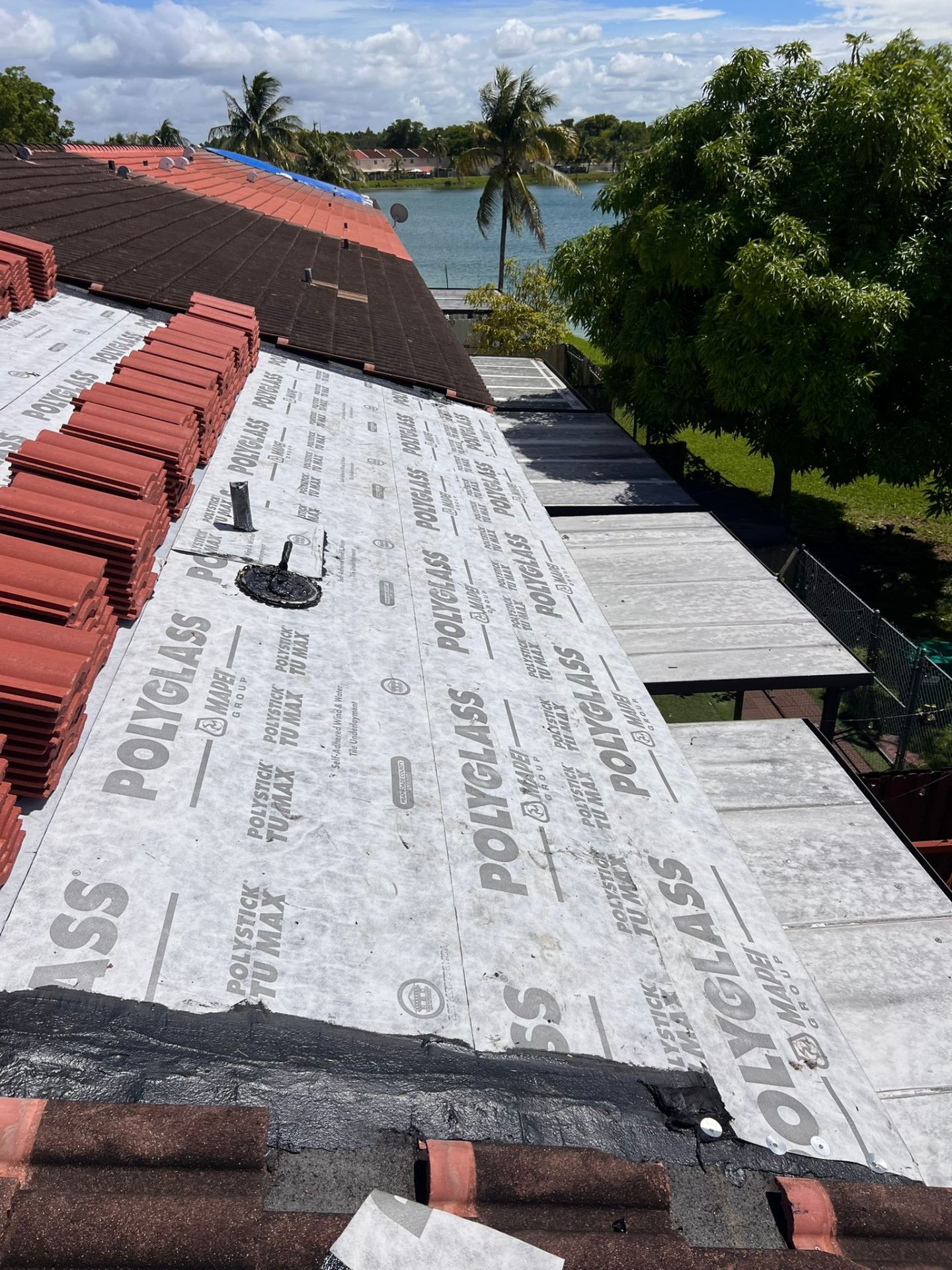
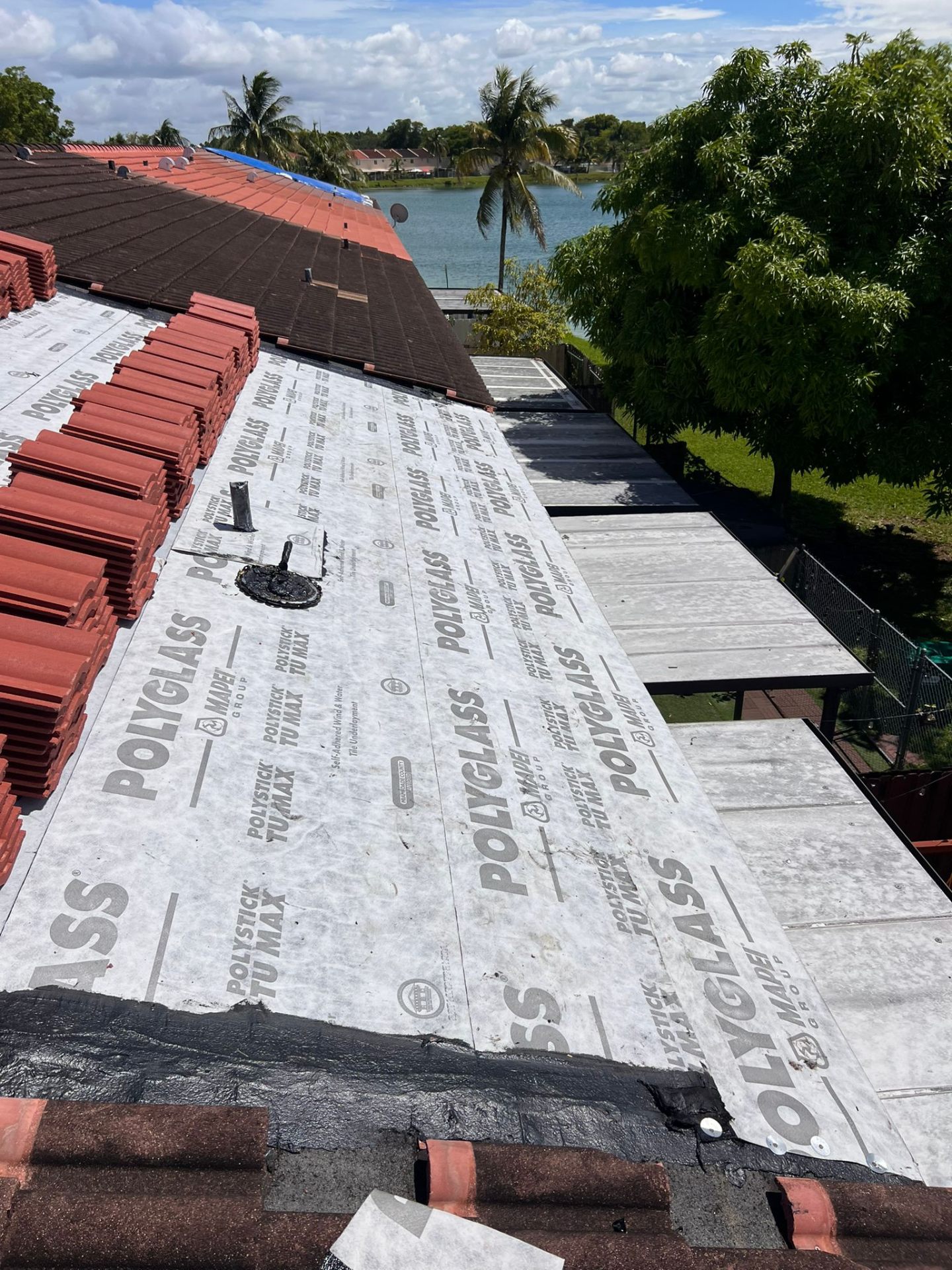
On a replacement project, the existing roofing system is removed down to the decking. This is the moment when hidden problems become visible: soft spots, delaminated plywood, corroded fasteners. A contractor who skips a thorough decking inspection at this stage and simply re-covers problems is creating a future liability. Any damaged decking should be replaced before underlayment goes down.
Underlayment is the layer between the decking and the finish material. In South Florida, Miami-Dade-approved self-adhering underlayment is often required rather than felt paper, because it provides a secondary water barrier if the outer layer is compromised during a storm. This detail matters and should be specified in your contract.
Installation, Flashing, and Final Inspection
The finish installation follows the manufacturer's specifications for fastener type, spacing, and overlap. Flashing around chimneys, vents, skylights, and wall intersections is where most leaks originate when done incorrectly. A skilled crew takes time on these details rather than rushing through them.
After installation, the contractor's team should walk the roof and the surrounding ground to check for protruding fasteners, debris in gutters, and any areas that need touch-up. The municipal inspector then verifies code compliance before the permit is closed. You should receive copies of the permit and the final inspection sign-off for your records.
Comparing Common Roofing Materials for South Florida Homes
| Material | Best For | Key Advantage | Key Consideration |
|---|---|---|---|
| Architectural Asphalt Shingles | Sloped residential roofs | Wide availability, variety of colors | Must meet Miami-Dade wind rating |
| Metal (Standing Seam or Panels) | Sloped residential and light commercial | Long service life, high wind resistance, reflective | Higher upfront investment; requires experienced installer |
| Modified Bitumen | Flat and low-slope roofs | Proven performance in heat and UV | Requires proper drainage design |
| TPO Membrane | Flat commercial and residential | Highly reflective, energy-efficient | Seam quality depends on installer skill |
| Concrete or Clay Tile | Sloped roofs, common in South Florida | Excellent longevity, classic aesthetic | Heavy; structural assessment needed before installation |
Gutters: The Part of the Roofing System Most Homeowners Overlook
Why Gutters Matter in a High-Rainfall Climate
North Miami receives substantial rainfall concentrated in the summer months. Without properly sized and pitched gutters, that water runs directly against the fascia and foundation, which accelerates rot and can cause soil erosion around the home's perimeter. Gutters are not decorative; they are a functional extension of the roofing system.
Seamless vs. Sectional Gutters
Seamless gutters are fabricated on-site to the exact length of each run, eliminating the joints where sectional gutters commonly leak. For homes in South Florida, seamless aluminum gutters are a practical choice: lightweight, corrosion-resistant, and available in profiles that handle high-volume rainfall. PSR Roofing Company of Miami offers seamless gutter installation as part of a complete roofing solution, so the drainage system is designed to work with the roof rather than being added as an afterthought.
Maintenance After Installation
Even well-installed gutters require periodic clearing, particularly after storm season when debris accumulates. A clogged gutter in a heavy rain becomes a water dam at the roofline. Homeowners can safely clear gutters from a stable ladder with gloves and a scoop, but leave any structural repairs or re-pitching to a professional.
How to Get an Accurate Estimate From a Roofing Contractor
What Should Be Included in a Quote
A complete roofing estimate covers more than just the cost of shingles or membrane. It should itemize tear-off and disposal, decking repair allowances, underlayment specification, flashing materials, labor, permit fees, and cleanup. When you compare quotes from multiple contractors, make sure you're comparing the same scope. A lower number that omits underlayment upgrades or uses non-approved materials is not a better deal.
Red Flags in the Quoting Process
Be cautious of any contractor who asks for a large cash deposit upfront before ordering materials, cannot provide a written contract, or pressures you to sign on the same day as the estimate. Legitimate contractors give you time to review the proposal. They also do not offer to waive your insurance deductible, which is a practice that raises fraud concerns under Florida law.
Questions Worth Asking Before You Sign
A few direct questions reveal a lot about a contractor's professionalism:
Will you pull the permit, and can I see the permit number once it's issued?
Who specifically will be on my roof, and are they your employees or subcontractors?
What is your process if you discover damaged decking during tear-off?
What does your workmanship warranty cover, and for how long?
How do you handle cleanup, and will you use a magnetic roller for nails?
Frequently Asked Questions
How long does a typical roof replacement take in North Miami?
Most residential replacements are completed in one to three days, depending on roof size, complexity, and material type. Tile roofs generally take longer than shingle or membrane systems. Weather delays during rainy season can extend the schedule, and your contractor should communicate proactively if conditions push the timeline.
Does homeowner's insurance cover roofing work?
Coverage depends on your specific policy and the cause of damage. Storm damage, falling objects, and sudden events are commonly covered; wear and aging typically are not. Document any storm damage thoroughly with photos before temporary repairs are made, and contact your insurer before authorizing permanent work so the adjuster can inspect.
How often should a roof in South Florida be inspected?
An annual inspection is a reasonable baseline for most homes in North Miami. After any significant storm, a post-storm inspection is worth scheduling even if you don't see obvious damage, because wind and debris can compromise flashing and fasteners in ways that aren't visible from the ground.
Can a new roof be installed over the existing one?
Florida building code limits the number of roofing layers allowed on a structure, and many contractors and manufacturers recommend full tear-off regardless, because re-roofing over an existing layer can trap moisture and hide decking problems. Your contractor should assess whether a tear-off is required under the applicable code for your project.
What is the difference between a roofing contractor's warranty and a manufacturer's warranty?
The manufacturer's warranty covers defects in the roofing material itself and typically requires installation by a certified applicator. The contractor's workmanship warranty covers errors in how the material was installed. Both matter; ask for documentation of each before the project begins.
Is PSR Roofing Company of Miami licensed to work in North Miami?
PSR Roofing Company of Miami holds the appropriate state licensing to perform roofing work in North Miami and throughout the Miami-Dade area. You can verify any Florida contractor's license status through the state's online DBPR lookup tool using the license number provided at the time of your estimate.
Conclusion
A well-installed roof is not just protection against the next storm; it's the foundation of your home's structural integrity and long-term value. Choosing the right contractor in North Miami means verifying credentials, insisting on a written scope, and working with someone who knows South Florida's specific code requirements and climate demands. PSR Roofing Company of Miami has built its reputation in this community by treating each project with the attention it deserves. Ready to protect your home with a contractor you can trust? Schedule a free roof inspection with PSR Roofing today and get an honest assessment before the next storm season arrives.
Need help with Roof Repair?
PSR Roofing is Miami's licensed & insured expert for roof repair. Free estimates, honest pricing, and 24/7 emergency response.