Who Pays for Roof Repair in a Miami Condo, Townhome, or HOA Building?
When a ceiling stains in a single-family home, one owner makes one decision. When it happens in a condominium in Sunny Isles Beach, a townhome row in Doral, or an HOA-governed community in Aventura, the same stain sets off a question of authority: whose roof is it, whose interior is it, who can authorize work, and whose insurance responds. Getting that sequence wrong delays the fix by weeks while the water keeps moving through the assembly.
This article explains how responsibility is typically divided in Florida shared-ownership properties, what a board or manager should require in a roof repair proposal, and how low-slope systems on these buildings actually fail.
The Standard Division of Responsibility
Governing documents control, and they vary — but the common pattern in Florida condominiums is straightforward:
- The roof system is a common element. The association maintains, repairs, and replaces it, funded by assessments or reserves.
- The unit interior is the owner's. Drywall, paint, flooring, cabinetry, and personal property generally fall to the unit owner and their HO-6 policy, even when the water came through a common element.
- Consequential interior damage is where disputes live. Whether the association's policy responds often depends on the declaration's language about finished surfaces, and on whether the association's maintenance was reasonable.
Townhome and single-family HOAs frequently reverse the roofing part: the owner maintains the roof, and the association controls only appearance, requiring architectural approval for materials and color. Read the declaration before assuming.
What This Means Practically
For a unit owner: report the leak to management in writing the same day, photograph everything, and open a claim on your own policy for interior finishes without waiting for the association's determination. For a board or manager: log the report, dispatch an inspection immediately, and keep the trail — deferred maintenance is the fact pattern that turns a repair bill into a liability claim.
How Low-Slope Roofs on These Buildings Fail
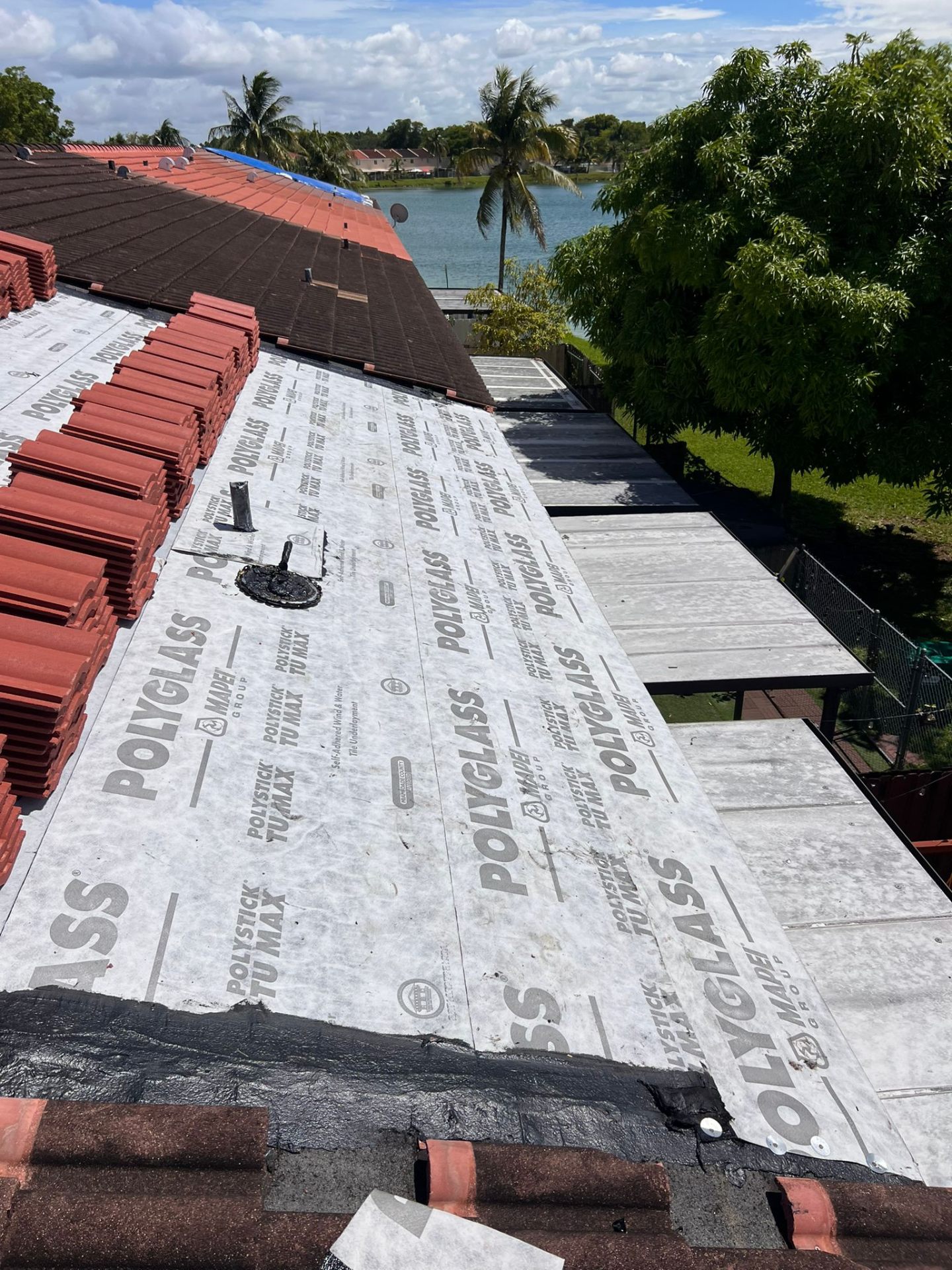
Most multi-family and commercial roofs in Miami-Dade are modified bitumen, TPO, or built-up systems, and their failure modes differ from a house's tile or shingle roof:
| Failure point | What it looks like | Why it matters here |
|---|---|---|
| Drains and scuppers | Standing water 48+ hours after rain | Adds dead load; carriers treat it as maintenance |
| Base flashing at parapets | Open laps, alligatored bitumen | Most common leak source on flat roofs |
| Mechanical curbs | AC units, exhaust fans, condensate lines | Concentrated traffic and vibration |
| Seams and laps | Fishmouths, lifted edges on TPO | Wind uplift entry point |
| Pitch pans | Dried, shrunken filler | Fails silently every few years |
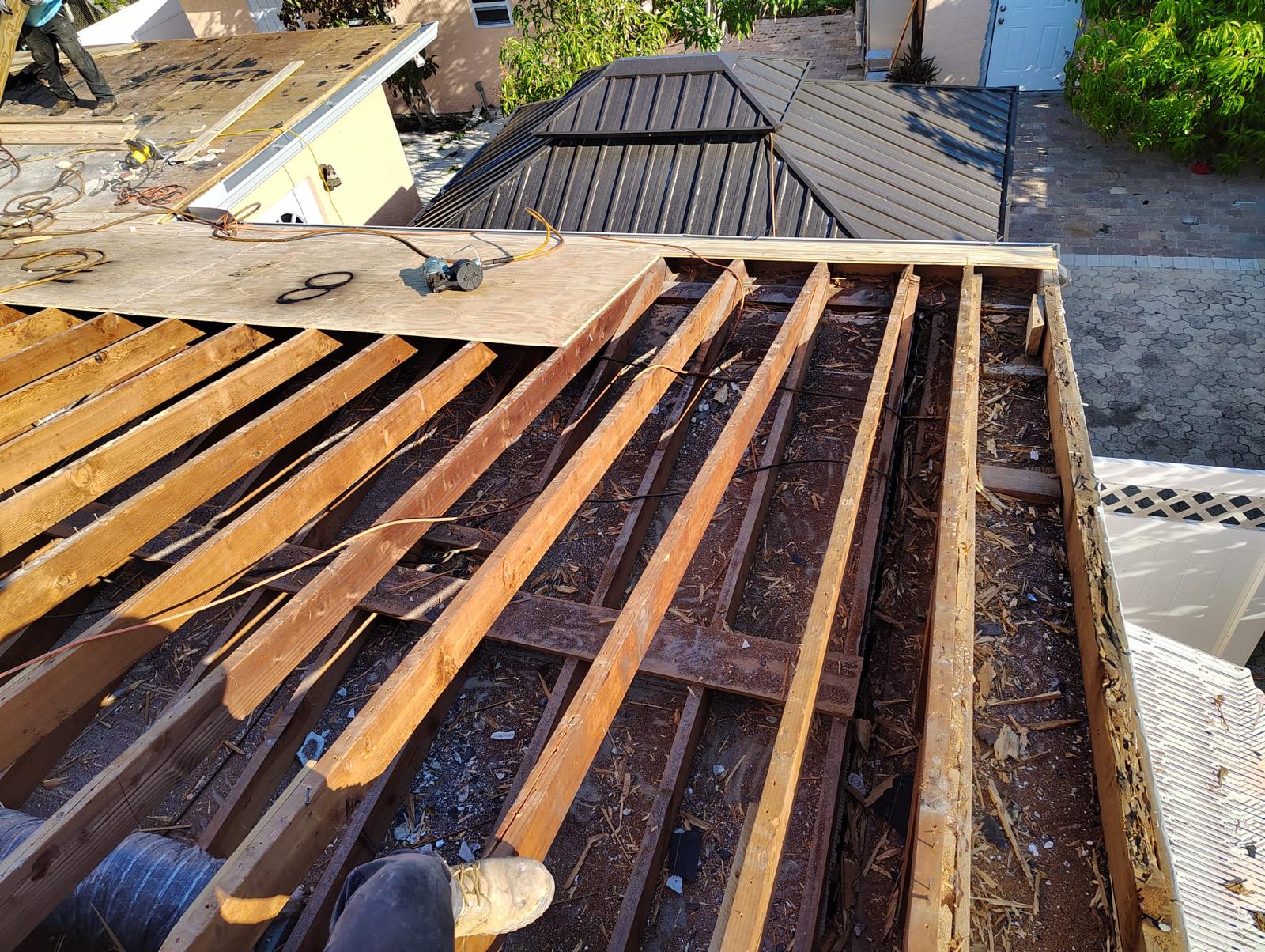
| Saturated insulation | Soft underfoot, high moisture readings | Repair over wet insulation always fails |
That last row is the one boards most often approve by mistake. Patching a membrane above saturated insulation returns the leak within a season. An infrared or moisture survey during the roof inspection defines the wet area so the repair removes it, and so the invoice can be justified to owners.
What a Board Should Require in a Proposal
A proposal that a board can defend to owners and to its own insurer contains:
- A moisture survey or core samples establishing the extent of wet insulation, with a diagram.
- Quantified scope — square footage of membrane, linear feet of base flashing, number of pitch pans and drains — rather than a lump sum for "roof repairs."
- License, insurance, and workers' compensation certificates naming the association as additional insured. Verify the license number rather than accepting a logo; any legitimate roofing contractor provides this without friction.
- Permit responsibility stated in writing, with Miami-Dade inspection and closeout included.
- Warranty terms separating workmanship from manufacturer coverage, including whether the manufacturer requires certified installation to keep an existing warranty alive.
- Access and safety plan — roof access route, protection of walkways and parked cars, work hours consistent with community rules.
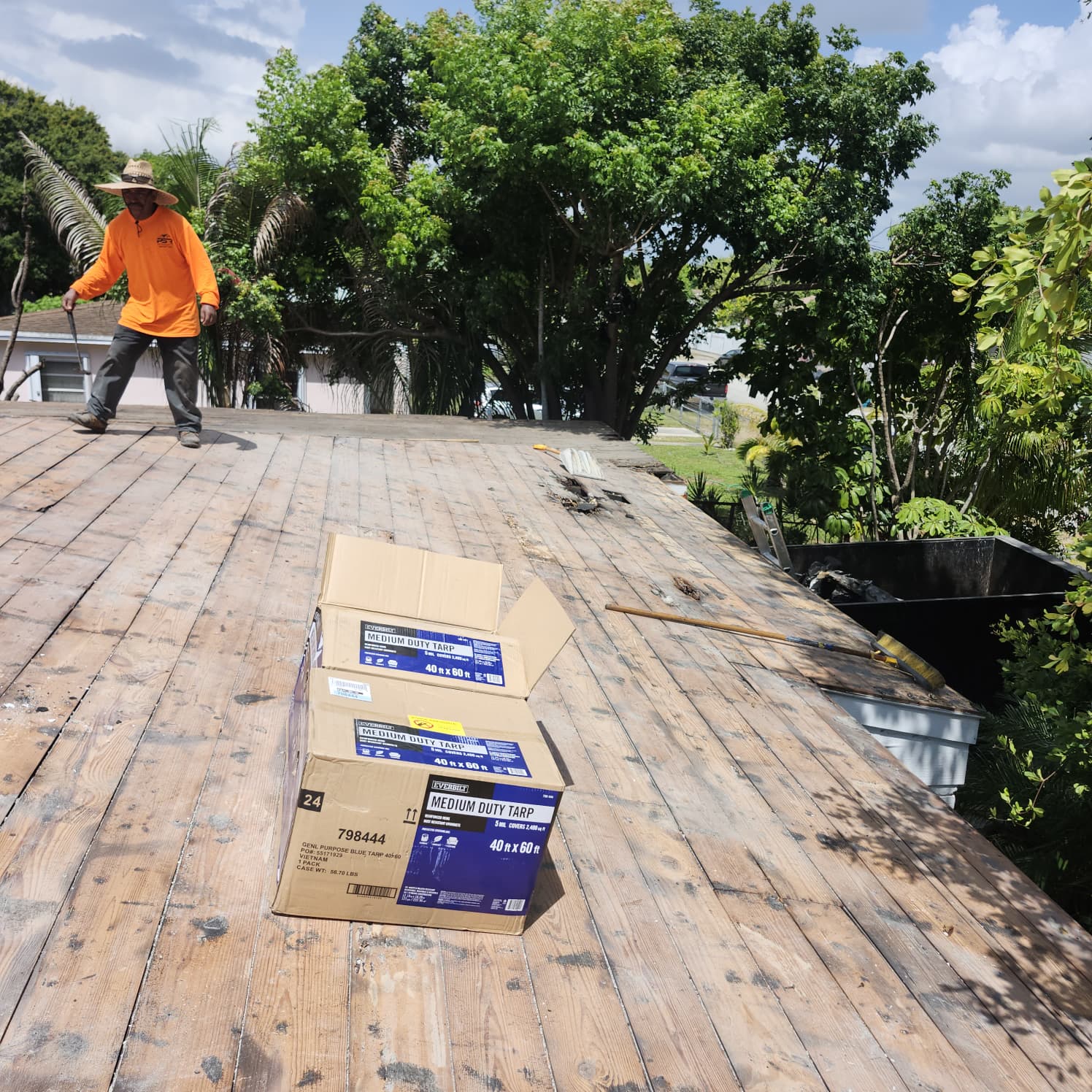
Emergency authority deserves its own line in the association's procedures. Boards that pre-authorize a named vendor and a dollar threshold for stabilization avoid the worst version of this problem: waiting for a quorum while water enters occupied units. When that happens, emergency roofing response is the immediate need, and the permanent scope follows.
Reserves, Milestone Inspections, and Timing
Florida's structural integrity and reserve-study requirements have pushed many associations to fund roofing properly for the first time. Two implications for repair decisions: a roof within a few years of its funded replacement date rarely justifies a large repair, and a reserve study that assumes a service life the roof will not reach should be revisited after any significant repair. Where the assembly is genuinely at end of life, a phased roof replacement with documented mitigation features usually costs less over five years than a sequence of emergency patches — and it is far easier to explain at an owners' meeting.
Frequently Asked Questions
My unit's ceiling is damaged by a common-element roof leak. Who repairs the drywall?
In most Florida condominium declarations, the association restores the common element and the owner restores the unit's finishes through their HO-6 coverage. Your declaration is the authority; read the sections on common elements and insurance obligations.
Can a single owner hire a roofer to fix a leak over their unit?
Not on a common-element roof. Unauthorized work can void warranties and shift liability to the owner. Report it and press management for a documented response.
How fast must an association respond to a leak?
Documents rarely give a number, but the standard is reasonableness — and a documented pattern of delay is what plaintiffs' counsel looks for. Dispatch an inspection promptly and record the dates.
Does a flat roof repair require a permit in Miami-Dade?
Repairs that open the assembly or exceed thresholds do, and permitted work with a closed inspection is what protects the association at the next insurance renewal.
Continue Reading
If a carrier or inspector triggered the repair, see passing an insurance re-inspection after roof repair. Selling or renting the property instead? Read next: roof repair before closing or leasing.
Bring a Documented Scope to Your Next Meeting
Boards, managers, and owners all make better decisions from the same set of facts: a moisture survey, a quantified scope, and a permitted plan. PSR Roofing Company Of Miami works with condominium associations, HOAs, and commercial properties throughout Miami-Dade.
Call (786) 889-4090 or request a building roof assessment.
Visit us: 1811 NE 142nd St, Miami, FL 33181 — view on Google Maps
Need help with Roof Repair?
PSR Roofing is Miami's licensed & insured expert for roof repair. Free estimates, honest pricing, and 24/7 emergency response.