
How to Safely Clean and Maintain Roof Tiles in North Miami
You're standing in the driveway on a Sunday morning, coffee in hand, and something catches your eye. The barrel tiles along the front slope of your North Miami home have gone from their original warm terracotta to a patchy gray-green, streaked with dark lines where rain has been channeling for months. It isn't a leak yet, but you can feel it's heading somewhere you don't want to go. That moment, familiar to homeowners throughout Miami-Dade, is exactly when a simple maintenance habit could save a costly repair bill later.
Tile roofing is the dominant choice across North Miami and the broader South Florida market for good reason: clay and concrete tiles handle the relentless sun, salt air, and hurricane-season downpours better than most alternatives. But they aren't maintenance-free. Understanding what's happening on your roof, and how to respond safely, is the difference between a roof that lasts its full lifespan and one that surprises you mid-rainy-season. This guide walks through the full picture, from what causes discoloration to how a proper cleaning is done, and the warning signs that mean it's time to move beyond maintenance into repair.
Why North Miami Roofs Get Dirty Faster Than You'd Expect
South Florida's climate is genuinely unlike most of the country, and it shows on rooftops. North Miami sits in a subtropical zone where temperatures rarely dip low enough to kill off organic growth, and the humidity from Biscayne Bay and the Atlantic never really lets up. That combination creates a near-perfect environment for algae, lichen, and moss to colonize porous roofing surfaces.
The dark streaks running down your tiles are almost always gloeocapsa magma, a cyanobacteria that feeds on the limestone filler in concrete tiles and, to a lesser extent, on mineral deposits in clay tiles. The greenish patches are algae or early-stage lichen. Left alone, lichen in particular develops root-like structures called rhizines that work into the surface of the tile and, over years, can compromise its structural integrity.
North Miami's older neighborhoods, many with homes built between the 1960s and 1990s, often have mature tree canopies that add another layer of challenge. Overhanging ficus, oak, and palm trees deposit organic debris in valleys and around pipe boots, holding moisture against the underlayment long after a rain event has passed. Homes closer to the Intracoastal or the bay also contend with salt-laden air, which accelerates surface weathering on both clay and concrete tiles.
None of this means your tile roof is failing. It means it's living in South Florida, and routine attention keeps the biology from becoming a structural problem.
What a Safe Tile Roof Cleaning Actually Looks Like
The single most important thing to understand about cleaning tile roofs is that the method matters as much as the frequency. Pressure washing at high PSI is one of the most common mistakes homeowners or inexperienced crews make on South Florida tile roofs. A strong pressure washer can fracture the surface glaze on clay tiles, blast the granule coating off the underlayment where tiles overlap, and drive water up under the tile profile in ways that mimic a roof leak. The tiles themselves may look clean for a few weeks, then the damage shows up as moisture intrusion or accelerated algae regrowth on the now-rough, porous surface.
The industry-preferred approach for tile roofs is a soft-wash system: a low-pressure application of a biocidal cleaning solution, typically a diluted sodium hypochlorite blend with a surfactant, that kills the algae and lichen at the root rather than blasting it off mechanically. The solution dwells on the surface, breaks down the organic growth, and is then rinsed at very low pressure. Results don't look as dramatic the same day, but the growth dies off over the following weeks and the surface stays cleaner longer because the organisms aren't just scraped away and left to regrow from surviving spores.
If you're considering having this done professionally, a few things are worth confirming: the crew should be walking on the roof using foam-padded kneelers or working from a ladder and extension wand where possible, because foot traffic on tile roofs is a leading cause of cracked tiles. Any reputable roofing professional will also do a quick visual inspection while they're up there, which connects directly to the next section.
For homeowners who want to handle light maintenance themselves, clearing debris from valleys, gutters, and around penetrations after a storm is genuinely useful and low-risk from ground level or a safely positioned ladder. Anything that requires walking on the roof surface is better left to someone with the equipment and experience to do it without adding cracked tiles to the problem list. If you need help thinking through what your gutters might need alongside your tile work, understanding how broken tiles connect to drainage issues is worth reading alongside this guide.
The North Miami Housing Stock: Why Your Tile Age Changes the Approach
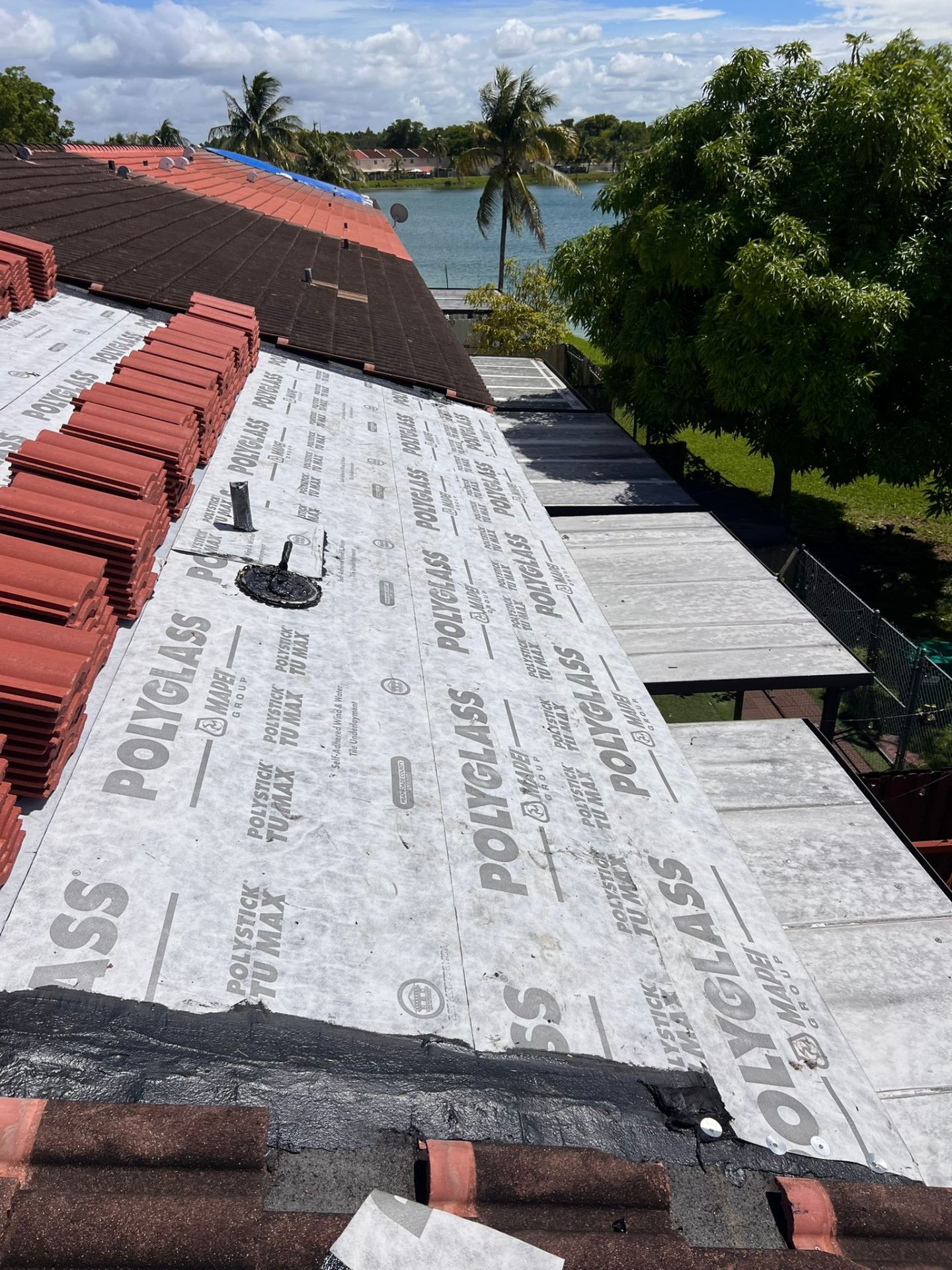
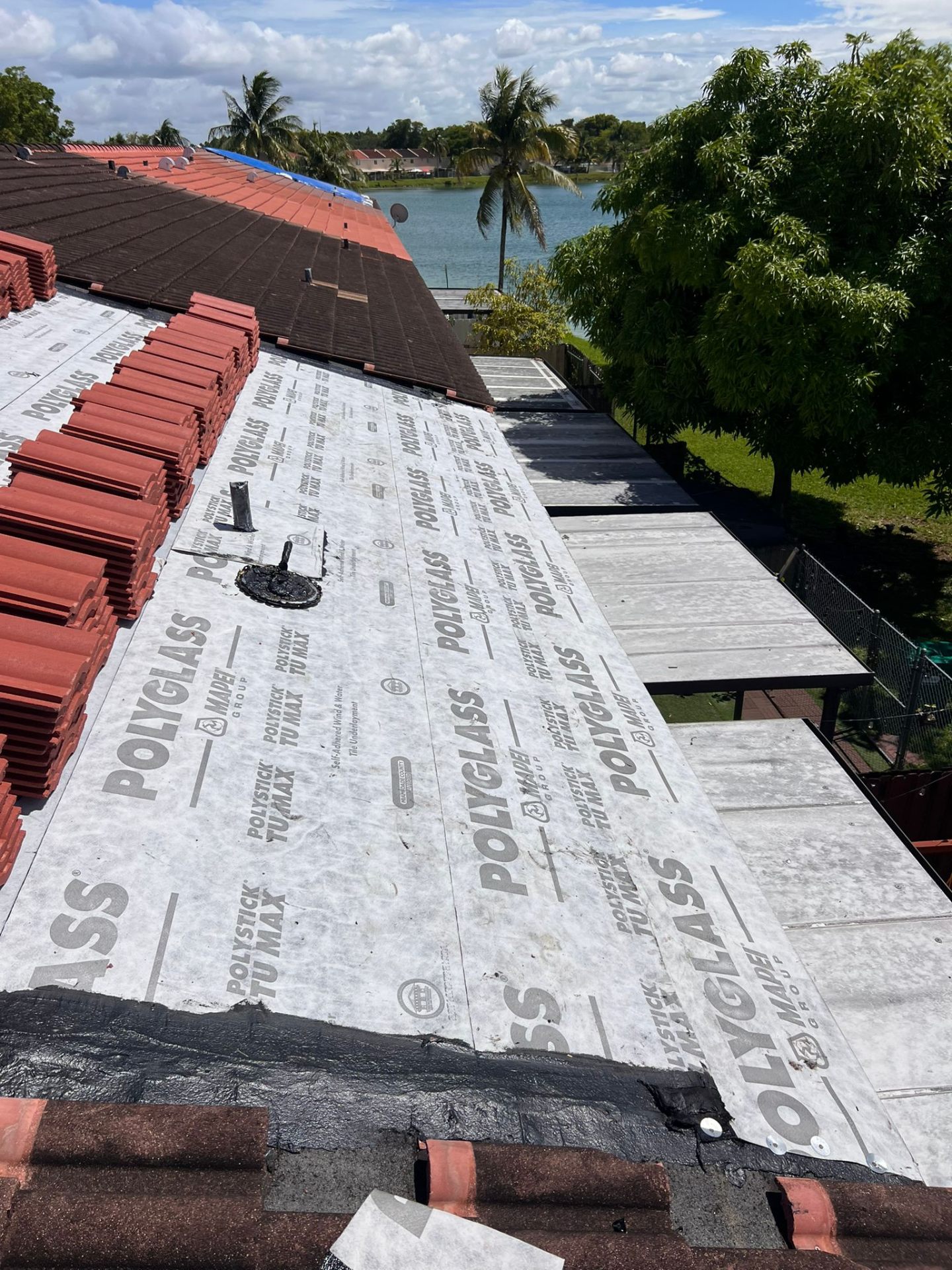
North Miami's residential neighborhoods span several distinct eras of construction, and the era your home was built in affects how you should approach tile maintenance. Homes in areas like Keystone Point, Enchanted Lake, and the streets east of Biscayne Boulevard were heavily developed in the 1970s and 1980s, and many of those original concrete tile roofs are still in service. Concrete tiles from that era were often thicker and heavier than today's profiles, which is a durability advantage, but the underlayment beneath them has almost certainly reached or exceeded its design life.
If you want it handled correctly the first time, consider professional roof repair in North Miami.
This matters for maintenance because cleaning a roof that has a compromised underlayment can accelerate moisture intrusion. When a professional walks a roof to clean it and finds soft spots, staining on the underside of tiles, or crumbling mortar at ridges and hips, those are signs the maintenance conversation needs to become a repair conversation. The tile surface can look fine while the waterproofing layer beneath it has failed.
Newer construction in North Miami, particularly the infill development that has accelerated in recent years, typically uses lighter concrete tile profiles or modern clay barrel tiles. These roofs are easier to walk and less prone to the mortar failures common in older construction, but they're not immune to the same algae and lichen growth that affects every tile roof in South Florida's climate.
Homes built before 2002 were constructed under the pre-Miami-Dade High Velocity Hurricane Zone code, which means their roof systems may not have the same wind-uplift resistance as post-Andrew construction. If you're doing any work on a pre-2002 roof, permit requirements and code compliance are worth confirming with your contractor, as requirements vary and a licensed professional can advise on what applies to your specific situation.
What to Watch for While You're Up There (Or While a Pro Is)
A cleaning visit is one of the best opportunities to catch small problems before they become expensive ones. Here's what a trained eye looks for on a North Miami tile roof, and what each finding typically means.
Cracked or broken tiles are the most obvious finding, and they're more common than most homeowners realize because they're invisible from the ground. A single cracked tile doesn't automatically mean water is getting in, because the underlayment is still present beneath it, but it does mean the primary weather barrier is compromised at that point. In South Florida's rain intensity, even a small opening can channel significant water volume. The tile roof repair specialists at PSR Roofing can assess whether individual tile replacement is appropriate or whether a larger section needs attention.
Slipped or displaced tiles are another common finding, particularly after a wind event. Tiles that have shifted out of alignment allow water to run behind them rather than over them. This is often a mortar or fastener issue at the ridge and hip caps, where tiles are bedded in mortar that dries out and cracks over years of thermal cycling.
Mortar deterioration at ridges, hips, and around pipe boots is one of the most common maintenance items on North Miami tile roofs. The mortar used to bed ridge caps is exposed to direct sun, rain, and the thermal expansion that comes with South Florida's temperature swings. When it cracks and gaps open, it becomes an entry point for water and a nesting spot for insects. Re-bedding ridge caps is a relatively straightforward repair that, if caught early, prevents the kind of water intrusion that damages decking and interior ceilings.
Flashing condition around chimneys, skylights, and wall intersections deserves attention during any roof visit. In North Miami's older housing stock, original lead or galvanized flashings may be corroding or pulling away from their sealed edges. Flashing failures are a leading cause of leaks in tile roof systems, and they're often misdiagnosed as tile failures until someone looks closely at the metal work.
If your inspection or cleaning turns up any of these findings, it's worth reading the early signs of a leaking tile roof to understand what the progression looks like and how urgently different findings need to be addressed.
Building a Maintenance Schedule That Actually Works in South Florida
The question homeowners most often ask is how frequently tile roofs need to be cleaned and inspected in this climate. The honest answer is that it depends on your specific site conditions, but a general framework holds for most North Miami homes.
Many North Miami homeowners rely on expert roof repair in North Miami for exactly this.
A professional inspection once a year is a reasonable baseline, and many homeowners schedule it in the fall after hurricane season closes, when any wind or storm damage can be identified and addressed before the winter dry season. If your home has significant tree canopy overhead, or if you've noticed algae growth accelerating, twice-yearly inspections make sense. PSR Roofing offers professional roof inspections that cover the full tile system, underlayment condition, flashings, and gutters in a single visit.
Soft-wash cleaning frequency depends largely on how quickly organic growth returns after treatment. In shaded, humid conditions, some North Miami roofs benefit from cleaning every two to three years. In more exposed locations with good airflow, four to five years between cleanings may be sufficient. A zinc or copper strip installed at the ridge can slow algae regrowth by releasing trace amounts of metal ions with each rain, though this is a supplementary measure rather than a replacement for periodic cleaning.
After any named storm or significant wind event, a visual inspection from the ground or a safely positioned ladder is worth doing within a day or two. Look for displaced ridge caps, tiles that have shifted out of alignment, or debris that has collected in valleys. If anything looks out of place, a professional inspection before the next rain event is the right call rather than waiting for the scheduled annual visit.
Gutter maintenance is closely tied to tile roof health. Blocked gutters cause water to back up at the eave, which can force moisture under the first course of tiles and against the fascia. Keeping gutters clear of the organic debris that South Florida's tree canopy generates is one of the simplest things a homeowner can do to protect the roof system between professional visits.
For homeowners thinking about what a repair project might involve if maintenance finds something that needs fixing, understanding what drives tile roof repair costs in Miami gives useful context for evaluating quotes and planning a budget.
Frequently Asked Questions
Can I pressure wash my tile roof myself to save money?
High-pressure washing is not recommended for tile roofs in South Florida. It can crack tile surfaces, damage the underlayment at overlapping joints, and strip protective coatings from concrete tiles. A soft-wash approach using low pressure and a biocidal cleaning solution is far safer for the tile system and produces longer-lasting results because it kills organic growth at the root rather than just removing visible surface staining.
How do I know if my tile roof needs repair or just cleaning?
Discoloration, algae streaks, and general darkening are maintenance issues that cleaning addresses. Cracked tiles, displaced ridge caps, deteriorating mortar, or water staining on interior ceilings are repair issues that cleaning will not resolve. If a professional inspection during a cleaning visit identifies structural or waterproofing concerns, those need to be addressed separately. The tile roof repair process in North Miami typically starts with a thorough inspection to separate cosmetic issues from functional ones.
How long does a tile roof last with proper maintenance in Florida?
Clay tiles are among the longest-lasting roofing materials available, with well-maintained installations regularly reaching 50 years or more in Florida's climate. Concrete tiles typically have a shorter lifespan, often in the 30-to-40-year range, though this varies significantly with maintenance history, installation quality, and exposure conditions. In both cases, the underlayment beneath the tiles has a shorter service life than the tiles themselves and may need replacement before the tiles show significant wear.
Is it safe to walk on my tile roof to clear debris after a storm?
Walking on a tile roof without proper training and equipment carries a real risk of cracking tiles, which can then allow water intrusion. After a storm, a visual inspection from the ground or a safely positioned ladder at the eave will identify most obvious issues like displaced ridge caps or missing tiles. For anything that requires getting on the roof surface, calling a licensed roofing professional is the safer choice for both you and the roof.
Keeping Your Tile Roof Healthy Through Every South Florida Season
A well-maintained tile roof is one of the most resilient things about a North Miami home. The same material that handles a Category 1 wind event can be undermined by years of unaddressed algae growth or a few cracked tiles that let moisture work its way into the decking. The good news is that the maintenance required to prevent that outcome is straightforward: periodic soft-wash cleaning, annual professional inspections, prompt attention to mortar and flashing issues, and clear gutters going into each rainy season.
If your last roof inspection was more than a year ago, or if you've noticed any of the warning signs described here, reaching out to PSR Roofing for a professional inspection is the logical next step. Small findings caught early are the ones that stay small.
Continue reading
Need help with Roof Repair?
PSR Roofing is Miami's licensed & insured expert for roof repair. Free estimates, honest pricing, and 24/7 emergency response.