
What Drives Clay Tile Roof Repair Costs in North Miami?
A handful of cracked tiles can quietly become a waterlogged deck, rotted fascia, and a ceiling stain before a North Miami homeowner ever notices the problem. The gap between a minor repair and a major restoration almost always comes down to how long the underlying damage went unaddressed, and how several specific variables compound on top of each other. Understanding those variables before you request a quote puts you in a far better position to evaluate what you're being told, compare scopes of work, and avoid surprises once the crew is on your roof. This guide breaks down the factors that matter most for tile roof repair in North Miami's climate and housing stock.
Factor 1: Underlayment Condition
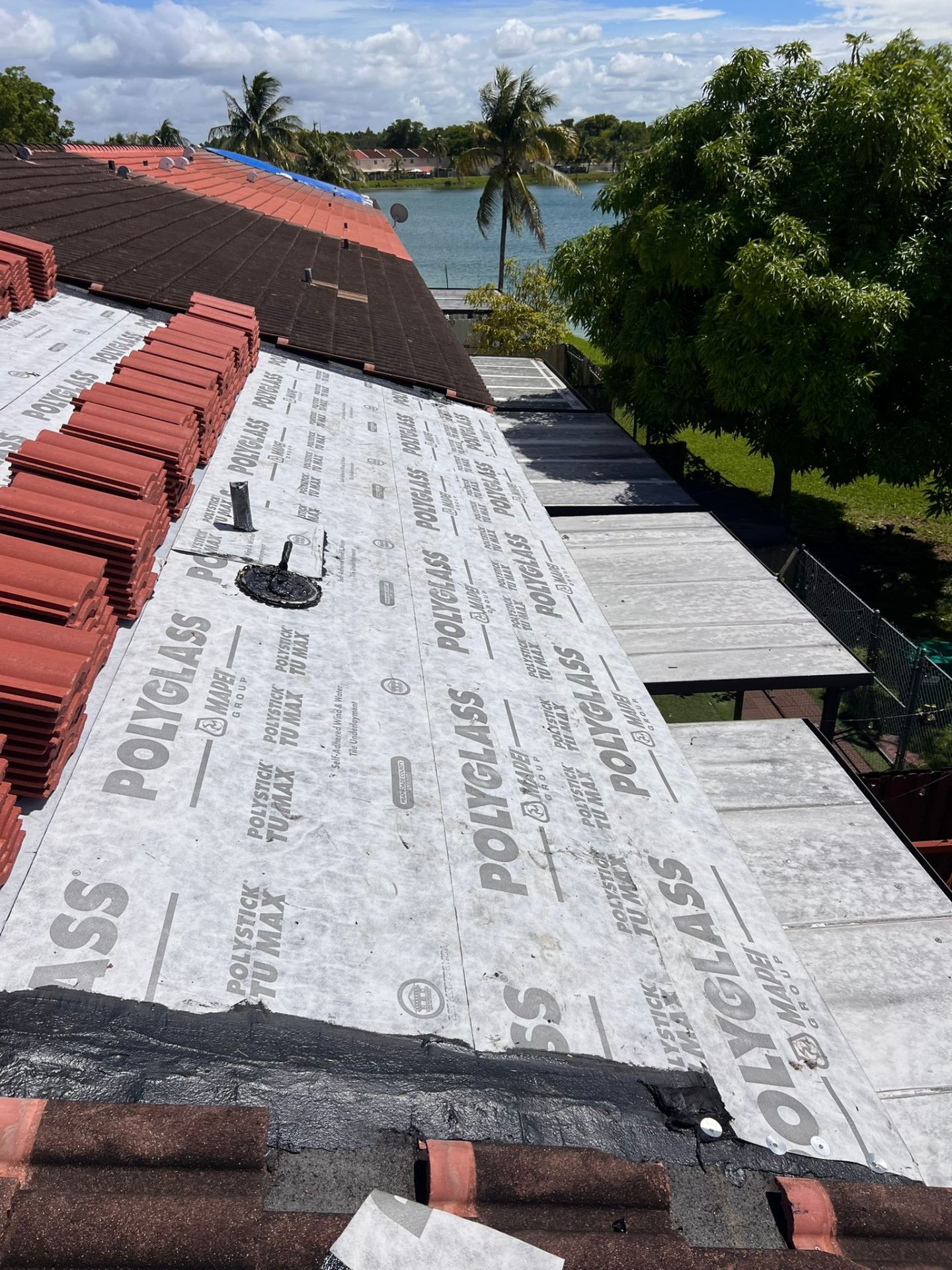
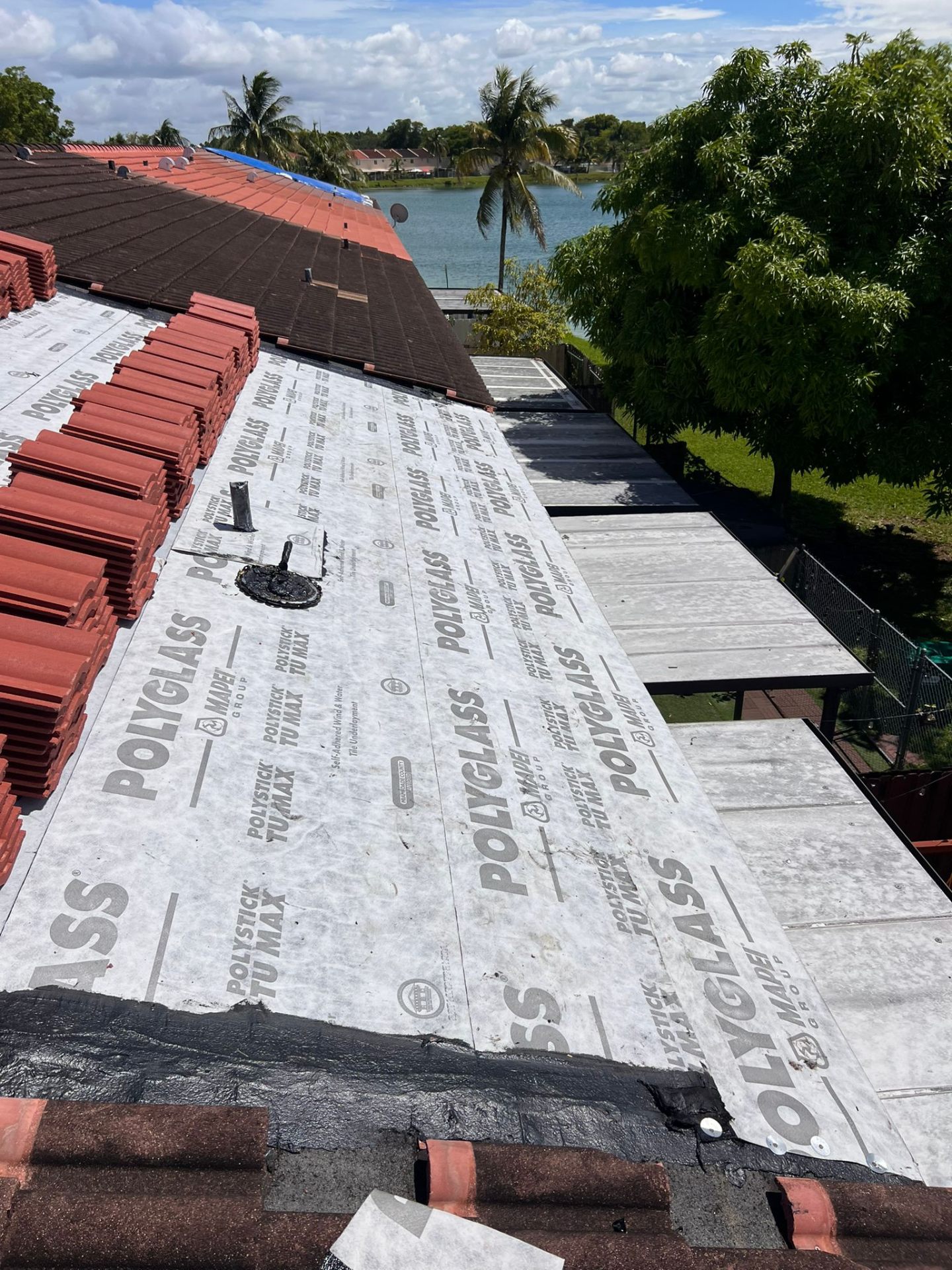
The tiles on a South Florida roof are the armor, but the underlayment is the actual waterproofing layer. In North Miami, the combination of intense UV exposure, hurricane-season wind-driven rain, and high ambient humidity accelerates underlayment degradation faster than in cooler, drier climates. When an inspector lifts a few tiles and finds a brittle, cracked, or saturated underlayment, the scope of work changes substantially.
A repair that involves only resetting or replacing a few surface tiles is a fundamentally different job from one that requires pulling a section of tiles, removing and disposing of failed underlayment, installing new material to current Florida Building Code standards, and then re-laying the tiles. The labor, the material volume, and the time on the roof are all larger. Underlayment issues are also rarely isolated to the exact spot where a leak appears, because water travels. A professional inspection often reveals that the visible damage point is downstream from where the underlayment actually failed.
For a thorough look at how to catch these issues before they escalate, see early warning signs of a leaking tile roof. Catching underlayment failure early is the single most effective way to keep a repair manageable rather than letting it grow into a full section replacement.
Factor 2: Roof Pitch and Accessibility
North Miami's residential neighborhoods include a wide range of roof geometries. Ranch-style homes from the 1950s and 1960s often have low-slope roofs, while Mediterranean-revival and newer construction can feature steep pitches with multiple hips and valleys. Pitch affects repair cost in two direct ways: safety equipment requirements and the time it takes to work safely.
On a steeper roof, crews must use additional fall-protection systems, move more carefully between sections, and spend more time per square foot of work than on a walkable low-slope surface. Valleys and hips, where two roof planes meet, are also the areas most vulnerable to water intrusion and tend to require more precise flashing and sealing work. A repair centered on a valley on a steep Mediterranean-style roof involves meaningfully more labor than the same square footage of damage on a flat section.
Accessibility from the ground also plays a role. Mature landscaping, pool cages, or tight lot lines common in older North Miami neighborhoods can limit where a crew can stage materials and set up equipment, adding time to the job.
Factor 3: Tile Type, Age, and Availability
South Florida roofs are predominantly clay or concrete tile, and the distinction matters when it comes to repairs. Clay tiles are heavier, more brittle, and have been manufactured in a wide variety of profiles over the decades. Concrete tiles are more uniform in modern production but have also gone through profile changes over the years.
The core challenge with tile repairs in North Miami is matching. A roof installed twenty or thirty years ago may use a profile that is no longer in active production. When a roofer cannot source an exact match, the options are to use a close-profile tile that may not blend visually, to source salvaged tiles, or in some cases to replace a larger section so the patchwork isn't visible. Each of those paths has different labor and material implications.
Concrete tile roofing in particular has seen significant profile standardization in recent years, but older concrete tile roofs can present the same matching challenges as clay. For a deeper look at how concrete tile behaves differently from clay in South Florida conditions, learn more about concrete tile roofing in Miami before deciding which repair approach fits your situation.
If you want it handled correctly the first time, consider professional roof repair in North Miami.
Tile availability also affects lead time. If a specific tile must be sourced from a specialty supplier or ordered in limited quantities, that can delay the repair window, which matters when a storm has left sections of the roof exposed.
Factor 4: Extent and Type of Damage
Not all tile damage is equal, and the type of damage is often as important as the quantity of affected tiles. Here is how the most common damage types in North Miami compare across the variables that affect repair scope:
| Damage Type | Typical Cause in North Miami | Underlayment Risk | Tile Replacement Needed | Flashing/Sealing Work | Repair Complexity |
|---|---|---|---|---|---|
| Cracked or broken tiles | Impact (debris, foot traffic), thermal cycling | Moderate if caught early | Yes, affected tiles | Minimal unless at a penetration | Low to moderate |
| Slipped or displaced tiles | Wind uplift, failed mortar or clips | Low if tiles are intact | Sometimes (if cracked during movement) | Minimal | Low |
| Failed ridge or hip mortar | Age, thermal expansion, hurricane winds | Moderate to high at ridges | Rarely | Yes, re-mortaring and sealing required | Moderate |
| Valley or flashing failure | Corrosion, improper original installation | High, water concentrates here | Surrounding tiles often disturbed | Significant, full reflashing common | High |
| Underlayment failure (widespread) | Age, UV degradation, sustained moisture | Confirmed failure | All tiles in section must be removed and reset | Full section resealing | High |
| Storm damage (multiple areas) | Hurricane or tropical storm winds | Variable, inspection required | Yes, often significant volume | Often yes, across multiple zones | High, insurance documentation typically needed |
Reading this table alongside a professional inspection report helps you understand why two roofs with the same number of broken tiles might carry very different repair scopes. The damage type, location on the roof, and what lies beneath the surface all shift the picture significantly.
Factor 5: Permit Requirements and Code Compliance
North Miami falls under Miami-Dade County's building code framework, which is among the most stringent in the country due to the region's hurricane exposure. Repair permits are not always required for minor tile replacement, but work that involves underlayment replacement, structural deck repairs, or work exceeding certain square-footage thresholds typically does require a permit and inspection. Requirements vary based on the scope and the specific municipality, so confirming with a licensed contractor and the local building department is always the right step before work begins.
When permits are required, the process adds time and administrative coordination to the project. It also means the work must meet current code standards, which can differ from what was in place when the roof was originally installed. For homeowners with older roofs, a code-compliant repair may involve upgraded materials or methods compared to what the original installation used, which affects the overall scope.
Insurance claims add another layer. Storm-related repairs in South Florida often involve a public adjuster or insurance adjuster reviewing the damage, and the documentation requirements for a successful claim can influence how a contractor scopes and photographs the work. Choosing a contractor familiar with Miami-Dade's permitting process and insurance documentation norms reduces friction on both fronts.
Which Factors Matter Most for North Miami Homes?
North Miami's housing market has a concentration of mid-century and 1970s-to-1990s construction, much of it featuring original or once-replaced tile roofs that are now approaching or past the point where underlayment requires attention. The subtropical climate accelerates the timeline compared to what a manufacturer's rated lifespan might suggest in a cooler region. That means underlayment condition and tile availability tend to be the two factors that most often shift a North Miami repair from a straightforward job to a more involved one.
Many North Miami homeowners rely on expert roof repair in North Miami for exactly this.
Roof pitch is a secondary but meaningful variable, particularly in neighborhoods with Mediterranean-style architecture. And for any roof that has experienced a named storm, the combination of displaced tiles, stressed flashing, and possible deck damage means a thorough inspection is the only reliable way to understand the true scope before committing to a repair plan.
For a full picture of what a professional repair process looks like from inspection through completion, the North Miami tile roof repair guide covers each stage in detail, including what to expect during the assessment and how different repair types are sequenced.
Keeping tiles clean and free of algae and debris is also a maintenance step that directly affects how long repairs hold. Organic buildup traps moisture against tiles and mortar, accelerating degradation. Proper roof tile cleaning in Miami is a straightforward maintenance task that extends the life of both the tiles and the work beneath them.
Frequently Asked Questions
Does replacing a few broken tiles require a permit in North Miami?
For minor tile replacement involving only surface tiles with no underlayment work, a permit may not be required, but this depends on the scope and the specific municipality. Any work involving underlayment replacement or structural deck repairs typically does require a permit under Miami-Dade's building code. A licensed contractor can confirm what applies to your specific project before work begins.
How does underlayment damage affect the overall repair scope?
When underlayment has failed, all tiles in the affected section must be carefully removed, the old underlayment stripped and disposed of, new material installed to current code, and the tiles re-laid. This is a significantly larger scope than replacing surface tiles alone, and it is one of the most common reasons a repair costs more than a homeowner initially expects after seeing only a few cracked tiles.
What if my tile profile is discontinued and cannot be matched?
A contractor may be able to source salvaged tiles from a supplier who specializes in older profiles, use a close-match tile for less visible areas, or recommend replacing a larger section so the repair blends more naturally. The right approach depends on the tile type, the location of the damage, and how visible the repaired area is from the ground or street.
How does storm damage differ from routine wear repairs?
Storm damage often affects multiple areas of the roof simultaneously, including tiles, flashing, ridge mortar, and in some cases the structural deck. It also involves insurance documentation, adjuster coordination, and potentially larger permit requirements. Routine wear repairs are typically more localized and predictable in scope, though an inspection is still necessary to confirm no secondary damage is present.
Can I delay a tile repair if there is no visible interior leak yet?
Visible interior leaks are a late-stage indicator. By the time water appears on a ceiling, the underlayment has already been compromised and moisture may have reached the deck or framing. Addressing tile damage and failed flashing promptly, before interior signs appear, consistently results in a smaller and less involved repair scope than waiting until the leak becomes obvious.
Does roof pitch affect how long a tile repair lasts?
Pitch itself does not shorten the lifespan of a quality repair, but steeper roofs require more precise installation technique and proper safety protocols that affect how efficiently a crew can work. A repair done carefully on a steep pitch, with proper fall protection and adequate time to seat tiles correctly, should hold as long as the same repair on a lower-slope section.
Getting an Accurate Evaluation
The most reliable way to understand what your specific tile roof repair will involve is a professional on-roof inspection that goes beyond counting cracked tiles. PSR Roofing Company of Miami serves North Miami and the surrounding South Florida area, providing roof inspections and tile roof repairs that account for underlayment condition, tile availability, pitch, and current Miami-Dade code requirements. Contact PSR Roofing for a professional roof inspection before committing to any repair scope, so you have a clear picture of what the job actually involves and why.
Continue reading
Need help with Roof Repair?
PSR Roofing is Miami's licensed & insured expert for roof repair. Free estimates, honest pricing, and 24/7 emergency response.