
North Miami Roof Inspection Guide: What Our Inspectors Check Before Storm Season
That faint dripping sound after a summer squall, or the granules collecting in your gutter after a windy afternoon, North Miami homeowners know these small signals can mean something bigger is brewing overhead. With Atlantic hurricane season stretching from June through November, a professional roof inspection in North Miami is one of the most practical steps you can take before conditions deteriorate. This guide walks through every checkpoint our inspectors cover, why each one matters in this specific climate, and how to get the most out of the process.
Why Roof Inspections Matter More in North Miami Than in Most U.S. Cities
North Miami sits in Miami-Dade County, which operates under some of the most stringent wind-load building codes in the country, a direct response to the destruction caused by past major hurricanes. Homes here face a combination of sustained tropical humidity, intense UV radiation, salt-laden air from nearby Biscayne Bay and the Atlantic coast, and the recurring threat of Category 1 through Category 5 storm conditions.
That environment degrades roofing materials faster than a dry inland climate would. Asphalt shingles lose granules more quickly under relentless UV exposure. Flat or low-slope roofs common on mid-century CBS (concrete block and stucco) homes can develop membrane fatigue from repeated thermal cycling. Metal fasteners corrode in salt air. An inspector who understands these local stressors looks for different things than a general home inspector performing a routine check in, say, suburban Ohio.
For a deeper look at how North Miami's building stock and storm history shape roofing decisions, see our hurricane roof preparation resource before your inspection appointment.
The Full Inspection Checklist: Section by Section
A thorough North Miami roof inspection covers the roof system as a whole, not just the visible surface. Here is what our inspectors evaluate on every visit.
1. Roofing Surface and Field Material
The surface material, whether asphalt shingles, concrete or clay tile, modified bitumen, TPO membrane, or metal panels, is the first line of defense. Inspectors look for:
Cracked, curling, or missing shingles on sloped roofs. Edges that curl upward (cupping) or downward (clawing) indicate age-related brittleness or moisture imbalance beneath.
Granule loss on asphalt shingles. Bare patches expose the underlying mat to UV degradation and signal the shingle is nearing the end of its useful life.
Cracked or slipped tiles on concrete or clay tile roofs, which are extremely common across North Miami's older neighborhoods. Even one displaced tile can allow wind-driven rain to penetrate during a storm.
Membrane blistering, splitting, or ponding areas on flat roofs. Standing water after rain is a red flag that drainage is compromised.
Rust staining or fastener back-out on metal roofing panels, which can create entry points for moisture.
2. Flashing and Penetration Seals
Flashing is the thin metal or rubberized material that seals the joints where the roof meets a vertical surface, chimneys, skylights, vent pipes, HVAC curbs, and parapet walls. In North Miami's wind environment, poorly attached or corroded flashing is one of the most common pathways for storm water intrusion. Inspectors check that all flashing is firmly secured, free of corrosion, and properly lapped so wind-driven rain cannot travel upward beneath the seam.
3. Gutters, Downspouts, and Drainage
North Miami can receive several inches of rain in a single afternoon thunderstorm. Gutters that are sagging, clogged with debris, or pulling away from the fascia cannot handle that volume, and water backs up against the roof edge. Inspectors examine gutter attachment points, look for standing water inside the gutter channel (which indicates improper slope), and confirm that downspouts direct water well away from the foundation. If gutter installation or replacement is needed, that work connects directly to long-term roof health.
4. Soffit, Fascia, and Eave Condition
The eave system is often where storm damage begins. Wind gets under the eave first, and if the soffit panels are loose or the fascia board is rotted, that failure point can propagate across the entire roof edge. Inspectors probe for soft spots, check that soffit vents are unobstructed (proper attic ventilation reduces moisture buildup and heat load), and look for signs of wood rot or pest intrusion along the fascia line.
5. Attic and Structural Inspection
A roof inspection that never goes inside the attic is incomplete. From below the deck, inspectors can identify:
If you want it handled correctly the first time, consider professional roof inspection in North Miami.
Water stains or active moisture on the underside of the roof deck, which point to existing leak pathways.
Sagging or compromised rafters and trusses that could fail under wind uplift loads.
Inadequate attic ventilation, which accelerates shingle aging and can cause moisture to condense on the deck year-round in humid South Florida.
Evidence of mold or mildew growth, which often indicates a long-standing slow leak that has not yet shown up as a visible interior stain.
6. Roof Deck Integrity
The deck is the structural substrate beneath the surface material. Inspectors check for delamination (on plywood or OSB decks), soft spots that indicate rot, and proper fastening of the deck to the framing below. Miami-Dade's wind protocols require specific nail patterns and ring-shank or screw-shank fasteners; an inspector familiar with local code can identify a deck that would not pass a re-roof permit inspection.
7. Ridge, Hip, and Valley Details
Ridges and hips are the highest-stress zones on a sloped roof during high winds. Ridge caps must be properly adhered and nailed; on tile roofs, the ridge mortar (or foam-set tiles) must be intact. Valleys, where two roof planes meet, channel the highest volume of water during heavy rain and are prone to debris accumulation. Inspectors confirm that valley flashing or woven shingle courses are watertight and clear.
North Miami's Specific Market: What Makes Inspections Here Different
North Miami's housing stock is a mix of mid-century CBS ranch homes built in the 1950s through 1970s, 1980s and 1990s tile-roof subdivisions, and newer construction that had to comply with post-Andrew Miami-Dade High-Velocity Hurricane Zone (HVHZ) codes. Each era presents distinct inspection challenges.
Mid-century homes often have original or once-replaced flat or low-slope roofs with built-up or modified bitumen membranes. These roofs are at or beyond typical service life and may have multiple layers of material stacked over the original deck, a condition that adds weight and can hide deck deterioration beneath. Inspectors probe these carefully and may use moisture scanning techniques to find wet insulation that is not visible to the naked eye.
Tile roofs from the 1980s and early 1990s, common in neighborhoods like Keystone Islands and sections near NE 135th Street, were often installed before the HVHZ fastening requirements were tightened after Hurricane Andrew in 1992. The tiles themselves may be in good cosmetic shape, but the underlying underlayment can be dried out and brittle, and the tile attachment method may not meet current wind-resistance standards. Our inspectors flag this specifically because it affects insurability as well as storm performance.
Newer construction post-2002 generally complies with the Florida Building Code's HVHZ provisions, but inspectors still check that all penetrations, flashings, and accessories were installed to the same standard as the primary field material, since shortcuts at details are more common than failures in the field itself.
If you are comparing what a professional inspection covers versus what a lender or insurance appraisal covers, this breakdown of inspections vs. appraisals in Miami clarifies the distinction.
What the Inspection Report Should Include
After a complete roof inspection in North Miami, you should receive a written report that documents findings with photographs, identifies deficiencies by location and severity, and distinguishes between items that require immediate repair and items to monitor. A good report will also note the approximate remaining service life of the primary roofing material and flag any conditions that could affect your homeowner's insurance coverage or a future home sale.
Many North Miami homeowners rely on expert roof inspection in North Miami for exactly this.
Miami-Dade County and Florida's insurance market have become increasingly linked: insurers often require a roof condition report before issuing or renewing a policy on homes with older roofs. An inspection report from a licensed roofing contractor carries more weight in that process than a general home inspection report, because the roofing contractor can speak specifically to installation standards and material condition.
Ready to schedule your inspection? book a professional roof inspection with PSR Roofing and get a written report before storm season arrives.
Pre-Storm vs. Post-Storm Inspections: Different Goals, Same Thoroughness
Most homeowners think about roof inspections only after a storm has passed. Pre-storm inspections are actually the higher-value service: they identify vulnerabilities while there is still time to repair them before wind and rain arrive. Post-storm inspections document damage for insurance claims and identify repairs needed to prevent secondary water intrusion.
For wind damage specifically, inspectors look for lifted or missing shingles, displaced tiles, damaged ridge caps, and torn or punctured membrane sections. Subtle wind damage is often invisible from the ground but visible on the roof surface as creased or cracked shingles that have lost their seal tab adhesion. Left unaddressed, these become active leak points in the next rain event. Learn the signs of wind damage on North Miami roofs so you know when to call for an inspection after a storm passes.
Flat Roof Inspections: A Separate Set of Priorities
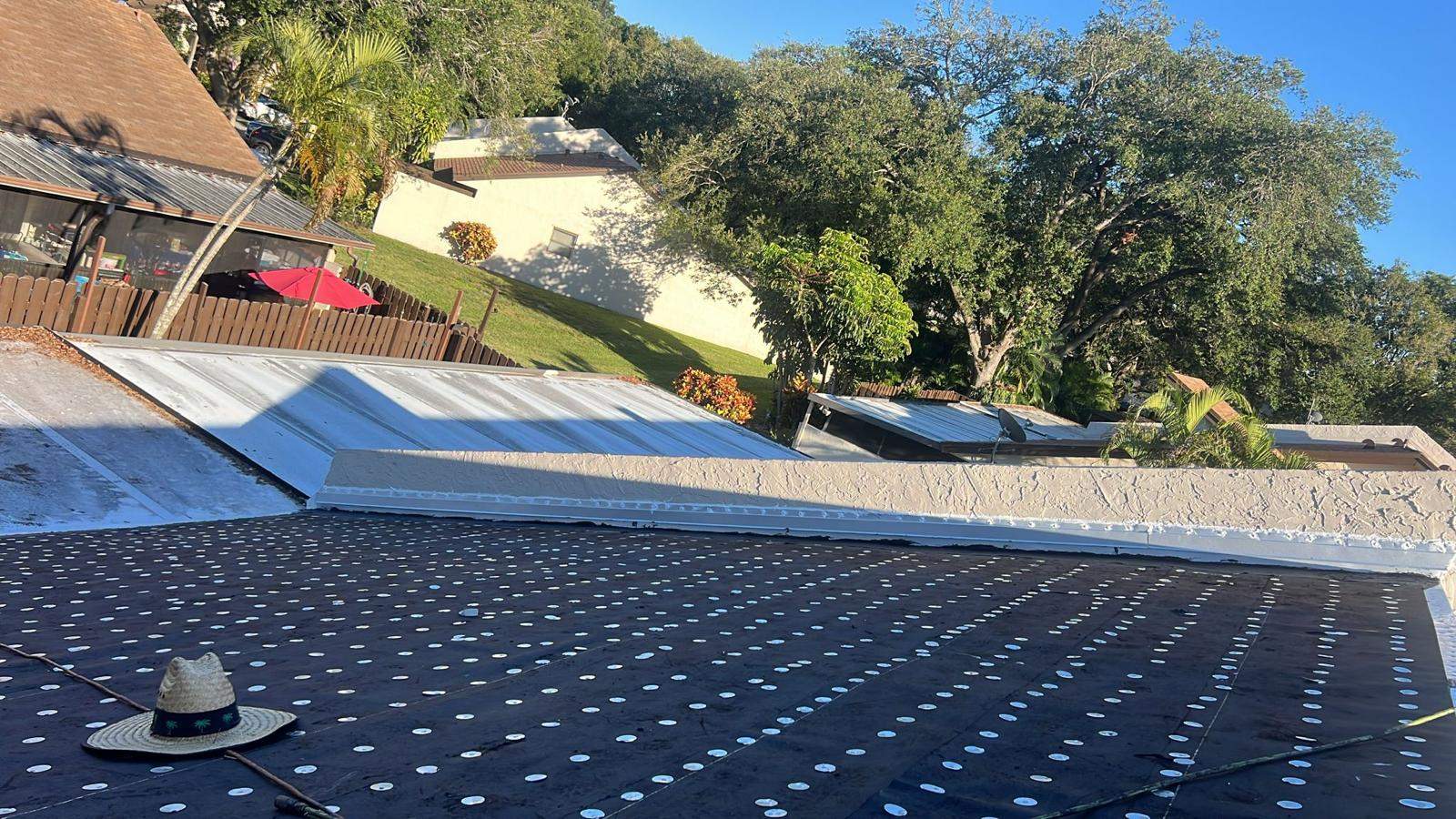
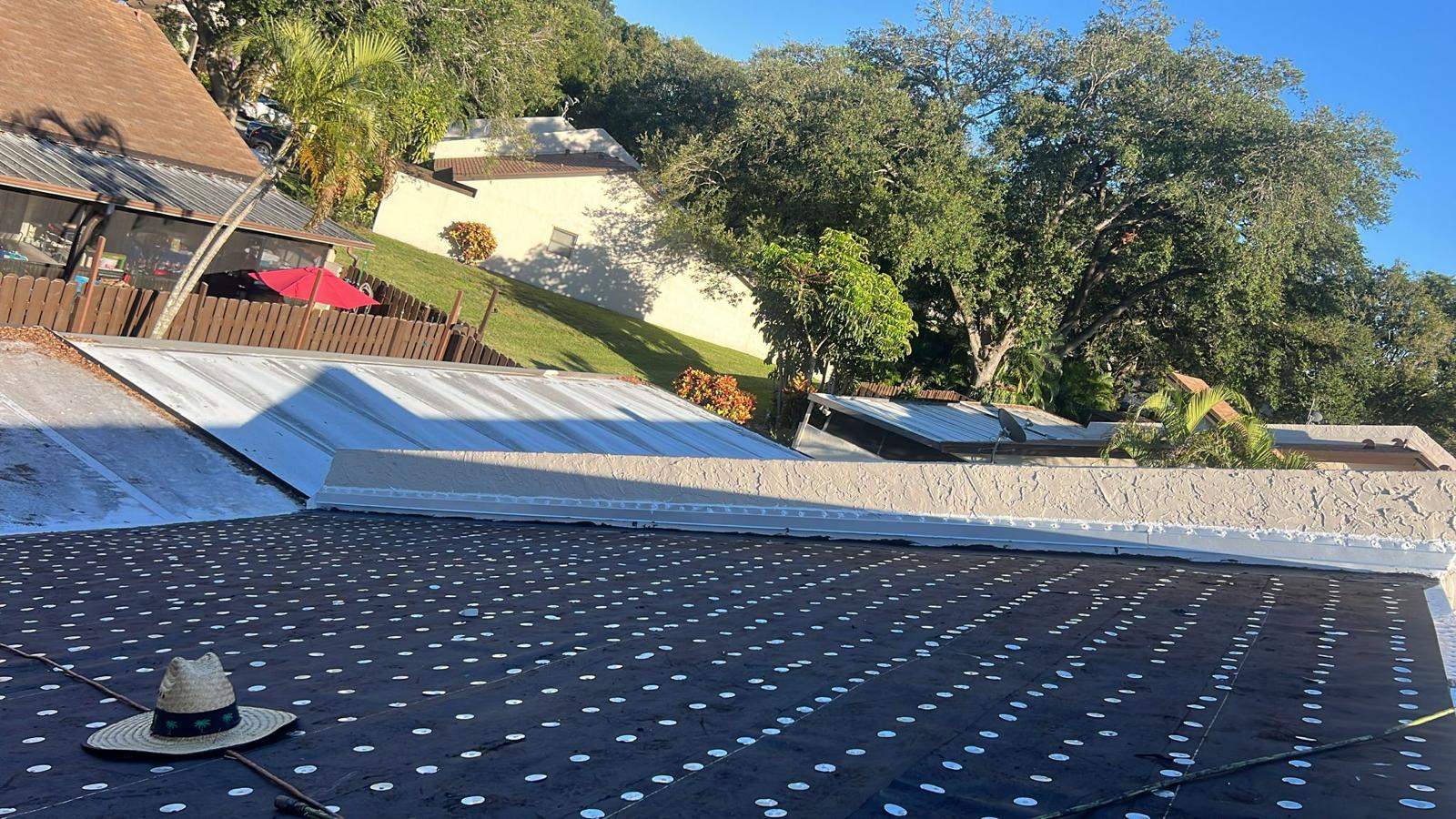
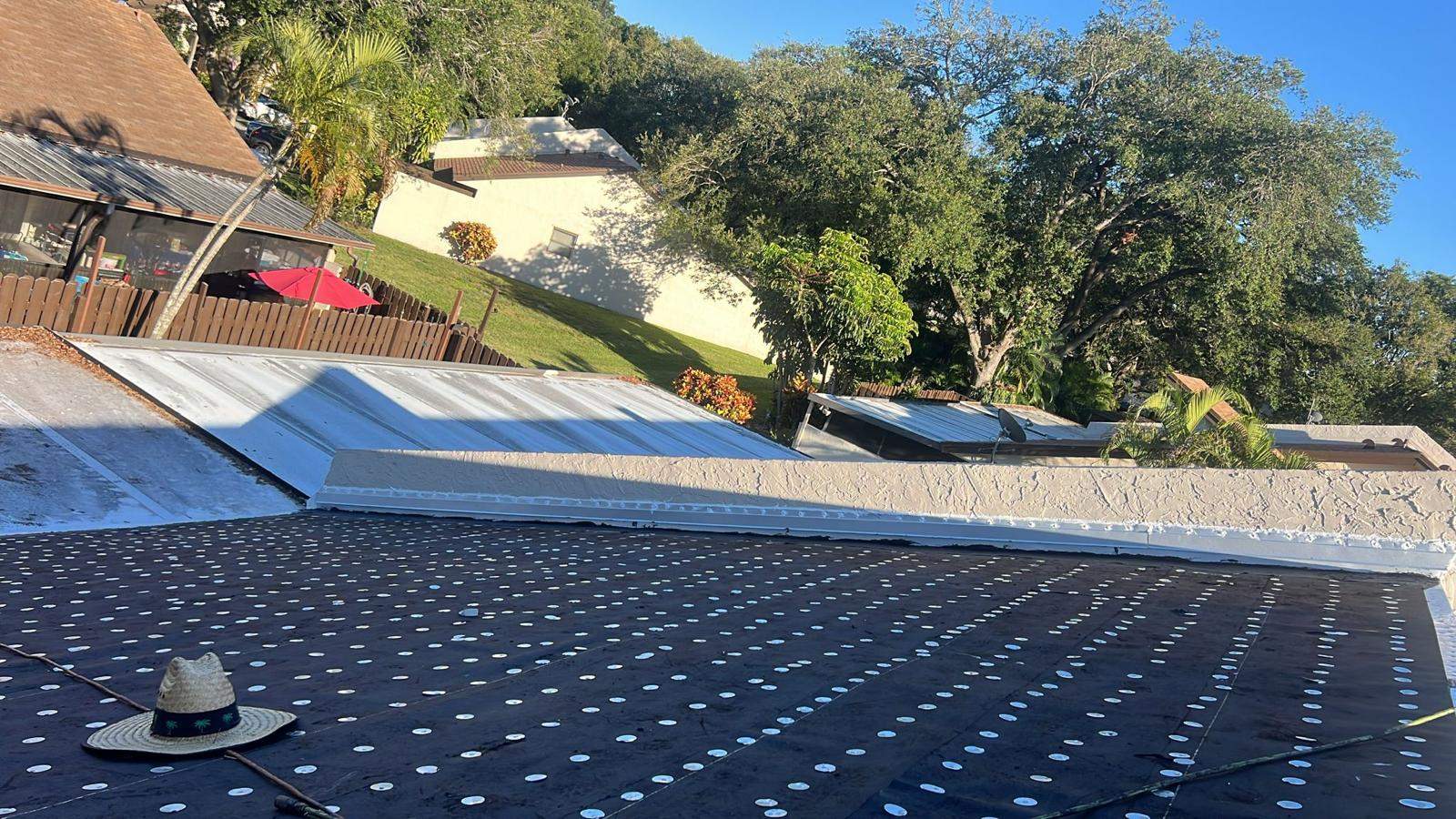
A significant portion of North Miami's commercial buildings and older residential properties have flat or low-slope roofs. These systems require a different inspection approach than sloped roofs. Inspectors walk the entire membrane surface looking for blisters, splits, open seams, and areas where the membrane has separated from the substrate. Drainage is critical: flat roofs depend entirely on properly placed drains and scuppers, and a single blocked drain can cause water to pond deep enough to stress the structural deck.
Flashings at parapet walls and equipment curbs are the most common failure points on flat roofs. Inspectors check that base flashings are fully adhered and that counterflashing at the wall cap is lapped correctly. For more on keeping flat roofs in shape between formal inspections, our flat roof maintenance guide for North Miami covers the owner's role in between professional visits.
How Often Should North Miami Homeowners Schedule Inspections?
Given the local climate and insurance environment, most roofing professionals recommend an inspection at least once a year for roofs older than ten years, and once every two years for newer roofs in good condition. The practical timing is before the June start of hurricane season, so any findings can be addressed while roofing crews are still available and materials are not on backorder from storm demand.
Additional inspections make sense after any named storm passes within 50 miles of North Miami, after hail events (less common here but not unheard of), and any time you notice interior water stains, granules accumulating in gutters, or visible surface damage from the ground. Catching a problem early almost always means a simpler, less disruptive repair. For context on what drives the scope and complexity of repairs that follow an inspection, see the factors that affect roof inspection and repair scope in Miami for a useful framework.
Comparison: What a Thorough Inspection Covers vs. a Surface-Only Check
Ready for the next step? Learn how roof inspection services in North Miami can help and reach out to the team.
| Inspection Area | Thorough Professional Inspection | Surface-Only Visual Check |
|---|---|---|
| Roof surface material | Full field inspection, edge-to-ridge, including underside of lifted areas | Ground-level or quick walk-around only |
| Flashing and seals | Every penetration, parapet, and transition checked individually | Major flashings only, if visible |
| Attic and deck | Interior inspection for moisture, staining, structural issues | Not included |
| Drainage system | Gutters, downspouts, flat-roof drains, and scuppers evaluated | Gutters only if accessible |
| Soffit and fascia | Probed for rot, pest damage, and attachment integrity | Visual only, no probing |
| Written documentation | Detailed report with photos, severity ratings, and service-life estimate | Verbal summary or brief checklist |
| Code/insurance relevance | Notes HVHZ compliance issues and insurance-relevant conditions | Not addressed |
Frequently Asked Questions
How long does a professional roof inspection take in North Miami?
For a typical single-family home, a thorough inspection including the attic generally takes between 45 minutes and two hours, depending on roof size, accessibility, and the number of penetrations and transitions present. Larger homes or commercial flat roofs with complex drainage systems take longer.
Will the inspector go on my roof, or just look from the ground?
A complete inspection requires physical access to the roof surface. Ground-level observation can identify obvious missing materials or structural sag, but it cannot detect lifted flashing, compromised seal tabs, or subtle membrane damage. Our inspectors walk the roof and document findings with photographs at each location.
Does my homeowner's insurance require a roof inspection?
Florida insurers increasingly request a roof condition report before issuing or renewing coverage on homes with roofs that are ten years old or older. Requirements vary by insurer and policy, so confirm the specific documentation your carrier needs, but a licensed roofing contractor's written inspection report is generally what satisfies that requirement.
What happens if the inspector finds damage?
The inspection report will categorize findings by urgency. Items that pose an immediate risk of water intrusion are flagged for prompt repair; items showing early wear are noted for monitoring or near-term maintenance. From there, you can schedule the appropriate repair service, and our team can often provide a repair estimate at the time of the inspection.
Can I be home during the inspection?
Yes, and many homeowners find it useful to be present so they can ask questions as findings are discovered. The inspector can point out specific areas of concern in real time, which helps you understand the written report when you review it afterward.
Is a roof inspection the same as a wind mitigation inspection?
They overlap but are not identical. A wind mitigation inspection is a specific Florida form (OIR-B1-1802) completed by a licensed inspector that documents construction features affecting wind resistance, primarily for insurance discount purposes. A roofing condition inspection focuses on the current state of materials and potential failure points. Both are valuable, and a roofing contractor familiar with Miami-Dade HVHZ standards can often identify wind-mitigation-relevant features during a standard inspection.
Schedule Your North Miami Roof Inspection Before Storm Season
A roof inspection is one of the few home maintenance steps that can directly influence your insurance standing, your storm preparedness, and your ability to catch small problems before they become large ones. North Miami's climate and building stock make that annual inspection more than a routine formality, it is a practical safeguard against the conditions this area reliably delivers every year.
PSR Roofing Company of Miami serves North Miami and the surrounding communities with thorough, documented roof inspections performed by licensed professionals who know the local codes, the local building stock, and what storm season actually looks like here. Contact us today to schedule your North Miami roof inspection and get a clear picture of where your roof stands before the season's first named storm forms in the Atlantic.
Explore this guide
- In this guideHurricane Roof Preparation in North Miami: Key Steps›
- In this guide7 Signs of Wind & Hail Roof Damage in North Miami›
- In this guideFlat Roof Maintenance Tips for North Miami Homes›
- In this guideRoof Inspection Cost Factors in Miami Explained›
- In this guideRoof Certification vs. Home Appraisal in North Miami›
Need help with Roof Inspection?
PSR Roofing is Miami's licensed & insured expert for roof inspection. Free estimates, honest pricing, and 24/7 emergency response.