
What Drives Roof Inspection Cost in Miami: A Local Homeowner's Guide
A roof that quietly develops a hidden problem between inspections rarely announces itself until water is already inside the walls. In North Miami, where Atlantic storm seasons arrive on a reliable schedule and salt-laden humidity accelerates material wear year-round, skipping or delaying a professional assessment is a gamble that tends to pay out at the worst possible time. Before you request quotes, it helps to understand what actually determines the fee, because two homes on the same block can carry very different inspection scopes, and knowing why lets you compare proposals on substance rather than just the bottom line.
This guide breaks down the primary variables that shape what a Miami-area roof inspection involves, how those variables interact, and what a thorough assessment should actually cover. For a detailed look at the checklist our team works through on every visit, see our complete North Miami roof inspection guide.
Why Inspection Scope Varies More Than Most Homeowners Expect
No two roofs in North Miami present the same inspection challenge. A single-story concrete block home in Keystone Point with a low-slope modified bitumen roof is a fundamentally different job from a two-story wood-frame home in the Arch Creek area with a steep clay-tile hip roof. The scope, time on site, and equipment required shift considerably between those two scenarios, and the fee reflects that reality.
Understanding the variables below helps you read a quote intelligently, ask the right follow-up questions, and recognize when a proposal is genuinely comprehensive versus when important items may have been left out.
Variable 1: Roof Size and Total Square Footage
The most straightforward driver is simply how much roof surface needs to be evaluated. Inspectors measure in roofing squares (100 square feet each), and a larger roof requires more time walking the surface, more photographs documenting conditions, and a longer written report. A compact 1,200-square-foot bungalow common in older North Miami neighborhoods involves a meaningfully shorter inspection than a 3,000-square-foot newer construction in the Biscayne Gardens corridor.
Size also interacts with complexity. A large but simple gable roof may take less time than a smaller roof with multiple valleys, dormers, skylights, or penetrations, because each transition point is a potential leak origin that requires careful attention.
Variable 2: Roof Pitch and Access Difficulty
Pitch, expressed as the rise over a 12-inch horizontal run, determines how safely and quickly an inspector can move across the surface. Low-slope roofs common on commercial buildings and many North Miami flat-roof residential properties allow relatively straightforward walking access. Steep-pitch roofs, particularly those above a 6:12 ratio, require fall-protection equipment, slower movement, and more time to cover safely.
Height compounds this. A steep roof on a two-story home may require an extension ladder setup and additional safety rigging that a single-story steep roof does not. Inspectors who skip these precautions are cutting corners that affect both their safety and the thoroughness of what they can actually observe. When comparing quotes, a proposal that accounts for access equipment on a tall, steep roof is a sign the inspector has actually thought through the job.
Variable 3: Roofing Material and System Type
The material covering your roof determines what an inspector is looking for and how long it takes to evaluate properly. The Miami area's housing stock spans several common systems, each with its own failure modes and inspection protocols.
Concrete and clay tile: Extremely common in South Florida, these systems require checking for cracked, slipped, or missing tiles, inspecting the underlayment condition at exposed edges, and evaluating ridge and hip mortar or foam adhesive. Tile roofs also demand attention to the flashing beneath tiles at walls and penetrations, which is not always visible without careful probing.
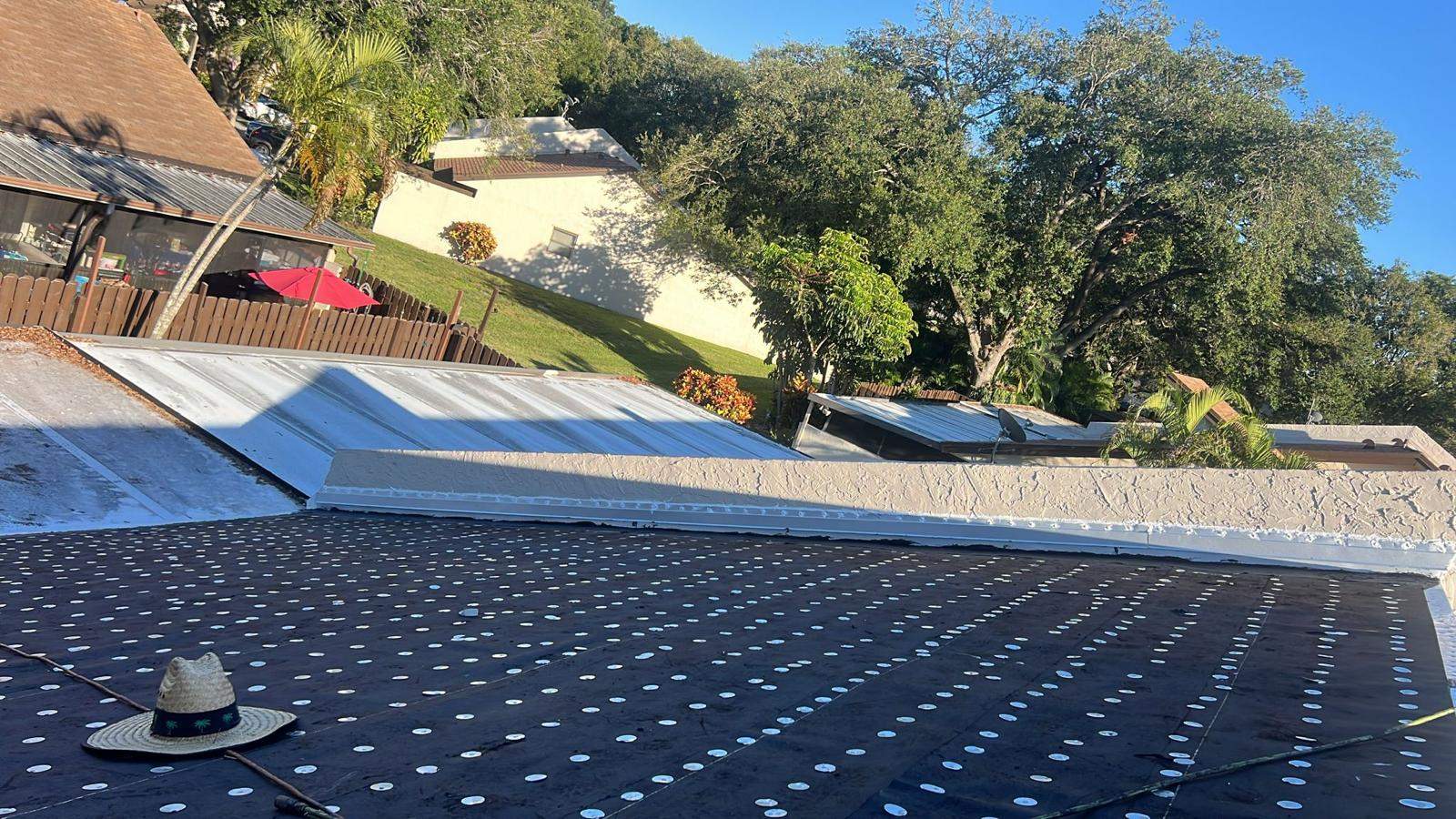
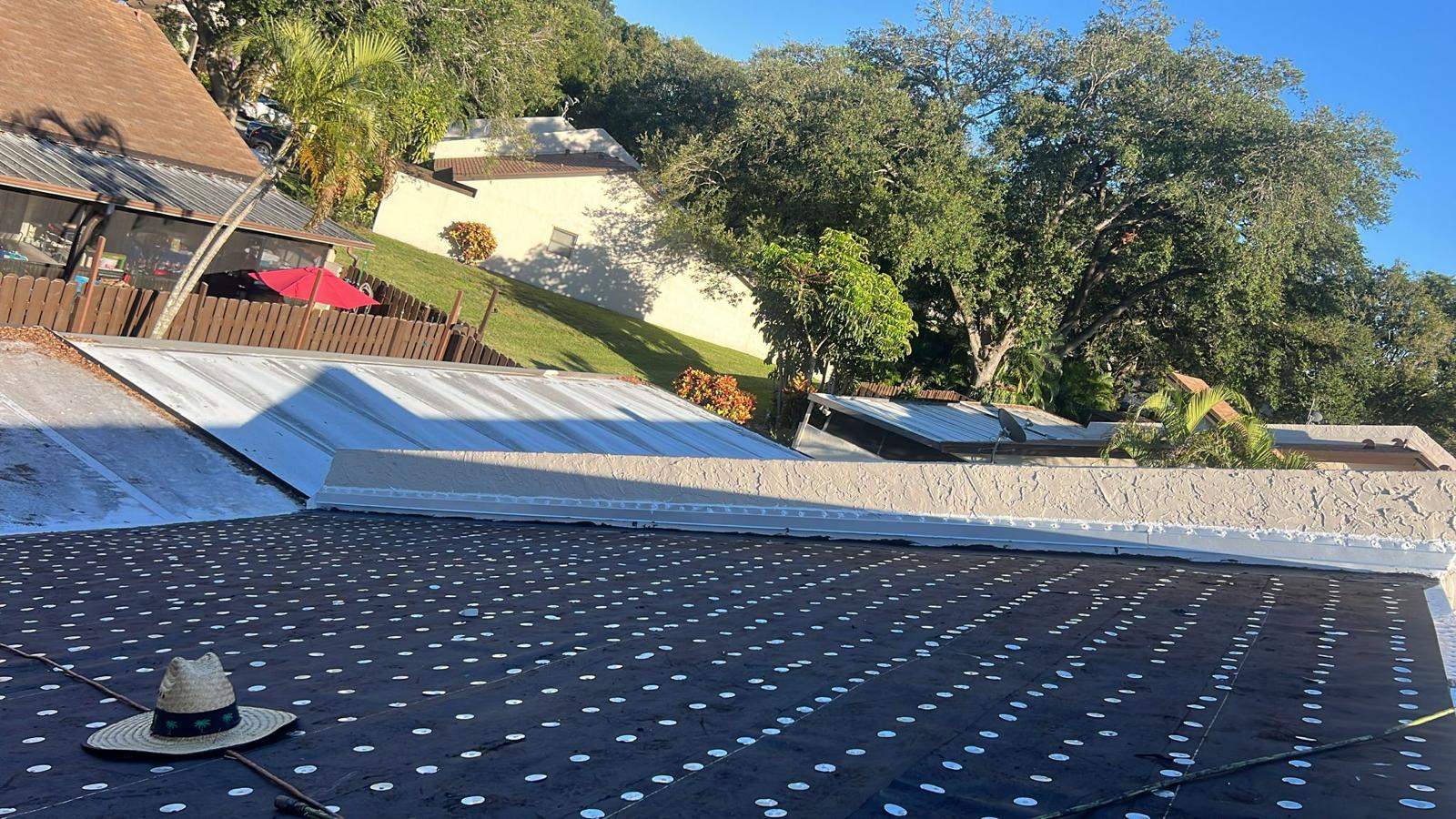
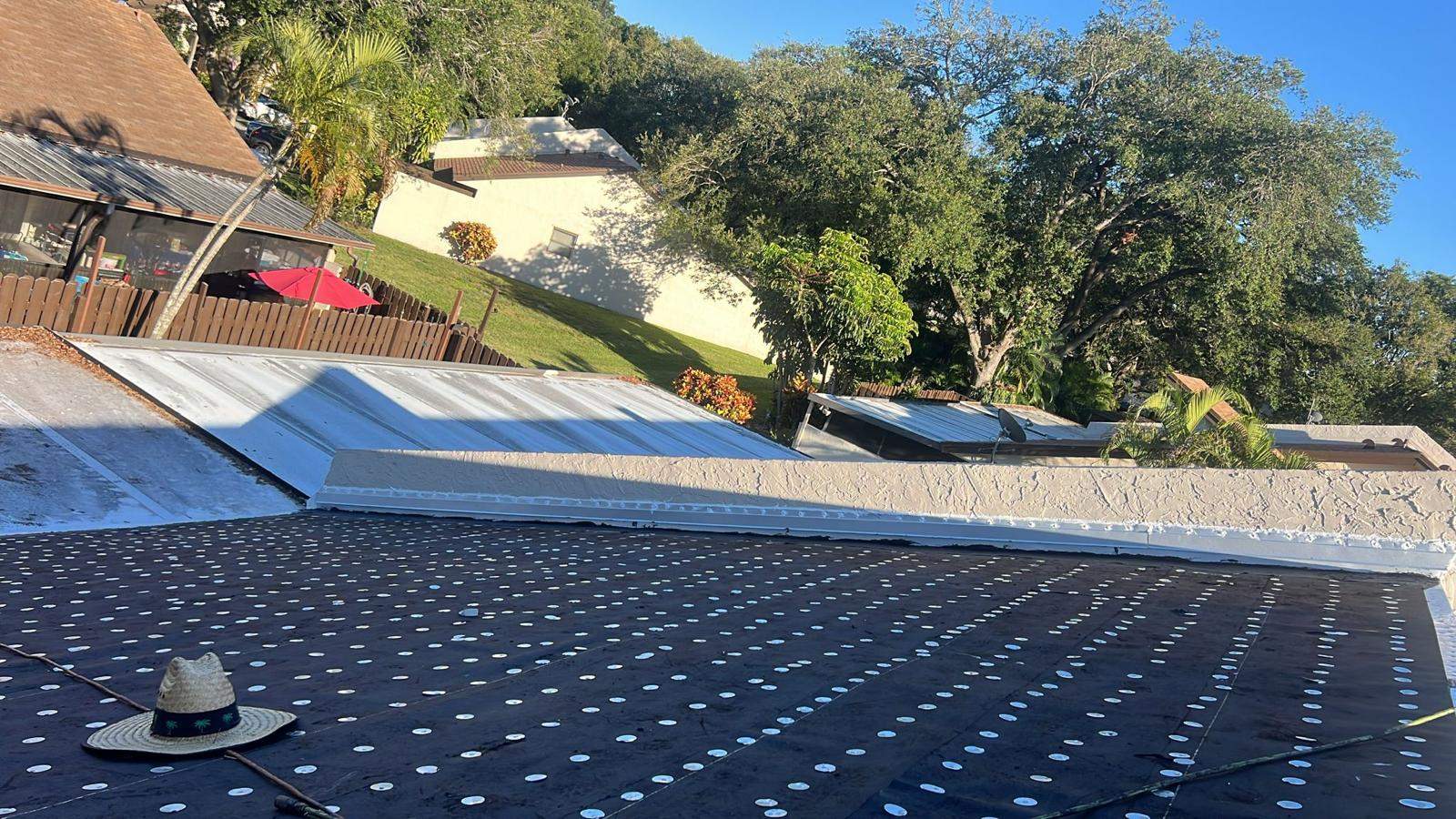
Modified bitumen and built-up (flat/low-slope): Prevalent on commercial properties and many older North Miami residential buildings, these systems require checking membrane seams, surface blistering, ponding water patterns, drain conditions, and perimeter edge metal. See our flat roof maintenance overview for more on what these systems need between formal inspections.
Asphalt shingle: Less dominant in Miami than in northern markets but still present, particularly on older homes. Inspectors look for granule loss, tab lifting, exposed fasteners, and flashing integrity at valleys and penetrations.
Metal roofing: Increasingly popular for its wind resistance, metal systems require checking seam integrity, fastener backing plates, and any signs of galvanic corrosion at dissimilar metal contact points.
A flat modified bitumen roof and a steep clay tile roof of identical square footage will involve different inspection techniques, different time commitments, and different report sections. That difference is legitimate, not a pricing anomaly.
If you want it handled correctly the first time, consider professional roof inspection in North Miami.
Variable 4: Age of the Roof and Known History
An older roof generally requires a more thorough inspection because there are more potential failure points to document. A tile roof installed in the 1980s may have underlayment that has reached or exceeded its service life even if the tiles themselves look intact from the ground. An inspector who understands North Miami's building history will know which eras correspond to which underlayment materials and what to probe for accordingly.
Known repair history also matters. A roof with multiple prior patch repairs, evidence of past storm damage, or a history of leak complaints needs more time to assess than a roof with a clean documented history. If you have permits, prior inspection reports, or insurance claim records, sharing them before the inspection helps the inspector allocate time to the areas most likely to have lingering issues.
Variable 5: Number of Penetrations, Skylights, and Roof Features
Every penetration through a roof deck, whether a plumbing vent, HVAC curb, skylight, chimney, or satellite mount, is a potential water entry point. Flashing at these locations is among the most common source of leaks in South Florida homes, particularly after wind events that flex the roof structure. An inspector must evaluate each one individually.
A roof with eight penetrations takes longer to inspect thoroughly than a roof with two. Similarly, features like parapet walls, gutters integrated with the roofline, and multiple roof levels (common on larger custom homes) each add inspection time. For more on how wind events stress these vulnerable points, our guide on wind damage signs in North Miami covers what to watch for between professional visits.
Variable 6: Purpose of the Inspection
Not all inspections serve the same purpose, and the scope can shift significantly depending on why you are requesting one. The three most common scenarios in the North Miami market are:
Pre-storm season maintenance inspection: A proactive assessment to identify vulnerabilities before hurricane season. This tends to be the most comprehensive, covering all roof components, flashings, gutters, and attic conditions.
Post-storm damage assessment: Focused on documenting specific damage for insurance purposes or repair planning. This requires detailed photography, measurement of affected areas, and sometimes a written scope of work. The difference between a roof inspection and an appraisal matters here, particularly when an insurance adjuster is also involved.
Pre-purchase or real estate inspection: Buyers and sellers in North Miami often need an independent assessment as part of a transaction. These inspections must be thorough enough to surface latent issues that affect the home's value or insurability under Florida's Citizens Insurance wind mitigation requirements.
A post-storm damage assessment for a single section of roof involves a different scope than a full pre-season maintenance inspection of the entire system. Clarifying the purpose upfront ensures the inspector prepares the right scope and that the resulting report serves your actual need.
Variable 7: Report Detail and Documentation Level
What you receive after the inspection is part of what you are paying for. A brief verbal summary at the end of a walkthrough is very different from a written report with annotated photographs, condition ratings by roof section, and a prioritized list of findings. In North Miami, where insurance carriers and mortgage lenders often require documentation of roof condition, a detailed written report has tangible practical value beyond the inspection itself.
Wind mitigation reports, which document construction features that qualify a home for insurance premium reductions under Florida law, follow a specific state-approved form and require the inspector to photograph and measure specific elements. If you need a wind mitigation report alongside a general condition assessment, that additional scope is a legitimate reason for a broader engagement. For a full picture of what a professional inspection covers from start to finish, read through our North Miami inspection checklist.
Many North Miami homeowners rely on expert roof inspection in North Miami for exactly this.
Comparing Inspection Proposals: What to Look For
| Factor | Lower Scope Indicator | Higher Scope Indicator | Why It Matters in North Miami |
|---|---|---|---|
| Surface access method | Ground-level or drone only | Physical walk of the full surface | Tile displacement and underlayment issues are not reliably visible from the ground or aerial imagery alone |
| Penetration review | General visual sweep | Individual flashing check at each penetration | Flashing failure is the leading source of storm-related leaks in the area |
| Attic inspection | Not included | Included, with moisture and decking check | Miami's humidity means attic moisture can indicate a roof breach before visible interior damage appears |
| Written report format | Verbal summary only | Annotated photo report with prioritized findings | Insurance carriers and lenders require documentation; verbal assessments have no evidentiary value |
| Wind mitigation documentation | Not offered or separate fee not discussed | Clearly scoped, state-approved form available | Florida wind mitigation credits can meaningfully reduce annual insurance premiums |
| Inspector qualification | No license or certification mentioned | Florida-licensed, roofing-specific credentials stated | Florida requires licensure for roofing contractors; verify before allowing anyone on your roof |
Which Inspection Scope Is Right for North Miami Homes?
North Miami sits in one of the most demanding roofing environments in the continental United States. The combination of Atlantic hurricane exposure, year-round UV intensity, salt air from Biscayne Bay and the ocean, and a housing stock that ranges from 1950s CBS construction to recent high-wind-code builds means there is no single template that fits every property.
For most North Miami homeowners, the right inspection is a full physical surface assessment with individual penetration review, attic access, and a written photographic report. If your home is approaching the age at which Florida insurers commonly request updated roof documentation (typically around 15 to 20 years for shingle and modified bitumen systems, though requirements vary by carrier), a wind mitigation report alongside the standard assessment is worth discussing upfront.
Homes that have experienced a named storm, even without obvious visible damage, benefit from a post-event assessment that specifically documents any wind-driven water intrusion or fastener-back movement, both of which can cause progressive damage that worsens with each subsequent rain event. Preparing your roof before hurricane season and getting it assessed afterward are two sides of the same protective strategy.
When you request a quote, ask the inspector to specify what surface areas they will physically access, how they will document each penetration, whether the attic is included, and what the final deliverable looks like. A thorough answer to those four questions tells you more about the value of a proposal than the fee alone. To schedule a comprehensive roof inspection with PSR Roofing Company of Miami, contact our North Miami roofing team and we will walk you through exactly what our assessment covers for your specific roof type and situation.
Frequently Asked Questions
Does roof pitch really affect how long an inspection takes?
Yes, meaningfully. Steep-pitch roofs require fall-protection equipment and slower, more deliberate movement across the surface. An inspector rushing a steep roof to match the time they would spend on a flat roof is almost certainly missing things. Pitch is one of the most legitimate scope drivers in a proposal.
Is a drone inspection as thorough as a physical walkover?
Drone imagery is a useful supplement for documenting visible surface conditions, particularly on roofs where physical access is genuinely hazardous. However, it cannot replicate the tactile feedback of walking a surface, probing flashing, or checking underlayment condition at edges and penetrations. In North Miami, where underlayment degradation is a common hidden issue, a physical walkover provides information a drone cannot.
What is a wind mitigation inspection, and do I need one?
A wind mitigation inspection documents specific construction features, such as roof deck attachment method, roof cover type, and opening protections, that qualify a home for insurance premium discounts under Florida's wind mitigation credit program. It follows a state-approved form completed by a qualified inspector. If you have not had one recently and your home has undergone roof work since the last report, an updated assessment may reduce your annual insurance cost. Requirements and eligibility vary by carrier, so confirm with your insurer.
Should I get an inspection before or after filing an insurance claim?
An independent professional inspection before you file gives you documentation of the damage scope from a qualified party, which can support your claim and help ensure nothing is overlooked. After a storm event, it is worth having a licensed roofing professional assess the roof before or alongside the insurer's adjuster visit. Understanding the difference between a roofing inspection and an insurance appraisal helps clarify each party's role in that process.
How often should North Miami homeowners schedule a professional roof inspection?
Most roofing professionals recommend an annual inspection for homes in South Florida, given the combination of hurricane season, UV exposure, and salt air. Homes with older roofs or those that experienced a recent storm event benefit from an additional post-event assessment. Annual inspections also help maintain documentation continuity, which insurers increasingly request when renewing or writing new policies in Florida's current market.
Can I inspect my own roof between professional visits?
A ground-level visual check after a storm, looking for displaced tiles, visible debris, or granule accumulation in gutters, is reasonable homeowner maintenance. Walking a steep or wet roof surface without proper equipment is not safe and is not a substitute for a professional assessment. If you notice something concerning from the ground, call a licensed roofing professional rather than attempting to investigate from above.
Continue reading
- Complete guideRoof Inspection North Miami: What Inspectors Check›
- RelatedHurricane Roof Preparation in North Miami: Key Steps›
- Related7 Signs of Wind & Hail Roof Damage in North Miami›
- RelatedFlat Roof Maintenance Tips for North Miami Homes›
- RelatedRoof Certification vs. Home Appraisal in North Miami›
Need help with Roof Inspection?
PSR Roofing is Miami's licensed & insured expert for roof inspection. Free estimates, honest pricing, and 24/7 emergency response.