Permits, Inspections, and Closeout: What a Roofing Contractor Handles in Miami-Dade
A homeowner in Keystone Point called us during a sale. The buyer's title work had turned up an open roofing permit from four years earlier — work that looked finished, was never inspected, and was never closed. The closing stalled while the county worked through what could and could not be verified after the fact.
Nothing about that roof was visibly wrong. The paperwork was. Permitting is the least glamorous part of hiring a roofing contractor and the part with the longest tail, so it is worth understanding the sequence before your project starts.
Why Miami-Dade Permitting Is Stricter Than Most of the Country
Miami-Dade sits in the High-Velocity Hurricane Zone. The Florida Building Code applies statewide, but HVHZ provisions add requirements to product approval, fastening schedules, secondary water barriers, and inspection points. Products used here generally need a Miami-Dade Notice of Acceptance or a Florida Product Approval valid for HVHZ — a detail that catches out-of-area crews after a storm.
Jurisdiction also matters. North Miami, Miami Shores, Biscayne Park, and Aventura each run their own building department, while other addresses fall under unincorporated Miami-Dade. Submittal formats, fee schedules, and inspector scheduling differ. A contractor who works these municipalities weekly knows which counter your address goes to without guessing.
The Sequence, Step by Step
1. Application and Submittal Package
Your contractor applies under their own license and submits the package: scope, product approval documentation for the specific system, and where applicable a signed and sealed engineering or truss letter — most often on tile roofs, structural changes, or when uplift resistance needs verification.
Turnaround varies by jurisdiction and time of year. It gets slower after a named storm, when submittal volume spikes across the county.
2. Notice of Commencement
For projects above the statutory threshold, a Notice of Commencement must be recorded and posted on site. It is directly connected to lien rights, which is why it belongs in the same conversation as your payment schedule.
3. Tear-Off and Deck Inspection
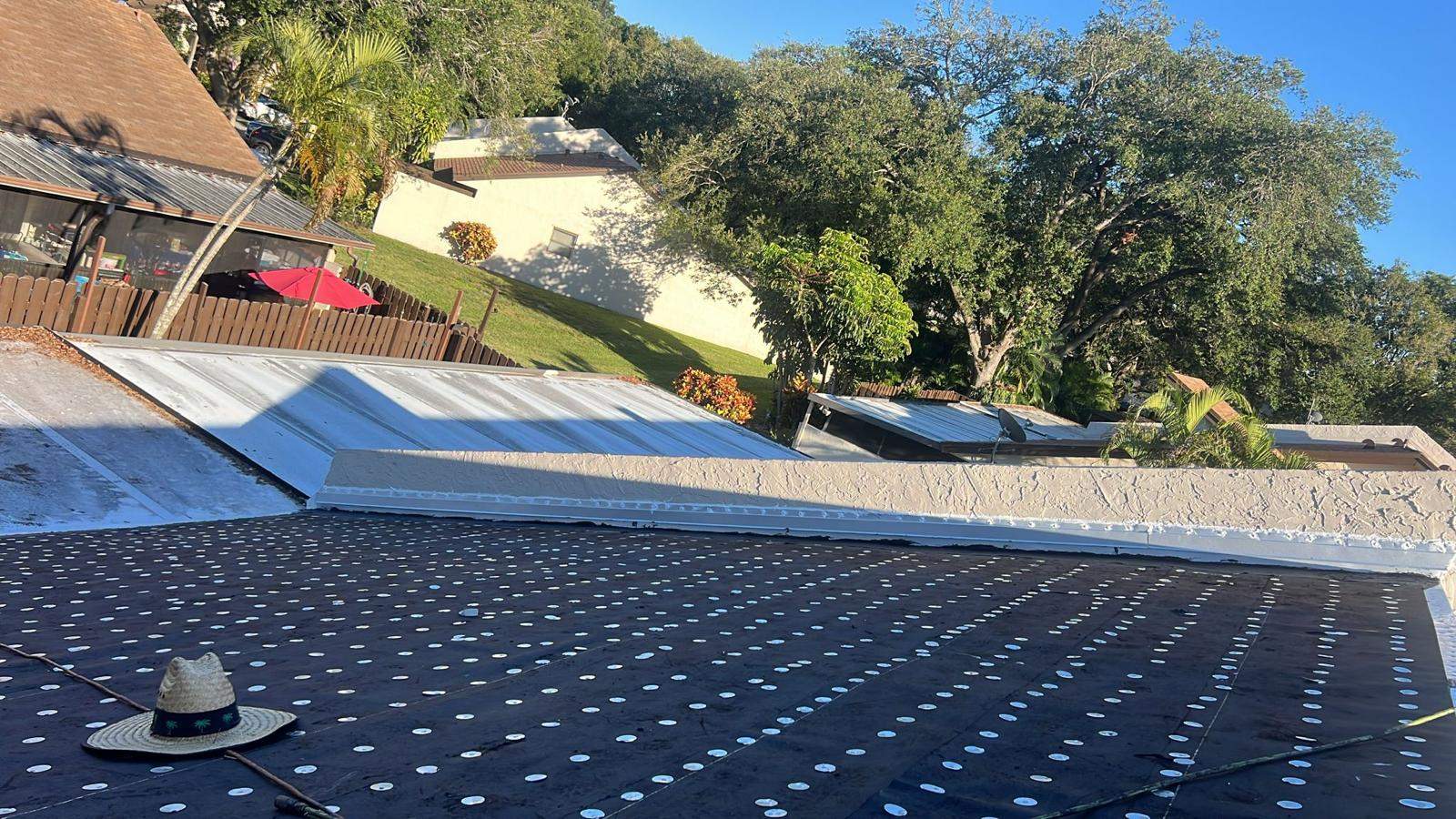
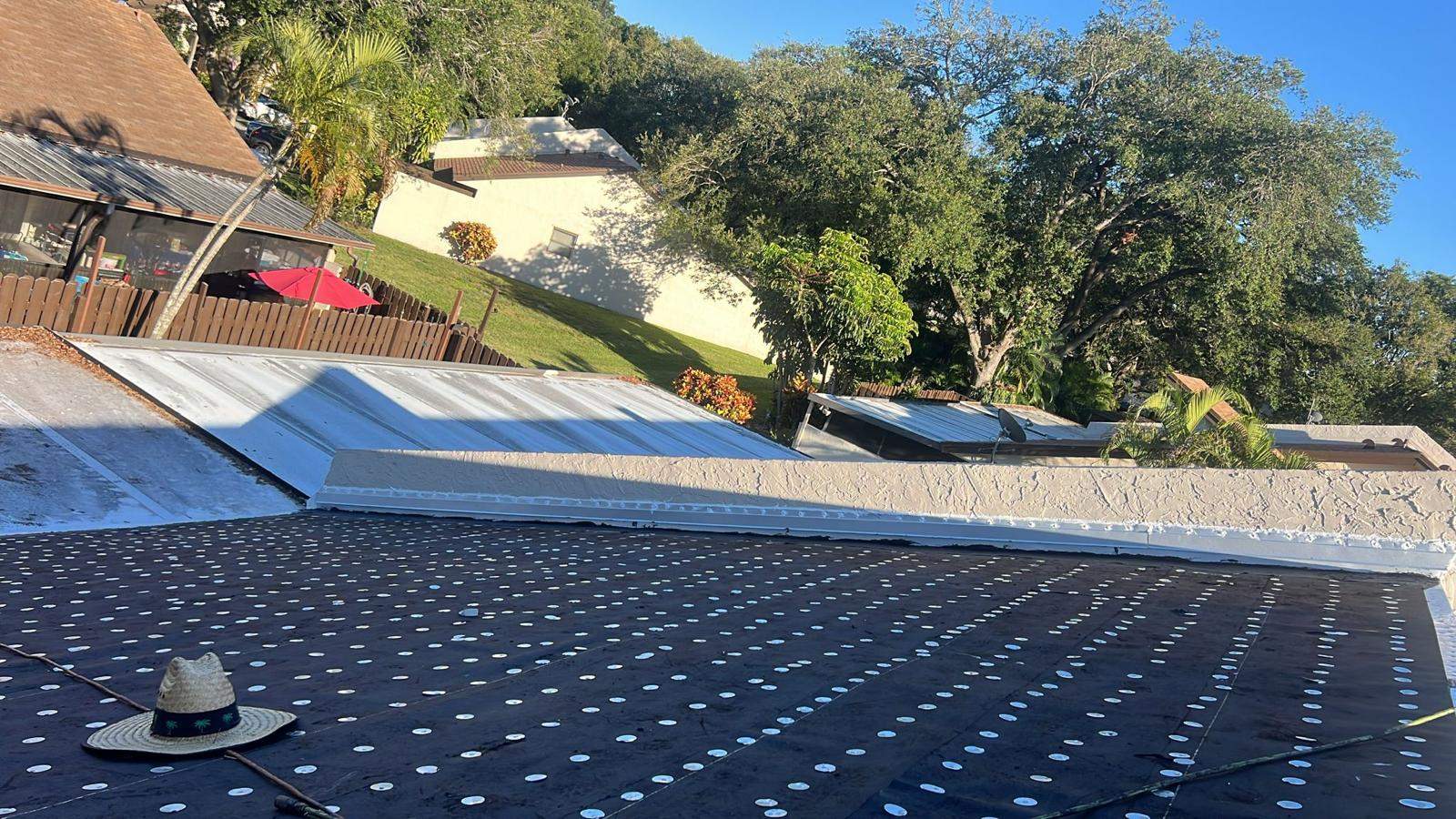
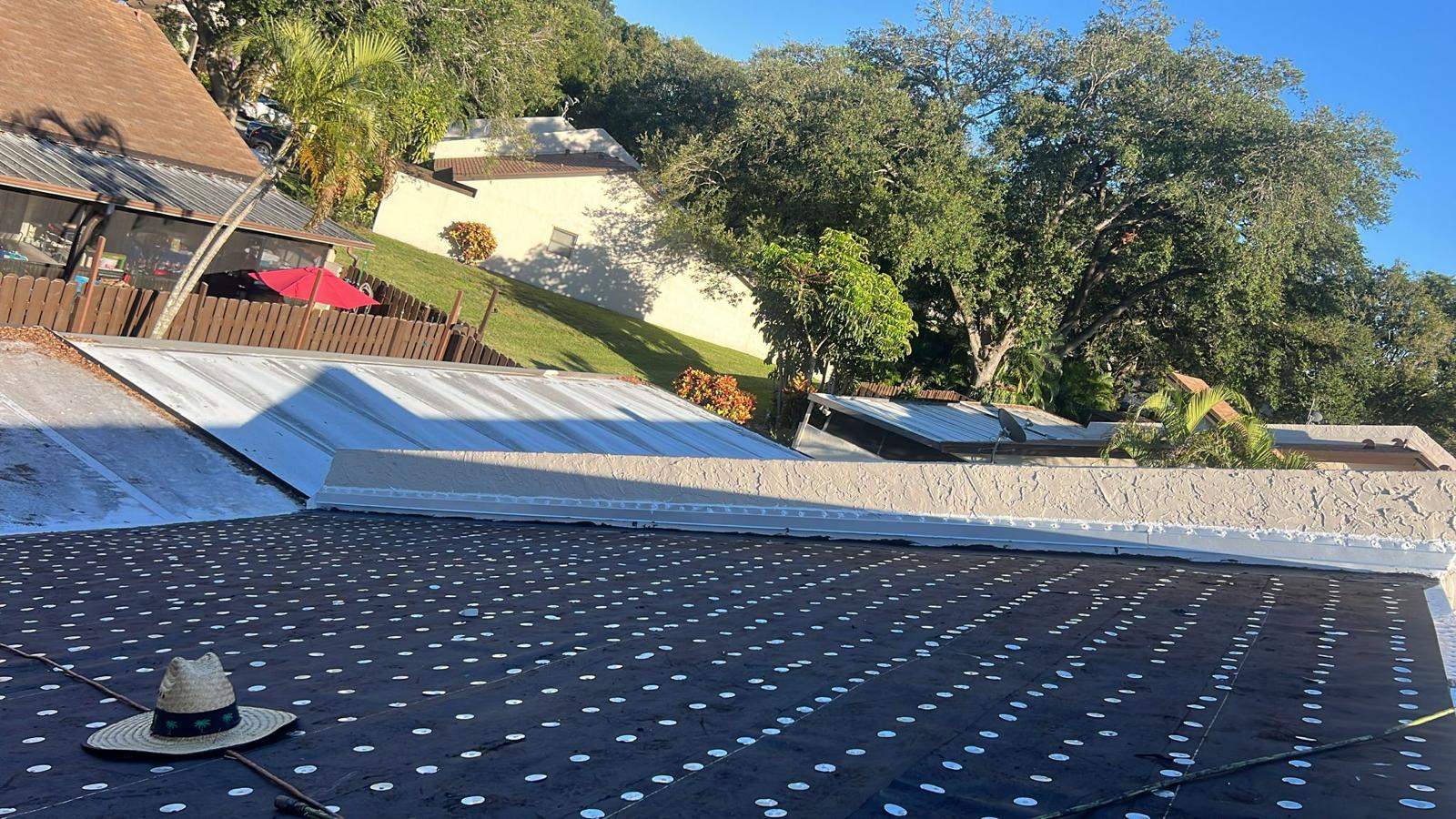
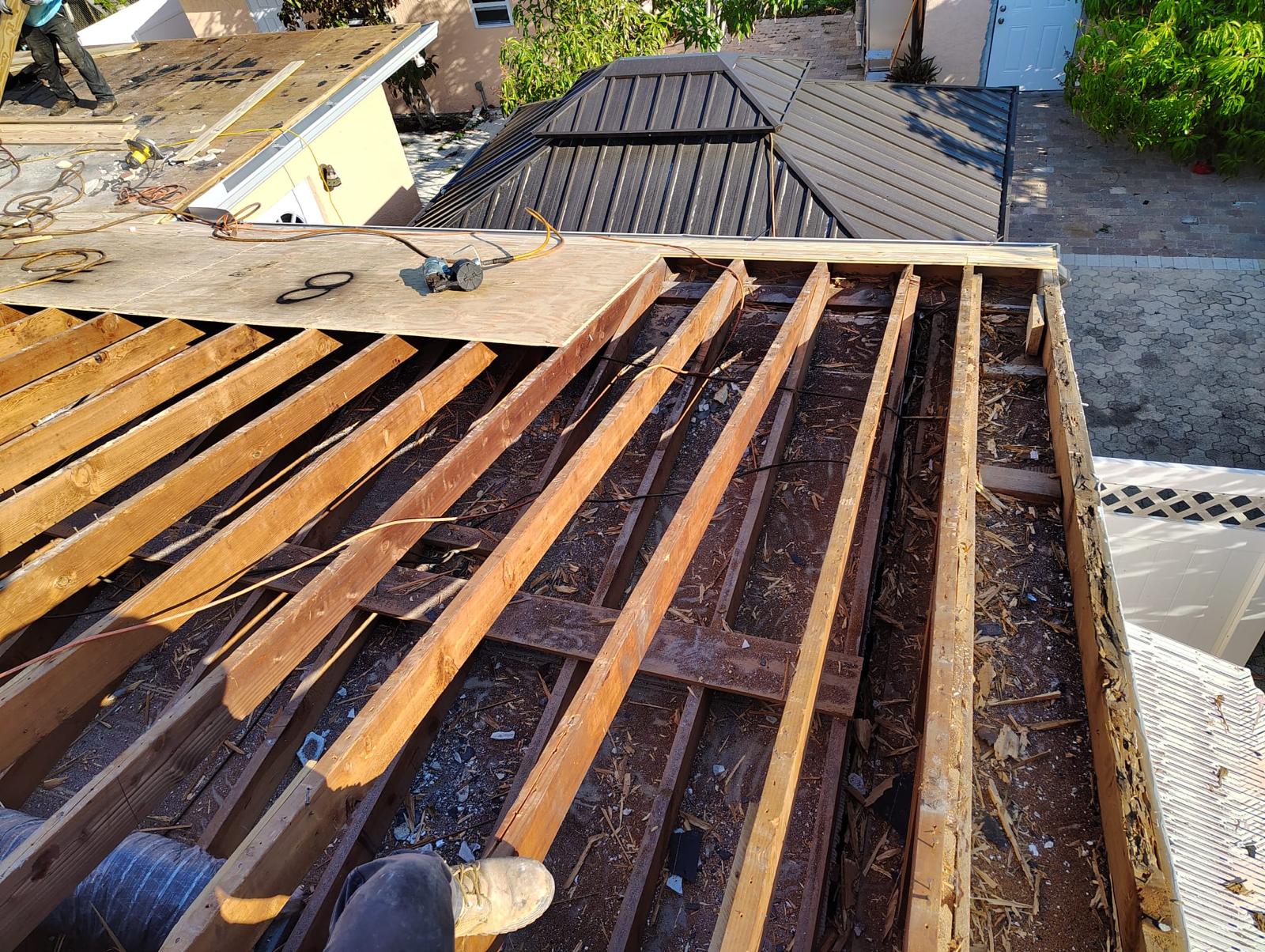
Once the permit is issued, tear-off begins. With decking exposed, damaged sheathing is replaced and re-nailed to current schedule. In many re-roofs this is also when the required deck nailing upgrade happens — one of the practical reasons a code-compliant re-roof performs better in wind than the roof it replaced.
4. Dry-In / In-Progress Inspection
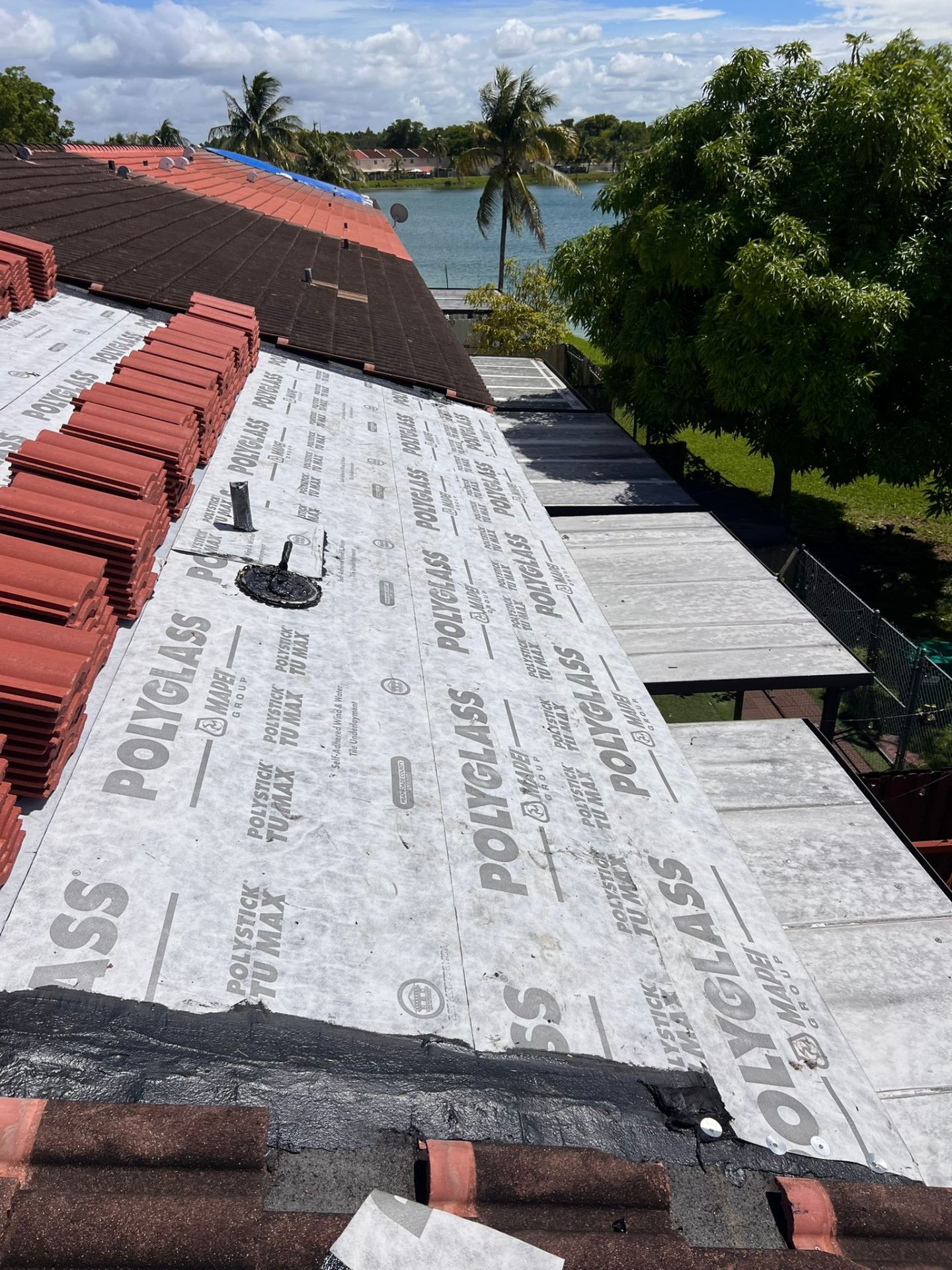
This is the inspection homeowners never hear about and the one that matters most. Before the finish material goes on, an inspector verifies the deck attachment and the approved underlayment. If the crew covers this work before the inspector sees it, you have a problem that is expensive to un-do.
Ask your contractor a simple question: "Will you text me when the dry-in inspection passes?" A professional says yes.
5. Finish Installation
Shingles, tile, metal, or membrane installed per the manufacturer's HVHZ instructions, with flashing, drip edge, valley metal, and penetration details completed as specified. Ventilation components are set at this stage.
6. Final Inspection
The inspector verifies the completed system against the approved permit. If corrections are required, the contractor addresses them and re-schedules. Corrections are not unusual; leaving them unresolved is.
7. Closeout and Your Document Package
When you have paid in full, you should hold:
- The closed permit with final inspection approval
- Product approval documentation (NOA or Florida Product Approval) for the installed system
- The manufacturer material warranty, registered where required
- The contractor workmanship warranty, with duration and transfer terms
- Final release of lien, plus releases from any party that sent a Notice to Owner
- Photo documentation of deck condition and underlayment, which is genuinely useful for future claims
- The wind mitigation report if one was completed, which may reduce your insurance premium
Keep this package with your closing documents. Buyers, appraisers, and insurance carriers all ask for parts of it eventually.
What Goes Wrong Without Proper Permitting
| Shortcut Taken | Consequence Later |
|---|---|
| No permit pulled | Unpermitted work discovered at sale; possible removal or retro-approval |
| Permit in homeowner's name | Code compliance liability shifts to you |
| Dry-in inspection skipped | No verification of the layer that stops storm water |
| Permit left open | Stalled closings; expired permit requires re-application |
| No product approval on file | Insurance and warranty claims contested |
| No wind mitigation form | Premium credits left unclaimed |
Homeowner Timeline Expectations
Permit review, material lead time, and inspector availability drive the calendar more than crew speed does. Most residential re-roofs in Miami-Dade are physically completed in a few days once started; tile takes longer than shingle or membrane. The realistic view is that a project spans a few weeks end to end, most of it before and after the crew is on your roof.
Weather is the wildcard between June and November. A responsible contractor sequences tear-off around forecast windows and never opens more roof than can be dried in the same day. If you want your roof evaluated before wet season pressure builds, a documented roof inspection is the right first step, and it produces the condition record that supports a permit application later.
Frequently Asked Questions
Can I get a roof repaired without a permit in Miami-Dade?
Small isolated repairs may fall under permit thresholds, but the thresholds are specific and vary by jurisdiction. Anything approaching a re-roof requires a permit. Ask your contractor to confirm with the building department rather than assuming.
What is the 25 percent rule?
Broadly, when repairs within a 12-month period affect more than 25 percent of a roof section, the code generally requires the affected area to be brought up to current requirements rather than patched. Application depends on your specific roof and jurisdiction, and it frequently pushes borderline projects toward a full roof replacement.
How do I check whether my permit was closed?
Search your address in the relevant municipal or Miami-Dade permit portal. If status is not "final" or "closed," contact your contractor before making a final payment — or before listing your home.
Does a re-roof require an updated wind mitigation inspection?
It is not required for the permit, but it is worth completing afterward, since a new code-compliant roof frequently improves the credits available on your policy.
Continue the Series
Previous: deposits, draws, and lien waivers when paying a roofing contractor. Next, the post-storm chapter: how to tell a local roofing contractor from a storm chaser.
Let a Local Contractor Handle the Paperwork
PSR Roofing Company Of Miami pulls permits under our own license, schedules every required inspection, and delivers a complete closeout package on projects throughout North Miami, Miami Shores, Aventura, Biscayne Park, Keystone Point, and Miami-Dade County.
Call (786) 889-4090 or request a roofing consultation.
Visit us: 1811 NE 142nd St, Miami, FL 33181 — view on Google Maps
Need help with Roof Inspection?
PSR Roofing is Miami's licensed & insured expert for roof inspection. Free estimates, honest pricing, and 24/7 emergency response.