What Your Attic Reveals During Roof Inspection and Maintenance in Miami
By the time a brown ring shows up on a bedroom ceiling, water has usually been moving through the structure for weeks. It soaked insulation first, then the drywall paper, and only then did it become visible. Which means the most useful part of a thorough roof inspection and maintenance visit in Miami often happens with a flashlight in an attic, not on the roof surface.
This is the part homeowners skip. It is hot, it is cramped, and nothing appears wrong from the hallway. But in Miami-Dade, where interior humidity and roof-deck temperature swings are extreme, the attic is the earliest and most honest record of how your roof is performing.
The Difference Between a Leak and a Humidity Problem
Not every wet attic has a hole above it. We routinely find moisture in attics with completely sound roofs, and misdiagnosing that leads homeowners to pay for repairs that fix nothing.
Active leak indicators are directional. Staining runs downward from a specific point — a nail, a seam, a penetration collar — and the pattern repeats after rain. The wood shows tannin streaking with defined edges.
Condensation indicators are diffuse. Moisture appears across broad areas of sheathing, often heaviest on the north slope, and correlates with humid weather rather than rain. You may see rusted nail tips, damp insulation with no source above it, or a persistent musty odor with no visible stain.
The two problems have completely different corrections. One is a roofing repair. The other is a ventilation and air-sealing issue, frequently caused by bathroom exhaust fans terminating into the attic instead of through the roof or soffit — something we find constantly in older North Miami and El Portal homes.
Ventilation Balance: The Detail Almost Nobody Checks
Roof ventilation only works as a system. Air has to enter low, at the soffit, and exit high, at ridge or off-ridge vents. When those are out of balance, the system either stops moving air or starts pulling conditioned air out of the living space.
What proper inspection looks at:
- Soffit intake that is actually open. Painted-shut vent panels and insulation stuffed against the eave block intake completely. From the roof, everything looks fine.
- Intake-to-exhaust ratio. Too much exhaust with too little intake causes the exhaust vents to draw air from inside the house.
- Mixed exhaust types on one slope. A ridge vent combined with powered fans or turbines on the same air space short-circuits airflow — the fan pulls from the nearest vent instead of from the far side of the attic.
- Baffles at the eave. Without them, blown insulation migrates into the vent channel and seals it.
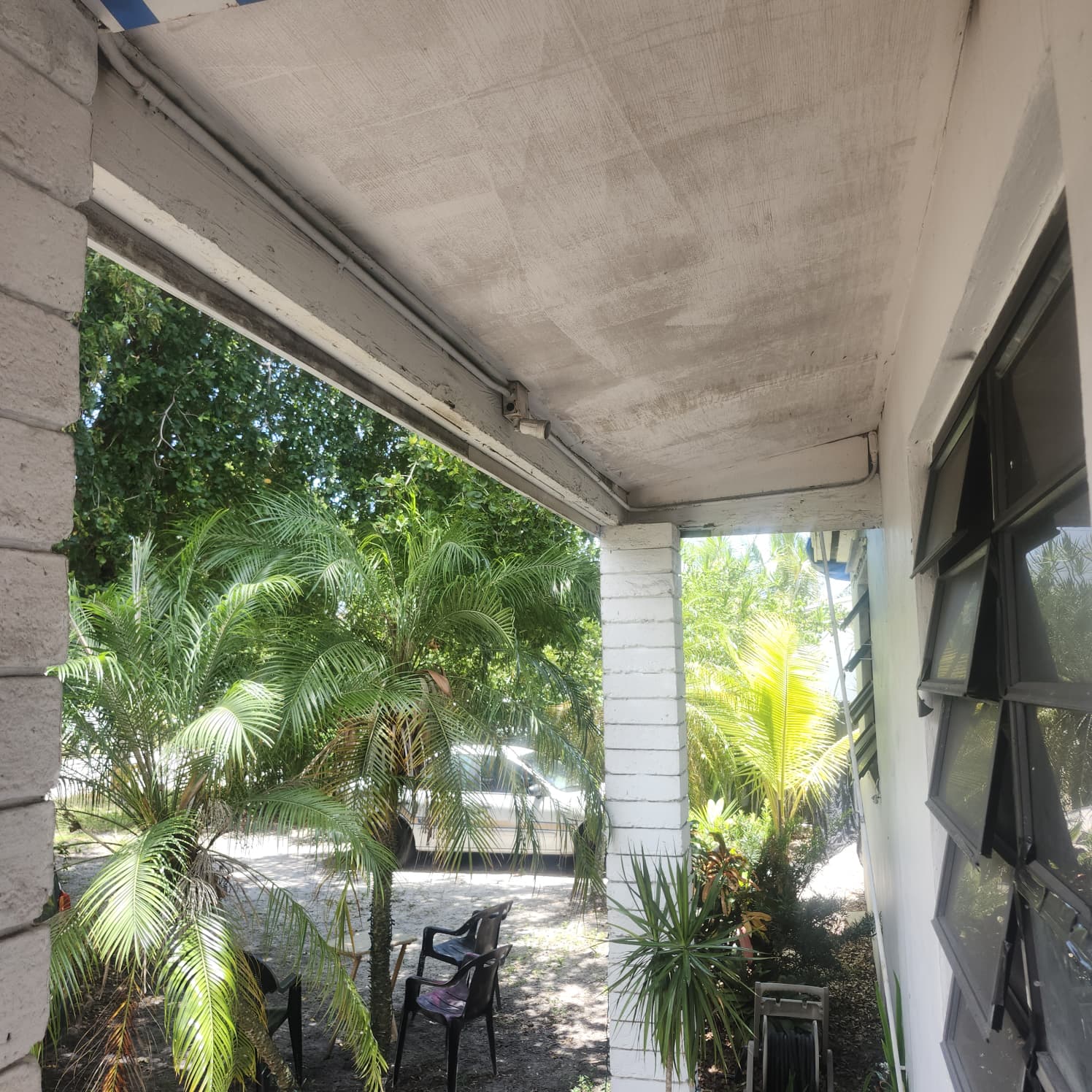
In Miami's climate, an attic that cannot exhaust heat runs shingle surfaces hotter, which shortens material life, and holds moisture against sheathing, which invites mold and fastener corrosion. Homeowners in Miami Shores and Biscayne Park with 1950s-era construction often have adequate ridge exhaust that was added over the decades while intake was never increased to match.
Reading the Sheathing
The underside of your roof deck is a written history of the roof above it.
| What you see | What it usually means |
|---|---|
| Dark streak from a single nail | Fastener penetration or shiner from a previous re-roof |
| Stain radiating from a pipe collar | Failed boot or dried sealant at the penetration |
| Delaminating plywood layers | Long-term chronic moisture, not a recent event |
| Rust rings on nail heads across a slope | Condensation, ventilation-driven |
| White or gray efflorescence on masonry gable | Wind-driven rain entering through the wall, not the roof |
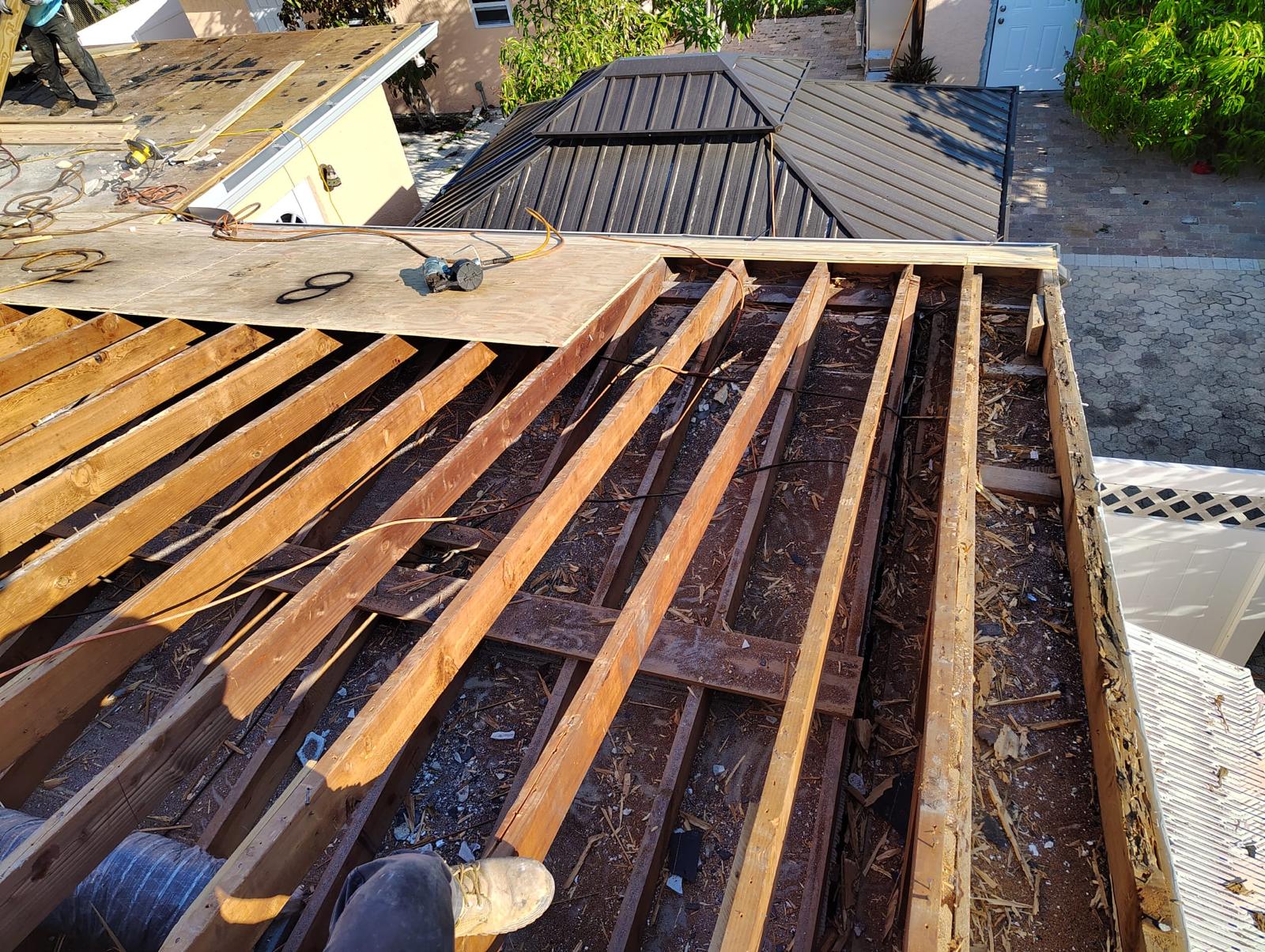
| Sag or spring underfoot | Deck deterioration; requires structural evaluation |
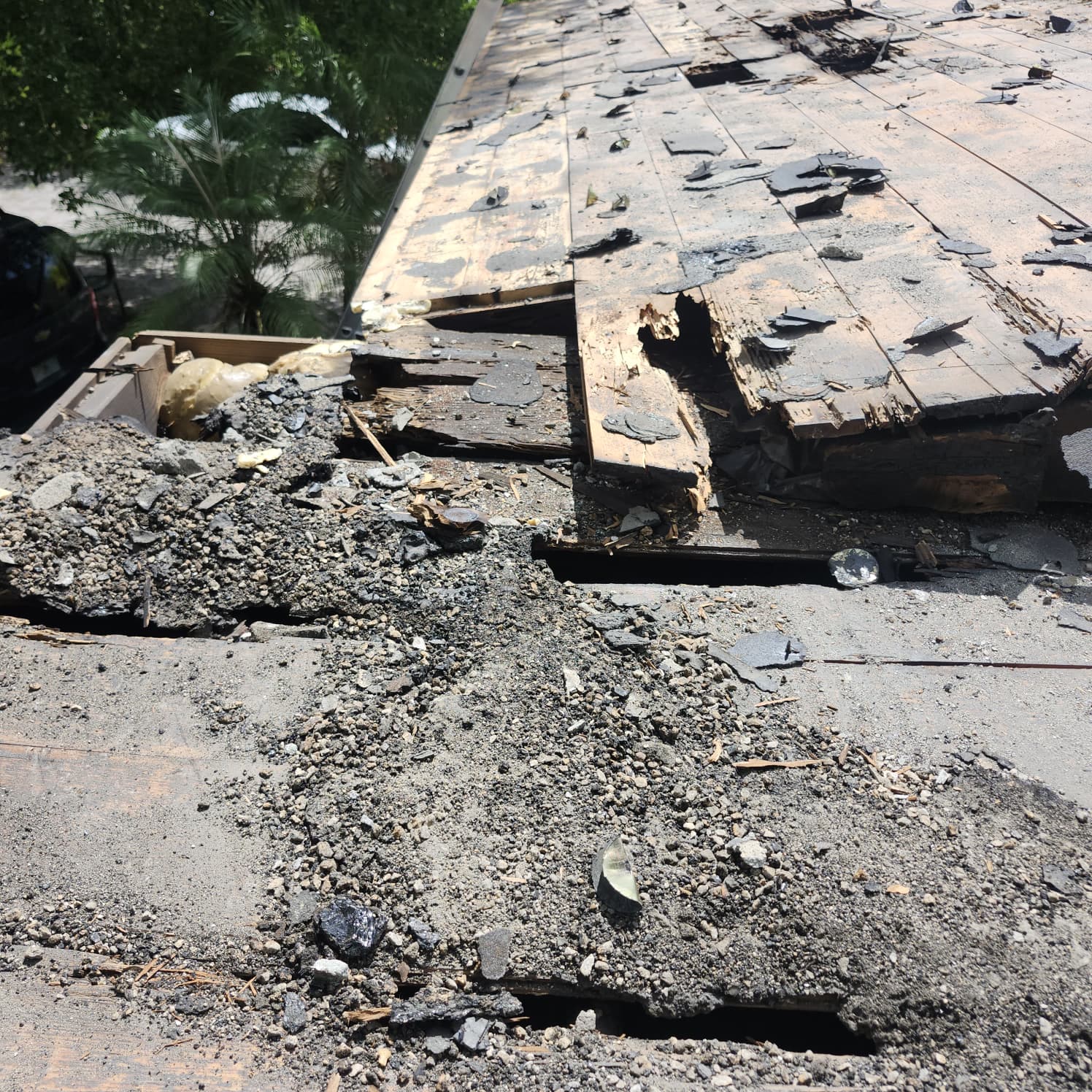
That last row matters more than the rest. Soft decking cannot be maintained. It gets replaced, and if it appears in multiple bays, the conversation moves toward roof replacement rather than continued patching.
Insulation Tells You About Air Leaks
Compressed, discolored, or oddly dark insulation is not just old — dirty insulation marks where air is moving through it. Air movement carries moisture. Common Miami culprits are recessed can lights, attic hatch perimeters, plumbing chases, and the gap around the A/C air handler platform.
Correcting those is not roofing work, strictly speaking, but a roofer who ignores them will keep getting called back about "leaks" that are actually condensation on cold ductwork. Honest roof inspection and maintenance means telling you which problem you actually have, even when the answer is not a roofing invoice.
What Homeowners Can Safely Check Themselves
Between professional visits, you can do a lot with a bright flashlight and fifteen minutes:
- Go up on a dry, cool morning, never during midday heat.
- Turn the light off briefly and look for daylight at ridges, penetrations, and eaves.
- Look at the underside of the deck around every visible pipe and vent.
- Touch insulation near the eaves — damp is a finding, report it.
- Note any new odor; mold announces itself before it becomes visible.
- Photograph anything questionable with a reference point so it can be located from the roof.
Stay on structural framing, do not step between joists, and leave anything requiring a moisture meter or a probe to a licensed roofer. If you find active dripping during a rain event, that is a same-day call, and depending on severity it may fall under emergency roofing service.
How This Connects to the Rest of the System
Attic findings frequently point outward. Blocked soffit intake often traces back to overflowing gutters saturating the eave, which is where gutter installation and repair becomes part of the maintenance picture. Stains at a wall transition often trace to stucco or window details rather than the roof field, and require a coordinated look at both.
Continue the Series
Previous article: the year-round roof inspection and maintenance calendar for Miami homes.
Next: coastal homes face a corrosion problem inland homes never see — how salt air changes roof inspection and maintenance near the water.
Want to know what your attic is telling you? Schedule an inspection with PSR Roofing Company Of Miami or call (786) 889-4090. We are at 1811 NE 142nd St, Miami, FL 33181 — see our location on Google Maps.
Need help with Roof Inspection?
PSR Roofing is Miami's licensed & insured expert for roof inspection. Free estimates, honest pricing, and 24/7 emergency response.