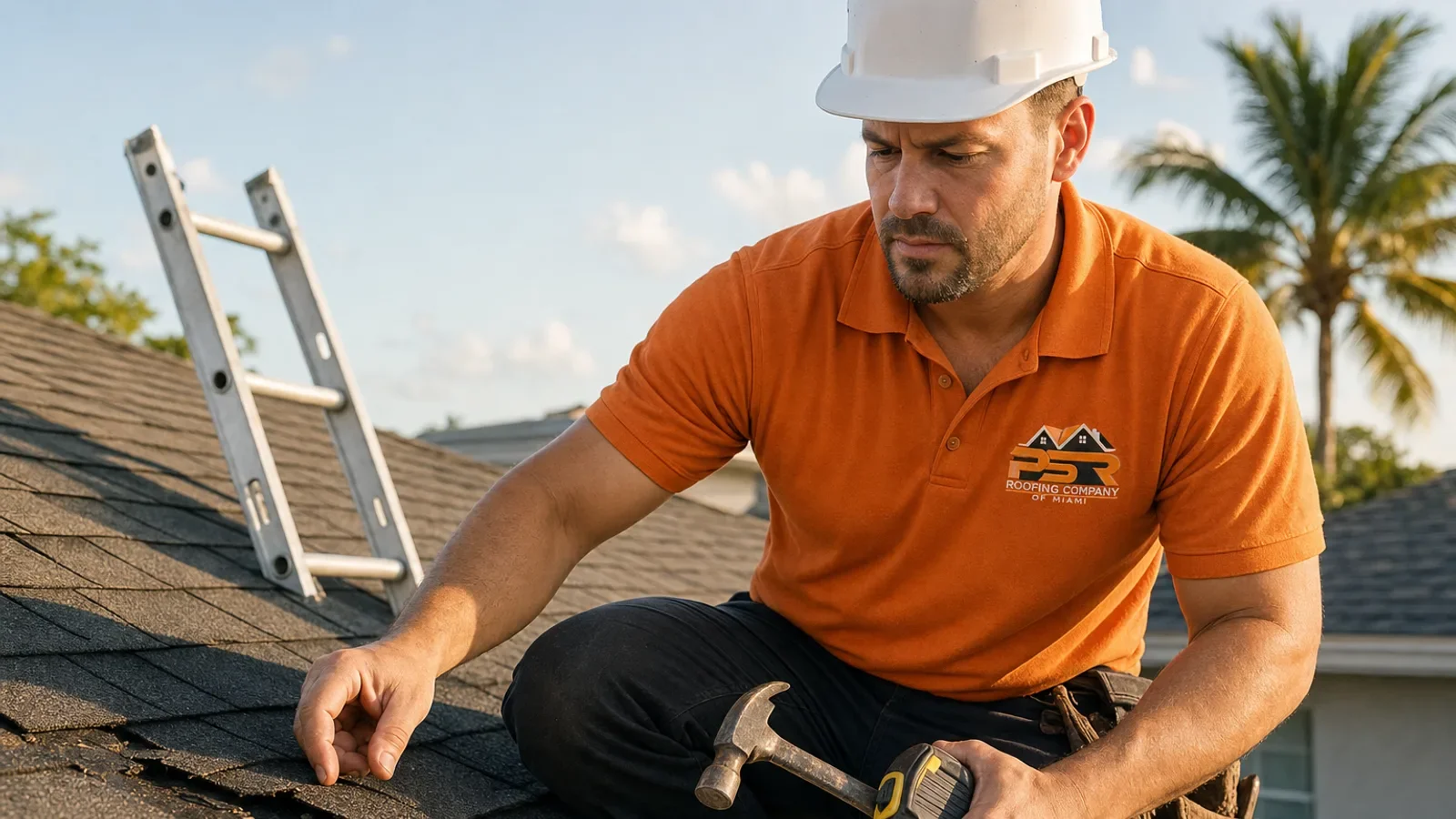
Signs Your North Miami Roof Needs Repair vs. Full Replacement
Asphalt shingles in South Florida's climate age measurably faster than the same material installed in a northern state, thanks to relentless UV exposure, high humidity, and annual hurricane-season stress. For North Miami homeowners, that reality makes reading your roof's warning signs early a practical necessity, not just a precaution. This guide walks through the questions most homeowners ask once they spot damage, so you can approach the conversation with a contractor already informed.
What does it actually mean when a roof is "failing"?
A failing roof is one where the protective system as a whole has broken down, not just a single component. Shingles crack, curl, or go missing in isolated spots during normal wear. Flashing separates around chimneys or vents. Granules wash into gutters. Any of these alone may point toward repair. When several of these issues appear simultaneously across multiple roof sections, or when the underlying decking shows water intrusion, the roof is moving from "needs attention" to "needs replacement." The distinction matters because patching a roof that has failed systemically tends to delay the inevitable rather than solve it.
Which visible signs usually point toward repair rather than replacement?
Damage that is localized and structurally shallow is typically a strong candidate for repair. Specific indicators include:
A small cluster of missing or cracked shingles in one area, often caused by a single wind event or falling debris
A flashing separation around a pipe boot, skylight, or chimney that has allowed a contained leak
Minor granule loss on a roof that is fewer than 10 to 12 years old
One or two soft spots on the decking with no sign of spread to adjacent sections
A single interior water stain that traces cleanly back to one penetration point
When damage stays in a defined zone and the rest of the roof is intact, a targeted repair protects the home and extends useful life without the disruption of a full tear-off. For a broader look at how North Miami's storm patterns influence these decisions, see our guide to roof age and lifespan in North Miami.
Which warning signs suggest replacement is the smarter path?
If you want it handled correctly the first time, consider professional roof replacement in North Miami.
Some signs tell a more serious story. If you notice any of the following, a full replacement conversation is worth having with a licensed roofer:
Widespread granule loss that leaves shingles looking bare or discolored across large sections
Shingles that are curling at the edges or cupping across most of the roof plane
Sagging or visible deflection along a ridge line or in a roof field, which signals decking or structural compromise
Multiple active leaks in different parts of the home after a single rain event
Daylight visible through the attic boards when you look up from inside
A previous repair history where the same areas keep failing
Repeated repairs on a roof that keeps leaking in new spots is one of the clearest signals that the system has reached the end of its serviceable life. Our complete roof repair vs. replacement guide walks through the cost-benefit framework that helps homeowners weigh these scenarios side by side.
How does roof age factor into the repair-or-replace decision in North Miami?
Age is one of the most reliable inputs in this decision, and it carries extra weight in South Florida. A standard three-tab or architectural asphalt shingle roof installed under typical northern conditions might last 20 to 25 years. In North Miami, the combination of intense UV radiation, salt air from Biscayne Bay and the Atlantic, and the mechanical stress of tropical storm-force winds compresses that timeline noticeably. A roof approaching 15 years in this market deserves a professional inspection even if no obvious damage is visible, because the degradation is often happening at the shingle mat level before it shows on the surface. If a roof is already past that age threshold and requires significant repair, the economics often favor replacement, since a new roof comes with a full manufacturer warranty and known performance life rather than an uncertain extension of an aging system.
What does North Miami's climate do to roofs that homeowners elsewhere don't have to worry about?
North Miami sits inside Miami-Dade County's High-Velocity Hurricane Zone (HVHZ), one of the strictest building code jurisdictions in the country for roofing. That designation exists because the area regularly experiences sustained tropical storm winds and periodic hurricane-force gusts that test every component of a roofing system. Beyond wind, the local climate creates specific failure patterns worth knowing:
Many North Miami homeowners rely on expert roof replacement in North Miami for exactly this.
Algae and mold streaking appear faster here than in drier climates. Dark streaking on shingles is often algae (Gloeocapsa magma), which feeds on limestone filler in shingle granules. While streaking alone is cosmetic, it can accelerate granule loss if left untreated.
Thermal cycling is extreme. Rooftop temperatures in summer regularly exceed 150°F during the day and drop sharply at night, causing shingles to expand and contract repeatedly, which loosens fasteners and opens seams over time.
Flat and low-slope roofs are common on older North Miami homes built in the 1950s through 1970s, and these systems face standing-water risk after heavy rain events that shingle roofs largely shed. Ponding water accelerates membrane degradation significantly.
Any assessment of whether to repair or replace needs to account for these local stressors, not just the visible surface damage.
Can a roof inspection tell me definitively which option I need?
A professional roof inspection is the most reliable way to move from guessing to knowing. A qualified inspector will check the shingle surface condition, probe for soft spots in the decking, examine all flashing and penetration points, assess the attic for moisture intrusion and ventilation, and document findings with photos. In North Miami specifically, inspectors familiar with HVHZ requirements will also flag whether existing installation methods still meet current Miami-Dade code, which matters if you are planning to file a homeowner's insurance claim or sell the home. An inspection report gives you documented evidence rather than a gut feeling, and it puts you in a much stronger position when reviewing contractor proposals. PSR Roofing offers professional roof inspections across North Miami and the surrounding area, so you have a clear picture before committing to any scope of work.
What role does homeowner's insurance play in this decision?
Florida's property insurance market has been under significant pressure, and North Miami homeowners have felt that directly through policy changes, non-renewals, and stricter inspection requirements. Many insurers in this market now scrutinize roof age and condition closely, and some will not renew or write new policies on roofs beyond a certain age threshold regardless of visible condition. This creates a practical dynamic: if your roof is approaching the age where insurability becomes a concern, replacement may protect your coverage options as much as it protects the structure. After a named storm, insurance adjusters will assess whether damage is storm-caused or pre-existing, and a documented inspection history helps support a legitimate claim. Always review your specific policy terms and consult your insurer directly, since coverage rules vary by carrier and policy year.
Ready for the next step? Learn how roof replacement services in North Miami can help and reach out to the team.
Is there a rule of thumb for when repair stops making financial sense?
Roofing professionals often reference a general guideline: if the estimated repair cost exceeds roughly half the cost of a full replacement on a roof that has already used most of its expected lifespan, replacement typically delivers better long-term value. This is not a hard rule, and the math shifts depending on how many years of useful life remain, whether the home is being sold soon, and whether the damage is covered by insurance. The key question to ask is whether the repair addresses the cause of failure or just the symptom. A patch that stops today's leak but leaves aging shingles and compromised flashing elsewhere is a temporary measure, not a solution. For the full framework on weighing these factors, our roof repair vs. replacement decision guide covers the analysis in detail.
What should I look for when I go up to inspect my own roof?
A ground-level and attic check can give you useful preliminary information before calling a professional, and it is the safest way for a homeowner to get a first look. From the ground, use binoculars to scan for missing shingles, visible curling or cupping, dark streaks, and any areas where the roof plane looks uneven or depressed. From inside the attic during daylight, look for light penetration through the decking, water stains on rafters or sheathing, and signs of active moisture like soft wood or mold growth. Do not walk on the roof yourself, particularly on older or damaged surfaces where the risk of a fall or causing additional damage is real. If your ground and attic observations raise concerns, that is the right moment to schedule a professional inspection rather than attempt a DIY repair on a surface that may not be structurally sound underfoot.
How do I know if a contractor's recommendation is trustworthy?
A contractor who recommends full replacement on every job is not serving your interests, and neither is one who patches everything without assessing the bigger picture. Signs of a trustworthy assessment include a written inspection report with photos, a clear explanation of why the scope they recommend addresses the root cause of the problem, and willingness to show you the damaged areas in person or via photos before any work begins. In North Miami, verify that the contractor holds a current Florida state license and is familiar with Miami-Dade product approval requirements, which govern which roofing materials can be legally installed in the HVHZ. A contractor who knows local code is not a bonus feature; it is a baseline requirement for work that will pass inspection and hold up under insurance scrutiny.
Reading your roof's warning signs accurately is the first step toward a decision you can feel confident about. Whether the answer turns out to be a targeted repair or a full replacement, the goal is the same: a roof that reliably protects your North Miami home through whatever the next storm season brings. If you have spotted any of the signs described here, PSR Roofing is available for professional inspections and honest assessments across North Miami and surrounding communities. Reach out to schedule a roof inspection and get a clear picture of what your roof actually needs.
Continue reading
- Complete guideRoof Repair vs. Replacement in North Miami›
- RelatedRoof Lifespan in North Miami: 7 Signs It's Time to Replace›
- From the blog7 Signs of Storm Damage Needing Roof Repair in North Miami | PSR Roofing Miami›
- From the blogEvaluating Roof Quotes: North Miami Roof Installation Cost | PSR Roofing Miami›
- From the blogRoof Repair & Installation After North Miami Hurricanes | PSR Roofing Miami›
Need help with Roof Replacement?
PSR Roofing is Miami's licensed & insured expert for roof replacement. Free estimates, honest pricing, and 24/7 emergency response.