Roof Lifespan in North Miami: 7 Signs Your Roof's Age Is Working Against You
How long should a roof last in North Miami? It's one of the first questions homeowners ask after a storm, a leak, or an inspection report. The short answer: significantly less than the manufacturer's rated lifespan, because South Florida's climate is uniquely hard on roofing materials. If your roof is pushing past its prime here in North Miami, age alone can shift the math firmly toward replacement. Here are seven concrete signs that your roof's years are catching up with it.
1. Your Roof Has Surpassed Its Climate-Adjusted Lifespan
Roofing manufacturers rate product lifespans under standard conditions, but North Miami is anything but standard. Constant UV exposure, high ambient humidity, salt air from Biscayne Bay and the Atlantic, and annual hurricane-season wind loads all accelerate material breakdown. Asphalt shingles rated for 25-30 years in a temperate climate routinely show end-of-life characteristics after 15-20 years here. Flat or low-slope membrane roofs common on mid-century CBS (concrete block and stucco) homes face similar compression of their effective service life. If your roof is approaching or past the 15-year mark, age alone warrants a professional inspection to determine whether repairs are still cost-effective or whether a full replacement is the smarter path. Our roof repair vs. replacement guide walks through the full decision framework in detail.
2. Multiple Layers of Shingles Are Already on the Deck
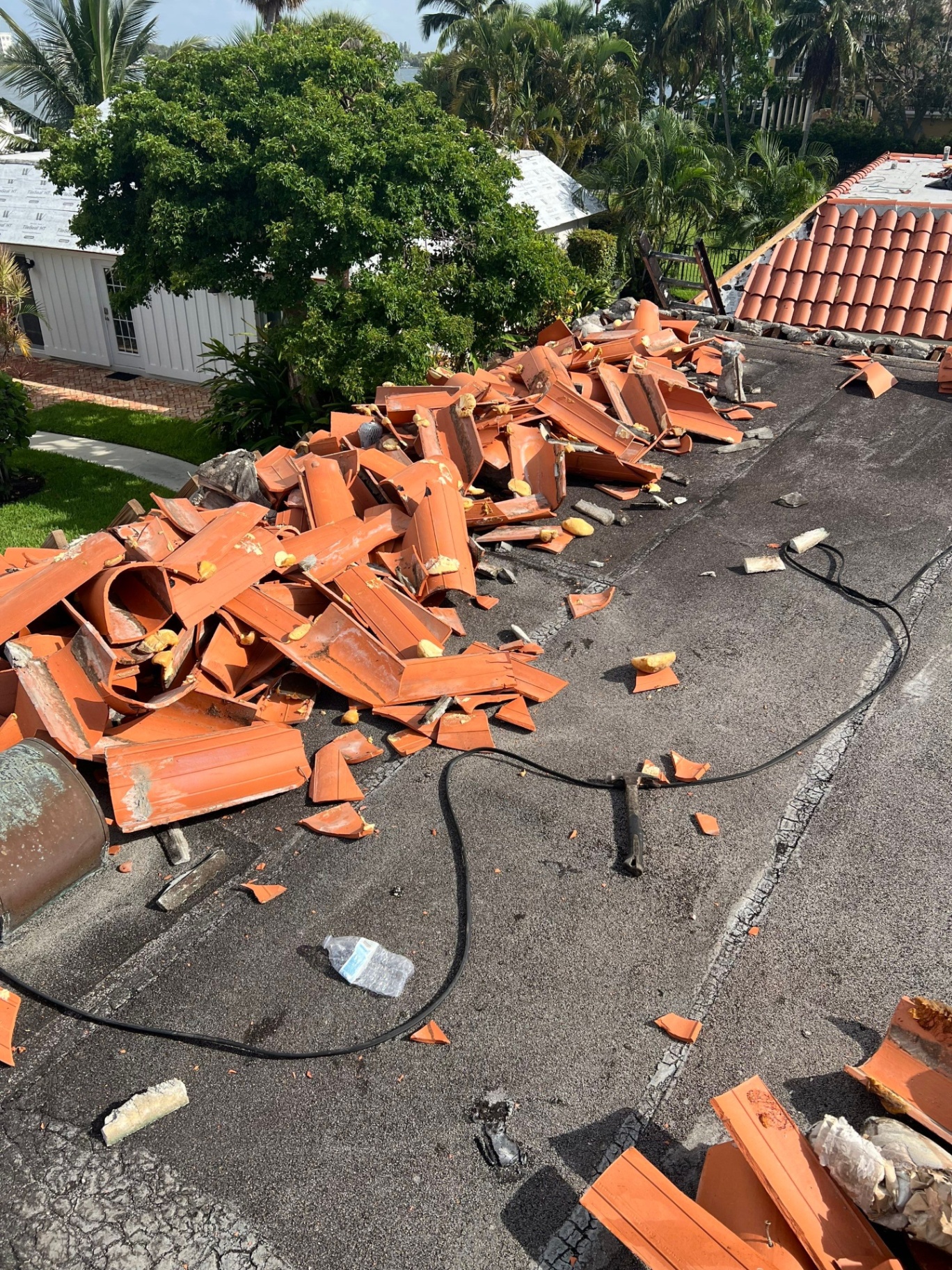
Florida's building code limits how many roofing layers are permitted on a residential structure. If your home already carries a re-roof layer over the original shingles, the next project must be a full tear-off and replacement, not another overlay. Beyond the code issue, multiple layers trap heat and moisture between them, accelerating the deterioration of the underlying deck. During an inspection, a contractor can probe the deck for soft spots that signal moisture intrusion through those stacked layers. If your home is old enough to have had one re-roof already, the current roof's effective remaining life is likely shorter than its age suggests.
3. The Roof Deck Shows Moisture Damage or Rot
Surface materials like shingles or modified bitumen membrane are replaceable components, but the structural deck beneath them is the foundation of the entire system. When persistent leaks, poor ventilation, or failed flashing allow moisture to reach the plywood or OSB sheathing, the damage compounds quietly over years. Signs include soft or spongy areas when you walk the roof, visible dark staining on rafters in the attic, or sagging sections visible from the street. Deck damage of any meaningful extent changes the repair-or-replace calculation quickly, because patching surface materials over a compromised deck is rarely a durable solution. See the warning signs that point to replacement for a closer look at how deck condition factors into that decision.
If you want it handled correctly the first time, consider professional roof replacement in North Miami.
4. Granule Loss Has Reached the Mat Layer
Asphalt shingles depend on their embedded granules to reflect UV radiation and protect the asphalt mat beneath. Some granule shedding is normal in the first year after installation as loose particles wash off. But heavy granule loss in a roof that is more than a few years old is a reliable indicator of advanced aging. Check your gutters and downspout splash zones after a rain: a consistent accumulation of coarse, sand-like granules signals that shingles are past their protective prime. Once the asphalt mat is exposed, UV degradation accelerates rapidly, and the shingles lose their ability to shed water cleanly. At that stage, replacing individual shingles buys only a short reprieve on a system that is failing broadly.
5. North Miami's Storm History Has Compounded the Wear
This is the locale-specific factor that separates North Miami roof aging from almost anywhere else in the country. Miami-Dade County sits in one of the highest wind-speed design zones in the continental United States, and roofs here absorb repeated stress from named storms, tropical systems, and the intense afternoon convective storms that roll through from May through October. Each high-wind event lifts shingles slightly, fatigues fasteners, and stresses flashing seals. Each heavy rain tests every penetration and seam. A roof that has weathered a decade-plus of South Florida storm seasons has experienced cumulative mechanical stress that does not show up in a simple age calculation. If your roof predates any of the significant hurricane seasons of the past 15-20 years and has never been fully replaced, the structural fatigue may be more advanced than the surface appearance suggests. A professional inspection after any named storm is worth scheduling promptly, and our decision guide for repair vs. replacement explains what inspectors look for when assessing storm-accumulated damage.
6. Flashing Failures Keep Recurring
Flashing, the metal sealing at chimneys, vents, skylights, and roof-to-wall transitions, is one of the first components to fail as a roof ages. In North Miami's environment, the thermal cycling between hot days and cooler nights, combined with high humidity and occasional salt air, corrodes and fatigues flashing faster than in drier climates. A single flashing failure is a repair. Recurring flashing failures at multiple points on the same roof, or the same location failing again within a short interval, signal that the surrounding materials have aged to the point where they can no longer hold a durable seal. Chasing individual leaks on an aging roof can become a cycle that delays an inevitable replacement while allowing water damage to accumulate inside the structure.
7. Your Energy Bills Have Crept Up Without an Obvious Cause
Many North Miami homeowners rely on expert roof replacement in North Miami for exactly this.
An aging roof loses its ability to reflect radiant heat effectively. Granule loss on shingles, degraded reflective coatings on flat roofs, and compromised attic ventilation all allow more heat to transfer into the living space, putting additional load on air conditioning systems that already work hard in North Miami's subtropical climate. If your cooling costs have risen gradually over several years without a change in usage habits or HVAC equipment, the roof's declining thermal performance may be a contributing factor. This is not a standalone reason to replace a roof, but when it appears alongside other age-related symptoms, it reinforces the case. A newer roof with current energy-code-compliant materials can meaningfully reduce the heat gain that drives cooling demand here.
Frequently Asked Questions
How long does an asphalt shingle roof typically last in North Miami?
In North Miami's climate, most asphalt shingle roofs reach the end of their reliable service life somewhere between 15 and 20 years, even when the product carries a longer manufacturer rating. UV intensity, humidity, salt air, and repeated storm-season stress all shorten the practical lifespan compared to cooler, drier regions. A professional inspection around the 15-year mark gives you an honest picture of remaining life.
Is it ever worth repairing a roof that is more than 20 years old?
It depends on the scope of damage and the condition of the deck and underlying structure. Isolated damage on an otherwise sound older roof can sometimes be repaired cost-effectively, particularly if a full replacement is not financially feasible right now. However, repeated repairs on a roof past its climate-adjusted lifespan often cost more cumulatively than a replacement would have, and they leave the home exposed to ongoing water intrusion risk. A thorough inspection is the only reliable way to weigh those options for your specific situation.
Does Miami-Dade County have specific roofing requirements that affect replacement decisions?
Yes. Miami-Dade County has some of the most stringent wind-resistance requirements for roofing products in the country, and local building codes govern when a permit is required, how many roofing layers are allowed, and what product approvals are accepted. Requirements can also vary by municipality within the county. Always consult a licensed roofing contractor and verify current local code requirements before beginning any replacement project, rather than relying on general guidance.
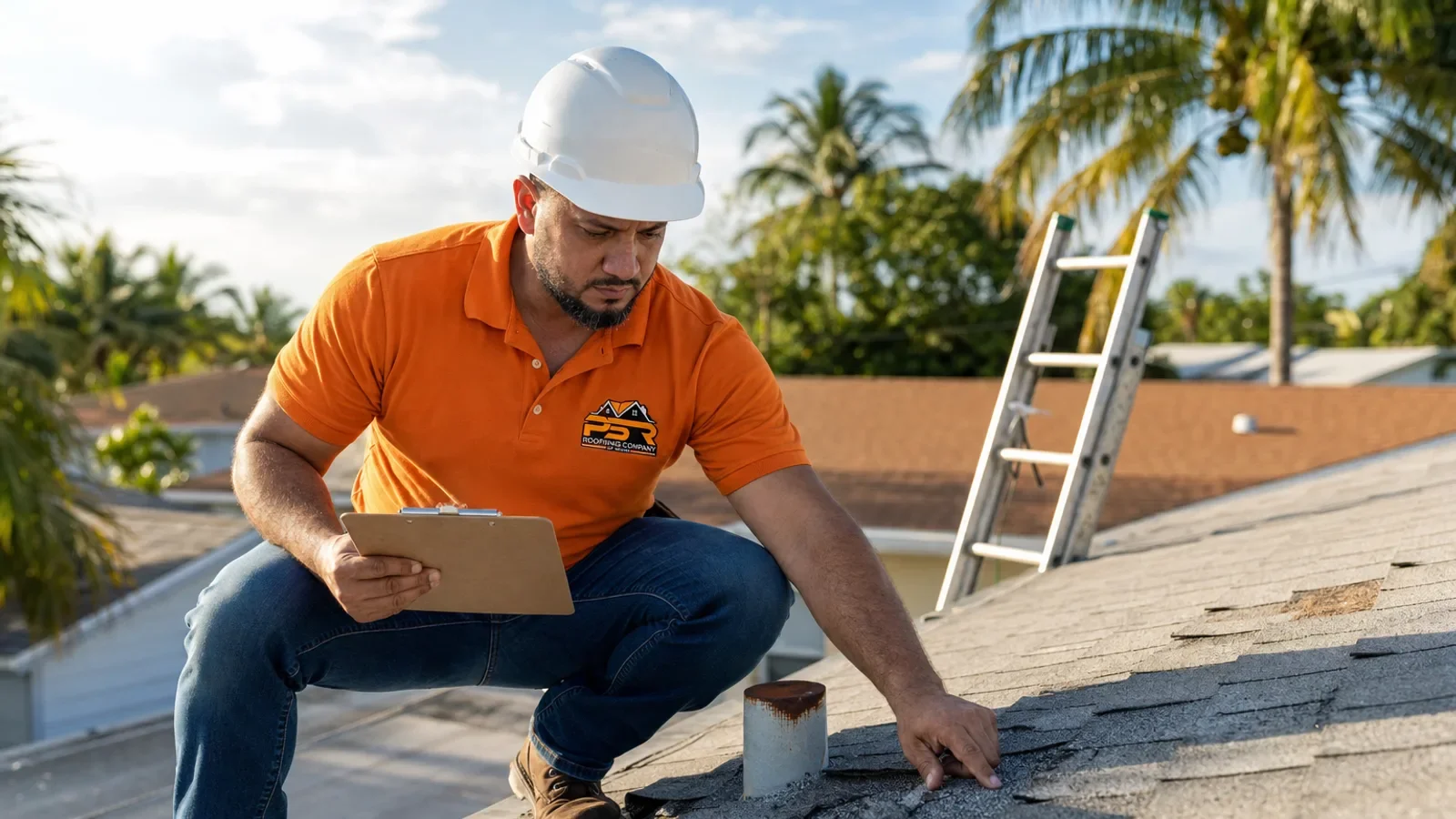
Roof age is rarely the only factor in a replacement decision, but in North Miami it carries more weight than it does in most other markets. The combination of UV intensity, storm exposure, humidity, and salt air means that a roof here works harder and ages faster than its rated lifespan implies. If several of the signs above apply to your home, the most useful next step is a professional inspection that gives you a clear picture of what the roof actually has left. For a broader look at how age fits into the full repair-or-replace decision, visit our complete guide to roof repair vs. replacement in North Miami, or review the physical warning signs that point toward replacement to see what condition factors matter most alongside age. When you are ready for an honest assessment of your roof's remaining life, schedule a professional roof inspection with PSR Roofing Company of Miami.
Continue reading
- Complete guideRoof Repair vs. Replacement in North Miami›
- RelatedSigns Your North Miami Roof Needs Repair vs. Replacement›
- From the blog7 Signs of Storm Damage Needing Roof Repair in North Miami | PSR Roofing Miami›
- From the blogEvaluating Roof Quotes: North Miami Roof Installation Cost | PSR Roofing Miami›
- From the blogRoof Repair & Installation After North Miami Hurricanes | PSR Roofing Miami›
Need help with Roof Replacement?
PSR Roofing is Miami's licensed & insured expert for roof replacement. Free estimates, honest pricing, and 24/7 emergency response.