
7 Signs of Storm Damage That Require Roof Repair in North Miami
Tropical storms drop an average of six inches of rain in a single South Florida event, and North Miami sits squarely in the path of Atlantic hurricane season every year. After any significant weather event, your roof may be carrying hidden damage that looks minor from the ground but worsens with every passing afternoon thunderstorm. Knowing exactly what to look for, and when to stop assessing and start calling a professional, can protect your home and your budget.
1. Granule Loss on Asphalt Shingles
After a storm, check your gutters and downspout discharge areas for a buildup of dark, sand-like granules. These granules are the protective coating on asphalt shingles, and high-wind rain strips them loose at a much faster rate than normal weathering. Once granules are gone, the underlying mat is exposed directly to UV rays and moisture, accelerating deterioration. A handful of granules in the gutter after a minor shower is typical; a significant accumulation after every storm is a signal that shingle surfaces are compromised and roof repair in North Miami should be scheduled before the next rain cycle. Look for bare, shiny patches on the shingles themselves as a secondary confirmation.
2. Missing, Cracked, or Lifted Shingles
Wind uplift is one of the most common mechanisms of storm damage in South Florida. Gusts can slip beneath shingle edges, break the seal strip bond, and either lift shingles partially or tear them away entirely. Even a single missing shingle creates an opening that allows water to reach the decking underneath. Cracked shingles, which often result from hail or debris impact, are equally problematic because the crack acts as a channel directing water inward rather than shedding it off. Walk the perimeter of your home after any storm and scan the roofline for obvious gaps, curled corners, or shingles lying in the yard. Any of those findings warrants a professional inspection.
3. Blistering or Bubbling on Flat Roof Membranes
If you want it handled correctly the first time, consider professional roof repair in North Miami.
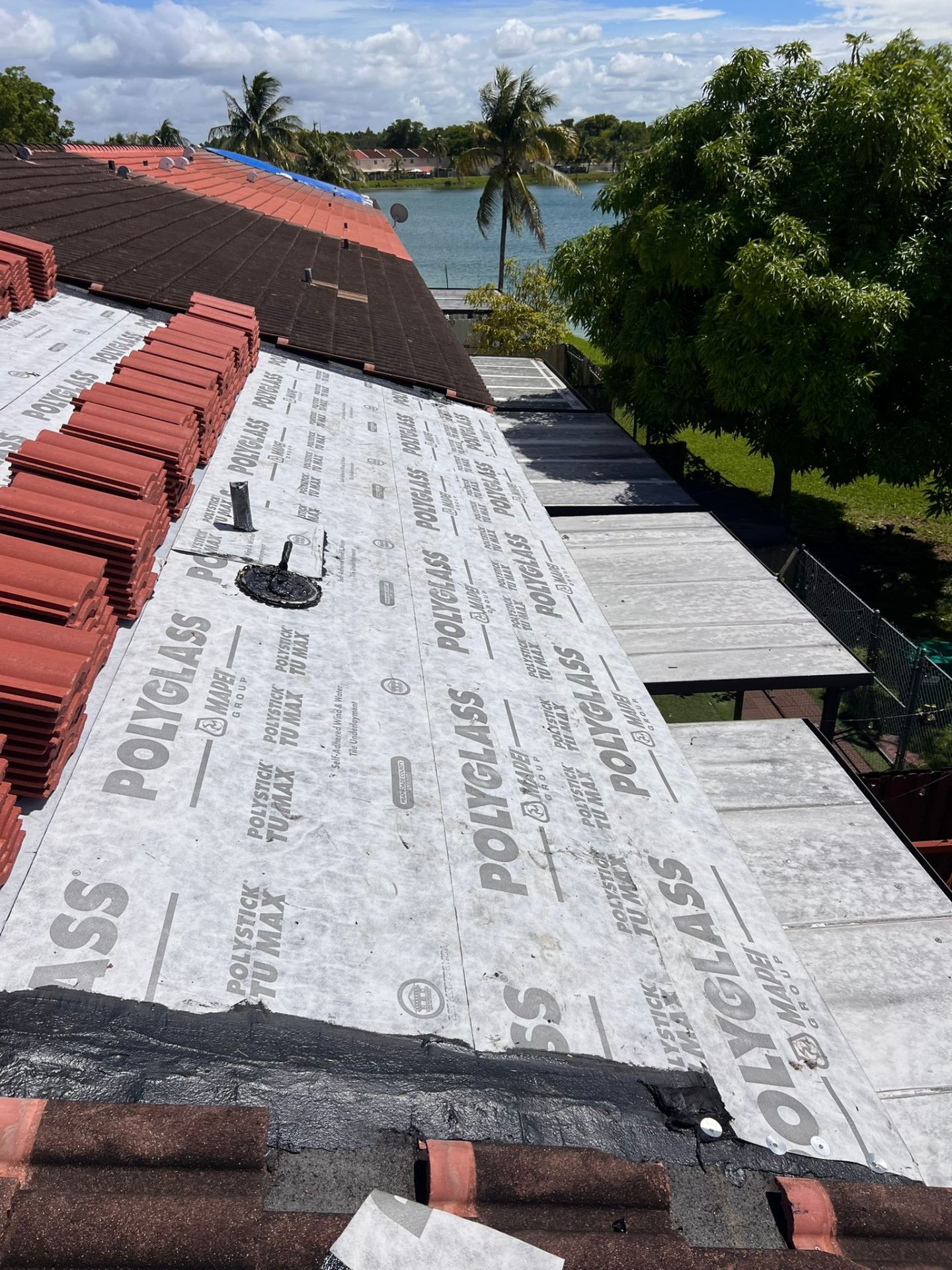
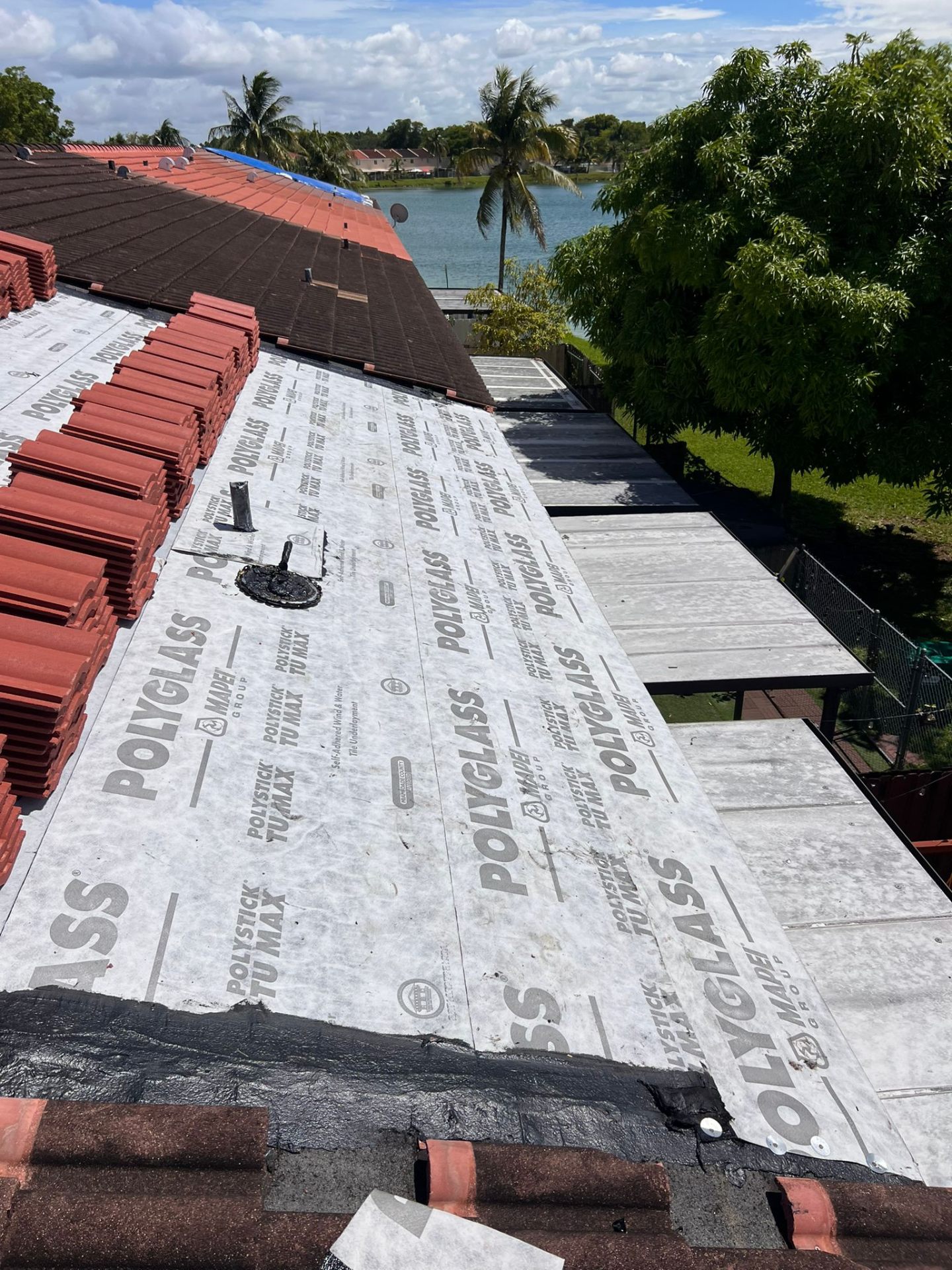
Many North Miami homes, particularly those built in the mid-twentieth-century ranch style common throughout the area, combine a pitched shingle section over the main living space with a flat or low-slope section over a garage, addition, or covered patio. Flat roofs use membrane systems, and storm-driven moisture can penetrate seams or small punctures and become trapped beneath the membrane. When the sun returns after a storm, that trapped moisture heats and expands, creating visible blisters or bubbles. Walking on blistered membranes can rupture them and make the situation worse. If you notice raised areas or soft spots on a flat section, keep foot traffic off it and arrange for a contractor to assess the membrane integrity. For context on what those repairs may involve, see our guide to flat roof repair costs in North Miami.
4. Damaged or Separated Flashing
Flashing is the metal or rubberized material that seals roof transitions: around chimneys, skylights, vent pipes, parapet walls on flat roofs, and the joints where a lower roof section meets a vertical wall. Storm winds create pressure differentials that can pry flashing loose, and heavy rain then exploits every gap. Separated flashing is one of the leading causes of interior water intrusion because it is easy to overlook from the ground. After a storm, look for visible gaps, rust streaks on the roof surface near penetrations, or water stains on interior ceilings directly below those transition points. Flashing repairs require proper sealing techniques to hold up against ongoing South Florida rain, so this is not a candidate for temporary caulk fixes.
5. Interior Water Stains or Active Drips
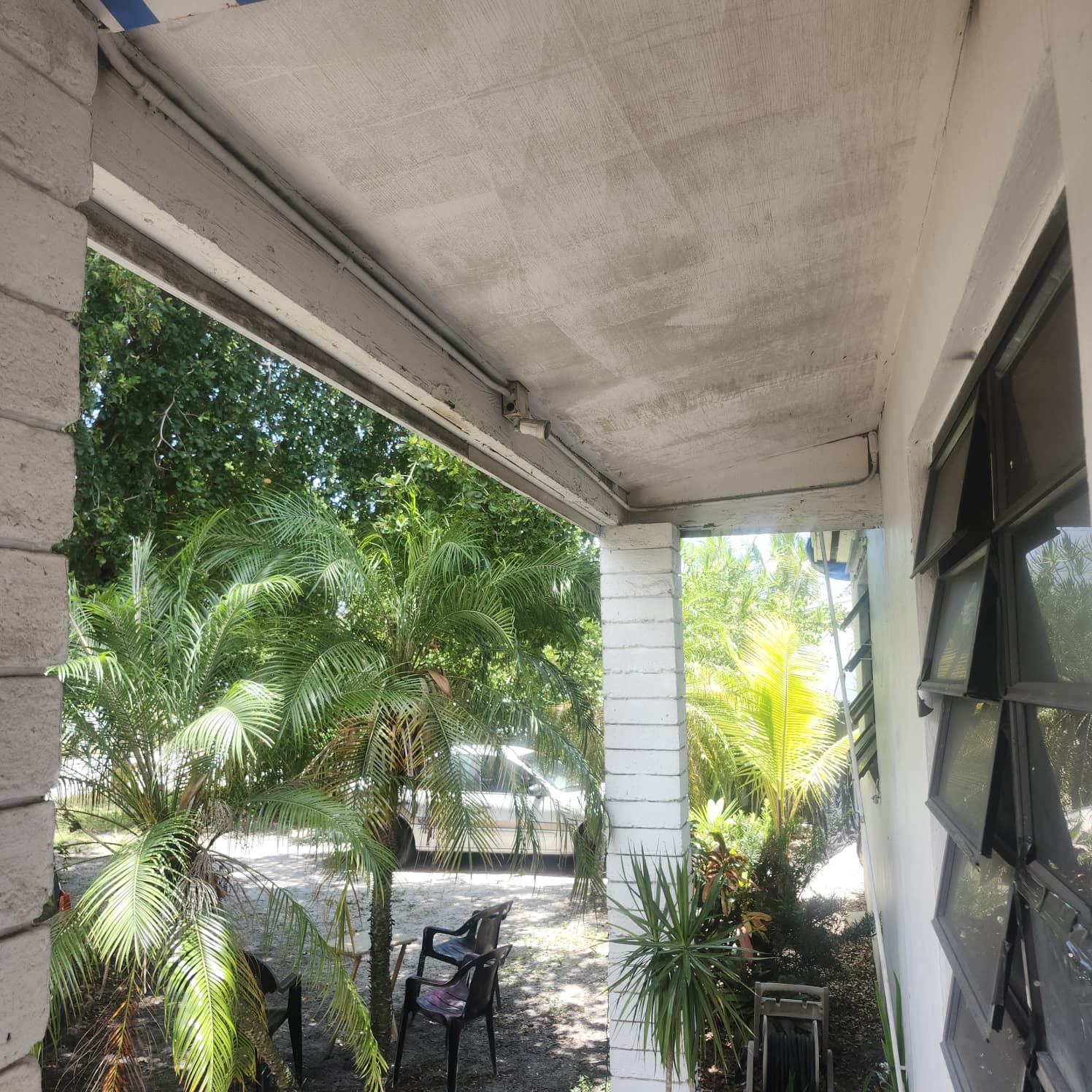
Water stains on ceilings or walls, especially those that appeared or expanded after a storm, are a direct indicator that the roof envelope has been breached. The stain's location on the ceiling does not always correspond to the entry point on the roof because water travels along rafters and decking before dripping down. A yellowish ring stain suggests a slow, ongoing leak; a darker, wet stain suggests active intrusion. Active dripping during a rain event is an emergency situation. PSR Roofing Company of Miami offers emergency roofing services for situations where water is actively entering the structure and cannot wait for a standard appointment window. Do not assume a stain that dries out has resolved itself; the entry point remains open for the next storm.
Many North Miami homeowners rely on expert roof repair in North Miami for exactly this.
6. North Miami's Specific Storm Risk: Wind-Driven Rain and Flat Roof Drainage Failure
This point is specific to the local conditions North Miami homeowners face. The city's position in Miami-Dade County places it under some of the most stringent Florida Building Code wind-load requirements in the country, a direct result of hurricane history. However, older homes built before the post-Andrew code revisions of the mid-1990s may have roofing assemblies that were not designed to current wind-resistance standards. Beyond wind, North Miami's relatively flat topography and dense urban tree canopy create two compounding problems after storms: debris accumulation on flat roof drains and gutters, and standing water that has nowhere to go. A clogged drain on a flat roof section can allow water to pond several inches deep, which adds structural weight and accelerates membrane fatigue. After any significant storm, clearing debris from flat roof drains and checking that gutters flow freely is a maintenance step every North Miami homeowner should perform, or have performed, promptly. If drainage issues are recurring, a roofing contractor can assess whether the drain configuration or gutter system needs attention, including gutter installation or upgrades that handle South Florida rain volumes more effectively.
7. Sagging Deck or Soft Spots Underfoot
If you can safely access a flat or low-slope roof section, a soft or spongy feeling underfoot is a serious warning sign. The roof deck, typically plywood or oriented strand board, absorbs moisture when the membrane above it is compromised. Once the deck begins to saturate and delaminate, it loses structural integrity and cannot hold fasteners or support the weight of new roofing material without first being replaced. Sagging visible from the ground, particularly a wave or dip in what should be a flat or uniformly pitched surface, indicates deck damage that has progressed beyond surface-level repair. This is the scenario where delayed action leads to a significantly larger repair scope. If you notice any of these structural signs, the next step is a professional roof inspection to determine the full extent of damage before water infiltrates the insulation layer and interior framing.
Frequently Asked Questions
Ready for the next step? Learn how roof repair services in North Miami can help and reach out to the team.
How soon after a storm should I have my North Miami roof inspected?
Ideally within 48 to 72 hours of a significant storm, before secondary rain events compound any existing damage. Even if nothing looks obviously wrong from the ground, a professional inspection can identify lifted shingles, compromised flashing, or membrane issues that are not visible without getting on the roof safely.
Does homeowner's insurance cover storm damage roof repair in North Miami?
Coverage depends on your specific policy, the cause of damage, and whether the damage meets your deductible threshold. Florida insurance policies vary considerably in how they define wind versus flood damage. A licensed roofing contractor can document the damage thoroughly, which is typically required when filing a claim, but interpreting your policy terms is a conversation to have directly with your insurer.
Can I patch a missing shingle myself after a storm?
Replacing a single shingle is a light maintenance task some homeowners handle, but working on a wet or storm-damaged roof carries real fall risk, and an improper installation can void any remaining manufacturer warranty on adjacent shingles. If there are multiple missing shingles, flashing concerns, or any signs of deck damage, calling a licensed roofing contractor is the safer and more reliable path.
From Assessment to Action
Spotting these warning signs is the first step; acting on them before the next storm arrives is what protects your home. Once you have identified potential damage, the next step is choosing a qualified professional to assess and repair it correctly. Our complete guide to vetting a North Miami roofing company walks through exactly what credentials, questions, and documentation to look for before signing any contract. If you are ready to schedule an inspection now, PSR Roofing Company of Miami serves North Miami and the surrounding area with roof repair, emergency roofing, and full roof inspections. Reach out for a professional assessment and get a clear picture of your roof's condition before the next weather system moves through.
Continue reading
Need help with Roof Repair?
PSR Roofing is Miami's licensed & insured expert for roof repair. Free estimates, honest pricing, and 24/7 emergency response.