North Miami Roof Replacement Planning: Navigating the Florida Building Code and Permit Process
Planning a residential roof replacement in North Miami involves far more than simply selecting a shingle color or choosing a material. Because of our coastal geography and exposure to extreme tropical weather, South Florida maintains some of the strictest construction standards in the country. Navigating the Florida Building Code roof replacement guidelines and obtaining local municipal approvals can feel overwhelming. This guide breaks down the essential legal, technical, and practical steps required to ensure your new roof installation is fully compliant, structurally sound, and built to last.
The Myth of the Simple Roof Swap: Why Code Compliance Matters
Many homeowners believe that replacing a roof is a straightforward cosmetic upgrade that can be completed over a weekend without local oversight. In South Florida, this assumption can lead to costly stop-work orders, steep municipal fines, and potentially voided homeowners insurance policies. Local building codes are designed to protect your physical safety and preserve your property value during major wind events.
The High-Velocity Hurricane Zone (HVHZ) Standard
North Miami is situated entirely within the High-Velocity Hurricane Zone (HVHZ). This specific designation within the Florida Building Code dictates that every residential structure must withstand extreme wind loads. The HVHZ provisions govern everything from the thickness of the plywood decking to the specific nail patterns used to secure the underlayment. A code-compliant system is an engineered shield designed to keep your home intact when barometric pressure drops and wind speeds climb.
The Risk of Unpermitted Contracting
Operating without a valid building permit from the City of North Miami is a serious violation. Unpermitted roofing projects can prevent you from selling your home in the future, as title companies and buyers require proof of closed permits. Furthermore, should a storm damage an unpermitted roof, your insurance provider has legal grounds to deny your claim entirely, leaving you to cover the cost of repairs out of pocket.
Why Professional Oversight is Mandatory
Because of the complexity of Miami-Dade County Product Approvals, property owners cannot simply purchase retail materials and install them without specialized verification. Working with an experienced, state-licensed roofing contractor ensures that every square foot of your new barrier meets or exceeds municipal standards, passing every required inspection along the way.
Deciphering the Florida Building Code Roof Replacement Rules
The state building code is updated regularly to incorporate new engineering data and structural lessons learned from past storm seasons. For property owners in North Miami, understanding these technical standards helps you make informed decisions when reviewing estimates and discussing material options with your project coordinator.
The 25% Rule Explained
A frequent point of confusion is the state's 25% rule. Under the current building code, if more than 25% of a roof section is repaired or replaced within any 12-month period, the entire roof system must be brought up to the latest building code standards. This means that if you have an aging roof with localized storm damage covering a third of your roof surface, a localized repair is legally insufficient. A complete structural upgrade will be required by the local building department.
Mandatory Decking Inspections and Re-Nailing
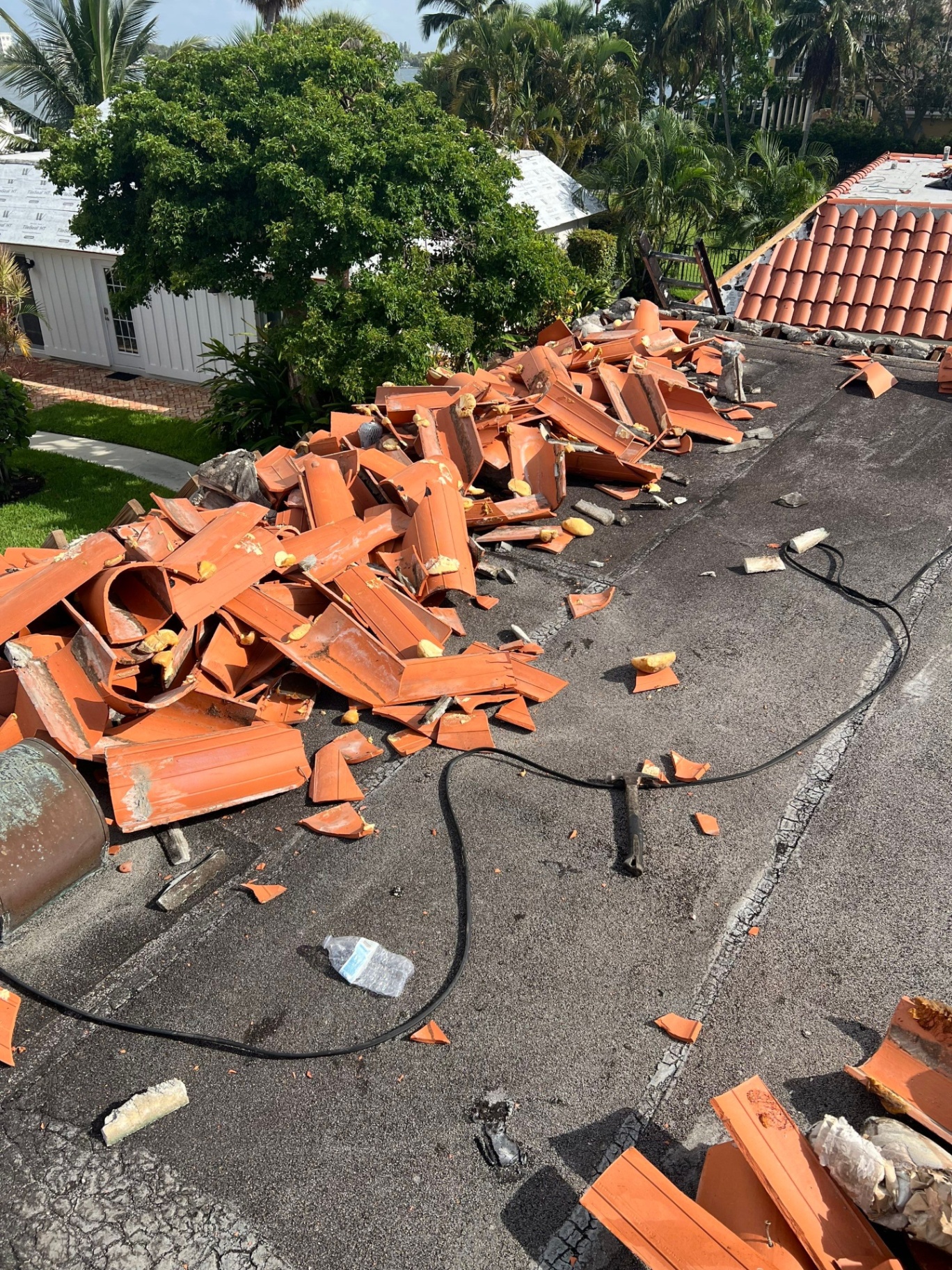
One of the most critical structural steps in a modern installation occurs immediately after the old material is stripped away. The code requires the inspection of the underlying wood roof decking. Any rotted, soft, or damaged plywood must be replaced immediately. Additionally, the code mandates that the remaining decking be re-nailed to the trusses using 8d ring-shank nails spaced no more than six inches apart along the panel edges, significantly improving the roof's resistance to wind uplift.
Secondary Water Barrier Requirements
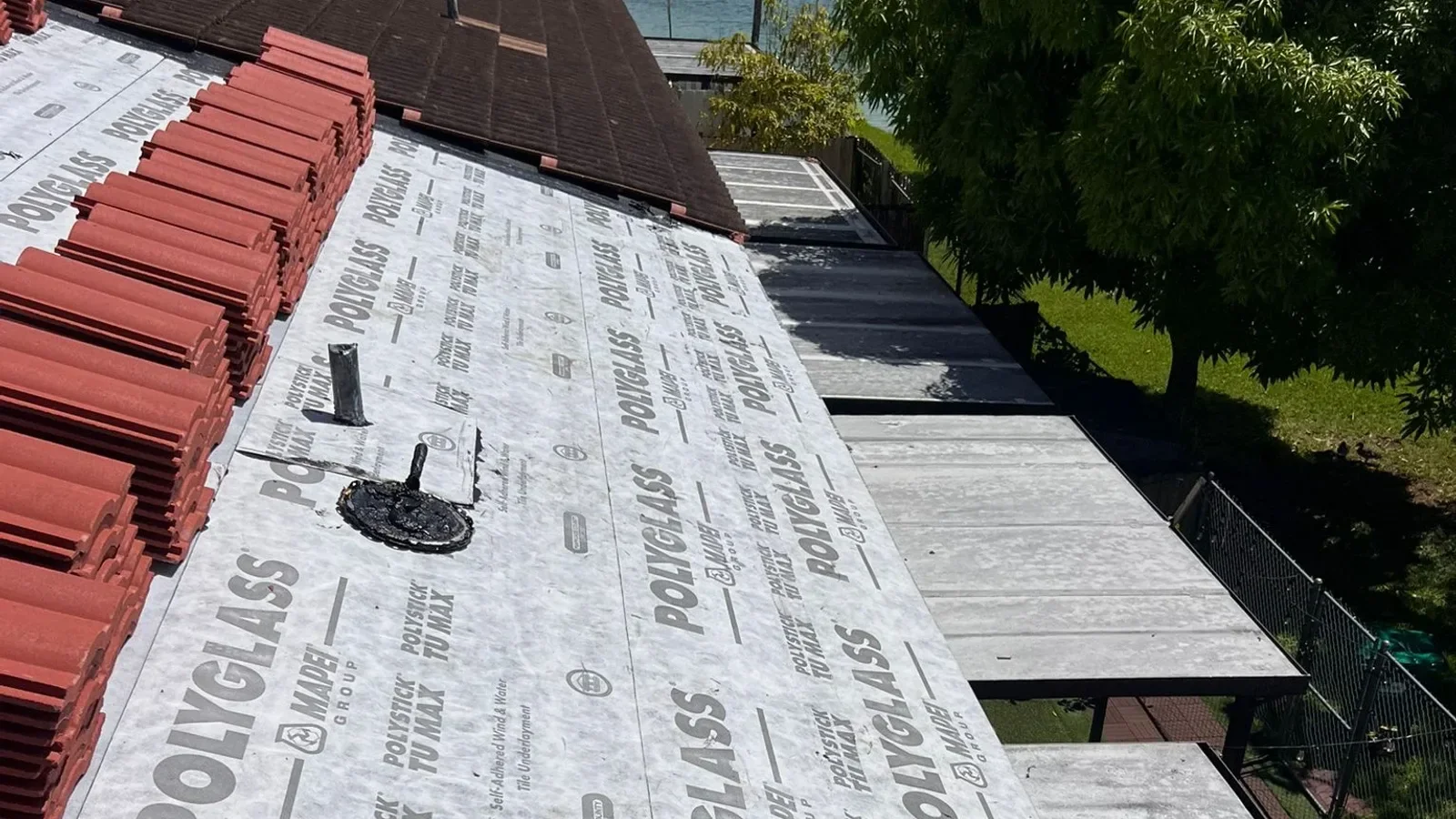
Even if wind tears away your primary shingles or tiles, a secondary water barrier must remain intact to prevent water intrusion. Code revisions require a sealed roof deck, typically achieved by applying a self-adhering polymer-modified bitumen flashing tape over all joints in the roof decking, or by installing a full coverage self-adhered underlayment (commonly known as peel-and-stick) directly to the wood deck. This dual-layer defense is standard practice for any quality roof installation in our region.
Understanding Miami Dade Roof Permit Requirements
Obtaining a permit in Miami-Dade County is a detailed administrative process that requires meticulous documentation. The City of North Miami Building Department reviews these submittals to verify that the proposed materials and installation methods are rated for local wind zone demands.
The Uniform Roofing Permit Application
Every project requires the submission of the Miami-Dade County Uniform Roofing Permit Application. This document acts as a comprehensive roadmap for your project. It details the exact square footage, the slope of the roof, the specific materials being used, and the licensed professional responsible for the work. Accurate calculations on this form are vital to avoid immediate rejection by city plan reviewers.
The Role of Product Approval Numbers (NOAs)
Every single component used on your roof, from the underlayment and nails to the shingles, metal panels, or clay tiles, must possess a valid Miami-Dade Notice of Acceptance (NOA). An NOA is a document certifying that the product has undergone rigorous laboratory testing to withstand high winds, flying debris, and torrential rain. Your contractor must submit these specific NOA numbers with the permit application, and the crew must install those exact products in strict accordance with the NOA guidelines.
The Required Inspection Schedule
A compliant installation is not verified in a single visit. The City of North Miami requires multiple inspections at key stages of construction:
The Sheathing/Nailing Inspection: Conducted once the old roof is removed, damaged wood is replaced, and the mandatory re-nailing of the deck is complete.
The Underlayment/Mop Inspection: Verified after the water-resistant underlayment and flashing are installed but before the final surface material is applied.
The Final Inspection: Performed after the shingles, metal, or tile installation is complete, ensuring all venting, flashing, and ridge caps are properly secured.
Material Selection Under High-Velocity Wind Standards
While aesthetics are important, your material choice directly impacts how your roof performs under extreme stress. Different materials have distinct wind resistance ratings, lifespans, and maintenance needs within our warm, humid coastal environment.
Asphalt Shingles
Modern architectural shingles are a popular choice due to their cost-efficiency and versatility. However, to pass inspection in North Miami, these shingles must carry an ASTM D7158 Class H wind rating, certifying resistance to wind speeds up to 150 mph. They must also be secured with a six-nail pattern rather than the standard four-nail pattern used in non-coastal states.
Metal Roofing Systems
Standing seam metal roofing has grown rapidly in popularity throughout South Florida. These systems offer exceptional wind resistance because the interlocking panels are fastened to the deck with concealed clips, leaving no exposed screws. Metal reflects solar radiation, helping lower cooling costs during hot summer months, and can easily last forty to fifty years when properly maintained.
Clay and Concrete Tile
Tile roofs are an iconic part of the South Florida aesthetic. Concrete and clay tiles offer superior durability and naturally resist fire and insect damage. However, tiles are incredibly heavy, requiring a structural inspection of your home's trusses to ensure they can support the load. They also require specialized foam adhesive or heavy-duty mechanical fasteners to meet HVHZ uplift requirements.
| Material Type | Average Lifespan in South FL | Wind Resistance Level | Primary Benefit |
|---|---|---|---|
| Architectural Shingles | 15 - 20 Years | High (Up to 110-130 mph) | Cost-effective, versatile styles |
| Standing Seam Metal | 40 - 50+ Years | Extreme (Up to 140-160+ mph) | Energy efficiency, maximum longevity |
| Concrete / Clay Tile | 30 - 50 Years | Very High (Up to 130-150 mph) | Classic aesthetic, highly durable |
The Financial and Insurance Benefits of a Certified Installation
While the planning and permitting process requires patience, completing a fully compliant, code-verified installation offers substantial long-term financial returns that extend beyond mere storm protection.
Securing Wind Mitigation Credits
In Florida, home insurance companies are legally required to offer discounts on policy premiums for homes with certified wind-resistant features. Upon completion of your project, a certified inspector can perform a wind mitigation inspection. This report documents your secondary water barrier, your ring-shank nail patterns, and your hurricane-rated materials, often resulting in significant annual savings on your property insurance.
Enhancing Property Value
A new, fully permitted roof is a massive selling point in the North Miami real estate market. Prospective buyers and their home inspectors will verify permit histories. Presenting a closed building permit from the City of North Miami, complete with passed inspection records and transferrable material warranties, provides peace of mind that can accelerate a home sale and command a higher asking price.
Avoiding Costly Litigation and Repairs
Cutting corners with unpermitted labor often results in rapid system failure, leaks, and structural damage during routine afternoon thunderstorms. Remedying these mistakes later usually costs double the price of doing the job correctly the first time. Investing in proper permits, quality materials, and expert craftsmanship protects your family, your belongings, and your bank account.
Selecting the Right Licensed Partner in North Miami
The success of your project ultimately rests on the competence of the team you hire. Working with a dedicated, locally knowledgeable team makes navigating the bureaucratic steps simple and stress-free.
Verifying Licensing and General Liability Insurance
Never assume a contractor is licensed simply because they present a professional-looking estimate. Always verify their status through the Florida Department of Business and Professional Regulation (DBPR). A qualified professional must carry active state licensing as a roofing contractor or general contractor, along with comprehensive general liability and workers' compensation insurance to protect you from on-site liability.
Local Knowledge of Municipal Staff and Processes
A local firm like PSR Roofing Company of Miami understands the specific filing quirks and documentation standards of the North Miami Building Department. This familiarity prevents administrative delays, ensuring that permits are submitted correctly the first time and inspections are scheduled promptly as the project progresses.
Written Warranties and Post-Installation Support
A trustworthy provider stands behind their craftsmanship. Ensure your contract clearly outlines both the manufacturer's material warranty (which can range from twenty years to a lifetime) and the contractor's labor warranty. This ensures that in the rare event of a material defect or installation issue, you have a direct path to resolution without added expense.
By prioritizing code compliance, obtaining the correct permits, and selecting high-wind-rated materials, you can approach your upcoming home improvement project with complete confidence. Keeping your home dry, secure, and legally protected is the ultimate goal of every successful build.
Frequently Asked Questions
How long does it take to get a roofing permit in North Miami?
Permit approval times vary depending on the volume of applications currently being processed by the City of North Miami Building Department. Generally, it takes between two to four weeks to review the plans, verify the Notice of Acceptance (NOA) documents, and issue the active building permit.
Can I pull an owner-builder permit to replace my own roof?
While Florida law allows owner-builder permits under very specific exemptions, it is highly discouraged for major structural work in High-Velocity Hurricane Zones. If you act as your own contractor, you assume all liability for safety, worker injuries, code compliance, and passing inspections. Most insurance carriers will also require professional certification to maintain your policy.
What happens if a roof is installed without a permit?
If code enforcement discovers active work without a permit, they will issue an immediate stop-work order and double the permit fees as a penalty. You may be required to strip away completed work so inspectors can verify the underlying sheathing and nailing patterns. Additionally, unpermitted work can prevent future home sales and lead to the cancellation of your homeowners insurance.
Do I need to replace my gutters when I get a new roof?
While not legally mandated by the building code, it is highly practical to replace aging gutters during a roof replacement. The process of removing the old roofing material can sometimes damage older, brittle gutters. Installing seamless gutters alongside your new roof ensures optimal water shed and protects your home's foundation from erosion.
Secure Your Property with an Expert North Miami Team
Protect your home and ensure full compliance with the Florida Building Code by partnering with the trusted local experts at PSR Roofing Company of Miami. Contact us today to schedule your roof replacement consultation with our experienced team.
Need help with Roof Replacement?
PSR Roofing is Miami's licensed & insured expert for roof replacement. Free estimates, honest pricing, and 24/7 emergency response.