Reading a Roofing Contractor's Proposal Line by Line: What Belongs in the Scope
A homeowner in Miami Shores recently showed us three proposals for the same roof. The spread was just over eleven thousand dollars. When we lined them up side by side, the cheapest one had no underlayment product named, no allowance for deck replacement, and a single sentence for the entire scope. It was not a better price. It was a different job.
The proposal is the only thing that survives after the handshake. Whatever is not written in it does not exist. This is how to read one properly before you choose a roofing contractor.
The Non-Negotiable Line Items
Every complete roofing proposal in Miami-Dade should contain these, stated specifically enough that a third party could verify them from the roof.
Materials Named by Manufacturer and Product Line
"Architectural shingles" is not a specification. "GAF Timberline HDZ, Miami-Dade NOA-approved, color to be selected" is. The same applies to membrane systems — a TPO or modified bitumen line should name thickness or ply count. Named products let you look up the wind rating, the warranty terms, and the required installation method yourself.
Underlayment and the Fastening Schedule
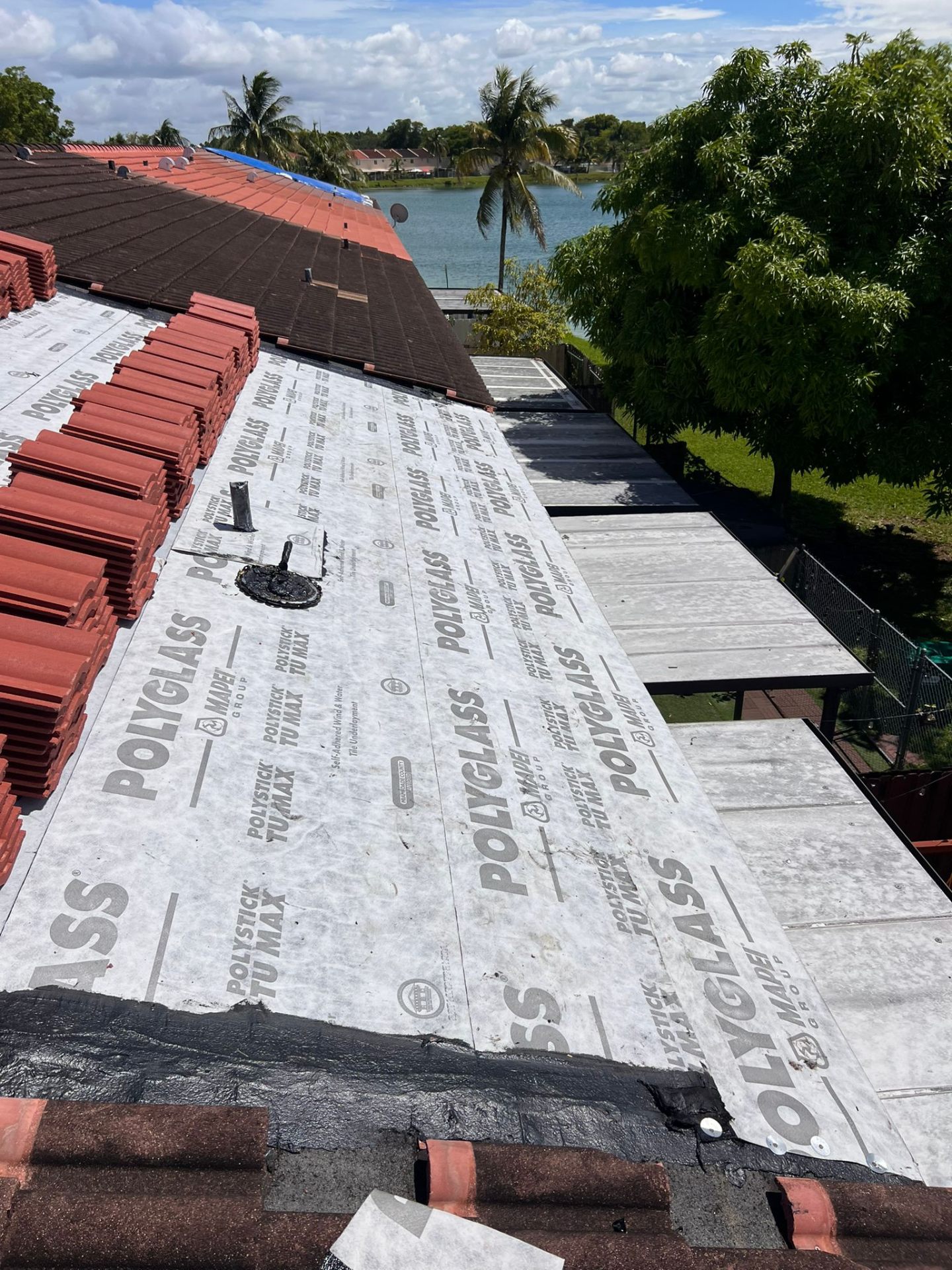
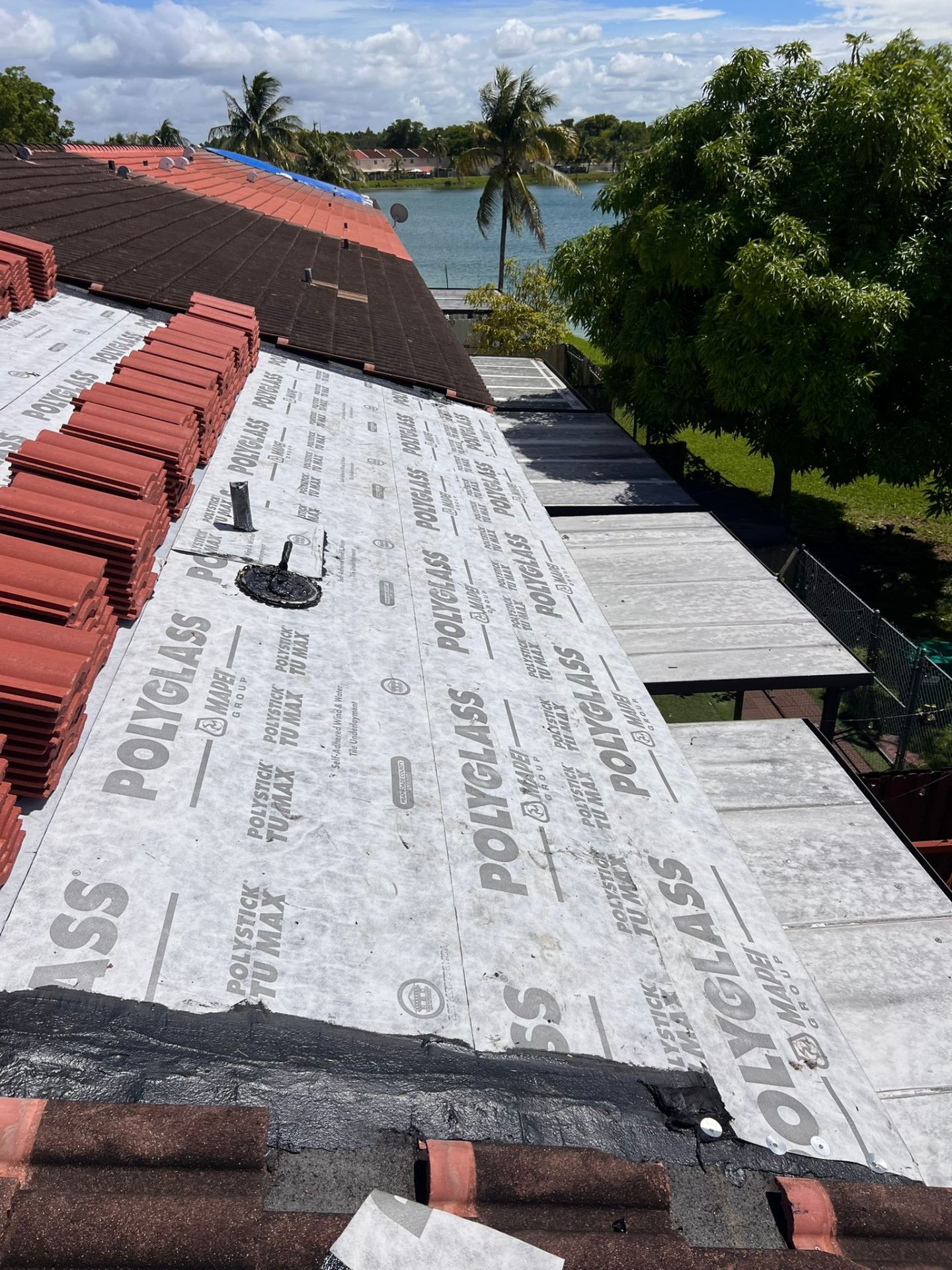
In High-Velocity Hurricane Zone jurisdictions, underlayment is not a minor detail — it is the layer that keeps water out when the outer surface is compromised in a storm. The proposal should specify a self-adhering, approved underlayment and state the nailing or fastening pattern being used. Vague underlayment language is the single most common place cost gets quietly removed from a bid.
A Unit Price for Deck Replacement
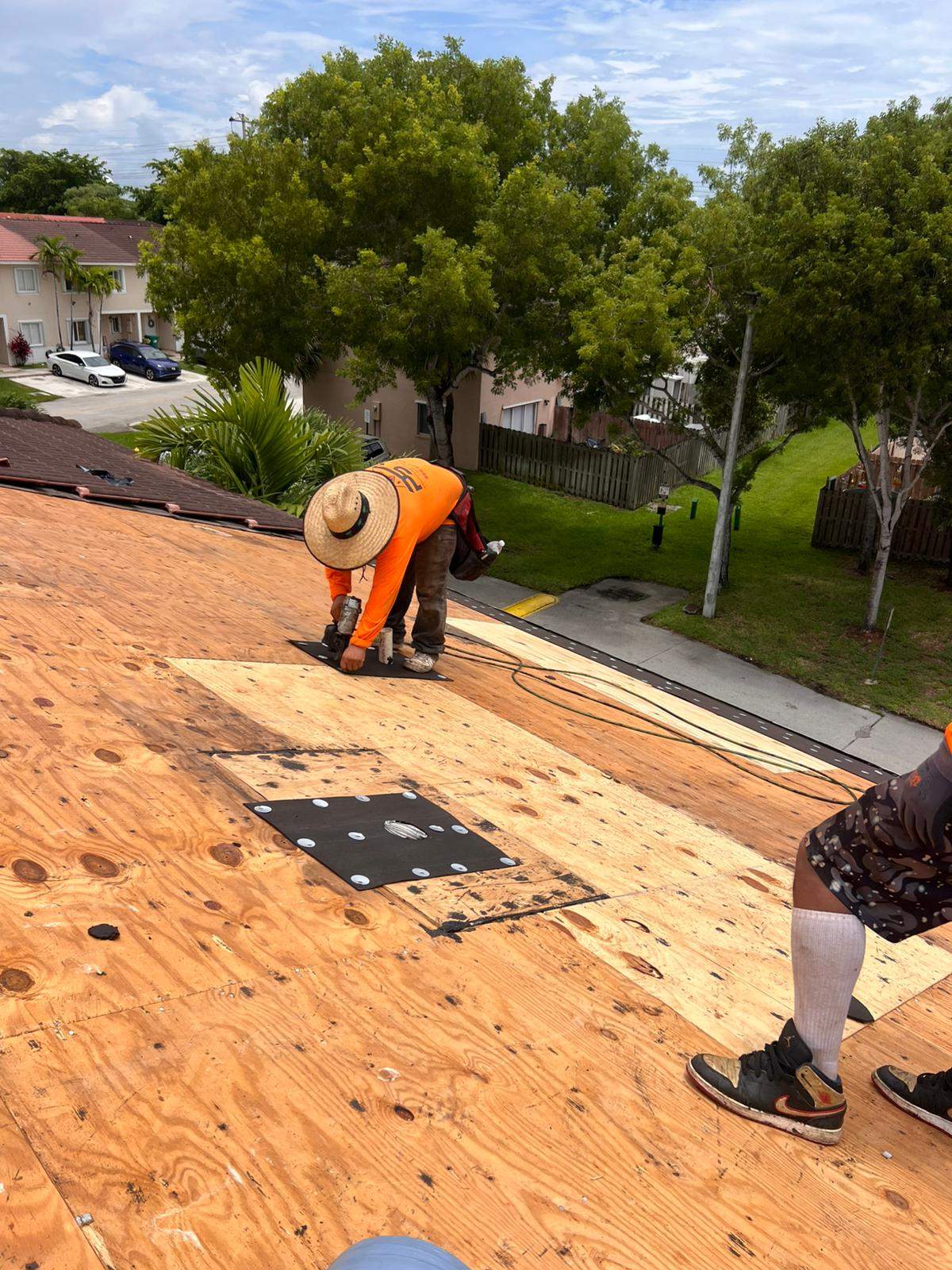
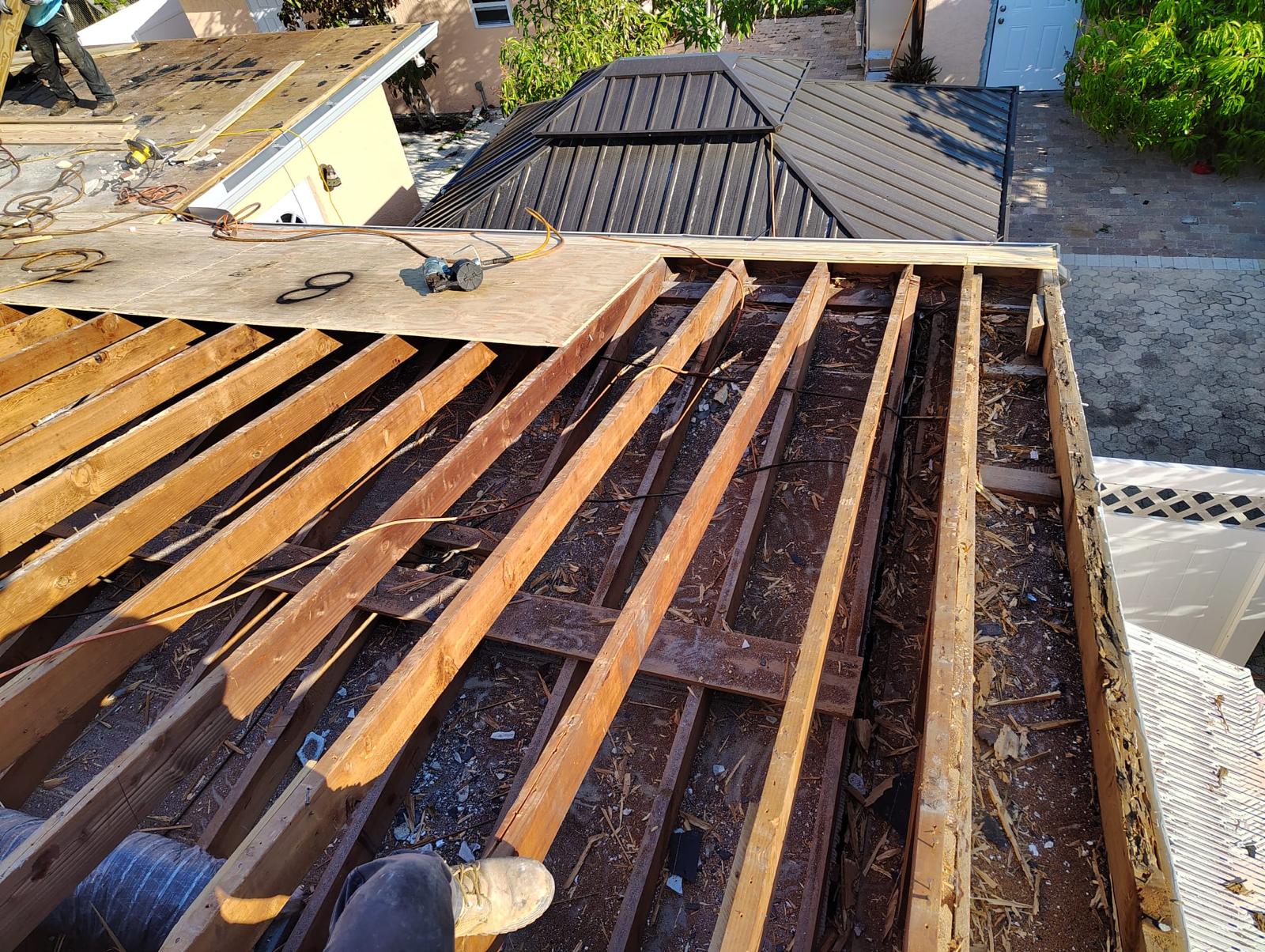
South Florida decking hides rot under old systems, and you will not know how much until tear-off. A professional proposal handles this with a stated price per sheet of plywood and per linear foot of fascia or truss repair, plus a note that you approve additions in writing before work proceeds. Without that number, discovery becomes a negotiation while your home is open.
Flashing, Penetrations, and Metal Work
Most leaks begin at transitions, not in the open field of the roof. The scope should state that pipe boots, vent flashings, valley metal, drip edge, and wall counter-flashing are being replaced, not reused. Reused flashing on a new roof is a warranty problem waiting to happen and often the reason a "new" roof leaks within two seasons.
Ventilation
Look for what is happening to intake and exhaust — ridge vent, off-ridge vents, soffit intake condition. In Miami's heat and humidity, an unbalanced attic cooks shingles from underneath and drives cooling costs up. If the proposal does not mention ventilation at all, ask why.
Permit and Inspections
The line should read that the contractor applies for the permit under their license and schedules all required inspections, with fees either included or stated as a pass-through amount. If the proposal asks you to pull the permit, that is a disqualifying term, not a cost-saving one.
Cleanup, Protection, and Debris Removal
Dumpster placement, driveway and landscaping protection, daily site cleanup, and magnetic nail sweep of the perimeter. Also worth confirming: who is responsible if a dumpster cracks your driveway pavers.
Warranty, Split Into Two Parts
Material warranty comes from the manufacturer and usually requires certified installation to reach its full term. Workmanship warranty comes from the contractor and covers installation errors. The proposal should state the duration of each, what voids them, and whether the workmanship warranty is transferable if you sell — a real value point in Miami-Dade's resale market.
Payment Schedule Tied to Milestones
Deposit, material delivery, dry-in, completion. Milestone-based payments protect both sides. A schedule weighted heavily toward an up-front deposit is a warning sign.
What Makes Two Proposals Look Different When the Work Is the Same
| Proposal Language | What It Actually Means |
|---|---|
| "Replace roof as needed" | No defined scope; anything can be argued later |
| "Standard underlayment" | Likely the minimum, possibly not the approved system for HVHZ |
| "Reuse existing flashing where serviceable" | Leak risk moved onto you |
| "Deck repair additional" (no price) | Open-ended cost exposure mid-project |
| "Permit by owner" | Code liability shifted to you |
| "Lifetime warranty" with no document | Marketing language until you see the terms |
Comparing Bids Without Getting Fooled by the Bottom Line
Build a simple grid. Down the left, list the line items above. Across the top, put each contractor. Fill it in from the written proposals only — not from what anyone said in the driveway. The lowest number almost always has empty cells, and the empty cells are where your money goes later.
Then ask each contractor one clarifying question in writing and judge the response time and clarity. How a company communicates during the bidding stage is how it will communicate when a crew is on your roof and rain is in the forecast.
If two proposals disagree about what your roof needs — repair versus full replacement — that disagreement is usually about diagnosis, not price. An honest roof replacement recommendation should be supported by photos of specific conditions: soft decking, multiple leak points, systemic granule loss. Ask to see them.
Local Details a Miami-Dade Proposal Should Reflect
A contractor who works North Miami, Keystone Point, Miami Shores, Biscayne Park, and Aventura regularly will build these into the scope without being asked:
- Municipal variation. Submittal packages and inspection sequencing differ between municipalities and unincorporated county areas.
- Coastal exposure. Homes near Biscayne Bay face salt-air corrosion; fastener and metal selection should account for it.
- Tile-specific handling. Much of the older housing stock in Miami Shores carries concrete or clay tile, where structural load and matching replacement tile need addressing in writing.
- Drainage. Flat and low-slope sections need stated slope and drain scope, especially before wet season.
Gutters are frequently left out of proposals and then quoted separately at a premium. If your drainage is undersized, ask for gutter installation to be priced as part of the same project so the roof and the water it sheds are designed together.
Frequently Asked Questions
Should a proposal include a start date?
It should include an estimated start window and note what could move it — material lead times and weather being the two realistic causes in South Florida. A hard date with no conditions is optimistic rather than honest.
Is a change order always a bad sign?
No. Change orders are how legitimate discoveries get documented. What matters is that they are written, priced from the unit rates already in your contract, and approved by you before the work happens.
How long should a proposal remain valid?
Thirty days is typical. Material pricing does move, particularly after a named storm affects regional supply, so a shorter window is not automatically a pressure tactic — but "today only" is.
Can I ask for the manufacturer's installation instructions?
Yes, and it is a reasonable request. Warranties are written against those instructions, so the specification in your proposal should match them.
Continue the Series
Start of the series: how to verify a roofing contractor in Miami before you sign. Next up, the money side — deposits, payment schedules, and Florida lien law.
Have a Proposal You Want Explained?
PSR Roofing Company Of Miami will walk through any roofing contractor proposal with you, line by line, and tell you what is missing — including when someone else's bid is the right one. We work throughout North Miami, Miami Shores, Aventura, Biscayne Park, and Miami-Dade County.
Call (786) 889-4090 or request a written roofing estimate.
Visit us: 1811 NE 142nd St, Miami, FL 33181 — view on Google Maps
Need help with Roof Repair?
PSR Roofing is Miami's licensed & insured expert for roof repair. Free estimates, honest pricing, and 24/7 emergency response.