Roof Ventilation and Attic Airflow: The Roof Installation Detail Miami Homeowners Overlook
Most homeowners choose a roof by color, warranty, and price. Almost nobody asks about net free area — and yet ventilation is the variable that quietly determines whether the new system lasts its full service life, how hard the air conditioner works every August, and whether the attic stays dry through a wet season.
Ventilation is designed and built during a roof installation. Once the covering is fastened and the dry-in is sealed, changing it means opening the roof again. This is the moment to get it right.
Why Miami Attics Punish Bad Ventilation
Our climate combines sustained heat, extreme humidity, and long rainy stretches. Three failures follow from a sealed or unbalanced attic:
- Heat load. An underventilated attic in South Florida can run far hotter than outdoor air, radiating into the ceiling plane and raising cooling demand all day.
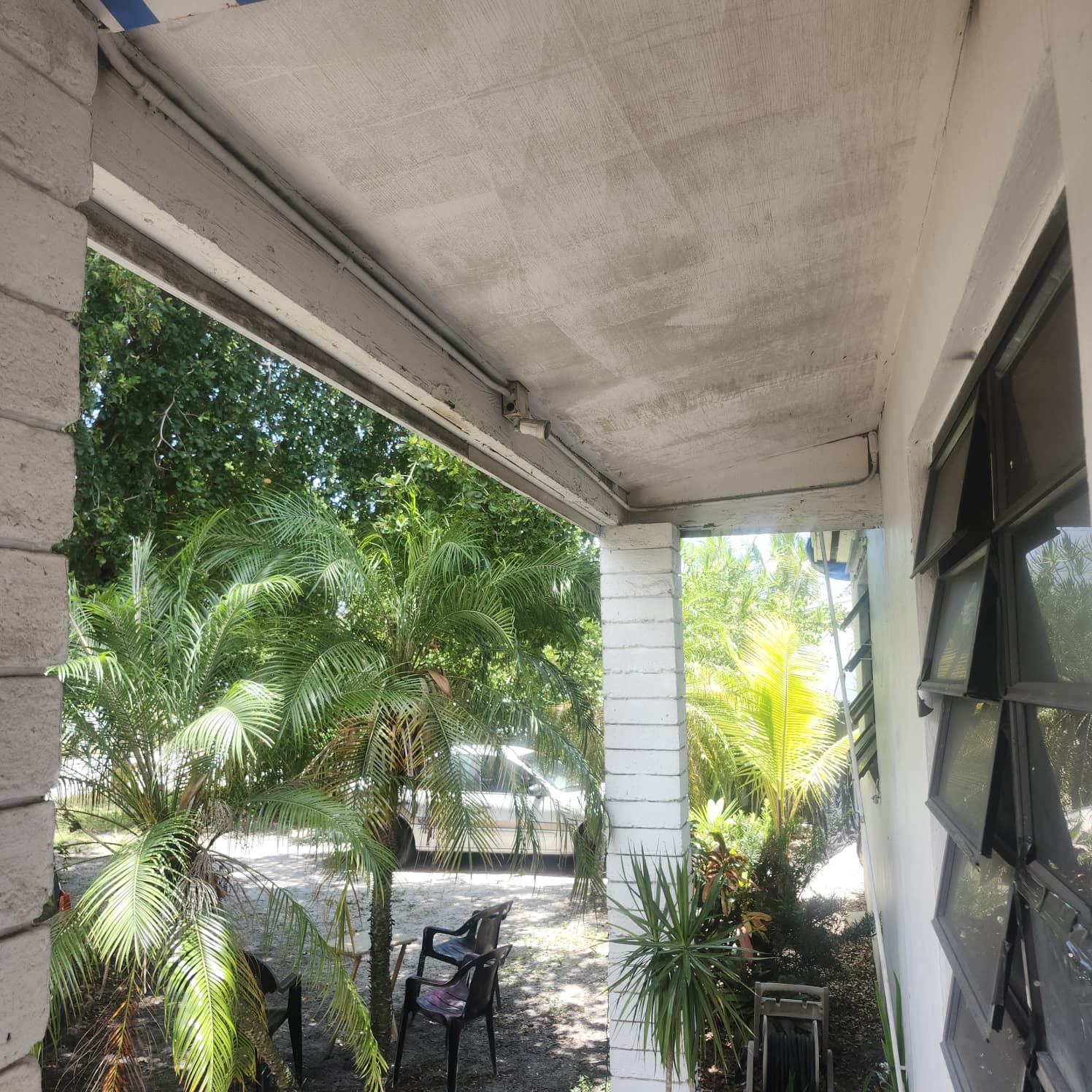
- Condensation. Warm moist air meeting cool duct surfaces creates moisture that shows up as ceiling stains, musty odors, and mold on the underside of decking — often misdiagnosed as a leak.
- Accelerated aging. Trapped heat cooks the underside of the covering, shortening shingle and underlayment life and stressing adhesives.
Intake and Exhaust Must Be Balanced
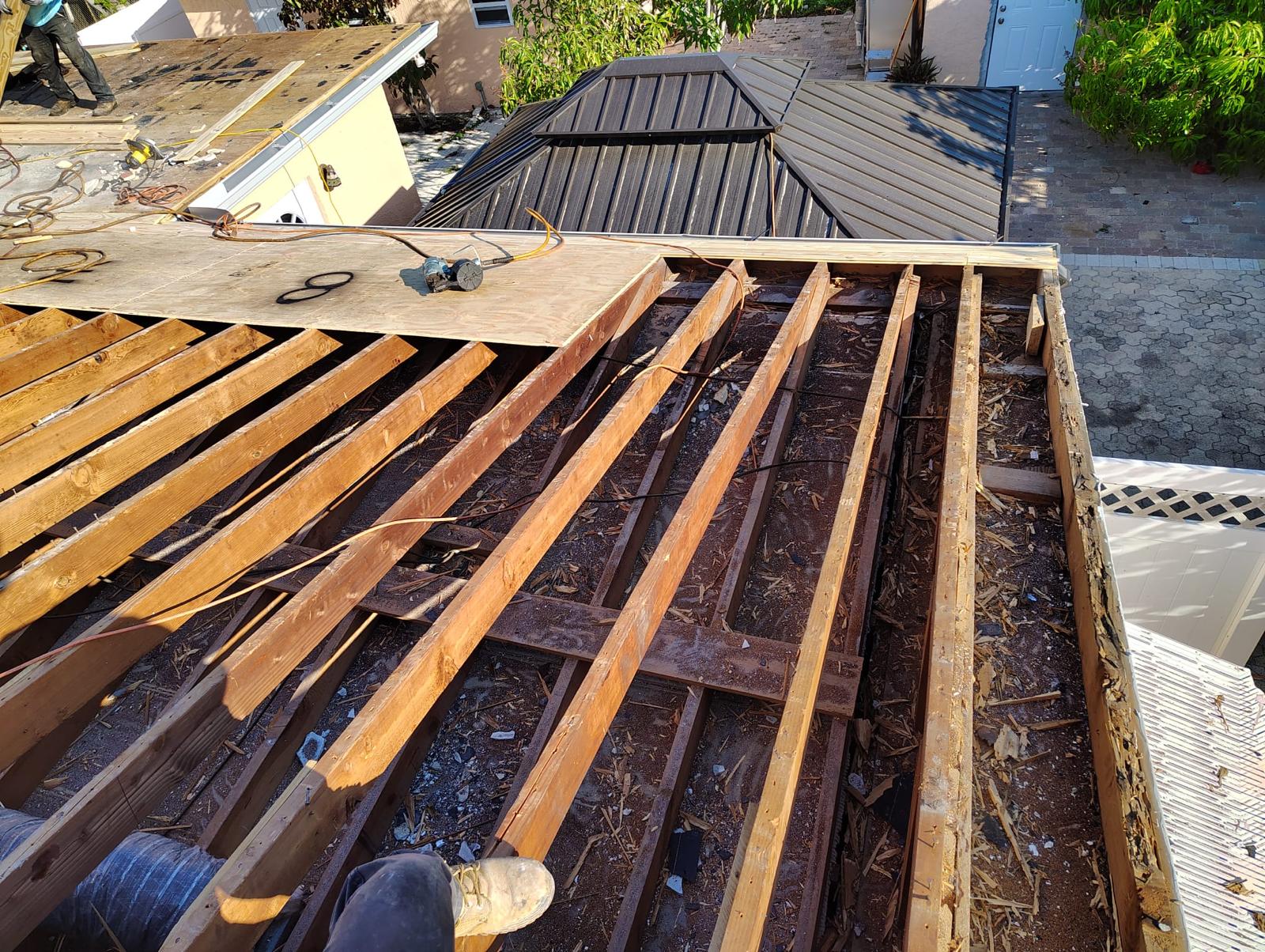
Ventilation is a system, not a product. Air enters low at the eaves and leaves high at the ridge, driven by thermal buoyancy and wind. Break either half and the whole system stops working.
| Component | Role | Common Miami problem |
|---|---|---|
| Soffit / eave vents | Intake | Blocked by insulation, paint, or blown-in debris |
| Ridge vent | Exhaust | Installed without cutting the deck slot |
| Off-ridge / box vents | Exhaust | Mixed with a ridge vent, short-circuiting airflow |
| Gable vents | Cross ventilation | Left open alongside ridge vent, pulling air the wrong way |
| Powered attic fan | Forced exhaust | Pulls conditioned air from the house when intake is insufficient |
The governing rule is simple: exhaust capacity should never exceed intake capacity. When it does, the roof draws replacement air from the easiest opening available — usually your living space or another roof vent — instead of from the soffits.
The Detail That Fails Most Often
A ridge vent installed over an uncut deck. From the street it looks correct. Functionally it is a decorative cap. During any roof inspection, the slot should be verifiable from the attic as a continuous open channel of daylight along the ridge.
Ventilation Choices by Roof Type
Tile roofs ventilate primarily through the ridge and hip lines with approved vented closures. Standing seam metal uses a vented ridge closure paired with continuous soffit intake, and benefits from a ventilated batten or high-temperature underlayment beneath the panels. Low-slope and flat roofs have no ridge at all, so exhaust relies on curbs and edge details — or the assembly is intentionally designed as unvented with insulation above the deck.
There is no universal answer. What matters is that the ventilation strategy is named in your scope of work and matches the covering's product approval.
Sealed Attics Are a Legitimate Option
In some Miami homes, encapsulating the attic — moving insulation to the roof deck and bringing the attic inside the conditioned envelope — outperforms vented designs, especially when air handlers and ductwork sit in the attic. It is a deliberate engineered choice, not a shortcut. It must never be the accidental result of blocked soffits.
Where Water and Air Meet
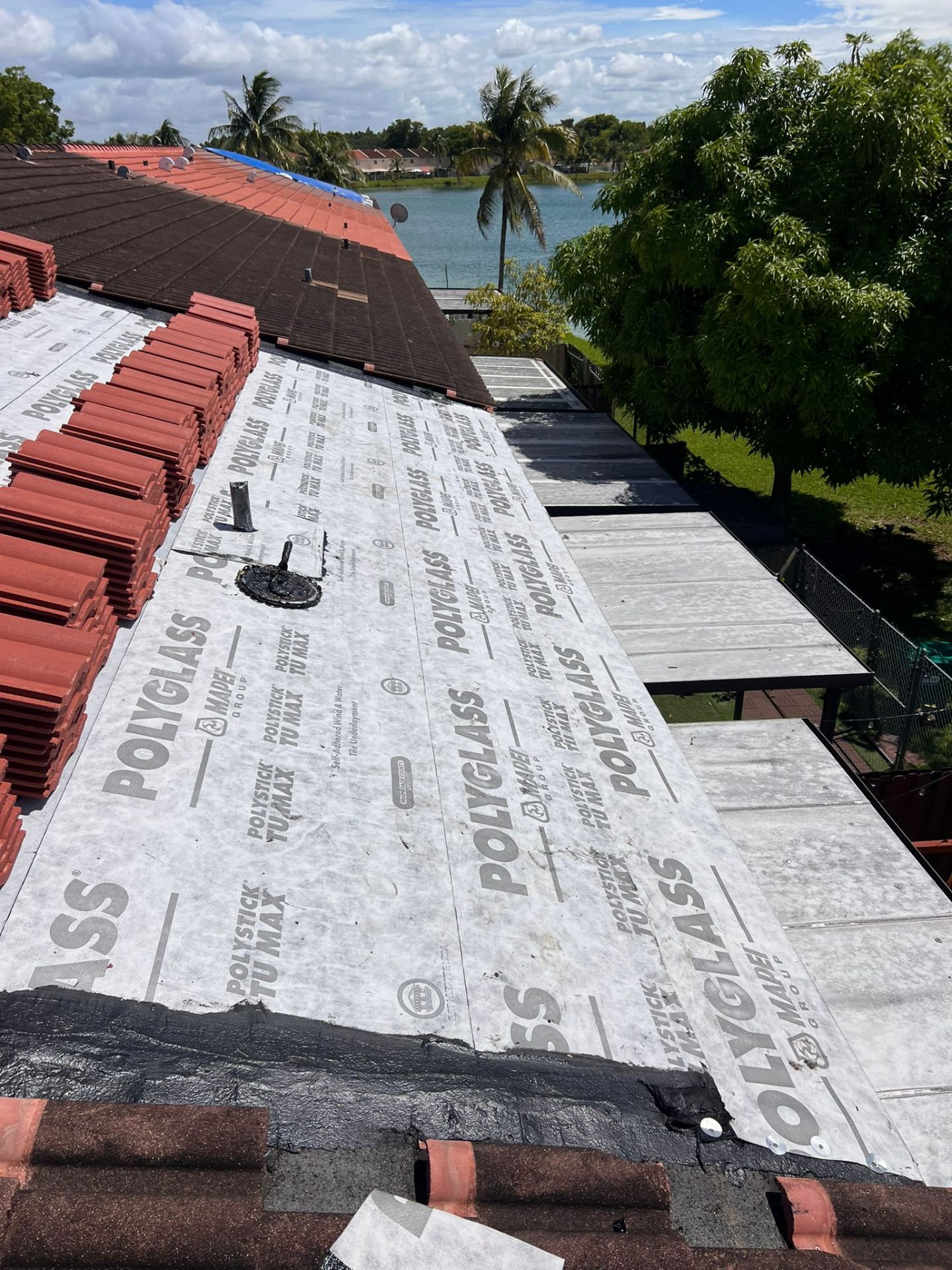
Ventilation openings are also potential water entry points during wind-driven rain. Approved vented products for the High-Velocity Hurricane Zone are tested for water infiltration under pressure, which is why substituting a generic ridge vent is both a code and a leak problem. Fascia and soffit condition matters too: rotted fascia cannot hold a vented drip edge, and overflowing gutters push water back into the eave, which is one practical reason correct gutter installation belongs in the same conversation as ventilation.
Neighborhood Notes
Bay-adjacent homes in Keystone Point, Eastern Shores, and Bay Harbor Islands need corrosion-resistant vent components because of salt-laden air. Mid-century houses in Miami Shores, Biscayne Park, and Arch Creek East frequently have shallow eaves with minimal soffit area, which forces intake solutions at the drip edge. Larger newer homes in Aventura and Sky Lake often have complex hip geometry where each roof plane needs its own intake path rather than relying on a single ridge run.
Frequently Asked Questions
How much ventilation does my roof need?
The common design target is one square foot of net free ventilating area per 150 square feet of attic floor, split roughly evenly between intake and exhaust — reduced to 1:300 when a vapor retarder is present. Your contractor should calculate it against your actual attic area, not assume it.
Will more vents lower my electric bill?
Balanced ventilation reduces attic temperature and cooling load. It is a contributor, not a miracle. Insulation depth and duct sealing usually matter more.
Are powered attic fans a good idea in Miami?
Rarely, and never as a substitute for intake. Without adequate soffit area, they depressurize the attic and pull conditioned air out of the house.
Can ventilation be corrected without a new roof?
Intake at the soffit can often be improved independently. Exhaust changes at the ridge generally require opening the covering, which is why the installation is the right time.
Continue the Series
Back up one step to how roof installation permits really work in Miami if you are still deciding between new construction and a re-roof. Ready to talk money? Next: how a new roof installation earns insurance and wind mitigation savings.
Have Your Ventilation Designed, Not Guessed
PSR Roofing Company Of Miami calculates intake and exhaust as part of every roof installation scope, with HVHZ-approved vented components throughout Miami-Dade.
Call (786) 889-4090 or request a written roof installation quote.
Visit us: 1811 NE 142nd St, Miami, FL 33181 — view on Google Maps
Need help with Roof Installation?
PSR Roofing is Miami's licensed & insured expert for roof installation. Free estimates, honest pricing, and 24/7 emergency response.