New Construction vs. Re-Roof: How Roof Installation Permits Really Work in Miami
Two homeowners can order what sounds like the same job — "a new roof" — and end up on two completely different regulatory paths. One needs sealed structural engineering and a truss layout review. The other needs a re-roof permit, a mandatory tear-off, and two field inspections. Confusing the two is the single most common reason a Miami project stalls at the counter.
This guide explains how Miami-Dade classifies your work, what each track requires, and where the cost and calendar actually diverge on a professional roof installation.
Which Category Is Your Project?
New Construction and Additions
If a roof deck is being built where none existed — a new home, a room addition, an enclosed patio, a detached garage, a second story — the roof is part of a structural building permit. Plans must be signed and sealed by a Florida-licensed engineer or architect, and they must show the framing, deck attachment schedule, uplift resistance, and the specific roof assembly with its product approval.
Re-Roof (Recover or Replacement)
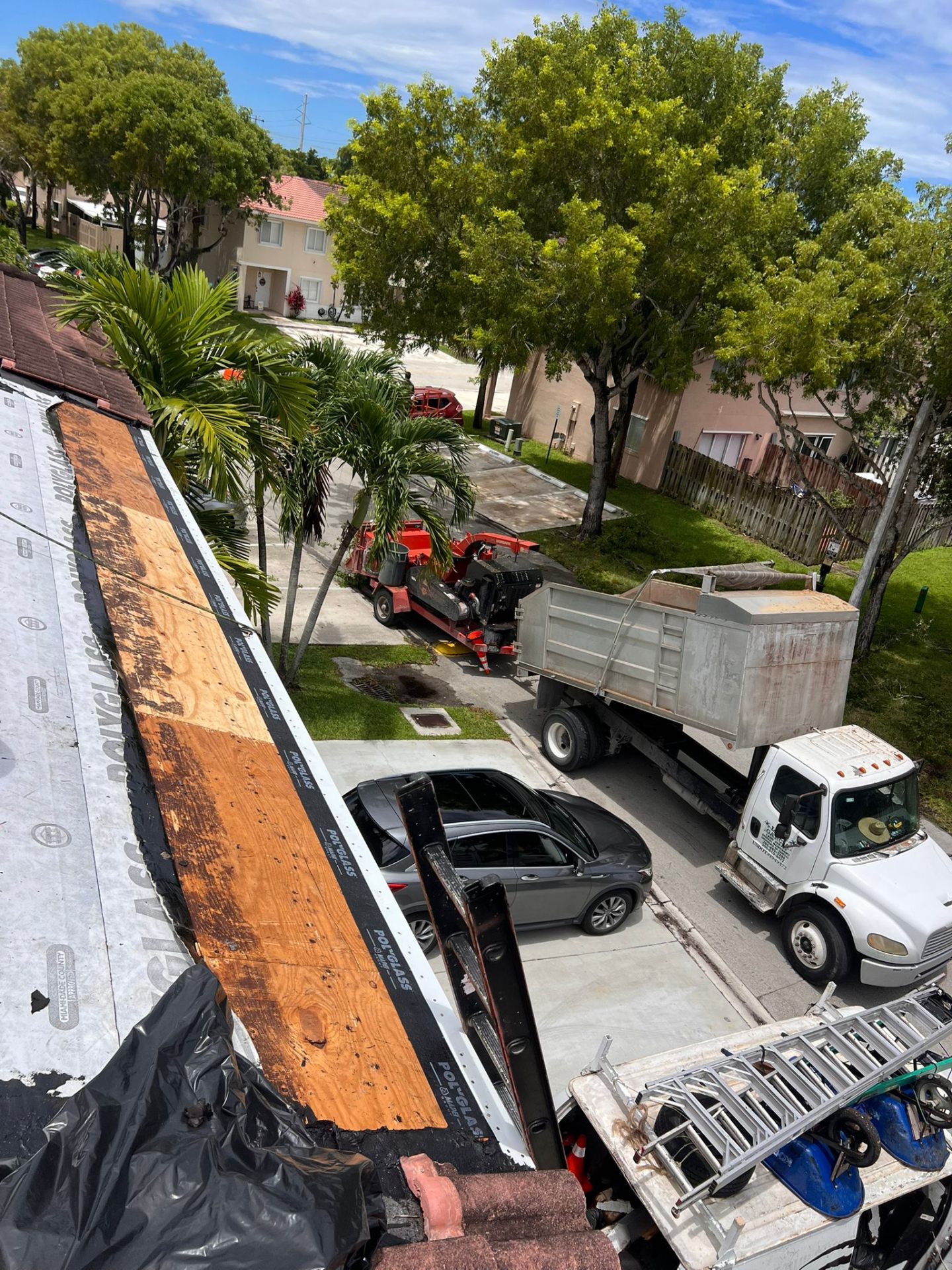
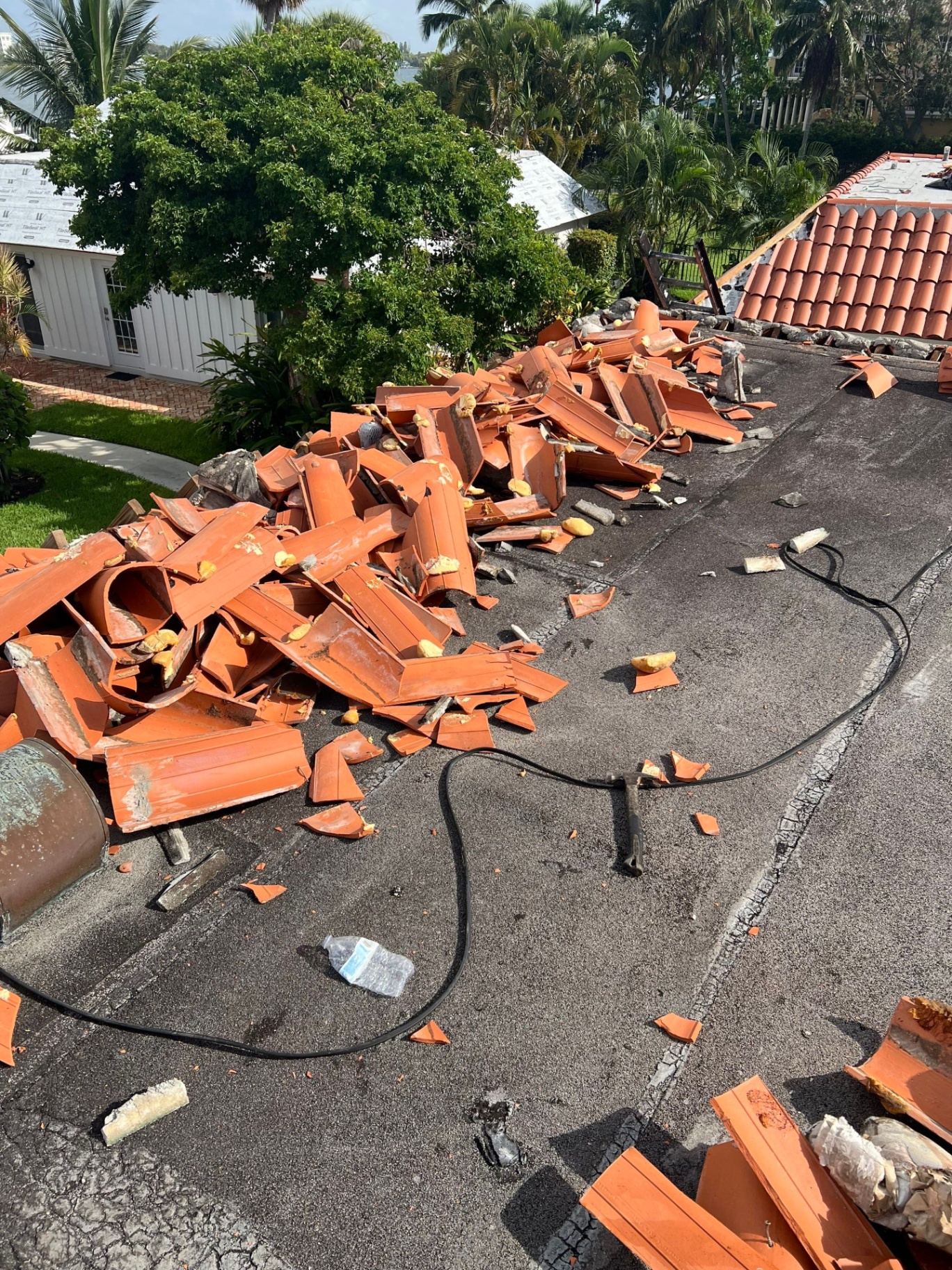
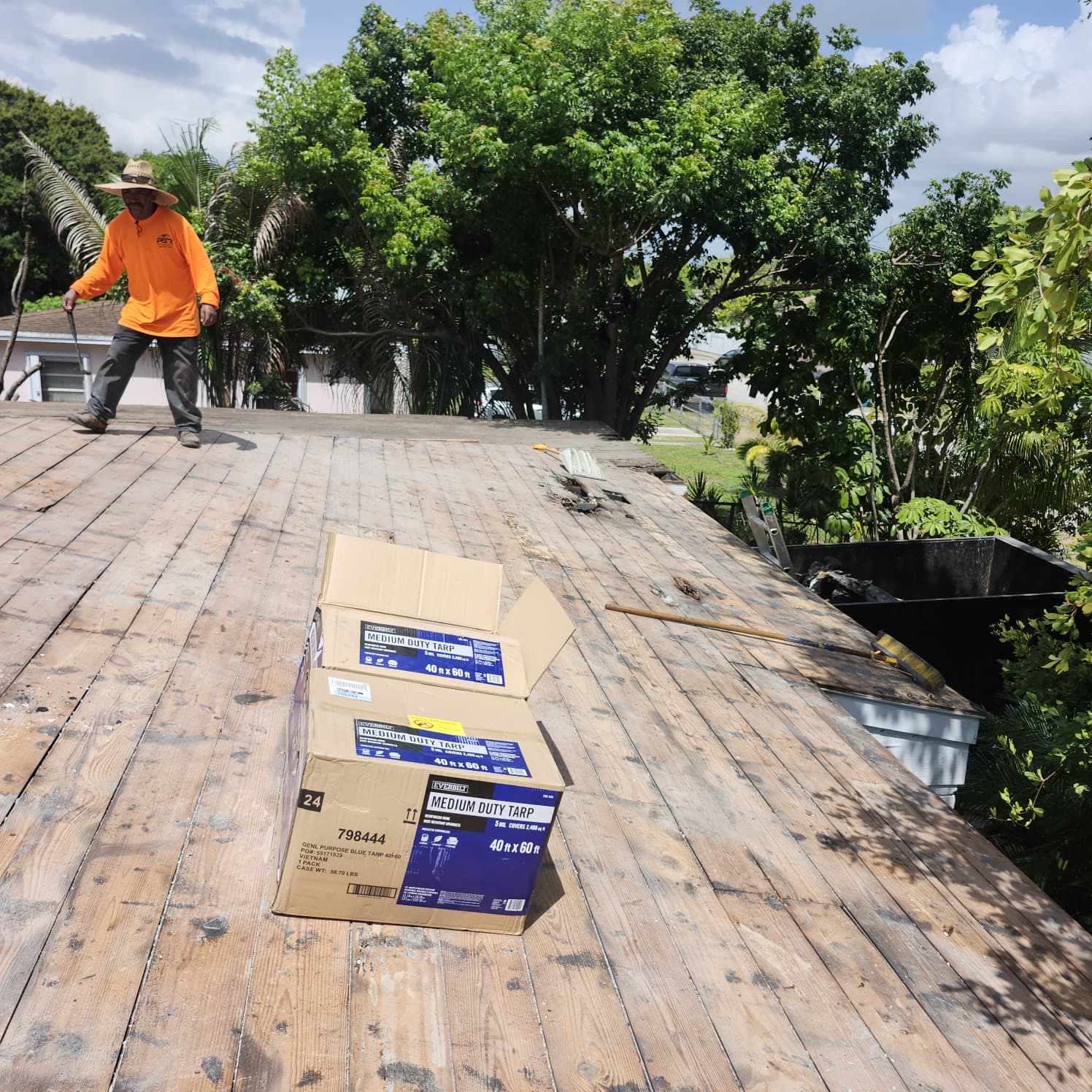
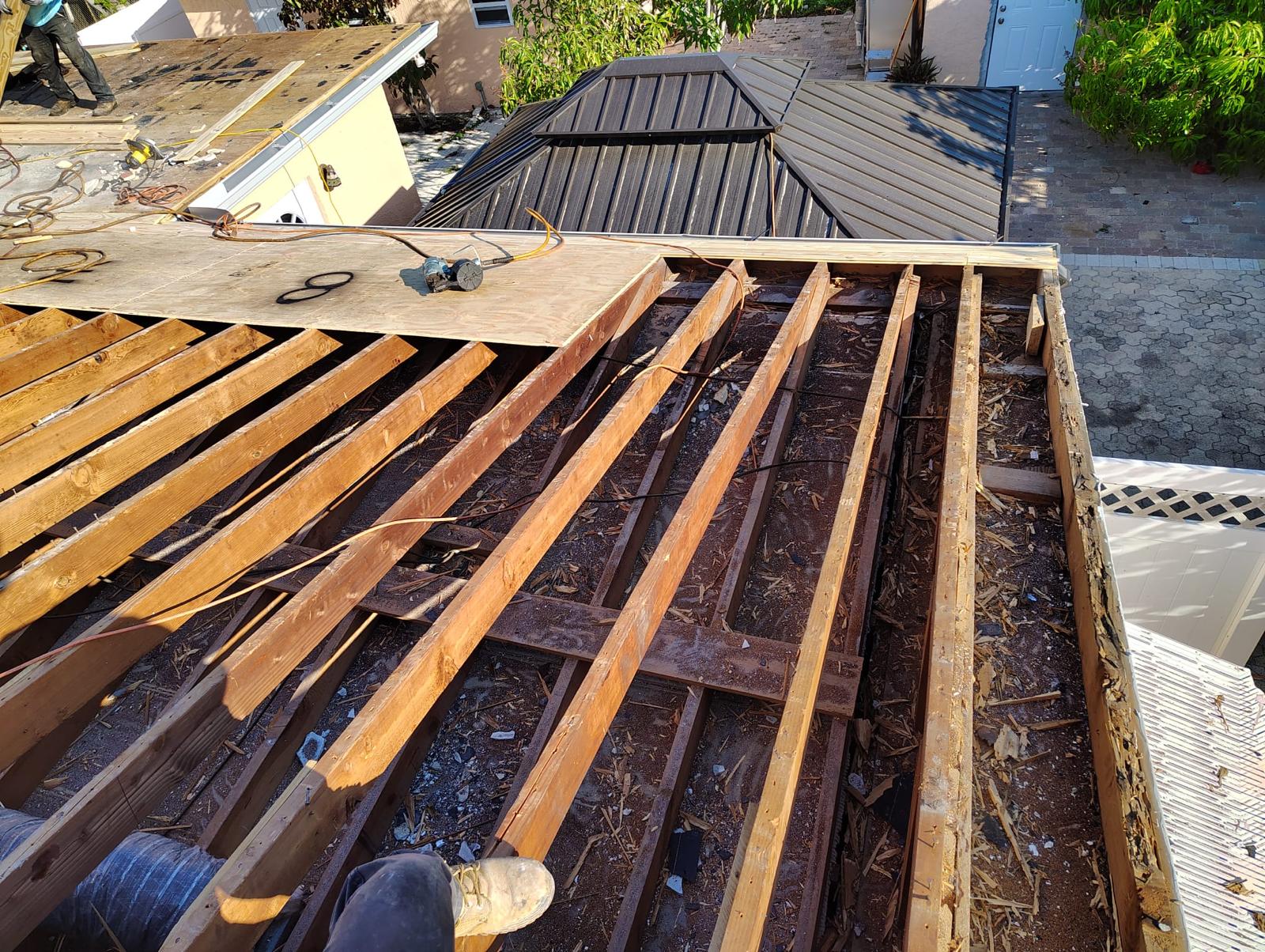
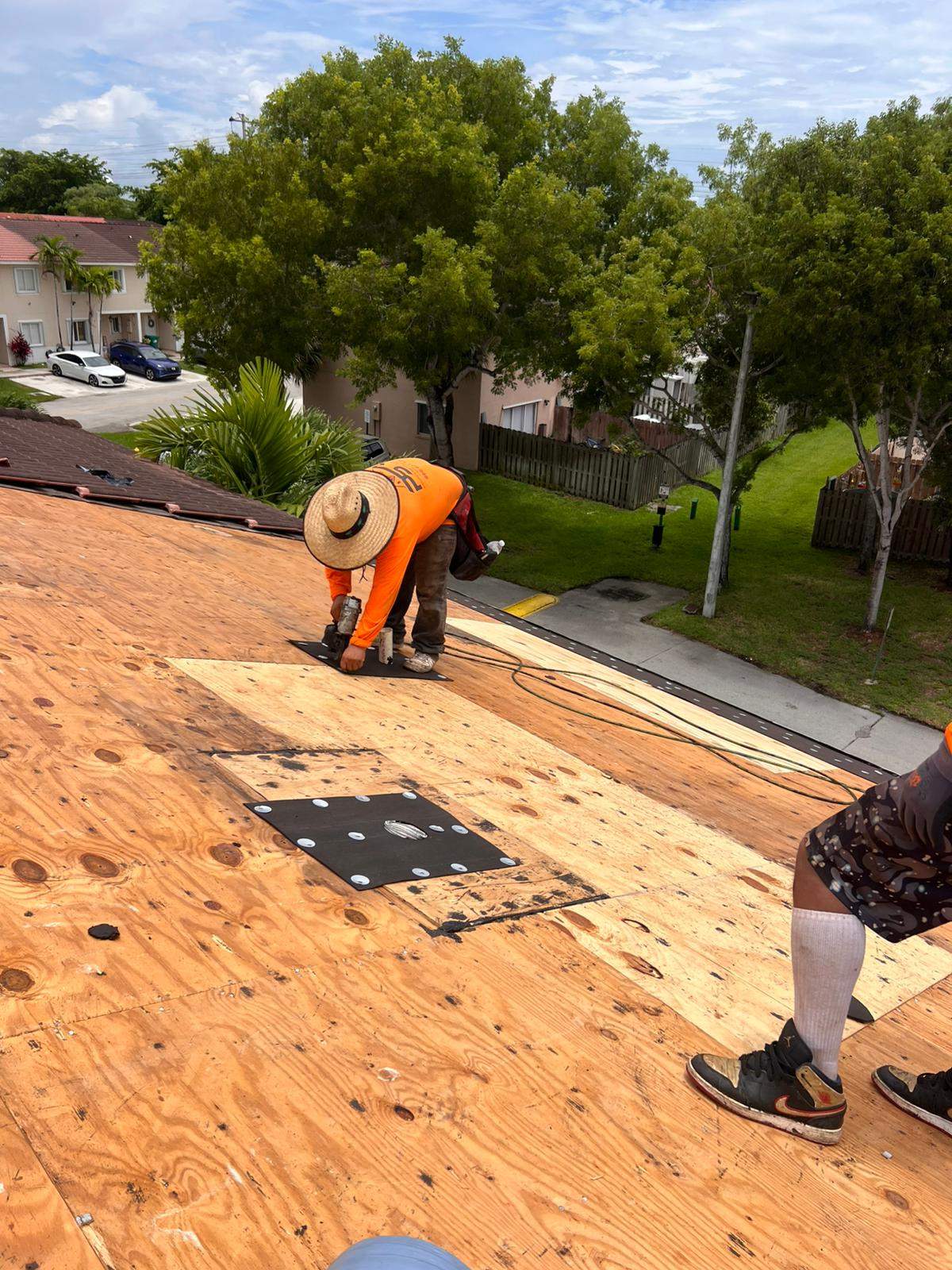
If the structure already exists and you are removing the existing covering, that is a re-roof permit. In the High-Velocity Hurricane Zone that covers Miami-Dade, a full tear-off to bare deck is required — you cannot legally lay a new system over old shingles. Once the deck is exposed, secondary water barrier and re-nailing requirements apply, which is where most surprise line items appear.
The Grey Zone: Partial Structural Work
Replacing rotted trusses, changing a roof pitch, cutting in a new dormer, or moving a load path pushes a re-roof into structural territory. It becomes a hybrid: a re-roof permit plus engineering for the altered framing. If your contractor discovers rot at the wall plate mid-job, expect a revision rather than a quiet substitution.
| New construction / addition | Re-roof | |
|---|---|---|
| Sealed plans required | Yes | No, in most cases |
| Tear-off required | N/A | Yes, to bare deck |
| Deck re-nailing to current code | Built to code from the start | Required |
| Secondary water barrier | Included in assembly | Required |
| Typical field inspections | Framing, sheathing, dry-in, final | Sheathing, dry-in, final |
| Notice of Acceptance needed | Yes | Yes |
What HVHZ Approval Actually Means
Every component that stays on the roof — underlayment, fasteners, tile, panel, ridge, adhesive — must appear on a Miami-Dade Notice of Acceptance or Florida Product Approval, and it must be installed in the exact configuration that approval describes. Approval is granted to the assembly, not to individual parts. Swapping one fastener for a cheaper equivalent invalidates the approval for the whole roof, which is a failed inspection at best and a denied insurance claim at worst.
Ask for the NOA numbers in writing before work starts. A contractor who cannot produce them on request is not ready to pull your permit.
Where the Timeline Really Goes
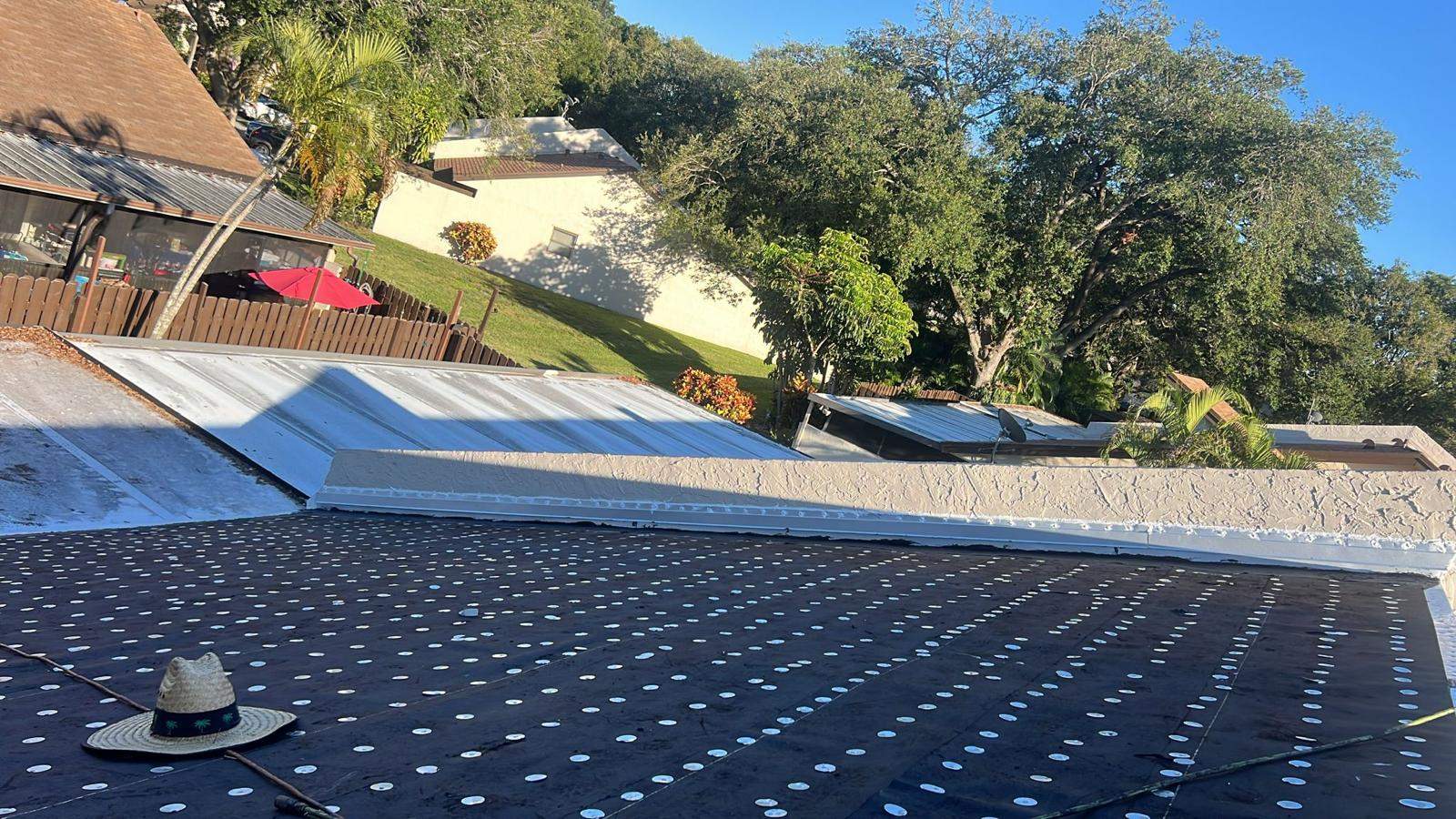
The physical labor on a single-family re-roof is usually two to five working days. The calendar is longer because of sequencing: permit review, tear-off, sheathing inspection, dry-in inspection, covering installation, final inspection. Each inspection is a scheduled municipal visit, and the roof cannot be covered until the previous stage passes.
New construction sits inside a broader building permit, so the roof waits on framing approval and coordinates with other trades. Plan in weeks, not days.
Neighborhood matters more than people expect. Homes in Keystone Point, Eastern Shores, Sans Souci Estates, and Bay Harbor Islands sit close to Biscayne Bay, where wind exposure category and salt-air corrosion drive fastener and flashing selection. Older properties in Miami Shores, Palm Grove, and Arch Creek East frequently have plank decking that needs sheathing overlay before any covering can go down. Aventura and Sky Lake condominium and HOA associations often add architectural review on top of the county permit.
Common Reasons Miami Roof Permits Get Rejected
- Product approval numbers missing or expired at the time of application.
- Deck attachment schedule not shown for the actual framing spacing found on site.
- No secondary water barrier detail on a tile submittal.
- Scope written as "repair" while the work is clearly a recover, which triggers the 25 percent rule.
- Homeowner-pulled permit on work that requires a licensed contractor of record.
If your existing roof only needs localized attention, a documented roof repair under the correct permit class is faster and cheaper than a full re-roof — but it must be scoped honestly, because repeated patching on a failing system is how the 25 percent threshold is crossed by accident.
What to Confirm Before You Sign
- The permit class your project falls under, in writing.
- NOA or Florida Product Approval numbers for every component.
- Who schedules and attends each inspection.
- Named unit price for replacing rotted decking per sheet.
- Whether the price includes edge metal, secondary water barrier, and dump fees.
- Workmanship warranty term and what voids it.
Frequently Asked Questions
Can I install a new roof over the existing shingles in Miami?
No. In the High-Velocity Hurricane Zone, complete removal to bare deck is required so the sheathing can be inspected and re-nailed to current fastening standards.
Do I need an engineer for a simple re-roof?
Usually not, unless framing is altered or rot repair changes a structural member. Then engineering enters the scope.
Who should pull the permit — me or the contractor?
The licensed contractor performing the work. A homeowner-pulled permit shifts liability and code responsibility onto you and is a red flag when a contractor suggests it.
Does a new roof need a separate inspection for insurance?
The municipal final inspection satisfies the building department. A separate wind mitigation inspection is what earns insurance credits, and it is worth scheduling right after the final.
Next in This Series
Ventilation is decided during installation and is nearly impossible to correct afterwards without opening the roof again. Continue with roof ventilation and attic airflow during a Miami roof installation to see how intake and exhaust are sized on a South Florida home.
Get a Permit-Ready Roof Installation Scope
PSR Roofing Company Of Miami is a licensed, insured local contractor performing permitted, HVHZ-compliant work across Miami-Dade — from Keystone Point and Miami Shores to Aventura and Coral Gables.
Call (786) 889-4090 or request a written roof installation quote.
Visit us: 1811 NE 142nd St, Miami, FL 33181 — view on Google Maps
Need help with Roof Installation?
PSR Roofing is Miami's licensed & insured expert for roof installation. Free estimates, honest pricing, and 24/7 emergency response.