Roof Installation Week in Miami: How to Prepare Your Home, Yard, and Household
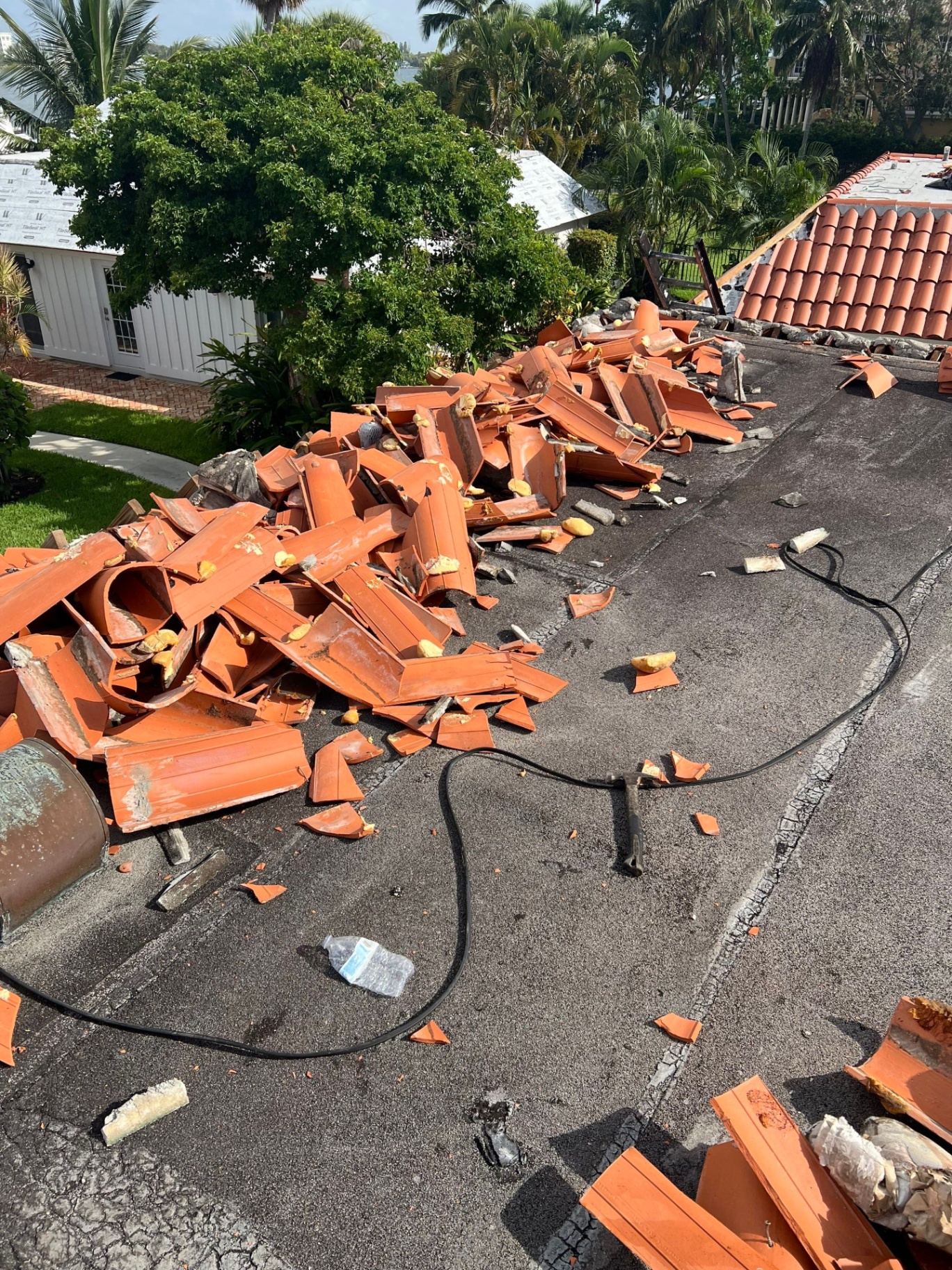
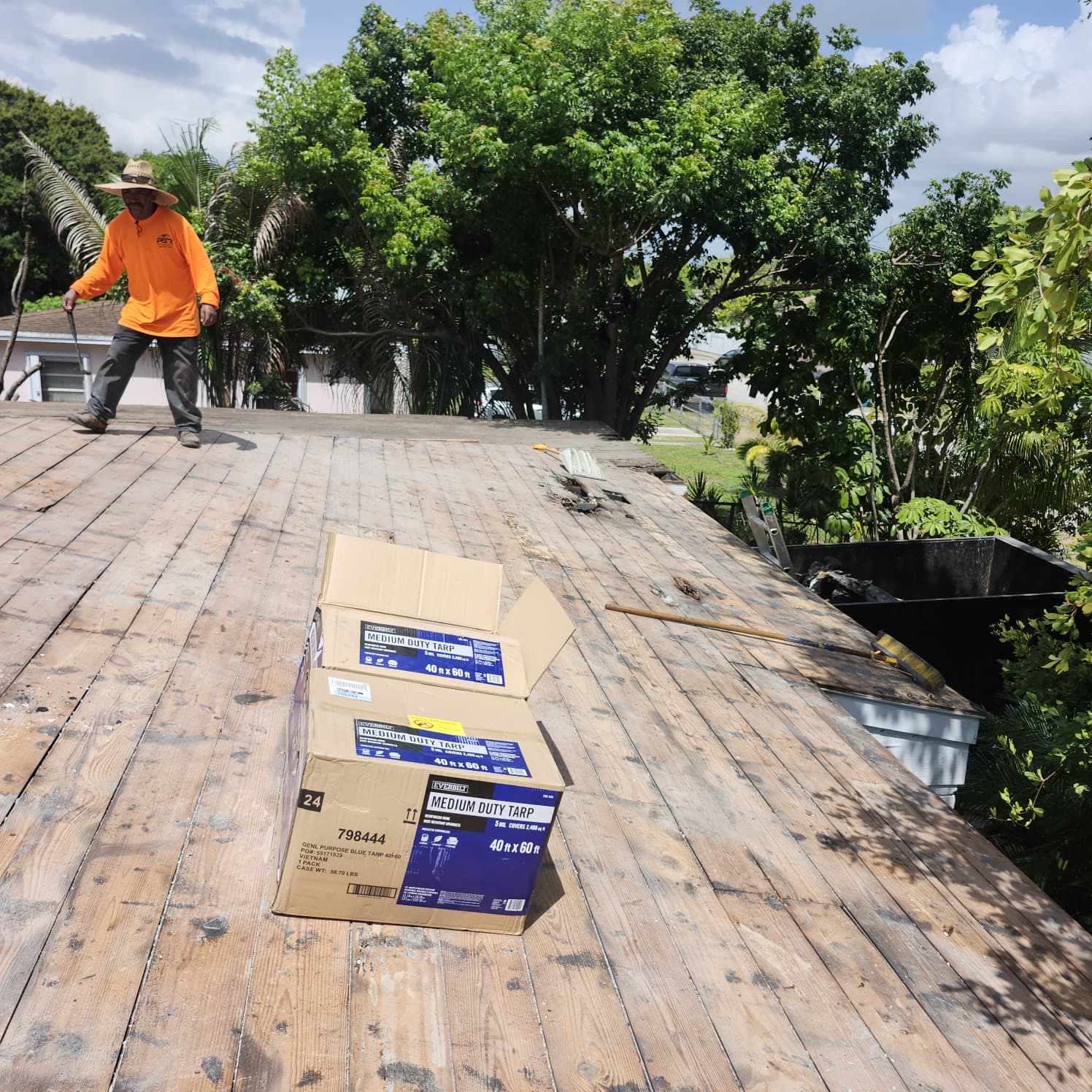
Tear-off day is louder and more physical than most homeowners expect. Crews arrive early, a dumpster occupies the driveway, and hammering transmits through the entire structure for hours. None of that is a problem — it is a well-run job. What causes friction is arriving at that morning unprepared.
A short preparation routine protects your belongings, speeds the crew, and eliminates most of the disputes that surface after a roof installation. Here is exactly what to do, in order.
Two Weeks Before
- Confirm the permit is issued and the inspection sequence is scheduled.
- Notify your HOA or association if you are in a governed community; many require architectural approval and set work-hour windows.
- Tell your neighbors. Driveway access, parking, and noise are easier when they hear it from you first.
- Review your written scope for the decking unit price, edge metal, secondary water barrier, ventilation plan, and dump fees.
- Plan for pets and remote work. Vibration frightens animals, and video calls are not realistic under a tear-off.
The Week Of
Inside the House
Hammering shakes walls. Take down mirrors, framed art, and shelf items on exterior walls and upper floors. Remove fragile items from the tops of cabinets and armoires. Expect fine dust in the attic — cover stored belongings with plastic sheeting, and move anything irreplaceable out entirely. If ceiling light fixtures are loose, tighten them now.
Outside the House
- Move vehicles, boats, trailers, and grills clear of the roof line and driveway.
- Take down patio umbrellas, hanging plants, screens, and wind chimes.
- Relocate potted plants and pool furniture away from the drip line.
- Cover pool equipment and, if the pool is close to the eave, plan for a net or cover.
- Trim branches overhanging the roof so the crew has clean access.
- Identify a water spigot and an exterior outlet the crew may use.
What a Professional Crew Does on Its Side
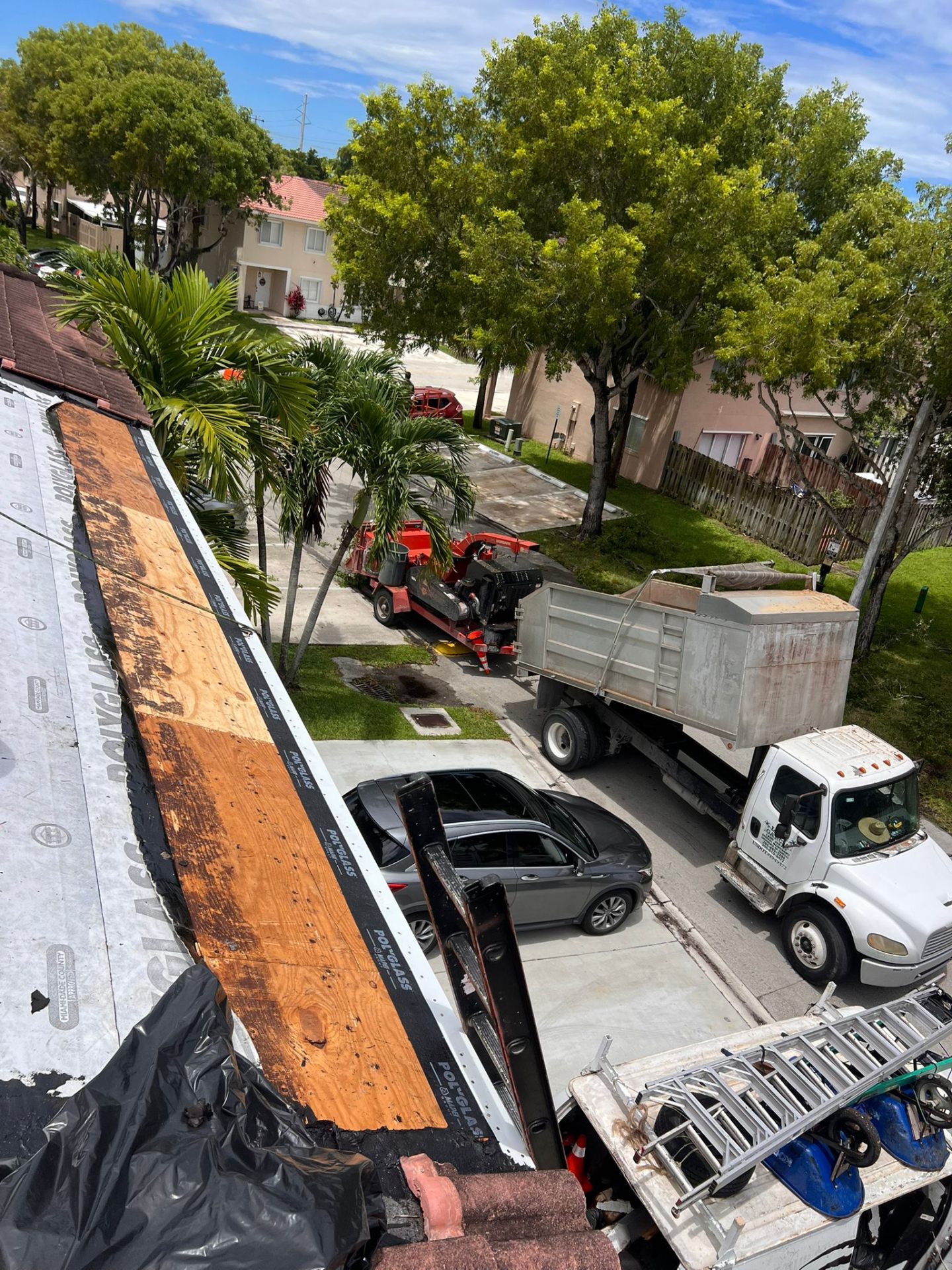
You should see, without asking: tarps and plywood protecting landscaping and walls, a dumpster placed on protective boards, magnetic sweeps for nails at the end of each day, and a daily debris cleanup rather than one pass at the end. Ask where the dumpster will sit and who is responsible if a driveway is stained or cracked. That answer belongs in the contract.
Realistic Timeline
| Day | Typical activity |
|---|---|
| 1 | Protection, tear-off, deck exposed and inspected |
| 1–2 | Deck re-nailing, sheathing repairs, sheathing inspection |
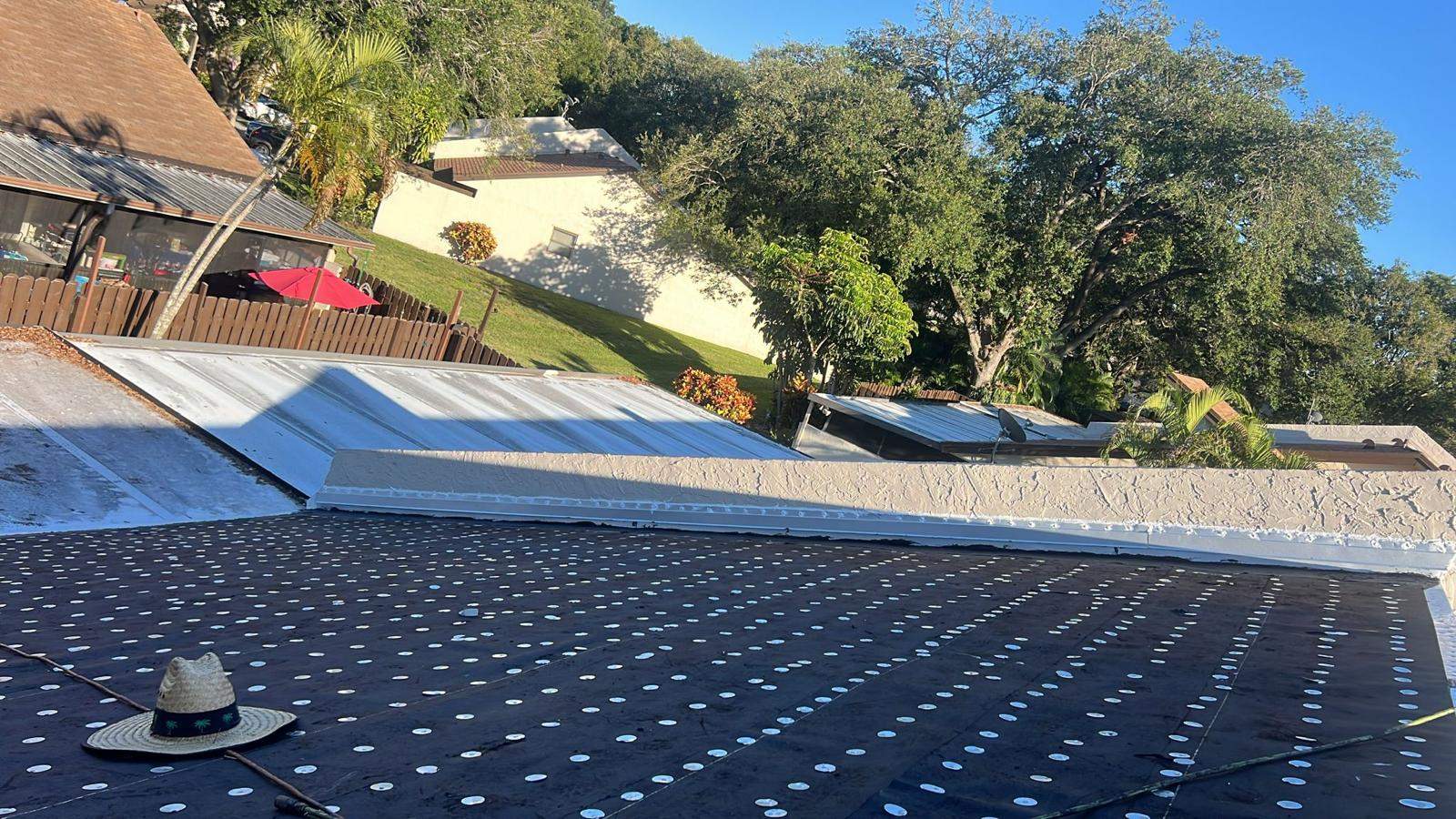
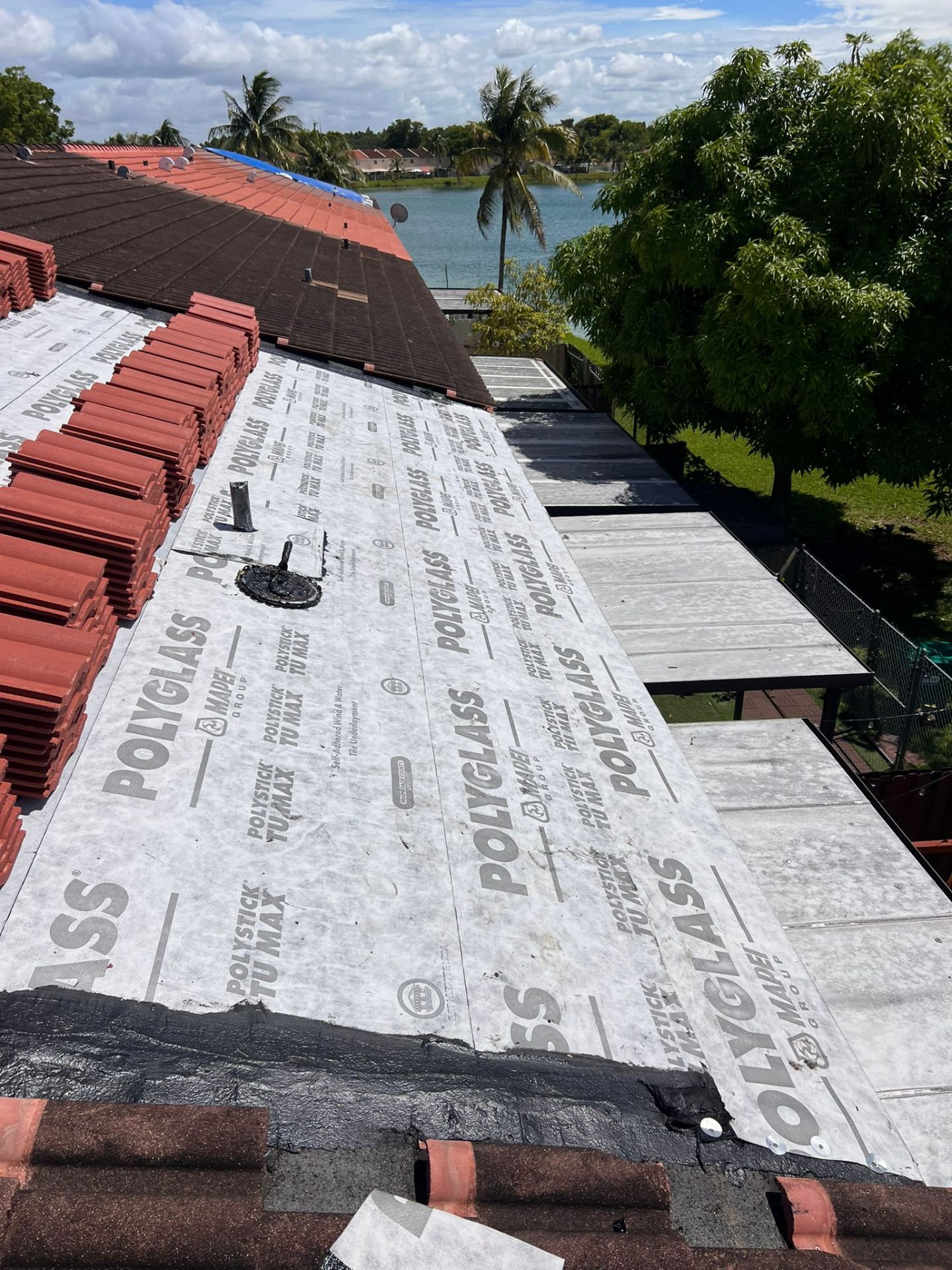
| 2 | Dry-in and secondary water barrier, dry-in inspection |
| 2–4 | Covering installation, flashing, ventilation, edge metal |
| 4–5 | Detail work, final cleanup, final inspection |
Weather moves this. A wet-season afternoon storm can stop work mid-plane, which is why a properly dried-in roof is watertight at the end of every day. If any water reaches the interior overnight, that is an immediate call, and legitimate contractors respond through emergency roofing service rather than waiting for morning.
Neighborhood Logistics Across Miami-Dade
Narrow waterfront streets in Keystone Point, Eastern Shores, and Sans Souci Estates limit dumpster placement and truck staging, so access is planned in advance. Mature tree canopy in Miami Shores, Biscayne Park, and Palm Grove often requires trimming before a crew can safely stage materials. Association-governed properties in Aventura, Sky Lake, and Bay Harbor Islands commonly restrict start times and require certificates of insurance filed with management before the gate opens. Historic districts such as Coral Gables may add material and color review.
The Day It Finishes
Walk the property with the foreman before final payment:
- Run a magnet over the driveway, walkways, and lawn yourself.
- Check gutters and downspouts for debris and correct pitch — this is the natural moment to address gutter installation if the existing run is undersized.
- Inspect stucco, fascia, screens, and pool cage for contact damage.
- Confirm all penetrations are flashed and no old sealant remains as the primary defense.
- Collect the closed permit, final inspection record, product approval numbers, dated photos, and written warranty.
- Schedule your wind mitigation inspection and set a reminder for an annual roof inspection.
Frequently Asked Questions
Do I need to move out during a roof installation?
Almost never. Most families stay. Consider a day away if someone works night shifts, an infant naps midday, or a household member is sensitive to noise and vibration.
Will my ceilings crack?
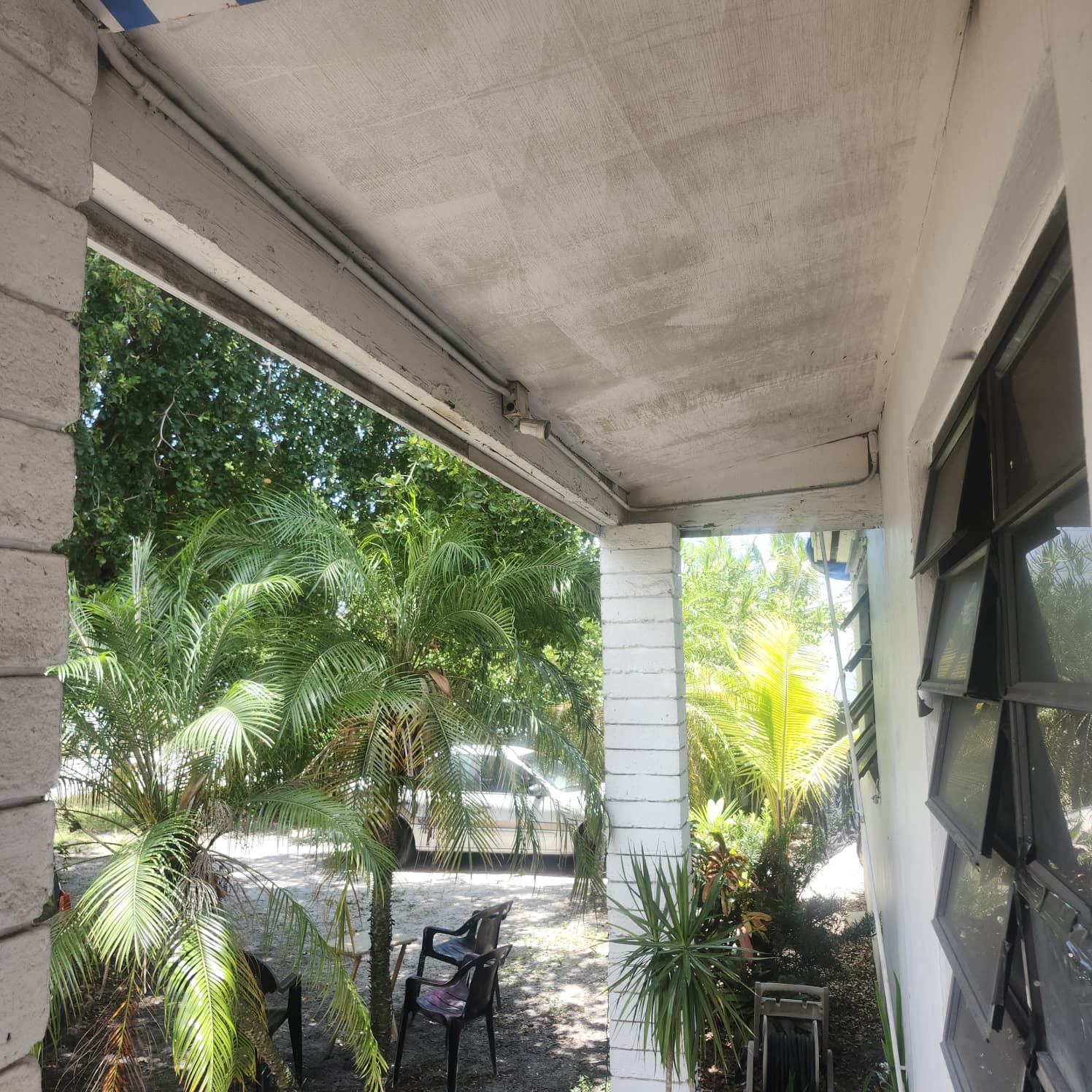
Hairline cosmetic cracking can occur in older plaster from vibration. It is uncommon and cosmetic. Photograph existing ceiling conditions beforehand so there is no ambiguity later.
Can the crew work during rain?
Tear-off pauses in rain. A competent crew only opens what it can dry in that day, and covers exposed areas before storms.
What happens if rotted decking is found?
It gets replaced at the agreed per-sheet price. This is why an unnamed decking unit price in a quote is a red flag, and why the honest range appears only after the deck is exposed.
The Full Series
Start at the beginning with how roof installation permits work in Miami, then ventilation and attic airflow, insurance and wind mitigation savings, and planning rooftop penetrations.
Schedule an Installation Run Like a Project, Not a Surprise
PSR Roofing Company Of Miami is a licensed, insured local contractor delivering permitted, HVHZ-compliant roof installations with daily cleanup and full documentation across Miami-Dade.
Call (786) 889-4090 or request a written roof installation quote.
Visit us: 1811 NE 142nd St, Miami, FL 33181 — view on Google Maps
Need help with Roof Installation?
PSR Roofing is Miami's licensed & insured expert for roof installation. Free estimates, honest pricing, and 24/7 emergency response.