
How to Hire a Licensed Roofing Contractor in North Miami, FL
Hiring the wrong roofing company in North Miami can cost you far more than a bad roof. Between Florida's strict licensing laws, Miami-Dade County's wind-load requirements, and the sheer number of contractors who appear after a storm, the hiring process has real stakes. This guide walks you through every step, from verifying credentials to reading a contract, so you can make a confident, informed decision.
Why North Miami Roofing Has Unique Requirements
Miami-Dade County's Wind Mitigation Standards
Miami-Dade County enforces some of the most demanding building codes in the country, largely because of the lessons learned from Hurricane Andrew in 1992. Any roofing work that requires a permit must comply with the Florida Building Code (FBC) and, in many cases, the High-Velocity Hurricane Zone (HVHZ) provisions that apply specifically to Miami-Dade and Broward counties.
Under HVHZ rules, roofing products must carry a Miami-Dade Notice of Acceptance (NOA) before they can be installed. This applies to shingles, underlayment, metal panels, tile systems, and the fasteners that hold them down. A contractor who skips this step isn't just cutting corners on quality; they're installing a roof that won't pass inspection and may void your homeowner's insurance coverage.
Permit Requirements You Should Know About
In North Miami, a full roof replacement almost always requires a building permit. Repairs that replace more than 25% of the roof surface typically trigger the same requirement. Requirements vary by scope and property type, so confirming with your local building department or a licensed pro before any work begins is the right move.
The permit process matters for you as a homeowner because it creates an official inspection record. That record protects your resale value, satisfies insurance carriers, and gives you documented proof that the work met code. A roofing company that discourages you from pulling permits is a red flag worth taking seriously.
Insurance Implications for South Florida Homeowners
Florida's property insurance market is sensitive to roof condition and installation quality. Insurers frequently request a wind mitigation inspection report, which documents features like roof deck attachment, roof-to-wall connections, and roof covering type. Work performed by an unlicensed contractor, or work done without permits, can complicate a claim or affect your eligibility for wind mitigation discounts. Hiring a properly licensed and insured roofer protects that coverage.
How to Verify a Florida Roofing License
The Two License Types That Matter
Florida issues two primary contractor license categories relevant to roofing. A Certified Roofing Contractor license (license prefix CC) is issued by the Florida Department of Business and Professional Regulation (DBPR) and is valid statewide. A Registered Roofing Contractor holds a local or county license and can only work within that jurisdiction. For North Miami work, either can be valid, but you'll want to confirm the license covers the specific scope of your project.
You can verify any Florida contractor license for free at the DBPR's online license search tool (myfloridalicense.com). Enter the contractor's name or license number and confirm the license is active, not expired, and carries no disciplinary actions.
What the License Search Reveals
The DBPR record shows the license holder's name, the business name they operate under, the license expiration date, and any complaints or administrative actions on file. A clean record with an active license is the baseline. If the name on the license doesn't match the company name on the estimate you received, ask for clarification. Some legitimate companies operate under a DBA (doing business as), but you deserve a clear explanation.
Local Registration in North Miami
Beyond state licensing, some municipalities require contractors to register locally before pulling permits. North Miami has its own building department, and a contractor who regularly works in the area should already be familiar with the local permit process. Ask directly: "Have you pulled permits in North Miami before?" A confident, specific answer tells you a lot.
Insurance: The Coverage That Protects You, Not Just the Contractor
General Liability and Workers' Compensation
Every roofing company you consider should carry two types of insurance: general liability and workers' compensation. General liability covers property damage that might occur during the job. Workers' compensation covers medical costs and lost wages if a worker is injured on your property. Without workers' comp, an injured worker could potentially pursue a claim against your homeowner's policy.
Ask for certificates of insurance before signing anything. The certificate should name your address as the job site, and the policy dates should cover the duration of your project. Call the insurance carrier directly to confirm the policy is active if you have any doubt.
What Adequate Coverage Looks Like
Coverage minimums vary, and Florida law sets baseline requirements, but the right level depends on your project size. The key is that the coverage is current and verifiable, not just a certificate printed months ago for a now-lapsed policy.
Surety Bonds and What They Cover
Some contractors carry a surety bond in addition to insurance. A bond provides a financial guarantee that the contractor will complete the work as agreed. If they abandon the job or fail to meet contract terms, the bond can provide recourse. It's not a universal requirement, but it's a sign of a contractor who takes their professional commitments seriously.
Comparing Estimates: What the Numbers Are Really Telling You
What a Complete Estimate Should Include
A written estimate from a reputable roofing contractor should specify the scope of work in detail: the materials to be used (including manufacturer, product line, and color), the method of installation, how existing materials will be removed and disposed of, whether a permit is included, and the warranty terms for both materials and labor. Vague line items like "roofing work" with a lump sum are a signal to ask more questions.
For North Miami projects, the estimate should also reference HVHZ compliance and specify that materials carry a Miami-Dade NOA. If it doesn't mention this, ask the contractor to confirm in writing that all materials meet HVHZ requirements.
Reading the Warranty Terms Carefully
Manufacturer warranties on roofing materials can range from 20 years to lifetime coverage, but the terms matter as much as the duration. Many manufacturer warranties require installation by a certified installer and registration within a set window after installation. A contractor who isn't certified by the manufacturer they're installing may not be able to activate the full warranty on your behalf.
Labor warranties are separate from material warranties. Ask specifically: how long does the contractor warranty their own workmanship, and what does that warranty cover? Get the answer in writing.
Comparing Multiple Estimates Without Getting Confused
Getting at least three estimates is standard advice, and it's good advice. But comparing them requires that you're comparing like for like. Use this checklist when reviewing competing bids:
| Estimate Element | What to Confirm |
|---|---|
| Material brand and product line | Same product across bids, or equivalent NOA-approved alternatives |
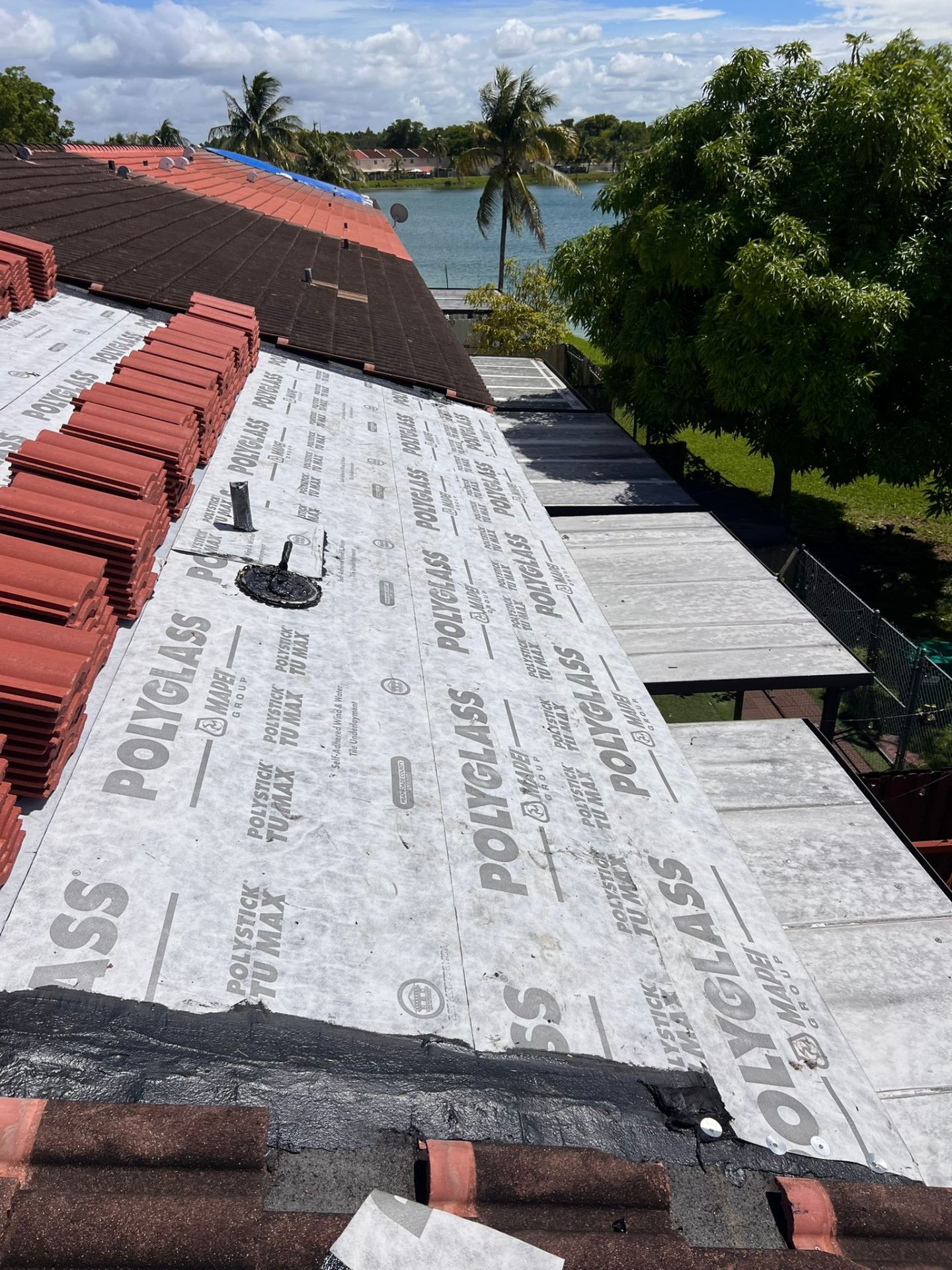
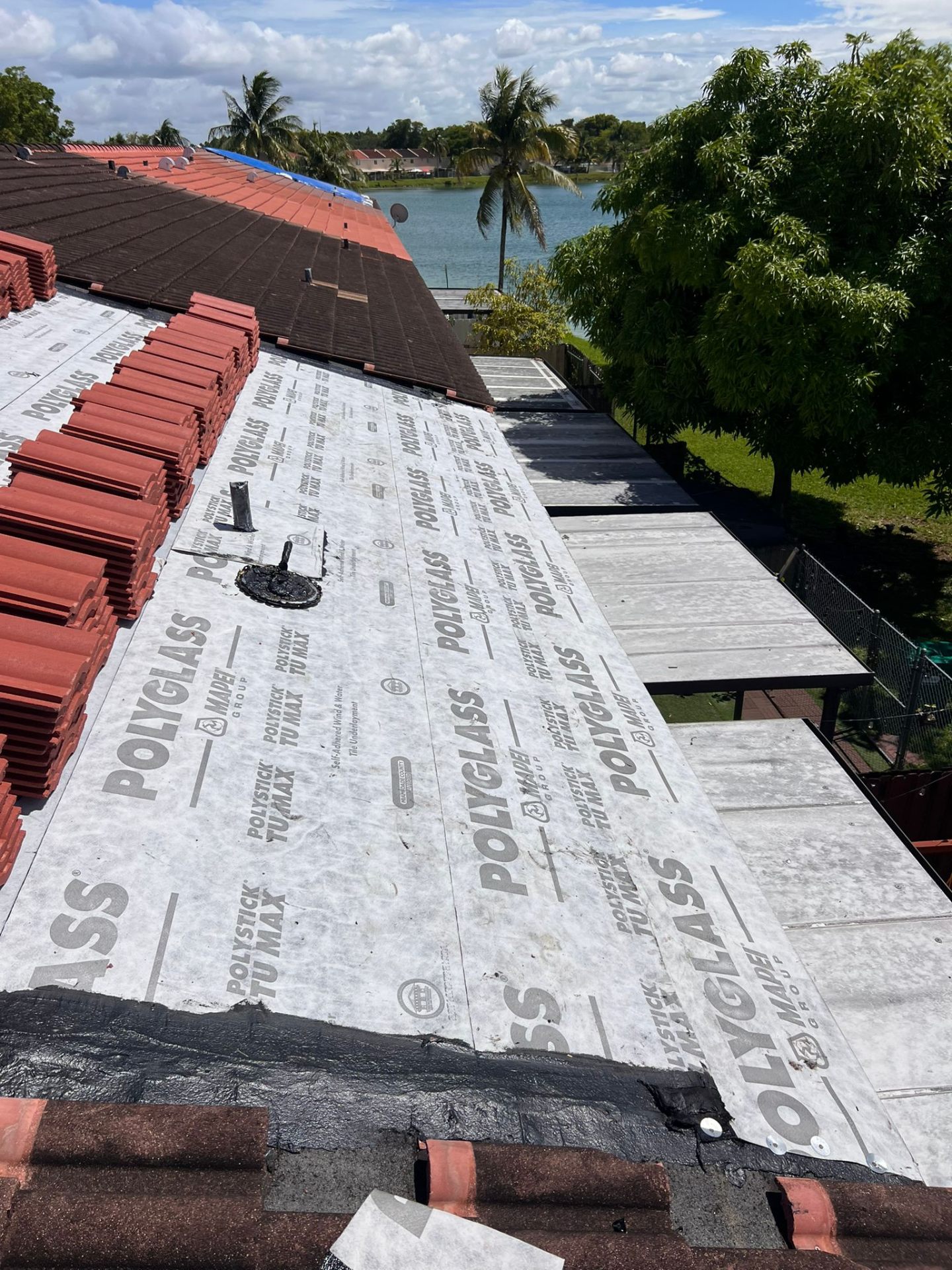
| Underlayment specification | Type (peel-and-stick, synthetic, felt) and HVHZ compliance |
| Permit inclusion | Permit fees included or billed separately |
| Tear-off and disposal | Full removal of existing layers included |
| Flashing work | New flashing at penetrations, valleys, and edges |
| Warranty terms | Manufacturer warranty activation + labor warranty duration |
| Timeline | Estimated start date and project duration |
Red Flags That Signal a Problem Before Work Begins
Storm Chasers and Door-to-Door Solicitation
After a significant weather event, North Miami and the broader Miami area attract contractors from out of state who have no local license, no local relationships, and no accountability once they leave. They often offer unusually fast timelines and pressure you to sign quickly. Florida law prohibits contractors from soliciting homeowners in a declared disaster area within 30 days of the event, but enforcement is imperfect. If someone knocks on your door the day after a storm, verify their license before any conversation goes further.
Requests for Large Upfront Payments
A reasonable deposit on a roofing project is normal. A request for full payment, or a very large percentage of the total, before any work begins is not. Standard practice is a deposit at signing, a progress payment when materials are delivered or work begins, and a final payment upon satisfactory completion and inspection. Tie your payment schedule to verifiable milestones, and put it in the contract.
No Physical Address or Local Presence
A contractor who operates only from a cell phone number and a generic email address is harder to reach if something goes wrong. Ask for a physical business address. Check that the address is real. A roofing company with a genuine local presence in North Miami or the surrounding area has more skin in the game than one passing through.
Questions to Ask Before You Sign
The Essential Pre-Contract Checklist
Before committing to any roofing company, run through these questions in your conversation or written communication:
Can you provide your Florida license number so I can verify it with the DBPR?
Will you pull the permit for this job, and is that included in the estimate?
Are all materials you plan to use Miami-Dade NOA approved?
Can I see a current certificate of insurance for both general liability and workers' comp?
Who will be on-site supervising the crew, and are they employees or subcontractors?
What does your labor warranty cover, and for how long?
What is the payment schedule, and what milestones trigger each payment?
How do you handle unexpected issues found during tear-off, like damaged decking?
A contractor who answers these questions clearly and without hesitation is demonstrating exactly the kind of transparency you want. Vague or evasive answers deserve follow-up.
Understanding the Contract Before You Sign It
The contract should reflect everything you discussed. If the salesperson promised something verbally, it needs to be in writing. Florida's contractor lien law also means that suppliers and subcontractors who aren't paid by the contractor can place a lien on your property even if you paid the contractor in full. Ask your contractor about their lien waiver process, and consider requesting conditional lien waivers from major material suppliers as the project progresses.
What a Good Timeline Looks Like
A standard residential roof replacement in North Miami typically takes one to three days of active work, depending on roof size, complexity, and the number of penetrations (vents, skylights, chimneys). The permit process adds time before work can begin. Factor in material lead times, especially if you're selecting a specific tile profile or color. A contractor who promises an unrealistically fast start without mentioning the permit step may be planning to skip it.
Working With PSR Roofing Company of Miami
Local Knowledge That Matters on Every Job
PSR Roofing Company of Miami operates in North Miami and the surrounding area with direct familiarity with Miami-Dade County's permit process and HVHZ requirements. That local knowledge shows up in the details: knowing which inspectors to coordinate with, understanding the specific wind-load expectations for different roof types, and being reachable when questions come up after the job is done.
Whether you need a roof inspection in Miami to assess current condition, a full replacement, or targeted repairs after storm damage, PSR Roofing approaches each project with the same process: verify scope, confirm code compliance, pull the required permits, and document the work properly.
Services Offered for North Miami Homeowners
PSR Roofing's scope covers the full range of residential roofing needs: new roof installation, roof replacement, roof repair, professional roof inspection services, emergency roofing response, and gutter installation. Having one contractor who can handle all of these means continuity, accountability, and a single point of contact for your home's roof over time.
What the Estimate Process Looks Like
PSR Roofing offers free estimates for North Miami homeowners. The process starts with an on-site assessment of your current roof, a conversation about your goals and timeline, and a written proposal that details materials, scope, permit inclusion, and warranty terms. There's no pressure to sign on the spot, and every question you have during that visit is worth asking.
Frequently Asked Questions
How do I verify a roofing contractor's license in Florida?
Visit myfloridalicense.com and use the license search tool. Enter the contractor's name or license number to confirm the license is active, current, and free of disciplinary actions. This search is free and takes less than two minutes.
Do I need a permit for a roof replacement in North Miami?
In most cases, yes. A full replacement almost always requires a permit under Florida Building Code. Repairs that affect more than 25% of the roof surface typically do as well. Requirements can vary, so confirm with the North Miami building department or your contractor before work begins.
What is a Miami-Dade Notice of Acceptance (NOA), and why does it matter?
An NOA is Miami-Dade County's product approval for roofing materials used in the High-Velocity Hurricane Zone. Any material installed on a permitted roofing project in Miami-Dade must carry a current NOA. Materials without this approval won't pass inspection and may not provide the wind resistance your home needs.
Is it safe to hire a contractor who offers a lower estimate than everyone else?
A lower estimate isn't automatically a problem, but it warrants scrutiny. Ask what's different: Are they using a lesser-grade material? Skipping the permit? Not including full tear-off? Once you identify the source of the difference, you can make an informed comparison. A significantly lower bid that can't be explained by a clear scope difference is worth treating cautiously.
What should I do if a contractor damages my property during the job?
Document the damage with photos immediately and notify the contractor in writing. This is exactly why general liability insurance matters. A properly insured contractor has coverage to address property damage that occurs during the project. If the contractor is unresponsive, contact their insurance carrier directly using the certificate of insurance you obtained before the job started.
How long does a roof replacement typically last in South Florida?
Lifespan depends heavily on material type. Concrete or clay tile roofs in South Florida can last several decades with proper maintenance. Asphalt shingles rated for HVHZ conditions typically carry manufacturer warranties in the 25-to-30-year range, though actual performance depends on installation quality, ventilation, and maintenance. A licensed contractor can advise on the best material choice for your specific home and budget.
Conclusion
Hiring a roofing contractor in North Miami isn't complicated once you know what to check. Verify the license, confirm the insurance, insist on permits, and get everything in writing. The roof over your home is one of its most critical components, especially in South Florida's climate, and the contractor you choose determines how well it performs for the next several decades. If you're ready to start with a no-pressure assessment from a locally based team, schedule your free roofing estimate with PSR Roofing today and get a clear picture of what your roof needs.
Need help with Roof Repair?
PSR Roofing is Miami's licensed & insured expert for roof repair. Free estimates, honest pricing, and 24/7 emergency response.