
How to Evaluate Roof Replacement Quotes From a North Miami Roofing Company
Getting three quotes for a new roof sounds simple enough. Then the estimates arrive and no two look alike. Different materials, different line items, wildly different totals. For North Miami homeowners navigating this process, the confusion is real, and the stakes are high. This guide walks you through exactly what to look for, what to question, and how to make a confident decision without second-guessing yourself for the next twenty years.
Why Roof Replacement Quotes in North Miami Look So Different
South Florida's Climate Demands Specific Materials
North Miami sits in a high-velocity hurricane zone. That designation, defined by the Florida Building Code, requires roofing materials to meet specific wind-uplift ratings. Not every contractor prices this the same way. One estimate might spec a standard three-tab shingle while another prices architectural shingles rated for 130-mph winds. Neither contractor is necessarily wrong, but the difference matters enormously when the next tropical storm comes through. When you receive estimates, confirm that every proposal references Florida Product Approval numbers for the materials listed. If a quote omits that detail, ask for it in writing before you proceed.
Labor Costs Vary More Than You Might Expect
Material costs for comparable products tend to be fairly close across contractors. Labor is where quotes diverge most sharply. Factors that drive labor costs include roof pitch, the number of layers being torn off, the complexity of valleys and penetrations, and whether the crew handles disposal on-site. A steep-pitch tile roof on a two-story home in North Miami takes significantly more labor than a low-slope flat roof on a single-story bungalow. Make sure each quote breaks labor out separately so you can compare it against a similar scope of work.
Permit and Inspection Fees Are Not Optional
Miami-Dade County requires a permit for virtually every roof replacement. Permit fees vary by project value, and some contractors include them in their base quote while others list them as an add-on. A quote that omits permit costs is not necessarily cheaper. It may simply be hiding a line item you will pay later. Ask each contractor to confirm whether permit procurement and the required inspections are included, and get that confirmation in writing on the proposal itself.
The Anatomy of a Trustworthy Roofing Estimate
What Should Appear on Every Line
A thorough written estimate from a reputable North Miami roofing contractor will include, at minimum, the following elements:
Scope of work: Specific description of tear-off, decking inspection, underlayment type, and finish material with manufacturer name and product line.
Material specifications: Shingle weight class, tile profile, or membrane type, plus Florida Product Approval number.
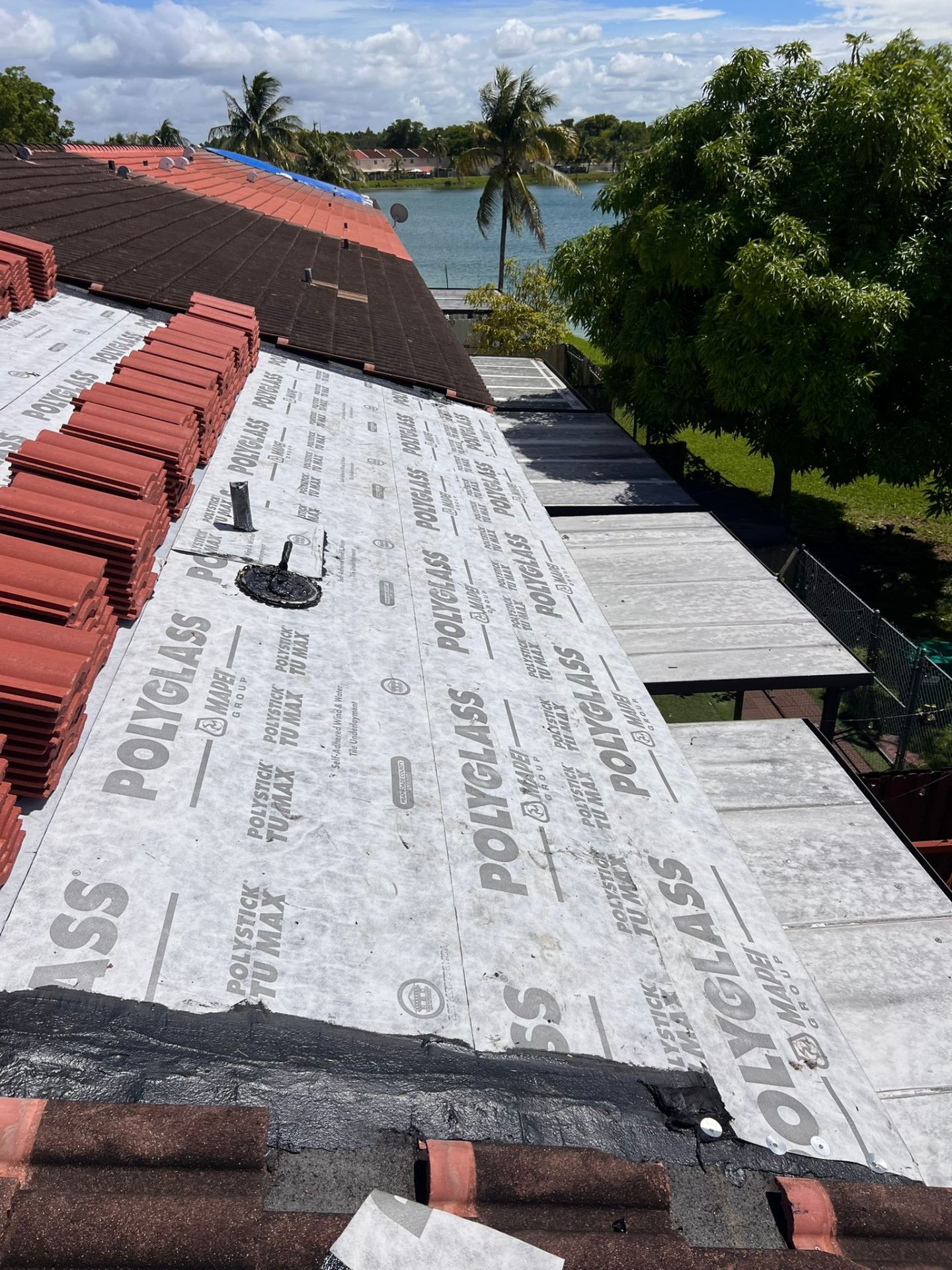
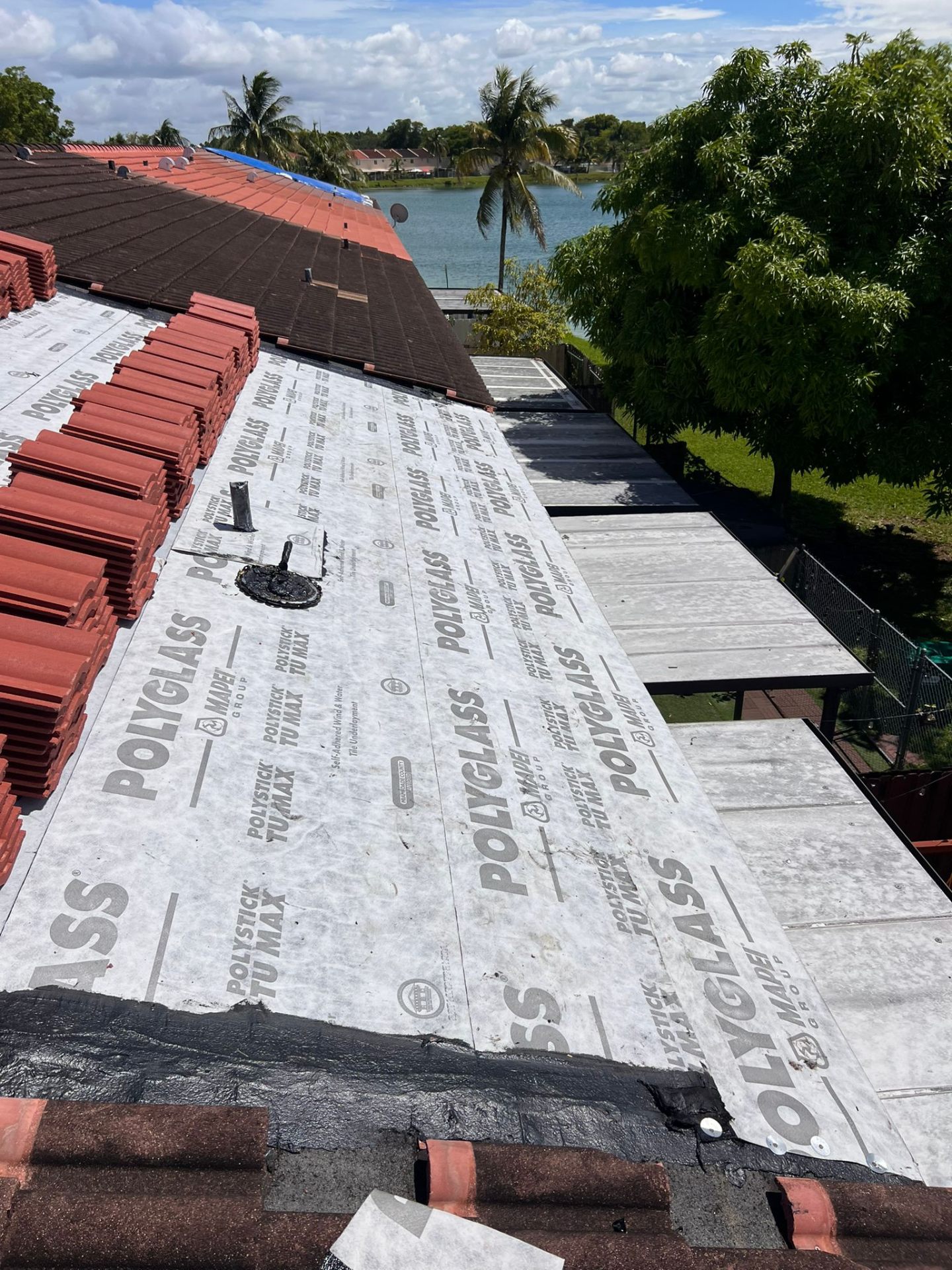
Underlayment details: In South Florida, synthetic underlayment or peel-and-stick membranes are common for added moisture protection. The spec should name what is being installed.
Flashing and penetration work: Chimneys, pipe boots, skylights, and wall transitions all require proper flashing. If these are not listed, ask whether they are included.
Warranty terms: Both the manufacturer's material warranty and the contractor's workmanship warranty, with duration and transferability noted.
Payment schedule: A reasonable deposit followed by milestone or completion payments. Requests for full payment upfront are a warning sign.
Permit and disposal: Confirmed as included or clearly listed as a separate line item.
Timeline: Estimated start date and projected completion window.
If any of these elements are missing from a quote you receive, that is not a minor oversight. It is a gap that could cost you later.
Reading the Warranty Section Carefully
Manufacturer warranties and workmanship warranties are two separate things, and both matter. A manufacturer's warranty covers material defects, typically for ten to fifty years depending on the product tier. A workmanship warranty covers installation errors, and this one is entirely the contractor's responsibility. Some workmanship warranties last one year. Others extend to ten or more. When comparing estimates, note what each contractor is offering on workmanship, because that is the warranty most likely to be relevant if something goes wrong in the first few years after installation.
The Role of a Pre-Estimate Inspection
A contractor who quotes a roof replacement without walking the roof first is guessing at the scope. Reputable contractors perform a roof inspection before finalizing any estimate. That inspection should assess the decking condition, the state of existing underlayment, the number of layers currently on the roof, and the condition of all flashings. If a contractor quotes you over the phone or from photos alone, treat that number as a rough ballpark, not a binding estimate. Surprises discovered mid-job, like rotted decking, almost always cost extra. A thorough upfront inspection reduces those surprises significantly.
A Side-by-Side Comparison Framework
Once you have two or three written estimates in hand, lay them out using a comparison framework like the one below. This makes it easier to spot where quotes diverge and ask the right follow-up questions.
| Comparison Factor | What to Look For | Red Flag |
|---|---|---|
| Material specification | Named product with Florida Product Approval number | Generic description like "standard shingles" |
| Underlayment type | Synthetic or peel-and-stick named explicitly | No mention of underlayment at all |
| Tear-off included | Confirmed in scope of work | Vague language or listed as optional add-on |
| Decking inspection/repair | Noted as part of process, with per-sheet repair rate stated | No mention of decking condition |
| Permit procurement | Included or clearly itemized | Not mentioned at all |
| Workmanship warranty | Duration and coverage stated in writing | Verbal-only promise, no written terms |
| Payment terms | Staged payments tied to milestones | Full payment required before work begins |
| License and insurance | Florida contractor license number, liability + workers comp certificates | Contractor cannot provide these on request |
Use this table as a checklist. Any column where a contractor cannot fill in the left-hand answer is worth a direct conversation before you sign anything.
Vetting the Contractor Behind the Quote
License Verification Is Non-Negotiable in Florida
Florida requires roofing contractors to hold a state-issued license. You can verify any contractor's license status through the Florida Department of Business and Professional Regulation (DBPR) website. Search by license number or business name. Confirm the license is active, covers the roofing trade, and has no disciplinary history. This takes about two minutes and removes a significant category of risk. A North Miami roofing contractor who hesitates to provide their license number is not a contractor you want on your roof.
Insurance Certificates and What They Should Show
Ask for a certificate of insurance before any work begins. The certificate should show general liability coverage and workers' compensation coverage. Workers' comp matters because if a crew member is injured on your property and the contractor lacks coverage, you could face liability. The certificate should name your address or at minimum confirm active coverage. Call the insurer directly to verify the policy is current if you want to be thorough. It is a reasonable step, and legitimate contractors expect it.
How to Read Roofing Company Reviews Critically
Online reviews provide useful signal, but they require some interpretation. Look for patterns rather than individual scores. A contractor with a 4.7-star average across a meaningful number of reviews, like PSR Roofing Company of Miami's current standing, tells you more than a single five-star rating. Pay attention to how the business responds to negative reviews. A measured, professional response to a complaint suggests accountability. Responses that deflect blame or argue with the reviewer suggest the opposite. Also check whether reviews mention specific details about the job, the crew's behavior, and cleanup, because vague reviews are harder to evaluate than specific ones.
When searching for roofing company reviews, look across multiple platforms rather than relying on a single source. Cross-referencing helps you spot outliers and confirms consistency.
The Lowest Quote Is Not Always the Best Value
What a Significantly Lower Estimate Usually Means
When one estimate comes in noticeably lower than the others, there are a few common explanations. The contractor may be using lower-grade materials that do not meet Miami-Dade wind requirements. They may be planning to re-roof over existing layers rather than performing a full tear-off, which Florida code restricts and which hides problems rather than solving them. Or they may be omitting permit costs, planning to skip the permit entirely, or underestimating the labor involved and planning to cut corners mid-project. None of these scenarios serve the homeowner.
That does not mean the lowest quote is always wrong. Sometimes a contractor is simply more efficient or has lower overhead. The way to tell the difference is to compare the scope of work line by line. If the low-bid contractor is proposing the same materials, the same tear-off, the same underlayment, and the same warranty as the others, then the lower number may genuinely reflect efficiency. If the scope is thinner, the price difference is not a deal, it is a reduction in what you are buying.
Long-Term Cost Considerations for North Miami Homes
A roof in South Florida faces intense UV exposure, seasonal humidity, and the ongoing threat of tropical weather. Materials that perform adequately in a mild climate may degrade faster here. Spending more upfront for a higher-quality underlayment, impact-resistant shingles, or a properly installed tile system can reduce the frequency of repairs over the life of the roof. When you evaluate estimates, factor in the manufacturer's warranty length and the contractor's track record with the specific product they are recommending. A longer warranty on quality materials often reduces total cost over a ten to fifteen year horizon.
Questions to Ask Every Contractor Before You Sign
Operational and Crew Questions
The answers to these questions reveal a lot about how a contractor actually operates:
Will your own employees perform the installation, or will you subcontract the work? (If subcontracted, confirm the subs carry their own insurance.)
Who is the project supervisor, and will they be on-site during installation?
How do you handle unexpected decking damage discovered during tear-off?
What is your process for protecting the interior of my home if rain occurs during the project?
How do you handle debris and cleanup at the end of each workday?
Documentation and Post-Job Questions
Will you provide a final inspection report and photos of the completed installation?
How do I register the manufacturer's warranty after the job is complete?
What is your process if I notice an issue within the first year after installation?
Can you provide references from recent jobs in North Miami or the surrounding area?
A contractor who answers these questions clearly and without hesitation is demonstrating professional confidence. Vague answers, deflection, or irritation at being asked are themselves useful information.
Making the Final Decision With Confidence
When to Trust Your Gut (and When Not To)
After you have compared scopes, verified licenses, checked insurance, and read reviews, you may still have two contractors who look roughly equivalent on paper. At that point, your impression of how they communicate matters. Did they return calls promptly? Did they explain their proposal clearly without pressuring you? Did the person who came to your home seem knowledgeable about South Florida-specific requirements? These soft signals reflect how the contractor will behave if a problem arises mid-project.
On the other hand, do not let a charming sales pitch override a missing license or a vague scope of work. Likability is a useful tiebreaker between two equally qualified contractors. It is not a substitute for proper documentation.
Putting It Together for Your North Miami Roof Replacement
The homeowners who feel best about their roof replacement decisions are the ones who treated the quote comparison process as a genuine evaluation, not just a price check. They asked for written scopes, verified credentials, read warranties carefully, and chose a contractor based on the full picture. PSR Roofing Company of Miami works with North Miami homeowners through exactly this process, providing detailed written estimates, walking every roof before quoting, and explaining each line item so there are no surprises when the project starts. That kind of transparency is what a major home investment deserves.
If you want to explore what a professional roof replacement looks like for your specific home, the process starts with a thorough inspection and a written estimate that covers every element described in this guide.
Frequently Asked Questions
How many quotes should I get for a roof replacement in North Miami?
Three written quotes is the standard recommendation. It gives you enough data to identify outliers on both the high and low end, and enough comparison points to evaluate scope differences meaningfully. Fewer than two makes it difficult to know whether a price is reasonable for your area.
Is it legal to re-roof over existing shingles in Florida?
Florida Building Code limits the number of roofing layers allowed. In most cases, a full tear-off is required before a new installation. Requirements vary by municipality and roof type, so confirm the applicable rule with your local building department or ask your contractor to reference the relevant code section in their proposal.
What does a Florida roofing contractor license number look like?
Florida roofing contractor licenses issued by the DBPR typically begin with the prefix "CCC" followed by a series of numbers. You can verify any license at the DBPR's online search portal by entering the license number or the contractor's business name.
Should I be worried if a contractor asks for a deposit?
A reasonable deposit is standard practice and helps contractors cover material orders before the job begins. The concern arises when the deposit requested is very large relative to the total project, or when a contractor asks for full payment before any work starts. A staged payment structure tied to project milestones is the most homeowner-friendly arrangement.
How long does a roof replacement typically take in North Miami?
Most residential roof replacements in North Miami take one to three days for the installation itself, depending on roof size, pitch, and material type. Tile roofs generally take longer than shingle roofs. Permit processing time varies and can add days or weeks to the overall timeline before work begins, so factor that into your planning.
What if I disagree with something in the final invoice that was not on the original estimate?
This situation is best prevented by having a detailed written contract before work begins. If a discrepancy arises, reference the original written scope and ask the contractor to explain the deviation in writing. Legitimate additional charges usually stem from discovered decking damage or scope changes you approved mid-project. Charges that appear without prior discussion or written change orders are worth disputing formally.
Conclusion
Comparing roof replacement quotes takes more than scanning the bottom line on three pieces of paper. It requires reading scope details, verifying credentials, understanding warranty terms, and asking the right questions before anyone picks up a nail gun. North Miami homeowners who go through this process carefully end up with better outcomes and fewer surprises. Ready to start with a contractor who puts every detail in writing? Schedule your free roof estimate with PSR Roofing Company of Miami and see exactly what a thorough, transparent proposal looks like.
Need help with Roof Repair?
PSR Roofing is Miami's licensed & insured expert for roof repair. Free estimates, honest pricing, and 24/7 emergency response.