
Flat Roof Ponding Water in North Miami: How to Spot It and What to Do Next
After a South Florida downpour, a little water on your flat roof is expected. What should not be there 48 hours later is a visible pool of standing water. In North Miami, where the rainy season runs roughly six months and afternoon storms can drop several inches in an hour, ponding water is one of the most common flat roof problems homeowners and building owners face. Left alone, it quietly accelerates structural damage. This guide walks you through how to identify it, why it happens, and the repair options that actually solve the problem.
What Counts as Ponding Water (and Why 48 Hours Is the Benchmark)
The Industry Definition
The roofing industry generally defines ponding water as any standing water that remains on a flat or low-slope roof surface more than 48 hours after rain has stopped. That window gives gravity and evaporation a fair chance to clear the surface. If water is still sitting at the 48-hour mark, something is preventing proper drainage, and that something needs attention.
Why North Miami Roofs Are Especially Vulnerable
North Miami sits in a subtropical climate where intense, short-duration storms are the norm rather than the exception. A roof designed to drain moderate rainfall may be overwhelmed when several inches fall within 90 minutes. Combine that with the flat or very low-pitch geometry common on mid-century concrete block homes and commercial buildings throughout the area, and you have conditions that make ponding a recurring issue rather than a one-off event. The city's older housing stock, much of it built before modern drainage standards, adds another layer of risk.
How to Check Your Roof Safely
You do not need to climb onto the roof to get a first look. After a storm clears, check from a second-floor window, a ladder positioned at the eave (without stepping onto the surface), or by inspecting interior ceilings for water stains or soft spots. If you can see a reflective pool or notice the ceiling drywall bulging, water has already been sitting long enough to matter. At that point, a professional inspection is the right next step rather than a DIY investigation on a wet, potentially compromised surface.
The Most Common Causes of Flat Roof Ponding in North Miami
Inadequate or Blocked Drainage
Most flat roofs rely on internal drains, scuppers (openings cut through the parapet wall), or gutters to move water off the surface. When any of these become clogged with leaves, debris, or sediment from South Florida's sandy soil, water has nowhere to go. Even a partially blocked scupper can cause significant pooling during a heavy rain event. Regular clearing of these outlets is the simplest preventive measure a property owner can take.
Structural Deflection and Sagging
Over time, the roof deck itself can develop low spots. This happens when the underlying structure settles, when wood decking absorbs moisture and warps, or when a concrete deck develops cracks that allow water infiltration into the substrate. Once a low spot forms, water consistently collects there with every rain event, accelerating the deterioration of that exact location. The weight of standing water also adds load to an already weakened area, which compounds the problem.
Membrane Deterioration and Improper Slope
Flat roofs are not truly flat. They are designed with a slight pitch, typically at least one-quarter inch of drop per foot of horizontal run, to encourage water to move toward drains. When the membrane (whether modified bitumen, TPO, EPDM, or built-up roofing) begins to blister, crack, or separate at seams, it can create micro-dams that disrupt that gentle slope. An aging membrane that has lost its elasticity is also far less capable of handling the thermal expansion and contraction that North Miami's heat puts it through daily.
Ponding Water Does More Damage Than Most Owners Realize
Accelerated Membrane Breakdown
Standing water is heavier than it looks. A single inch of water across a 1,000-square-foot roof adds more than five tons of load. Beyond weight, prolonged moisture contact breaks down the chemical bonds in roofing membranes faster than UV exposure alone. Algae and biological growth follow, further degrading the surface and staining it in ways that make future inspections harder to read accurately.
Structural Risk and Interior Water Intrusion
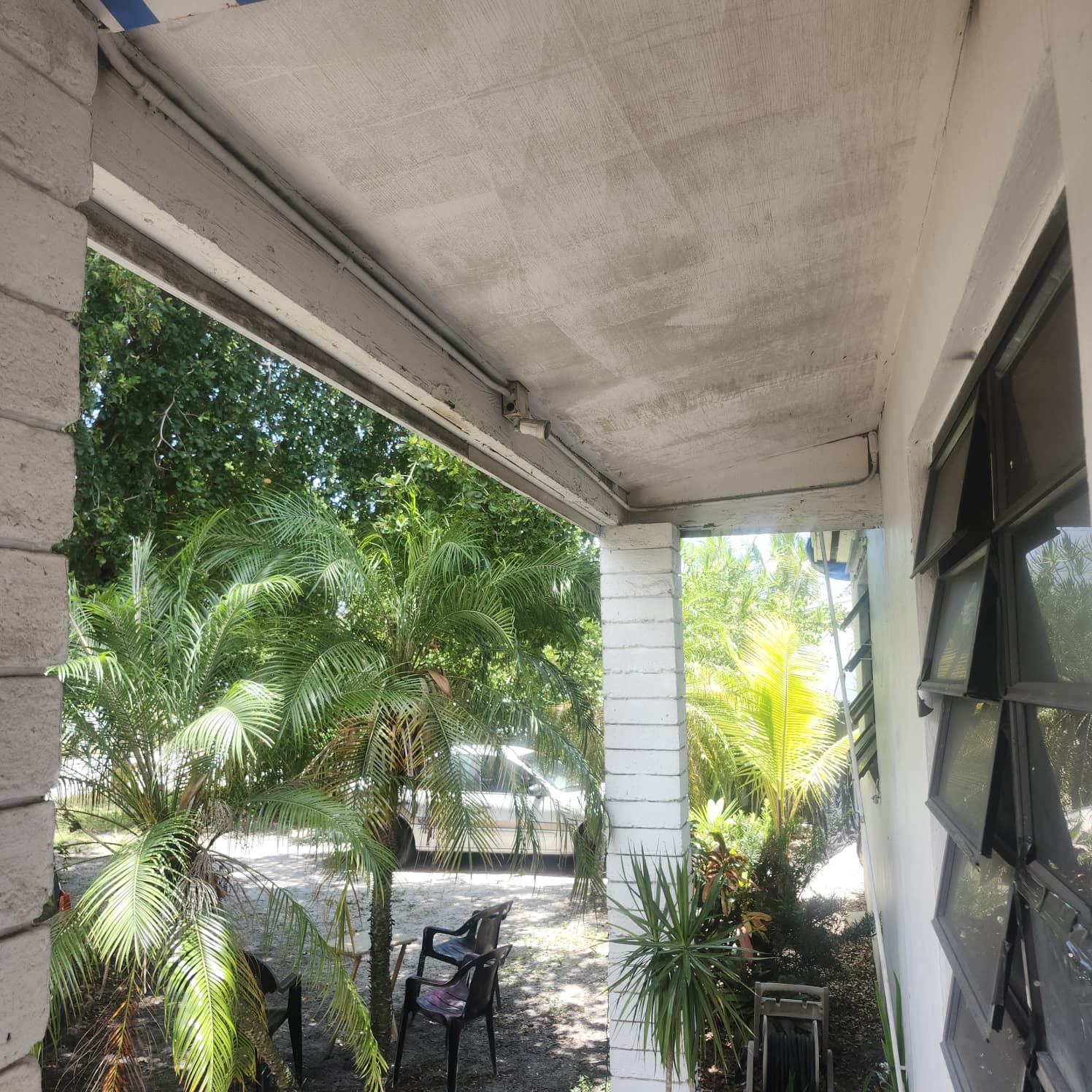
Once water finds a pathway through the membrane, it does not stop at the roof deck. It wicks into insulation layers, reducing their thermal performance, and eventually reaches the structural deck below. In North Miami homes with wood framing or wood sheathing beneath a flat roof, this creates conditions where rot and mold can develop inside wall cavities without any visible sign on the interior ceiling for months. By the time a stain appears, the damage is often more extensive than the stain suggests.
Insurance and Code Complications
Florida's property insurance market is sensitive to roof condition, particularly for older flat roofs. Documented ponding water that leads to interior damage can complicate claims if an insurer determines the underlying drainage issue was a pre-existing maintenance problem. Requirements vary by policy and area, so it is worth reviewing your coverage terms and consulting a licensed professional if you suspect ongoing ponding has caused interior damage. Staying ahead of the problem is almost always less complicated than addressing it after a claim.
Repair Options: Matching the Fix to the Problem
Drain Clearing and Scupper Restoration
If the cause is simply blockage, clearing and restoring the drainage system is the most straightforward repair. A qualified roofing contractor will remove debris, flush internal drains, and check that scuppers are properly sized and free of mortar or sealant that may have been applied incorrectly in the past. In some cases, adding a secondary drain or overflow scupper provides a backup path so that a single blockage never causes significant ponding again.
Re-Sloping and Tapered Insulation
When the problem is structural, the long-term solution often involves installing tapered insulation boards beneath a new membrane layer. These boards are manufactured with a built-in slope, so they redirect water toward drains without requiring structural changes to the deck itself. This approach is commonly used during a full roof replacement but can also be applied as a targeted repair over a persistent low spot. PSR Roofing Company of Miami evaluates each roof individually to determine whether spot repair or a broader re-slope is the more practical solution for the property.
Membrane Repair and Full Replacement
Localized membrane failures, such as open seams, blisters, or punctures, can often be addressed with targeted repairs: cleaning the affected area, applying compatible patching material, and resealing the seam or penetration. When the membrane is broadly aged or has multiple failure points, a full replacement with a modern system (modified bitumen, TPO, or a fluid-applied coating) gives the roof a reset and the opportunity to correct drainage geometry at the same time. The right choice depends on the membrane's overall condition, the age of the system, and how many repair cycles it has already been through.
A Quick Comparison: Repair vs. Replacement for Ponding Issues
| Scenario | Likely Best Approach | Typical Outcome |
|---|---|---|
| Single blocked drain, membrane in good condition | Drain clearing + preventive maintenance | Ponding resolves; membrane life extended |
| One low spot, membrane otherwise sound | Tapered insulation patch + localized membrane repair | Low spot corrected; drainage restored |
| Multiple ponding areas, membrane showing widespread cracking | Full roof replacement with re-slope | Drainage geometry corrected; new membrane warranty |
| Interior water intrusion, deck damage suspected | Inspection first, then replacement addressing deck | Structural integrity restored; leak eliminated |
| Aging roof near end of service life, recurring repairs | Replacement rather than continued patching | Lower long-term cost, improved performance |
If you want it handled correctly the first time, consider professional emergency roofing in North Miami.
You Should Not Wait Out Ponding Water: A Counterintuitive Point
Many North Miami property owners assume that if the roof has not leaked yet, the ponding water is not an urgent problem. This reasoning gets the risk backward. The membrane's job is to be the last line of defense, not the first. By the time water is visibly coming through the ceiling, the membrane, the insulation, and often part of the deck have already been compromised. Ponding water that never causes a visible interior leak can still cause significant structural degradation over one or two rainy seasons.
When to Call a Roofing Professional Immediately
Certain signs mean a same-day or next-day call to a roofing contractor is warranted rather than a scheduled inspection. These include: visible interior ceiling stains or bubbling paint after a storm, a sagging or soft area on the roof surface when viewed from the edge, water pooling near HVAC equipment or penetrations (which often accelerates damage to those systems), and any ponding that has been present for multiple consecutive rain events without clearing. PSR Roofing Company of Miami offers emergency roofing services for situations where waiting is not an option.
Seasonal Timing in South Florida
North Miami's rainy season typically runs from late spring through early fall. The period between November and April is generally drier and represents the best window for scheduled flat roof repair or replacement work, since crews can work in more predictable conditions and new membranes can cure properly. That said, roofing problems do not wait for the dry season. Addressing ponding water promptly, regardless of time of year, is always preferable to letting it compound through additional storm events.
Preventive Steps North Miami Property Owners Can Take
Clear Drains and Scuppers Twice a Year
Before the rainy season begins and again at its end, physically inspect and clear every drain opening and scupper on the roof. Remove leaves, seeds from nearby trees, and any debris that has accumulated. This takes less than an hour on most residential flat roofs and is the single most effective maintenance step available to a property owner without professional tools.
Schedule Annual Roof Inspections
A professional roof inspection once a year gives a trained eye the chance to catch membrane deterioration, seam separation, and developing low spots before they become active leak points. In North Miami's climate, the inspection is ideally timed for early spring, just before the rainy season, so any issues identified can be repaired while conditions are favorable. PSR Roofing Company of Miami provides thorough inspections that document current conditions and give property owners a clear picture of what maintenance or repair is needed.
Keep Records of Where Water Collects
After each significant rain event, note where water is pooling and whether it clears within 48 hours. A simple phone photo from a window or ladder position, dated and saved, creates a useful record for both maintenance planning and insurance purposes. If the same spot ponds repeatedly, that pattern is meaningful information for a roofing contractor assessing the drainage geometry.
Frequently Asked Questions
How long can ponding water sit on a flat roof before it causes damage?
The 48-hour threshold is the industry standard for concern. Water sitting beyond that point is actively working against the membrane's integrity and adding structural load. The longer it sits, the greater the cumulative damage, particularly in North Miami's heat, which accelerates chemical breakdown of roofing materials.
Can I fix a ponding water problem myself?
Clearing a clogged drain or scupper is a reasonable DIY task if you can access the roof safely. Anything involving membrane repair, re-sloping, or structural assessment should be handled by a licensed roofing contractor. Improper repairs can void existing warranties and sometimes make the underlying problem harder to address correctly later.
Will my homeowner's insurance cover flat roof ponding damage?
Coverage depends on your specific policy and the cause of damage. Sudden storm damage is typically covered; damage attributed to long-term neglect or a pre-existing drainage issue often is not. Review your policy terms and document the roof's condition regularly. A professional inspection report can support a claim by establishing the timeline of damage.
How do I know if my flat roof needs repair or full replacement?
Age, the extent of membrane deterioration, and the number of existing repair patches all factor into that decision. A flat roof membrane typically has a service life of 15 to 25 years depending on the system and maintenance history. A roofing contractor can assess whether the remaining membrane is sound enough to justify targeted repairs or whether replacement delivers better long-term value.
What flat roof systems work best in South Florida's climate?
Modified bitumen, TPO (thermoplastic polyolefin), and fluid-applied coatings are all used successfully in the North Miami area. Each has different performance characteristics for UV resistance, flexibility, and heat reflectivity. The best choice depends on the specific roof geometry, existing system, and budget. A qualified contractor can walk through the options based on your property's conditions.
How soon after a storm should I have my flat roof inspected?
If you notice ponding water, interior staining, or any sign of active leakage, schedule an inspection as soon as the storm has passed and conditions are safe. For routine post-storm checks, within a week of a significant rain event is a reasonable timeframe. Early identification of damage almost always reduces the scope and cost of necessary repairs.
Conclusion
Ponding water is one of those problems that looks minor from the ground but compounds quickly in North Miami's demanding climate. Identifying it early, understanding what is causing it, and matching the right repair to the actual problem are the steps that protect your property and keep small issues from becoming expensive ones. If you have noticed standing water on your flat roof after recent storms, do not let another rainy season make the decision for you. Schedule a professional flat roof inspection with PSR Roofing Company of Miami and get a clear assessment of what your roof needs before the next round of South Florida storms arrives.
Need help with Roof Repair?
PSR Roofing is Miami's licensed & insured expert for roof repair. Free estimates, honest pricing, and 24/7 emergency response.