
The North Miami Homeowner's Guide to Emergency Roof Patching and Tarping
A fast-moving storm rolls through North Miami, and suddenly you have water dripping through the ceiling. Every minute of delay means more water, more damage, and a larger repair bill. This guide walks you through exactly what to do in the hours after storm damage strikes your roof: what you can safely handle yourself, what requires a licensed professional, and how to protect your home until PSR Roofing Company of Miami can get a crew on site.
Assess the Damage Before Anything Else
Stay Safe First
The instinct to climb up and check the roof immediately is understandable, but resist it right after a storm. Wet shingles are slippery. Hidden structural damage can make a roof section collapse without warning. If the storm has passed and conditions are calm, a visual assessment from the ground is the right first move. Use binoculars if you have them. Look for missing shingles, lifted flashing, visible holes, or debris piled against the roof surface.
Inside the house, walk every room and look up. Water stains spreading across drywall, bubbling paint, or wet insulation falling from ceiling fixtures all tell you where the breach is. Mark those spots so you can communicate them clearly when you call for emergency roof repair in Miami.
Document Everything for Your Insurance Claim
Before moving a single piece of debris or applying any temporary fix, photograph and video the damage thoroughly. Walk around the exterior. Capture close-ups of broken or missing shingles, cracked ridge caps, and any areas where the decking is exposed. Inside, photograph the ceiling stains and any personal property that got wet. Timestamp those files. Insurance adjusters work from documentation, and a complete photo record taken right after the event is far more useful than photos taken days later once some cleanup has already happened.
Note the date and time of the storm, any weather alerts that were issued, and whether the damage appears to be from wind, fallen debris, or hail. All of that context supports your claim.
Identify the Scope Before Attempting Any Temporary Fix
Small, localized damage (a few missing shingles over a limited area, a small hole from a fallen branch) is a candidate for a temporary homeowner patch. Large sections of missing roofing, any damage near a chimney, skylight, or HVAC penetration, or any situation where you can see daylight through the roof deck from the attic should go straight to a professional. Trying to tarp or patch a structurally compromised area without training adds risk to an already dangerous situation.
How to Tarp a Roof Safely: A Practical Overview
What You Need Before You Start
Roof tarping is a legitimate temporary measure that can prevent thousands of dollars of additional water damage while you wait for a licensed contractor. Done correctly, a tarp buys you time. Done carelessly, it can shift on the first gust of wind and leave the area more exposed than before.
Gather these materials before going up: a heavy-duty polyethylene tarp rated for outdoor use (at least 6-mil thickness, larger than the damaged area by several feet on each side), 2x4 lumber to anchor the tarp, roofing nails or screws, a hammer or drill, and rope or bungee cords as secondary anchors. Wear rubber-soled shoes, use a sturdy extension ladder, and never work alone. Have someone on the ground who can call for help if needed.
Step-by-Step Tarping Process
Center the tarp over the damaged section so it extends at least four feet past the damage on all sides, including up toward the ridge. You want the top edge to go over the peak if possible, so water cannot run underneath. Fold the edges of the tarp over the 2x4 boards and nail or screw through the wood into the roof decking. The boards distribute the load and keep the tarp from tearing at the fastener points. Secure the bottom edge the same way, pulling the tarp taut before fastening so wind cannot get underneath and create lift.
If the damage is close to the ridge, run the tarp over the peak and down the other side, anchoring it on both slopes. This is the most secure configuration. Avoid stapling the tarp directly to shingles without backing boards; it will pull free in the first strong breeze.
What Tarping Cannot Fix
A tarp is a bridge, not a repair. It slows water intrusion; it does not stop it completely. It does nothing to address damaged flashing, cracked underlayment, or compromised decking. And in South Florida's climate, where afternoon thunderstorms can arrive with little warning even outside hurricane season, a tarp left in place too long can trap moisture and accelerate mold growth on the decking below. The goal is to get a qualified roofing contractor on site as quickly as possible to assess what permanent storm damage roof repair in North Miami actually requires.
Temporary Patching: When a Tarp Is Not Enough
Roofing Cement and Patch Kits
For very small punctures or areas where one or two shingles have cracked but are still in place, roofing cement (also called mastic or roof sealant) applied with a caulk gun or putty knife can slow water entry temporarily. Lift the edge of the damaged shingle, apply cement underneath, press it back down, and apply a bead along the edges. This is a stopgap only. Roofing cement is not a permanent repair material; it degrades under UV exposure and can crack as temperatures cycle.
Pre-cut peel-and-stick roofing patches are available at hardware stores and work similarly. They adhere directly over small cracks or holes. Again, these are temporary measures appropriate only for minor, localized damage while you wait for professional attention.
What to Do About Gutters and Drainage
Storm debris in gutters is a secondary problem that homeowners often overlook while focused on the roof itself. Clogged gutters force water to back up under the drip edge and into the fascia, accelerating rot and potentially leaking into the soffit. Once it is safe to do so, clear leaves and debris from gutters and downspouts. Check that downspout extensions are directing water away from the foundation. If gutters were physically damaged by the storm, note that for your contractor, since PSR Roofing Company of Miami also handles gutter installation and can address that during the same service visit.
Managing Interior Water Intrusion
While the roof is being stabilized, control the water inside. Place buckets under active drips. If water is pooling on a flat surface above a finished ceiling, carefully puncture the lowest point of the bulge with a screwdriver to let it drain in a controlled stream rather than letting it spread. Lay down plastic sheeting and old towels to protect flooring and furniture. Run fans to begin drying the affected area, and document the interior damage as it progresses for your insurance record.
Calling an Emergency Roofing Company: What to Expect
What Information to Have Ready
When you call for emergency roofing service, the more information you can give, the faster the response can be targeted. Be ready to describe: the type of roof (flat, sloped, tile, shingle, metal), the approximate size of the damaged area, whether you can see exposed decking or only missing surface shingles, whether there is active water intrusion inside the home, and whether any structural elements appear compromised. Photos sent via text or email before the crew arrives help them bring the right materials.
What a Professional Emergency Response Looks Like
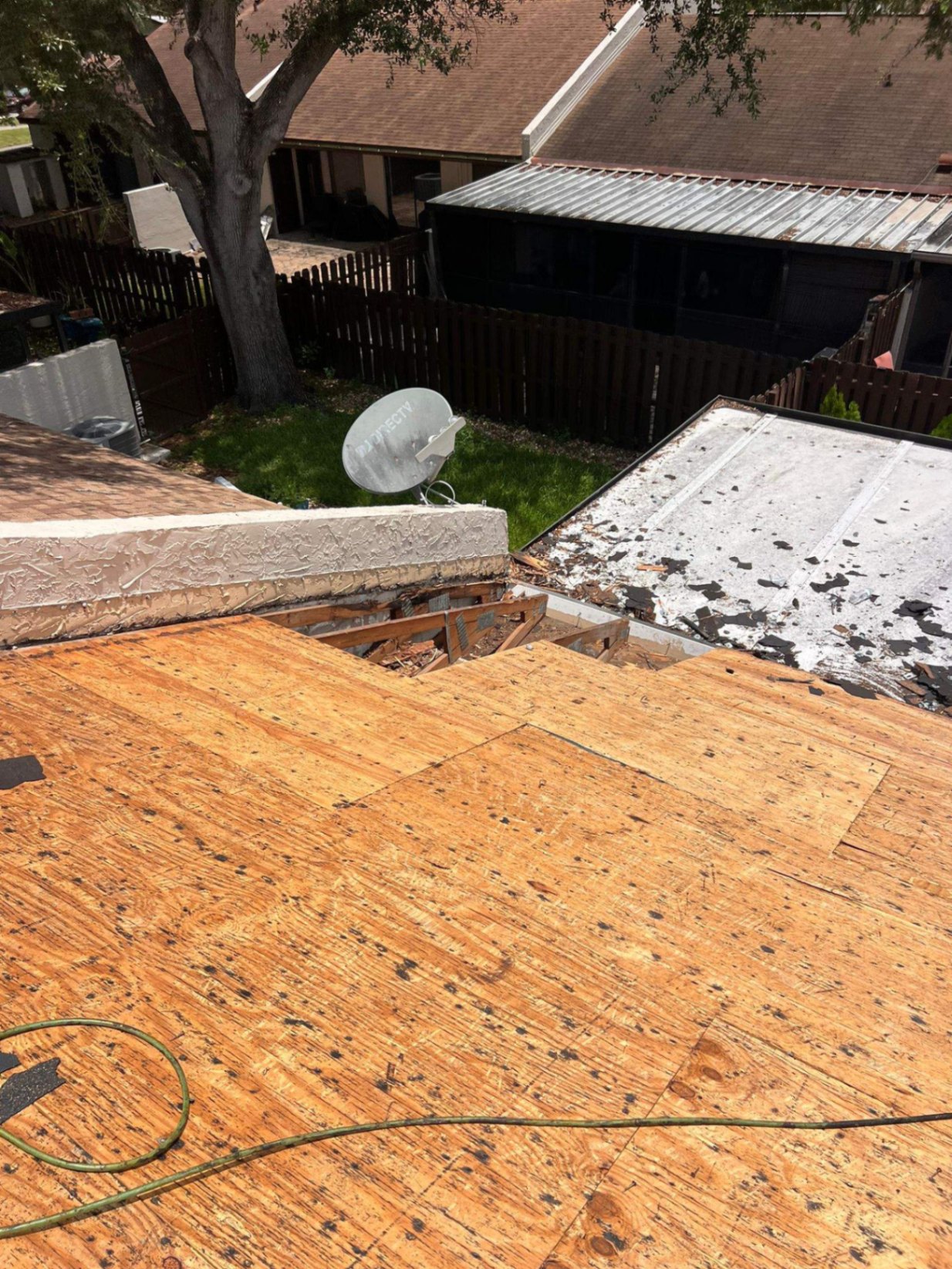
A licensed roofing crew responding to emergency storm damage in North Miami will start with a full roof inspection before doing any work. They will identify not just the obvious damage but secondary issues: lifted flashing around penetrations, cracked ridge caps, saturated decking sections that look intact from above but are soft underfoot. A professional tarp installation differs from a homeowner tarp in scale and anchoring method; crews use longer boards, more fasteners, and often apply tarp tape at seams to create a more weather-resistant temporary cover.
After stabilizing the roof, the contractor will provide a written assessment of what permanent repairs are needed. That document is useful both for planning the repair and for supporting your insurance claim. PSR Roofing Company of Miami provides this kind of structured emergency response, and you can request emergency roofing service any time damage occurs.
Red Flags When Vetting Any Roofing Contractor After a Storm
Post-storm periods attract contractors who work quickly and disappear just as fast. A few things to verify before signing anything: confirm the contractor holds a valid Florida roofing license (verifiable through the Florida DBPR website), ask for proof of liability insurance and workers' compensation coverage, and get any scope of work and pricing in writing before work begins. Be cautious of anyone who asks for full payment upfront or who pressures you to sign an assignment of benefits agreement without explaining what that means for your insurance claim. Requirements and permit obligations vary by municipality, so ask your contractor which permits apply to your specific repair and who pulls them.
North Miami's Storm Environment: Why Fast Response Matters
The Local Weather Reality
North Miami sits in one of the most active weather corridors in the continental United States. The Atlantic hurricane season runs from June through November, but severe convective storms capable of producing 60-plus-mph wind gusts can occur in any month. The combination of high humidity, frequent rain, and intense UV exposure means that even a small roof breach left unaddressed for a week can result in decking delamination, mold growth in the attic, and insulation damage that multiplies the original repair cost significantly.
How South Florida's Building Codes Shape Repair Options
Florida's building code, strengthened substantially after Hurricane Andrew, sets specific requirements for roofing materials, fastening patterns, and wind resistance ratings. Repair work that triggers a permit requirement must meet current code standards, which sometimes means a localized repair must use materials that match the wind-uplift rating of the original roof system. Your contractor should be familiar with Miami-Dade County's product approval requirements, which are among the most rigorous in the country. Always confirm with your contractor which permits apply; requirements vary based on the scope of work and your specific municipality within the North Miami area.
Insurance Considerations Specific to Florida
Florida homeowners insurance policies handle roof damage differently than policies in other states, and the rules have shifted in recent years. Coverage for older roofs, the distinction between wind damage and wear-and-tear, and depreciation schedules all affect what your insurer will pay. Document damage immediately, file your claim promptly (most policies have notification deadlines), and keep records of every communication with your insurer. A contractor experienced with storm damage roof repair in the Miami area will understand how to write a damage assessment that clearly distinguishes storm-caused damage from pre-existing conditions, which is often the central dispute in a claim.
Temporary Fix vs. Permanent Repair: Knowing the Difference
| Situation | Appropriate Temporary Action | Permanent Solution Needed |
|---|---|---|
| 1-3 missing shingles, no exposed decking | Roofing cement under remaining shingles | Shingle replacement matching existing profile |
| Small puncture from debris | Peel-and-stick patch or roofing cement | Decking inspection, underlayment and shingle repair |
| Large section of missing shingles | Professional tarp installation | Full section re-roofing with code-compliant materials |
| Damaged flashing at chimney or vent | Roofing cement as short-term seal | Flashing replacement by licensed contractor |
| Visible hole through decking | Professional tarp only, no DIY patch | Decking replacement, underlayment, and new surface |
| Flat roof membrane breach | Temporary patch tape if accessible | Membrane repair or section replacement |
After the Emergency: Planning the Permanent Repair
Get a Full Roof Inspection Before Finalizing Scope
Once the immediate crisis is stabilized, a thorough roof inspection is the logical next step. Emergency patching addresses the acute problem; a systematic inspection identifies everything the storm may have affected that is not immediately visible. Attic moisture readings, fastener pull-through on sheathing panels, and the condition of underlayment beneath intact shingles all factor into an accurate repair scope. Skipping this step and repairing only the obvious damage sometimes means returning to the same roof six months later for a problem that was already present but missed.
Prioritize Repairs That Protect the Structural Envelope
Not every repair is equally urgent. Exposed decking, active leaks, and compromised flashing around penetrations take priority because water intrusion through those points reaches structural framing and insulation quickly. Cosmetic damage, such as granule loss on otherwise intact shingles or minor soffit discoloration, can be scheduled on a normal timeline. Your contractor should help you triage the work clearly so you understand what needs to happen immediately versus what can wait for a scheduled appointment.
Consider the Age and Condition of the Overall Roof
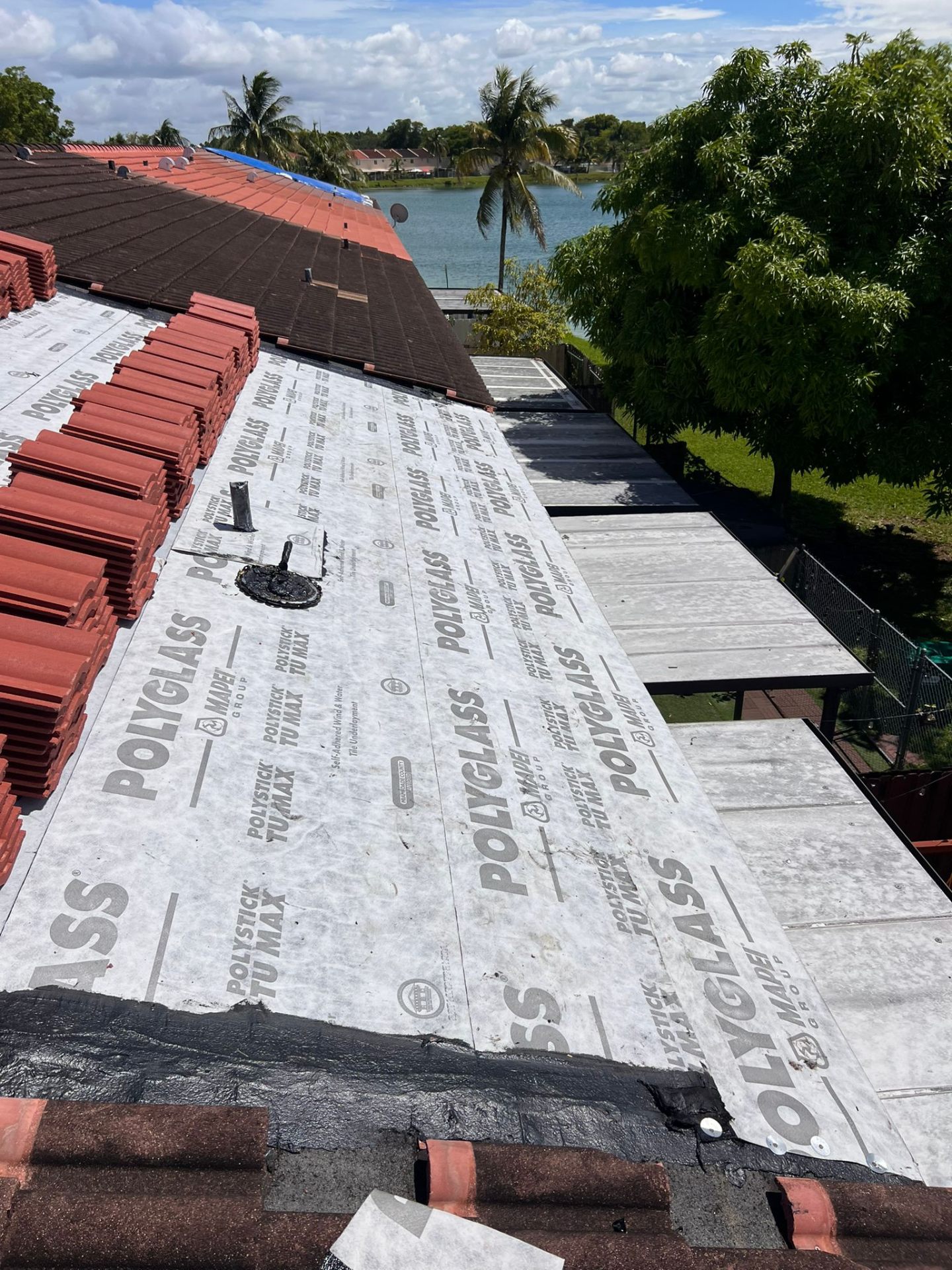
A storm event sometimes reveals that a roof was already near the end of its serviceable life. If the underlying materials were already brittle, the decking was already showing moisture damage, or the system was well past its expected lifespan, extensive patching may not be the most cost-effective path. A licensed contractor can give you an honest assessment of whether repair or full replacement makes more sense given the existing condition, the extent of storm damage, and what your insurance carrier is likely to cover. PSR Roofing Company of Miami handles both repair and full roof replacement, so the recommendation you receive is based on what actually fits your situation.
Frequently Asked Questions
Is it safe for a homeowner to tarp their own roof after a storm?
It can be, under specific conditions: the storm has fully passed, the roof slope is not extreme, you have a second person present, and you use proper non-slip footwear and a secure ladder. Avoid roof access entirely if there is any sign of structural compromise, if the surface is still wet, or if the damaged area is near the roof edge. When in doubt, wait for a professional.
How quickly does roof damage need to be addressed in South Florida's climate?
As quickly as possible. North Miami's heat and humidity accelerate moisture-related damage. Wet insulation and decking can begin supporting mold growth within 24 to 48 hours under typical summer conditions. Even a temporary tarp installed the same day as the storm can significantly limit secondary damage.
Will my insurance cover emergency tarping costs?
Most Florida homeowners policies cover reasonable costs for emergency mitigation measures taken to prevent further damage, including professional tarping. Keep all receipts and document the work with photos. Review your specific policy language or contact your agent to confirm coverage, since policy terms vary.
What is the difference between emergency roof repair and standard roof repair?
Emergency roof repair addresses active or imminent water intrusion that poses an immediate risk to the home's structure or interior. It typically involves same-day or next-day response, temporary stabilization, and a rapid damage assessment. Standard repair is scheduled work performed on a normal timeline to restore the roof to full function. Many contractors, including PSR Roofing Company of Miami, offer both, with emergency service available around the clock.
Do I need a permit for emergency roof patching in North Miami?
Permit requirements depend on the scope of the work. Minor repairs involving a small number of shingles often fall below the threshold requiring a permit, while more extensive work typically does require one. Requirements vary by municipality and scope, so confirm with your licensed contractor before work begins. A reputable contractor will handle the permit process on your behalf when it applies.
How do I know if my roof deck was damaged, not just the shingles?
Signs of decking damage include visible sagging or soft spots when walking on the roof, shingles that feel spongy underfoot, water stains on attic sheathing panels, or daylight visible through the attic ceiling. A professional inspection with moisture meters and a physical check of the decking from the attic is the most reliable way to assess this.
Conclusion
Storm damage moves fast, and so should your response. Assess safely, document thoroughly, apply a temporary tarp or patch if conditions allow, and get a licensed contractor on site as quickly as possible to prevent a manageable repair from becoming a major reconstruction project. When you need help right now, schedule your emergency roof inspection with PSR Roofing Company of Miami and get a professional assessment of the damage before the next rain arrives.
Need help with Emergency Roofing?
PSR Roofing is Miami's licensed & insured expert for emergency roofing. Free estimates, honest pricing, and 24/7 emergency response.