
How to Evaluate Roof Repair and Maintenance Costs in North Miami
A roofing estimate can feel like a black box. Numbers appear on paper, but without context, it's hard to know whether you're looking at a fair price or an inflated one. This guide walks you through every major variable that a qualified roofing company weighs when pricing repair and maintenance work in North Miami, so you can read any estimate with confidence and ask the right questions before signing anything.
Why North Miami Roofing Costs Are Different From the National Average
The South Florida Climate Factor
North Miami sits squarely in a high-velocity wind zone and a zone with extreme UV exposure, high humidity, and a hurricane season that runs six months of the year. These conditions accelerate wear on roofing materials faster than in most of the country. Contractors here must follow Florida Building Code requirements that are stricter than many other states, which affects material specifications, fastening patterns, and underlayment standards. Requirements vary by municipality, so always confirm local permit requirements with your contractor or the City of North Miami Building Department before work begins.
Material Availability and Labor Market
South Florida's construction market is active year-round. That sustained demand shapes labor costs differently than a seasonal market in a northern state. After a major storm event, material lead times can stretch and crews are in high demand across Miami-Dade County. A realistic estimate accounts for current material availability, not just a generic line-item list.
Permit Requirements and Inspection Layers
Most roof repairs and virtually all replacements in North Miami require a permit and a corresponding inspection. Permit fees, the time a crew spends on-site waiting for an inspector, and the administrative work of filing documentation all factor into a legitimate estimate. Be cautious of any roofing contractor who suggests skipping the permit process; unpermitted work can create serious problems when you sell the home or file an insurance claim.
The Variables That Drive Repair Estimates
Roof Size and Pitch
Roofing is typically measured in squares, where one square equals 100 square feet of roof surface. Larger roofs simply require more material and more labor hours. Pitch, the steepness of the slope, matters just as much. A low-slope or flat roof is faster to walk and work on than a steep residential pitch, but each type has its own material requirements. Steeper pitches require safety equipment, slower movement, and sometimes additional crew members, all of which affect the final number on your estimate.
Damage Extent and Access Difficulty
A handful of cracked tiles along a ridge line costs far less to address than widespread substrate damage discovered after those tiles are removed. Contractors who provide thorough estimates often note that the visible damage is only the starting point; the condition of the decking, underlayment, and flashing beneath determines the true scope. Access difficulty also plays a role. A single-story home with clear yard access is easier to stage than a multi-story property with a pool enclosure or landscaping that limits where a ladder or equipment can go.
Material Type and Grade
North Miami homes carry a wide range of roofing materials: concrete tile, clay tile, metal panels, modified bitumen, and single-ply membranes on flat sections. Each material has a different cost profile. Within each category, product grades vary. A standard concrete tile and a high-density concrete tile engineered to exceed Miami-Dade's wind uplift requirements are not the same product, and their installed costs reflect that difference. Matching existing tile on a partial repair adds another layer of complexity; discontinued profiles or colors may require sourcing from specialty suppliers.
Tile Roof Maintenance: What's Included and Why It Matters
Routine Inspection Components
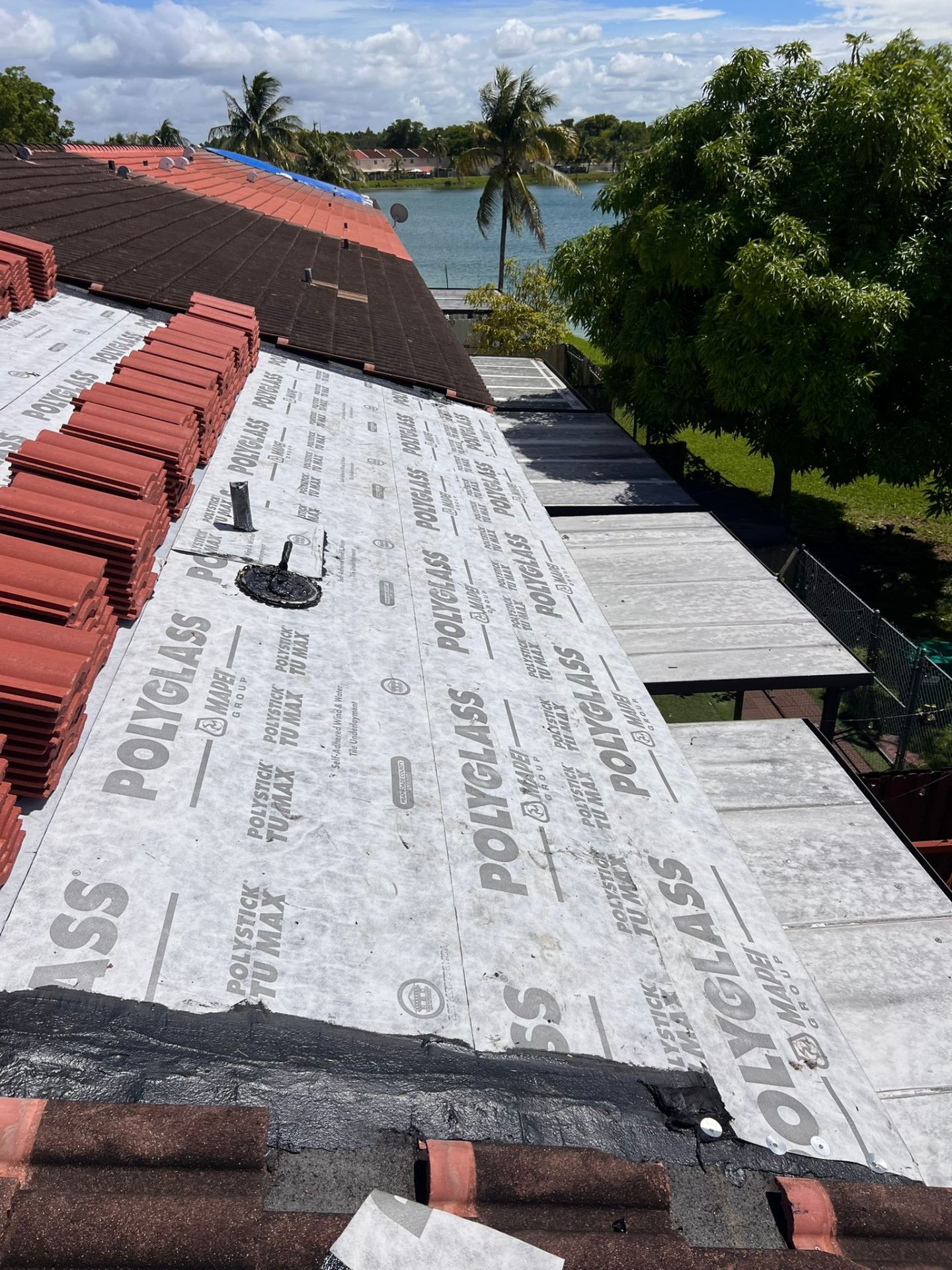
Tile roof maintenance in South Florida is not optional upkeep; it's a practical defense against the environment. A proper maintenance visit from a qualified roofing contractor typically covers: walking the field tiles to identify cracks or slippage, inspecting ridge caps and hip caps where wind uplift is greatest, checking all penetration flashings around vents, pipes, and skylights, clearing debris from valleys and gutters, and assessing the condition of the underlayment where it's visible at edges and penetrations.
PSR Roofing Company of Miami performs roof inspections that document each of these areas with notes and photos, giving homeowners a clear record of their roof's condition over time. That documentation is also useful if you ever need to support an insurance claim.
Common Tile Repair Scenarios
The most frequent tile repair calls in North Miami involve cracked field tiles from foot traffic or falling debris, slipped tiles caused by deteriorated mortar or failed clips, and re-bedding or re-pointing of ridge and hip caps. Ridge cap failures are particularly common after wind events because those caps bear the brunt of uplift forces. Addressing them promptly prevents water intrusion into the underlayment, which is the layer doing the actual waterproofing work beneath the tiles.
When Maintenance Crosses Into Replacement Territory
A single cracked tile is a repair. Widespread underlayment failure is a replacement conversation. The underlayment beneath a concrete or clay tile system has a finite service life, and once it degrades past a certain point, patching individual tiles no longer protects the home. An honest roofing contractor will tell you when the math favors replacement over continued repair. Watch for signs like recurring leaks in multiple locations, staining on interior ceilings in different rooms, or a maintenance report showing underlayment exposure at several spots across the roof plane.
Reading an Estimate: What a Thorough Quote Covers
Line Items to Expect
A well-structured estimate from a roofing company in the Miami area should break down costs into distinct categories rather than presenting a single lump-sum number. Here is what to look for:
| Estimate Line Item | What It Covers | Why It Matters |
|---|---|---|
| Labor | Crew hours for removal, installation, and cleanup | Reflects actual scope; vague labor lines are a red flag |
| Materials | Tiles, underlayment, fasteners, flashing, sealants | Allows you to verify product specs and grades |
| Permit and Inspection Fees | Municipal permit, required inspections | Absence suggests unpermitted work |
| Decking/Substrate Repair | Replacement of damaged sheathing or decking boards | Often conditional; should be noted as a potential add-on |
| Disposal and Cleanup | Haul-away of old materials, dumpster, site cleanup | Ensures no hidden fees at project end |
| Warranty Terms | Workmanship warranty duration and coverage | Differentiates quality contractors from budget-only bids |
Red Flags in Low-Ball Estimates
A significantly lower estimate is not automatically a better deal. When a quote comes in well below others, check whether it omits permit fees, uses a lower-grade underlayment that doesn't meet Miami-Dade product approval requirements, excludes decking repair as a possibility, or lacks a clear workmanship warranty. Each of those omissions shifts risk onto the homeowner. The goal is not to find the lowest number; it's to find the estimate that accurately describes the work and protects your investment.
Comparing Multiple Quotes Fairly
To compare quotes accurately, every estimate should describe the same scope. Ask each contractor to specify the underlayment product by name and approval number, the fastening pattern they'll use, and whether their quote includes permit fees. When the line items match, price differences become meaningful. When they don't match, you're comparing different scopes, not different prices for the same job.
Insurance Claims and Roof Repair in North Miami
How the Claims Process Affects Scope
Many roof repair North Miami homeowners encounter involve an insurance component, particularly after wind or hail events. The insurance adjuster's scope of loss is a starting point, not necessarily the final word on what the roof needs. A licensed roofing contractor can supplement a claim if additional damage is found during the repair process. Keep all documentation, including the adjuster's report, the contractor's estimate, and photos taken before and during the work.
What Contractors Can and Cannot Do
A roofing contractor can document damage, prepare a detailed scope of work, and communicate with your insurance company about the technical aspects of the repair. They cannot provide legal advice about your policy, and they cannot guarantee a specific insurance payout. Be cautious of any contractor who promises to handle your entire claim or suggests that you won't owe anything out of pocket before the adjuster has even visited; those arrangements carry their own risks under Florida law.
Timing Your Repair After a Storm
After a significant weather event in Miami-Dade County, demand for roofing services spikes quickly. Temporary protective measures, like tarping an exposed area, can prevent further water intrusion while you wait for a full repair appointment. PSR Roofing Company of Miami offers emergency roofing services for situations where waiting is not an option, including active leaks and significant storm damage that leaves the home vulnerable.
Contractor Credentials: What to Verify Before You Hire
Licensing Requirements in Florida
Florida requires roofing contractors to hold a state-issued license. The two primary categories are the Certified Roofing Contractor license, which allows work statewide, and the Registered Roofing Contractor license, which is limited to specific counties or municipalities. You can verify a contractor's license status through the Florida Department of Business and Professional Regulation's online lookup tool. This takes less than two minutes and confirms the license is active and in good standing.
Insurance Coverage to Request
Before any crew sets foot on your roof, ask for certificates of insurance showing general liability coverage and workers' compensation. General liability protects your property if something goes wrong during the job. Workers' compensation covers crew members if someone is injured on your property. Without these, a homeowner's own insurance policy could be exposed. A reputable roofing contractor provides these certificates without hesitation.
Local Experience and References
North Miami's building environment has specific characteristics: Miami-Dade product approval requirements, the High Velocity Hurricane Zone designation, and local permit office procedures. A contractor with years of active work in this market knows these systems. Ask how many projects they've completed in North Miami specifically and whether they can point to past work in your neighborhood or with your roof type. PSR Roofing Company of Miami has built its reputation specifically in this market, and that local familiarity matters when navigating inspections and sourcing materials that meet local approval requirements.
Maintenance Schedules: How Often Is Enough?
Recommended Inspection Frequency
For tile roofs in South Florida, a professional inspection once a year is a reasonable baseline. Many roofing professionals recommend scheduling one inspection before hurricane season begins (typically spring) and a follow-up after a significant storm. Flat or low-slope roofs with modified bitumen or single-ply membranes benefit from the same cadence, with particular attention to seams, drains, and penetrations where water tends to pool.
Owner-Level Checks Between Visits
Homeowners can perform safe ground-level and attic checks without getting on the roof. From the ground, look for displaced or missing ridge caps, visible cracked tiles, granule accumulation in gutters (relevant for shingle sections), and sagging gutters that might indicate water overflow. From inside the attic after a rain event, look for any sign of daylight, staining on the decking, or active drips. These observations give a contractor useful context and can catch problems between scheduled maintenance visits. Never attempt to walk a steep or wet roof yourself; leave that work to licensed professionals with proper safety equipment.
How Maintenance Affects Long-Term Costs
Deferred maintenance compounds. A cracked tile left unaddressed allows water to reach the underlayment. Degraded underlayment allows moisture into the decking. Rotted decking requires replacement before new material can go down. Each layer of damage adds to the eventual repair scope. Consistent maintenance catches problems at the tile or flashing level, where repairs are straightforward, rather than at the structural level, where they are not. Over the life of a roof, regular professional attention consistently reduces total expenditure compared to a reactive-only approach.
Frequently Asked Questions
How do I know if my roof needs repair or full replacement?
The condition of the underlayment is usually the deciding factor. If surface materials like tiles are damaged but the underlayment is intact and within its service life, targeted repair makes sense. If the underlayment shows widespread deterioration, or if you're seeing leaks in multiple locations, a licensed roofing contractor should inspect the full roof and give you an honest assessment of both options.
Does North Miami require a permit for roof repairs?
Permit requirements depend on the scope of work. Minor repairs like replacing a handful of tiles may fall below the permit threshold, but more extensive work typically requires one. Requirements vary, so confirm with your contractor and the City of North Miami Building Department before work begins. Any contractor suggesting you skip permits on significant work is a warning sign.
What is Miami-Dade product approval and why does it matter?
Miami-Dade County maintains its own product approval system for roofing materials used in the High Velocity Hurricane Zone. Materials must pass rigorous wind and impact testing to receive approval. Using non-approved products can result in failed inspections and may affect your insurance coverage. Always confirm that the materials specified in your estimate carry the appropriate Miami-Dade NOA (Notice of Acceptance).
How long does a typical tile roof repair take?
Minor repairs, like replacing cracked field tiles or re-bedding a ridge cap section, are often completed in a single day. More involved work involving underlayment sections or widespread tile replacement can take several days depending on crew size, material availability, and inspection scheduling. Your contractor should give you a realistic timeline before work starts.
What should I do if I find a leak during a storm?
Protect the interior first: move valuables, place containers to catch drips, and if safe to do so, lay down plastic sheeting to protect flooring and furniture. Document everything with photos. Then contact a roofing contractor who offers emergency services. Do not attempt to access the roof yourself during or immediately after a storm.
Can I negotiate a roofing estimate?
You can ask questions and request clarification, which sometimes reveals scope adjustments that affect the total. What you generally cannot negotiate away are permit fees, code-required materials, or labor necessary to do the job correctly. If a contractor offers to lower a quote by removing the permit or substituting a non-approved underlayment, that is not a negotiation worth accepting.
Conclusion
Understanding what drives roof repair and maintenance costs in North Miami puts you in a far stronger position when evaluating any estimate. Material type, damage extent, permit requirements, and contractor credentials all shape the final scope, and a thorough quote will account for each of them transparently. When you're ready to get a clear picture of your roof's current condition and what any necessary work will actually involve, schedule a professional roof inspection with PSR Roofing Company of Miami and get an honest, itemized assessment from a team that knows this market.
Need help with Roof Repair?
PSR Roofing is Miami's licensed & insured expert for roof repair. Free estimates, honest pricing, and 24/7 emergency response.