Roof Repair Warranties in Miami: What Is Actually Covered, What Voids It, and How to Spot a Bad Contractor
"We're under warranty" is one of the most common sentences a roofer hears — and one of the most frequently mistaken. A roof is rarely covered by one document. It is covered by two or three, written by different parties, protecting against different failures, for different lengths of time. Understanding which one applies to your situation is the difference between a repair that costs nothing and a repair that costs $2,000 while you hold a piece of paper that does not apply.
This guide breaks down how coverage really works on a Miami roof repair, the exclusions that catch homeowners off guard in Florida specifically, and how to evaluate a contractor before their workmanship becomes your problem.
The Three Layers of Coverage
Manufacturer Material Warranty
Issued by the company that made the tile, shingle, membrane, or metal panel. It covers defects in the product itself — premature granule loss, delamination, a bad production run. It does not cover installation error, storm damage, or labor to tear off and reinstall unless you purchased an upgraded system warranty. Most standard material warranties are prorated, meaning the payout shrinks each year, and a fifteen-year-old roof recovers a small fraction of material cost and no labor.
Contractor Workmanship Warranty
Issued by the company that performed the work, and this is the one that matters most on a repair. It covers installation error — a flashing detail assembled wrong, a fastener pattern that leaks, an underlayment lap installed against the flow of water. Terms in this market commonly run from one to ten years. There is no industry standard, which is precisely why it must be read.
Extended or System Warranty
Available when a certified installer uses a single manufacturer's full assembly. It folds material and labor together under the manufacturer's name, which means it survives the contractor going out of business. It is generally relevant to a full roof replacement rather than to a localized repair.
What Coverage on a Repair Actually Includes
A workmanship warranty on a repair almost always applies only to the repaired area. If a technician rebuilds twelve feet of valley and a pipe boot fails eight feet away the following year, that boot is not covered — nothing was done to it. Reputable scopes state this plainly.
| Situation | Typically covered by | Typically not covered |
|---|---|---|
| Repaired flashing leaks again in 8 months | Contractor workmanship | — |
| Tiles crack from a fallen limb | Homeowners insurance | Any warranty |
| Membrane blisters from a manufacturing defect | Manufacturer material | Labor, unless system warranty |
| New leak in a different, untouched roof plane | — | Both warranties |
| Deck rot discovered after repair, from a pre-existing leak | — | Both warranties |
What Quietly Voids Coverage in Florida
Unpermitted Work
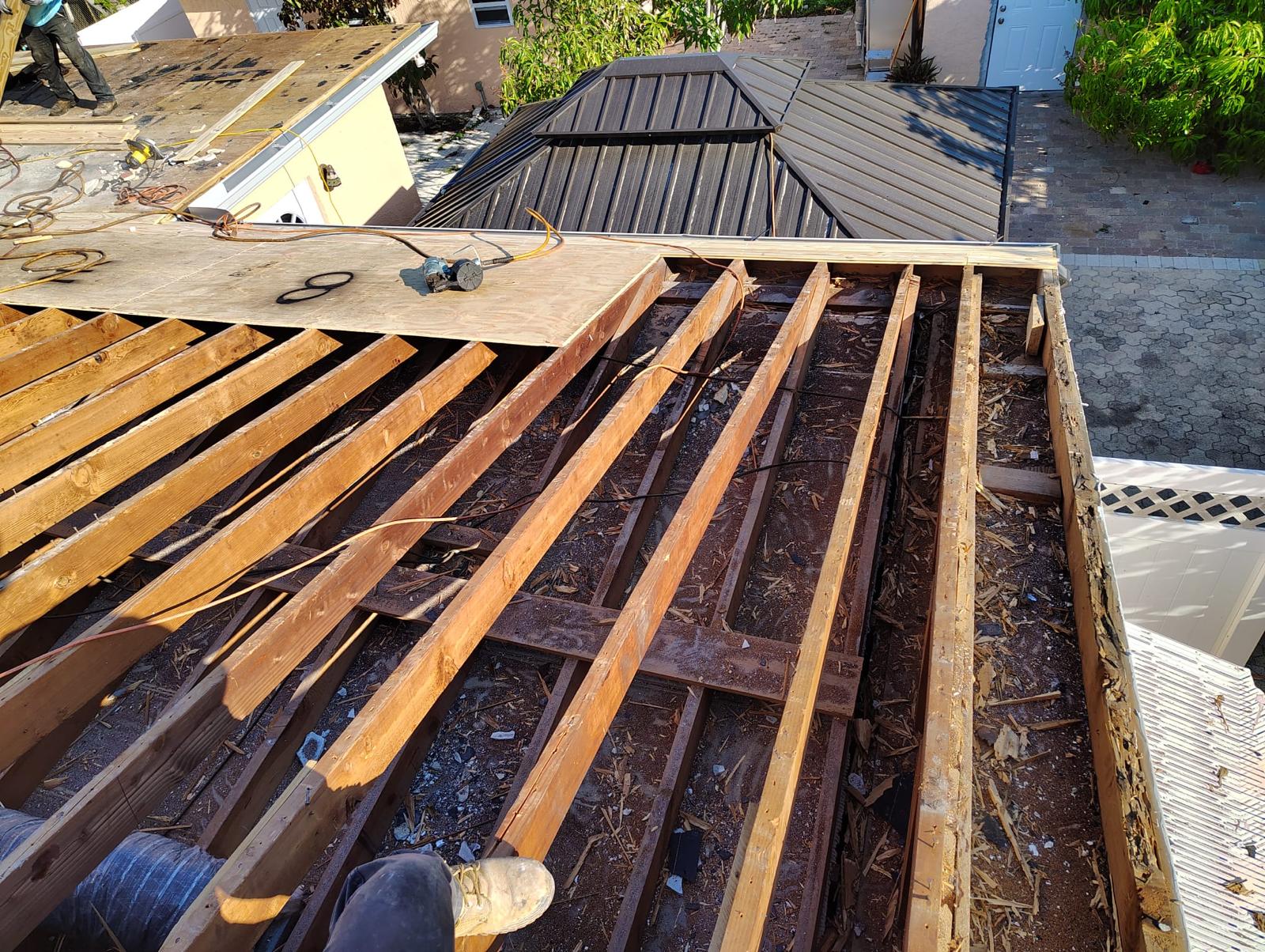
Repairs that touch underlayment, decking, or structural fasteners require a Miami-Dade permit. Work performed without one gives a manufacturer grounds to deny a claim, complicates resale, and can invite an insurer to question a future loss.
A Second Contractor Touching the Same Area
Once another company works on the repaired zone, workmanship coverage there generally ends. If you believe the original repair failed, call the original contractor first and put the request in writing.
Non-Approved Products
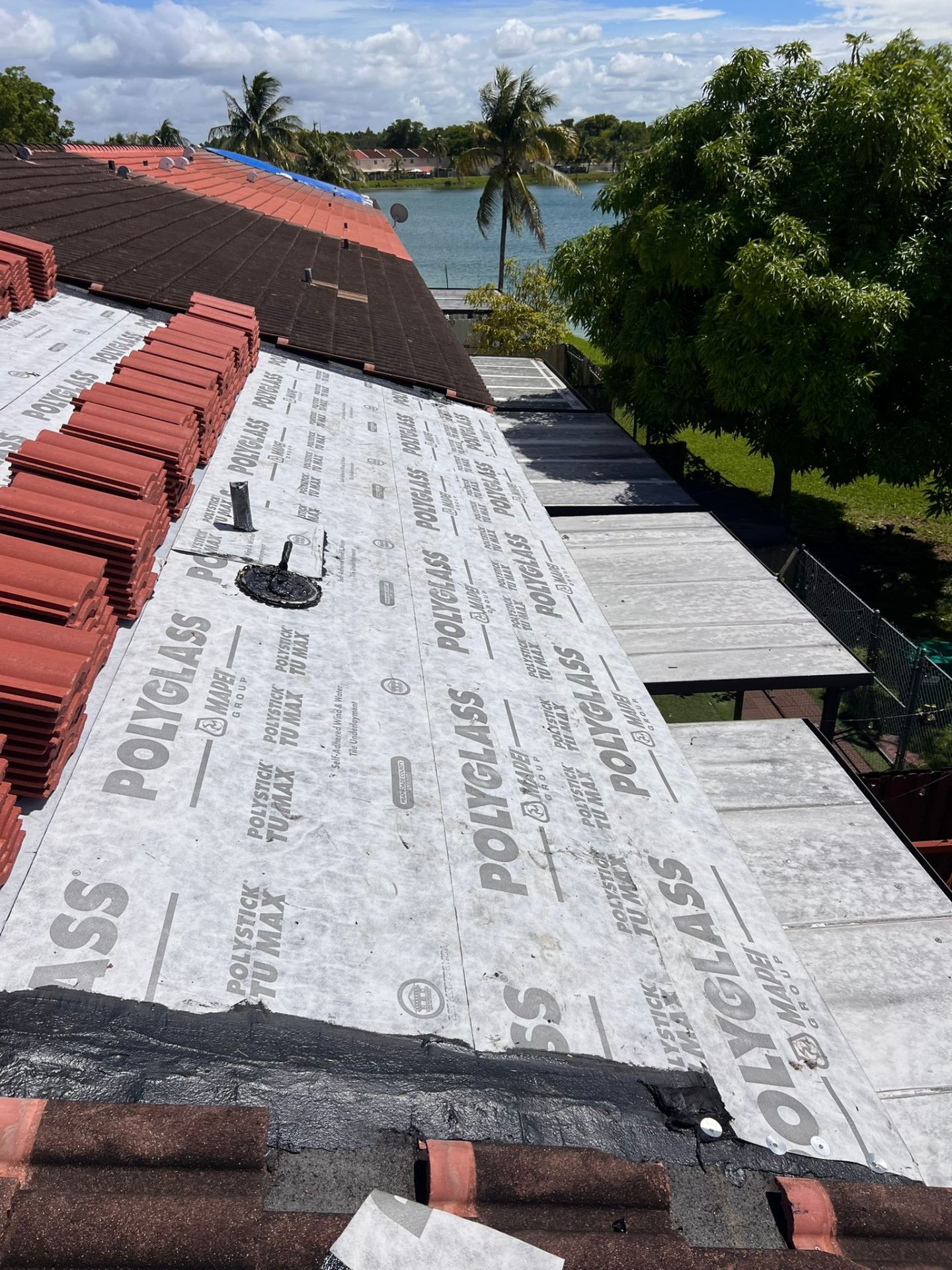
Miami-Dade sits in the High-Velocity Hurricane Zone. Assemblies must carry a Notice of Acceptance or Florida Product Approval. A cheaper substitute fastener or underlayment can void the manufacturer warranty for the entire assembly, not just the substituted part.
Pressure Washing and Foot Traffic
Aggressive pressure washing strips granules from shingles and cracks tile; both are excluded as owner-caused damage. Satellite dish and solar installers walking the roof, and equipment mounted through the covering, are common exclusion triggers as well. Softwash cleaning and documented annual service through a roof inspection program are the safe path.
Neglected Maintenance and Drainage
Nearly every warranty requires reasonable maintenance. Clogged drains, ponding water, and overflowing gutters are treated as deferred maintenance, not defects — which is one practical reason functioning gutter installation supports the coverage you already paid for.
Contractor Red Flags Worth Walking Away From
Storm seasons bring crews to Miami who will not be here next year. Coverage from a company that no longer exists is worth nothing, so the vetting matters more than the warranty language.
- No verifiable state license number. Verify it yourself with the Florida DBPR; a business tax receipt is not a roofing license.
- Pressure to sign immediately or a discount that expires today.
- Large deposits requested in cash or a demand for full payment before the permit is issued.
- Offers to cover, waive, or "absorb" your insurance deductible. This is illegal in Florida and taints your claim.
- Refusal to pull a permit, or a suggestion that you pull the permit as the homeowner.
- Verbal warranties only. If it is not written, dated, and signed, it does not exist.
- A single-line estimate. A legitimate repair scope names the components removed, the underlayment and fasteners installed, the product approval numbers, and the per-sheet price if rotted decking is found.
- No certificate of insurance naming general liability and workers' compensation. Without it, an injury on your property can become your liability.
How to Preserve Your Coverage
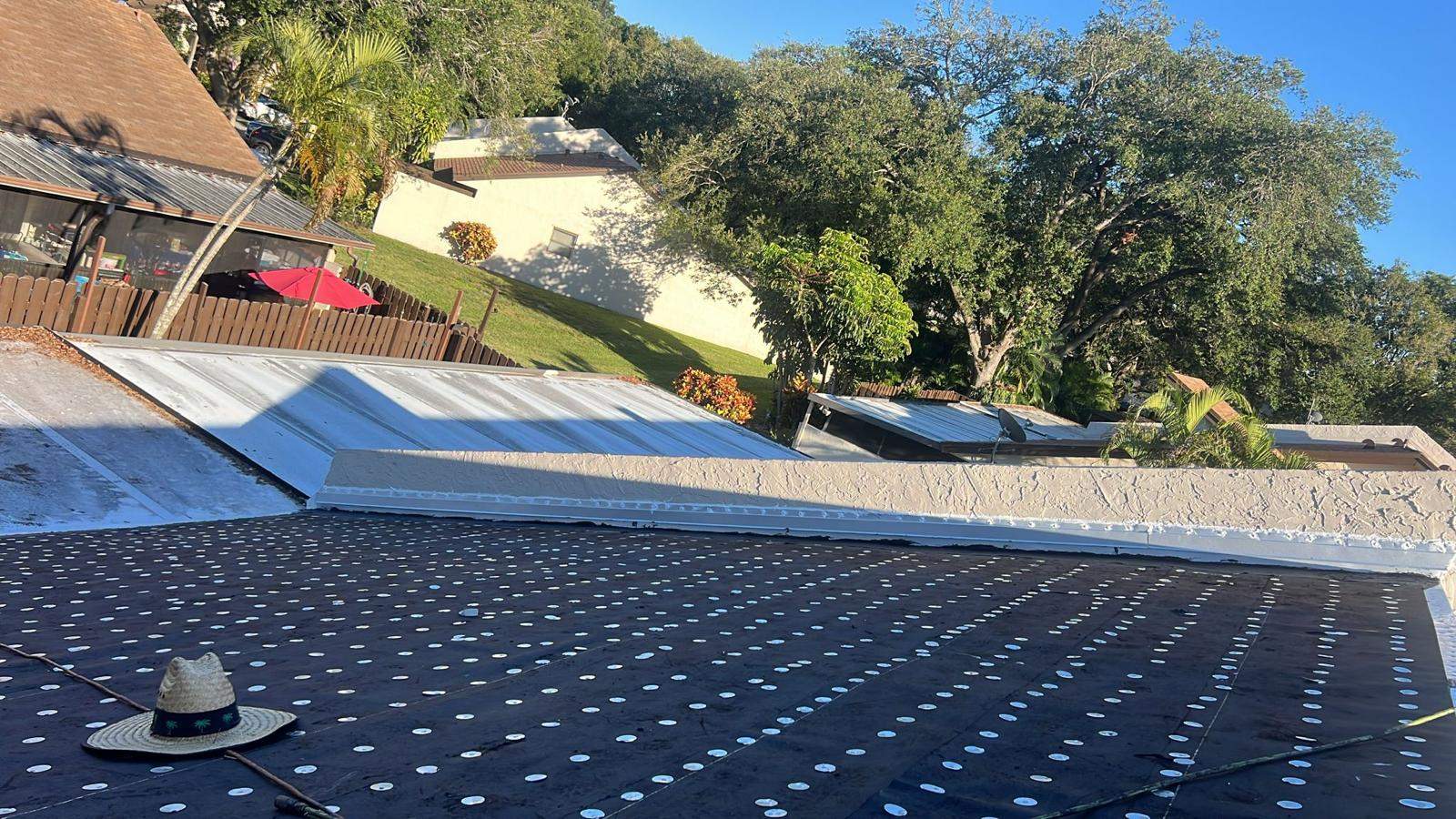
Keep the signed contract, the permit and final inspection record, product approval numbers, dated photographs before and after, and every service invoice in one place. Schedule annual documented service. Report any suspected failure in writing as soon as you see it rather than at the end of the coverage term — most warranties require prompt notice, and a two-year-old stain reported late is a common denial.
Frequently Asked Questions
Is a longer workmanship warranty always better?
Only if the company is likely to be around to honor it. A ten-year promise from a two-year-old company with no license history is worth less than five years from an established local contractor.
Does a repair extend my existing roof warranty?
No. It adds separate coverage for the repaired area. The original terms on the rest of the roof continue on their own schedule.
Is a roof repair warranty transferable when I sell?
Sometimes, often with a fee and a notice deadline. Ask before closing — an unregistered transfer is the most common way coverage is lost at sale.
What if my contractor closes the business?
Manufacturer material coverage survives; workmanship coverage generally does not. That asymmetry is the strongest argument for certified installers and system warranties on larger scopes.
Get a Repair Scope You Can Actually Hold Someone To
If you are comparing quotes or unsure whether your current roof is still covered, the useful first step is a documented assessment with a written scope, product approvals, and warranty terms stated up front. PSR Roofing Company Of Miami is a licensed, insured local contractor performing permitted, HVHZ-compliant work throughout Miami-Dade.
Call (786) 889-4090 or request a written roof repair quote.
Visit us: 1811 NE 142nd St, Miami, FL 33181 — view on Google Maps
Need help with Roof Repair?
PSR Roofing is Miami's licensed & insured expert for roof repair. Free estimates, honest pricing, and 24/7 emergency response.