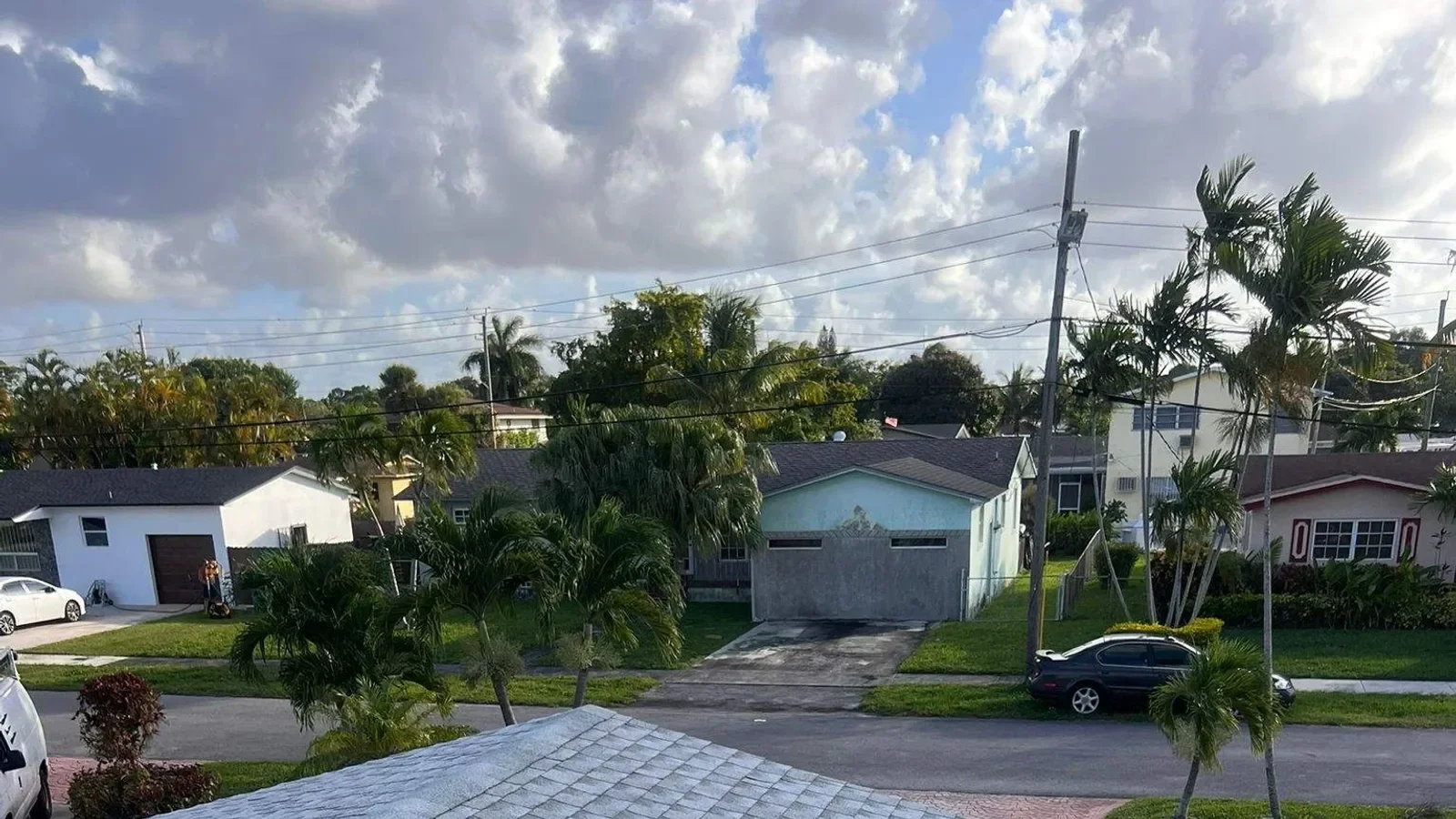
Why Local Roof Installation Standards Matter: How North Miami Code Compliance Impacts Your New Roof
A new roof is one of the most significant structural investments you will make for your home. In South Florida, this investment involves much more than simply choosing an attractive shingle or modern metal panel. For homeowners in North Miami, a professional roof installation must navigate some of the strictest building codes in the entire world. Failing to understand these regional requirements can lead to failed inspections, voided insurance policies, and structural vulnerability during hurricane season. Working with a qualified, local roofing contractor is the first step toward ensuring your property remains protected and fully compliant with all municipal standards.
The Reality of North Miami Wind Requirements and the HVHZ
Defining the High-Velocity Hurricane Zone
Miami-Dade and Broward counties sit within a designated High-Velocity Hurricane Zone (HVHZ). This classification under the Florida Building Code mandates that every single roofing material, accessory, and installation method must withstand extreme wind loads. The HVHZ guidelines are far more stringent than standard Florida state codes because our coastal geography exposes properties to intense pressure changes and flying debris during major tropical events.
Wind Speed Classifications and Load Pressures
When engineering a residential structure in North Miami, materials must be rated to survive wind speeds that frequently exceed 170 to 180 miles per hour, depending on the specific risk category of the building. Wind pressure does not just push down on a roof; it creates a powerful uplift force that tries to peel the roof off the rafters. Local regulations dictate exact fastening patterns to counteract this uplift, ensuring that shingles, tiles, or metal panels remain anchored to the deck.
The Role of Product Approval Numbers
Every piece of material used on your home, from the underlayment to the individual nails, must possess a valid Florida Product Approval number or a Miami-Dade Notice of Acceptance (NOA). These documents prove the material has undergone rigorous lab testing against high winds, driving rain, and impact. A reputable roofing company will compile these NOAs as part of the permitting package submitted to the North Miami building department before any physical work begins.
The Crucial Role of Permitting and Inspections in North Miami
Why You Cannot Skip the Permitting Phase
Some property owners mistakenly believe that minor roof work or a direct overlay does not require official city oversight. In North Miami, any structural work, including a full tear-off and replacement, requires a building permit. Attempting to bypass this step can result in heavy code enforcement fines, stop-work orders, and significant difficulties if you ever decide to sell or refinance your home in the future.
The Multi-Stage Inspection Process
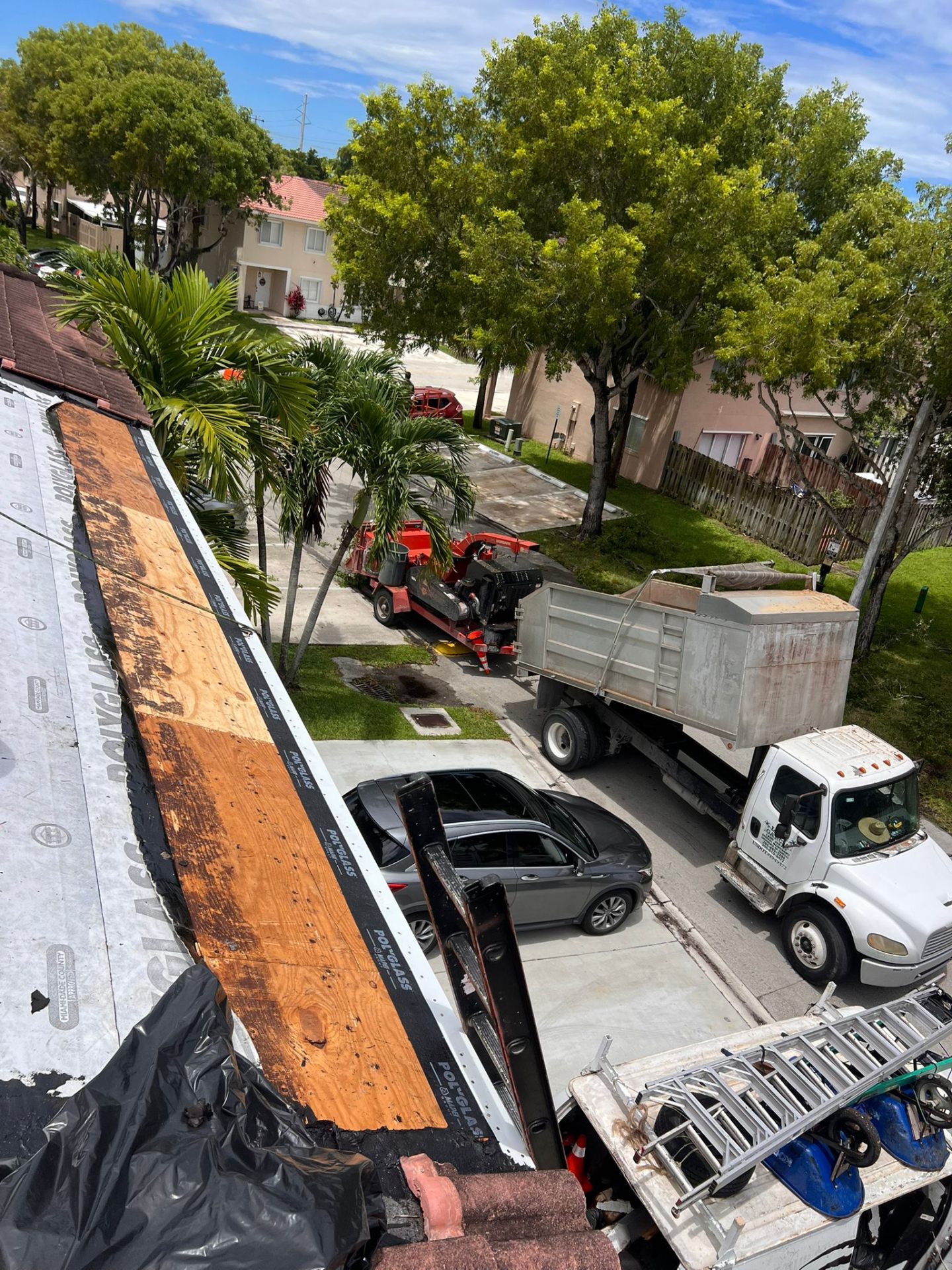
A proper roof installation is not evaluated only when the final shingle is laid. The North Miami building department requires multiple inspection phases to verify structural integrity. The first critical checkpoint is the sheathing or "tin-cap" inspection. This occurs after the old materials are removed and the wood deck is repaired and re-nailed. The inspector must verify the decking is secured to the trusses according to HVHZ spacing rules before the underlayment is fully covered.
The Final Inspection and Sign-Off
Once the primary roofing material is completely installed, a final inspection is scheduled. The city official will check the flashing, valleys, ventilation, and overall compliance with the approved permit documents. Only after receiving this official sign-off is your permit closed, confirming that your new system is legally compliant and recognized by municipal authorities.
Understanding Florida Building Code Roof Replacement Triggers
The 25 Percent Rule Explained
A frequent point of confusion for local property owners is the 25 percent rule within the Florida Building Code. Historically, this rule stated that if more than 25 percent of a roof section was damaged or required repair within a 12-month period, the entire roof had to be brought up to the latest building code standards. While recent legislative updates have created some exceptions for roofs built under relatively modern codes, it remains a critical factor that your chosen roofing contractor must evaluate during an initial damage assessment.
Upgrading Sheathing Fasteners During Replacement
When you undergo a full replacement, the existing plywood or tongue-and-groove decking is exposed. Even if your older roof deck is in good structural condition, the building code requires us to add extra fasteners to anchor the deck to the rafters below. Older homes often have nails spaced too far apart or rely on staples, which do not meet current HVHZ uplift ratings. Adding code-compliant ring-shank nails at tight intervals is a non-negotiable step of the process.
Mandatory Secondary Water Resistance
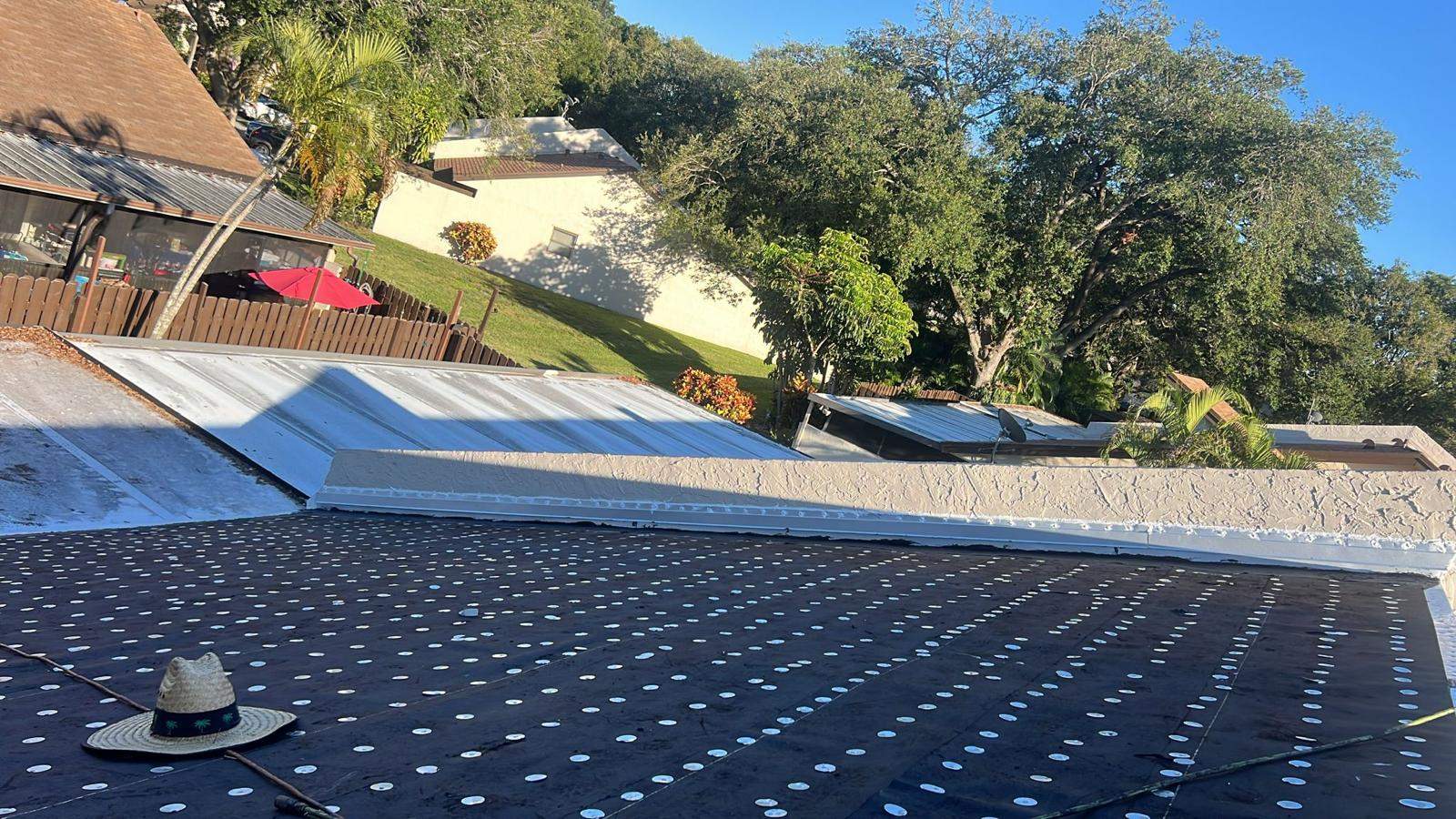
Modern codes require a secondary water barrier to protect your home's interior if the primary outer shingles or tiles blow off during a storm. This is typically achieved by sealing the joints in the plywood deck with approved flashing tape or by applying a self-adhering, peel-and-stick underlayment across the entire deck surface. This layer prevents water intrusion even during prolonged periods of hurricane-force wind-driven rain.
Comparing Roofing Materials Approved for South Florida
Selecting the right material involves balancing aesthetic preferences, budget considerations, and wind performance. Below is a comparison of how different common materials perform under local standards:
| Material Type | Typical Wind Resistance | Average Lifespan in Coastal Climates | Primary Code Considerations |
|---|---|---|---|
| Architectural Shingles | Up to 110-130 MPH (with approved installation) | 15 to 20 Years | Requires specific high-wind nailing patterns (6 nails per shingle instead of 4) and specialized starter strips. |
| Metal Panels (Standing Seam) | Up to 140-180+ MPH | 40 to 60 Years | Requires strict adherence to clip spacing and specific gauge thickness to prevent panel separation. |
| Concrete or Clay Tile | Extremely high wind resistance | 30 to 50 Years | Requires verified structural weight capacity of the roof trusses and specialized adhesive or mechanical fastening. |
Architectural Shingle Requirements
For homeowners choosing asphalt shingles, standard three-tab shingles are generally insufficient for HVHZ zones. Instead, thick architectural shingles are utilized. These systems must be fastened using hot-dipped galvanized nails rather than staples, placed in strict accordance with the manufacturer's high-wind installation instructions to ensure they stay put when tropical storms arrive.
The Rise of Metal Roofing systems
Metal systems are increasingly popular in North Miami due to their exceptional wind shed capabilities and thermal performance. Standing seam metal is highly favored because the fasteners are concealed, reducing the risk of water leaks over time. However, the metal panels must have an active NOA specifying the exact clip spacing required to withstand local design pressures.
Tile Roofing Considerations
Concrete and clay tiles are classic South Florida choices. Because tiles are heavy, a licensed professional must confirm that your home's framing can handle the dead load. Furthermore, tile installation in an HVHZ zone requires specialized two-component foam adhesive systems or heavy-duty mechanical screws to prevent individual tiles from lifting and becoming dangerous windborne projectiles.
The Financial and Insurance Impact of Compliant Roofs
Wind Mitigation Inspections and Premiums
In Florida, home insurance premiums are heavily influenced by the structural resilience of your property. Once your new installation is completed, you should arrange for a wind mitigation inspection. A certified inspector will document your roof's age, deck fastening spacing, underlayment type, and the presence of hurricane clips connecting your rafters to the walls. Providing this report to your insurance carrier often results in substantial discounts on your homeowner's policy.
Avoiding Policy Cancellations
Insurance carriers in Florida have become incredibly strict regarding the age and condition of residential roofs. Many homeowners face sudden policy non-renewals if their shingle roof is over 15 years old or if there is no documented proof of a code-compliant replacement. Keeping your roof updated with fully permitted, professional work is one of the most reliable ways to maintain continuous insurance coverage.
Long-Term Valuation of Your Property
A fully permitted, code-compliant roof with transferrable manufacturer warranties adds verifiable value to your home. When prospective buyers review property disclosures in North Miami, seeing a closed permit from a reputable local roofing company gives them confidence that they will not inherit costly compliance issues or structural defects.
Selecting the Right North Miami Roofing Contractor
Verifying Florida State Licensing
Never hire an uncertified handyman or an out-of-state storm chaser for a major roofing project. A qualified contractor must hold an active Certified Roofing Contractor (CCC) license from the Florida Department of Business and Professional Regulation (DBPR). This license ensures the contractor has passed rigorous technical exams and carries the mandatory liability and workers' compensation insurance to protect you from job-site liability.
Experience with the North Miami Building Department
Navigating municipal bureaucracy requires local experience. A local contractor like PSR Roofing Company of Miami understands the exact paperwork, digital submission portals, and scheduling nuances required by the North Miami building officials. This local familiarity prevents unnecessary delays in getting your permit approved and your final inspections completed.
Red Flags of Substandard Contractors
Be wary of any contractor who asks you to pull an "owner-builder" permit yourself. This is a common tactic used by unlicensed entities to shift all liability and code responsibility onto the homeowner. Additionally, avoid companies that offer to skip the permitting process entirely or refuse to provide written proof of their Florida Product Approvals for the materials they plan to install on your home.
Frequently Asked Questions
How long does a roof replacement take to complete in North Miami?
The physical installation for a standard single-family home typically takes 2 to 5 days, depending on the material. However, the entire process, including initial engineering, permit approval from the city of North Miami, material delivery, and scheduled municipal inspections, can take anywhere from 3 to 6 weeks from start to finish.
Can I install a new roof over my existing shingles to save money?
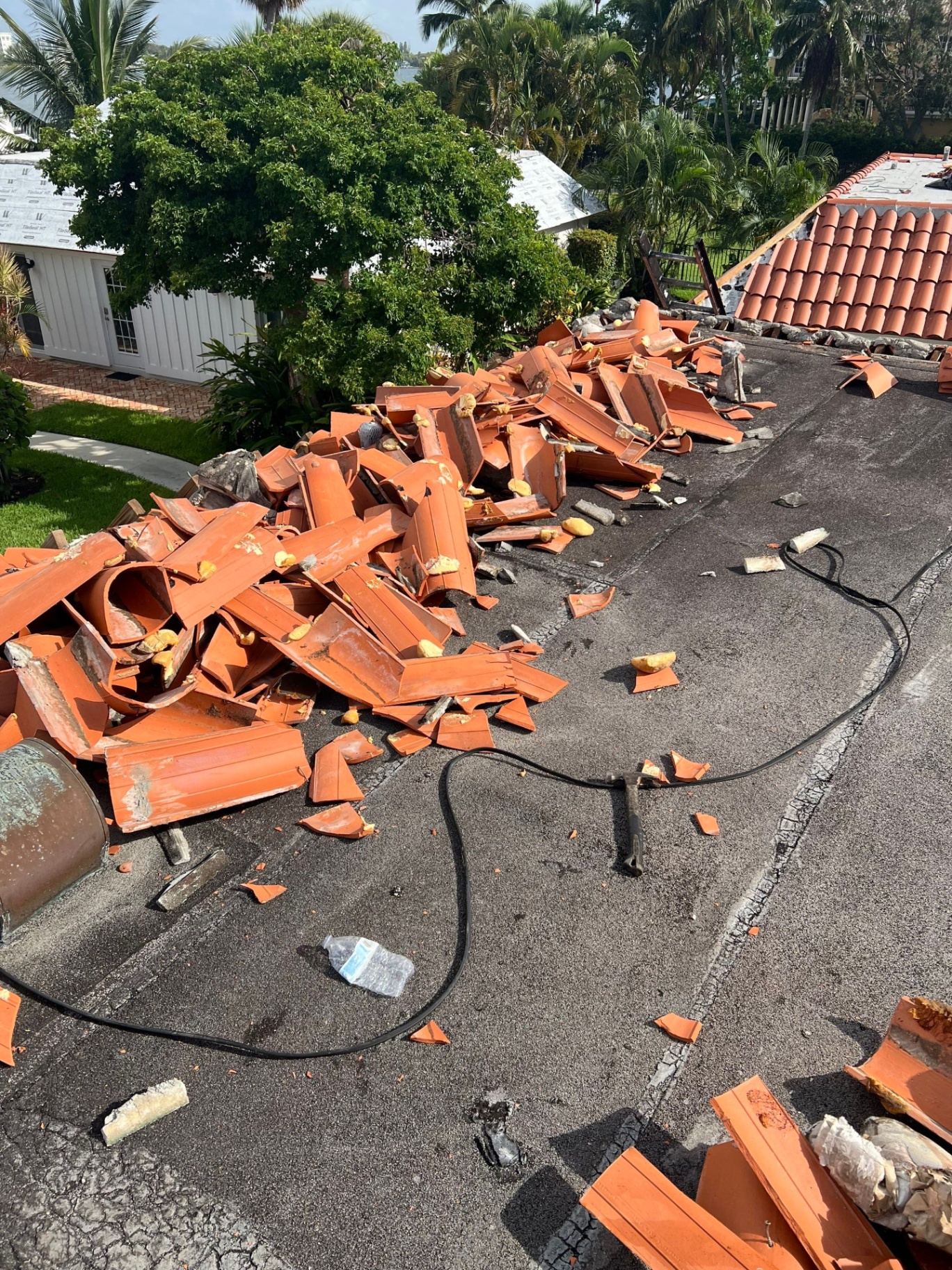
No. Under the High-Velocity Hurricane Zone (HVHZ) provisions of the Florida Building Code, overlaying a second layer of roofing material over an existing roof is not permitted. All existing materials must be completely torn down to the bare wood deck so the decking can be inspected, repaired, and re-nailed to meet modern wind-uplift requirements.
What is a wind mitigation inspection, and do I need one?
A wind mitigation inspection is a specialized assessment of your home's wind-resistant features. While not legally mandatory to occupy your home, it is highly recommended after a new installation. It provides the official proof your insurance company needs to apply premium discounts for having a code-compliant, storm-resistant roof.
What happens if my roof installation fails a city inspection?
If an inspector finds a compliance issue, they will issue a correction notice. The project cannot proceed to the next phase until the contractor corrects the specific deficiency and schedules a re-inspection. Working with an experienced local contractor minimizes this risk, as they understand the code requirements before the inspector ever arrives on site.
Protect Your Home with Local Expertise
Navigating the complex world of high-velocity wind codes, product approvals, and city permits requires professional execution. For dependable, code-compliant craftsmanship tailored to our South Florida climate, contact PSR Roofing Company of Miami to schedule your professional roof inspection and consultation today.
Need help with Roof Installation?
PSR Roofing is Miami's licensed & insured expert for roof installation. Free estimates, honest pricing, and 24/7 emergency response.