When to Schedule Roof Repair in Miami: Wet Season, Dry Season, and the Myths That Cost Homeowners Money
Most roofing advice about seasonal timing was written for markets with winter. Miami has no winter — it has a wet season from roughly May through October, a dry season from November through April, and a hurricane season that overlaps almost entirely with the wet one. That calendar, not temperature, is what determines how quickly a roof repair can be scheduled, how much it costs, and how likely a small problem is to become an interior one.
This guide explains how each season affects the work, when waiting is reasonable and when it is not, and which widely repeated maintenance habits quietly shorten the life of a Miami roof.
The Two Seasons That Matter
Wet Season: May through October
Daily convective storms compress the working day. Crews typically start at first light and dry in every open area before the afternoon cell arrives, which means a job that takes one day in February can take two in August. Demand also spikes after every named storm, so lead times stretch and material availability tightens — particularly for tile profiles that must be matched.
Sealants, adhesives, and self-adhering underlayments also need a genuinely dry, clean substrate to bond. On a humid roof deck, a rushed installation is where premature failures come from. A reputable contractor will tell you a section cannot be opened today; that is a sign of competence, not delay.
Dry Season: November through April
This is the right window for anything elective. Humidity is lower, rain interruptions are rare, adhesives cure predictably, permits move faster because volume is lower, and full days of work are actually available. If your roof is functional but aging, this is when to address flashing, boots, valley details, and the roof inspection findings you deferred during storm season.
| Timing consideration | Wet season (May–Oct) | Dry season (Nov–Apr) |
|---|---|---|
| Scheduling lead time | Longer, spikes after storms | Shorter and predictable |
| Working hours per day | Reduced by afternoon storms | Full days |
| Adhesive and sealant conditions | Marginal, requires dry windows | Ideal |
| Pricing pressure | Higher demand | More competitive |
| Risk of waiting | High — active leaks worsen weekly | Lower |
When Waiting Is a Mistake
Seasonal preference applies only to work that is not urgent. Four situations override the calendar entirely:
- Active water intrusion. Wet gypsum and insulation in Miami's humidity begin producing microbial growth within about 24 to 72 hours. The roofing scope barely changes; the interior scope multiplies.
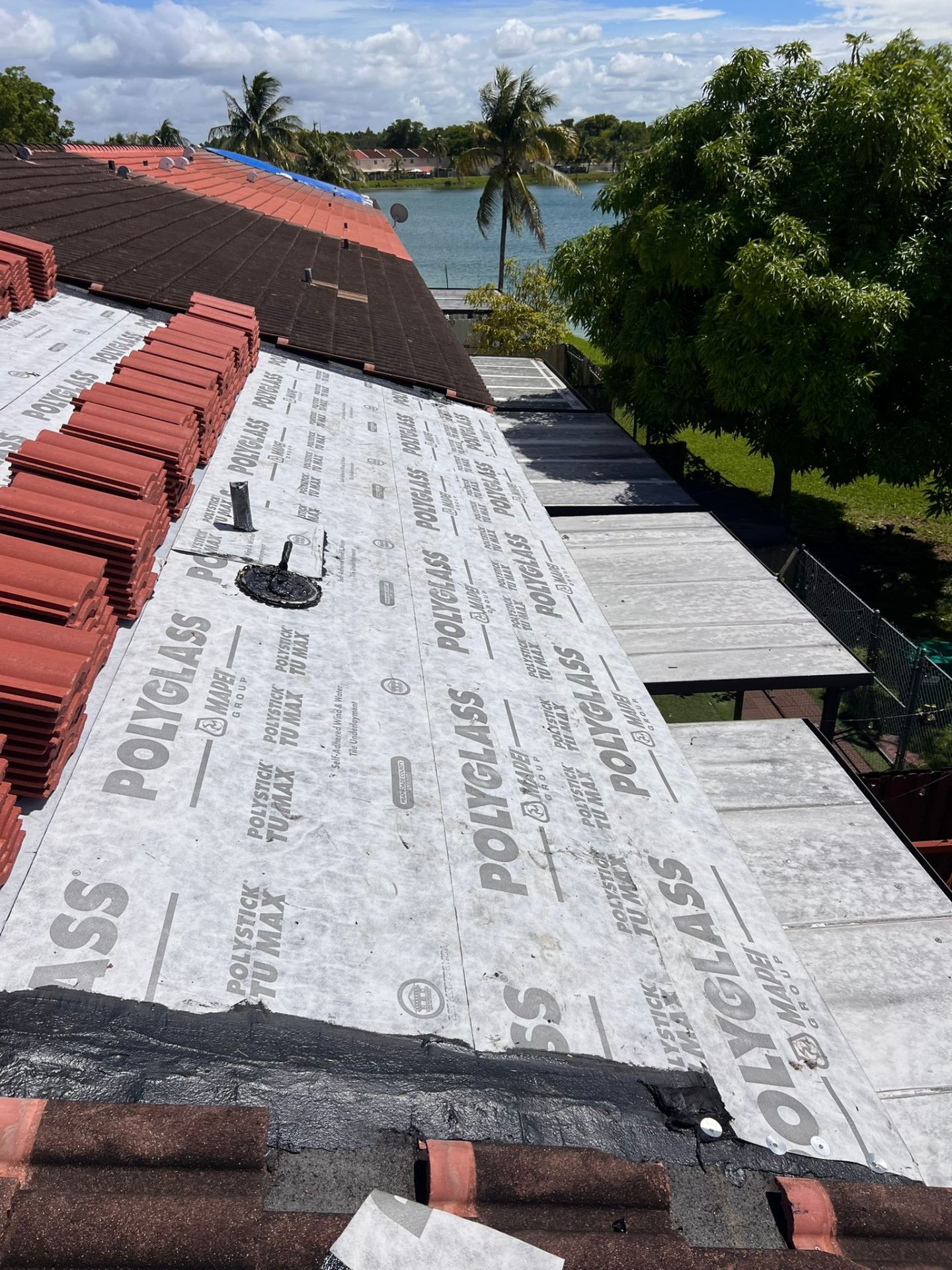
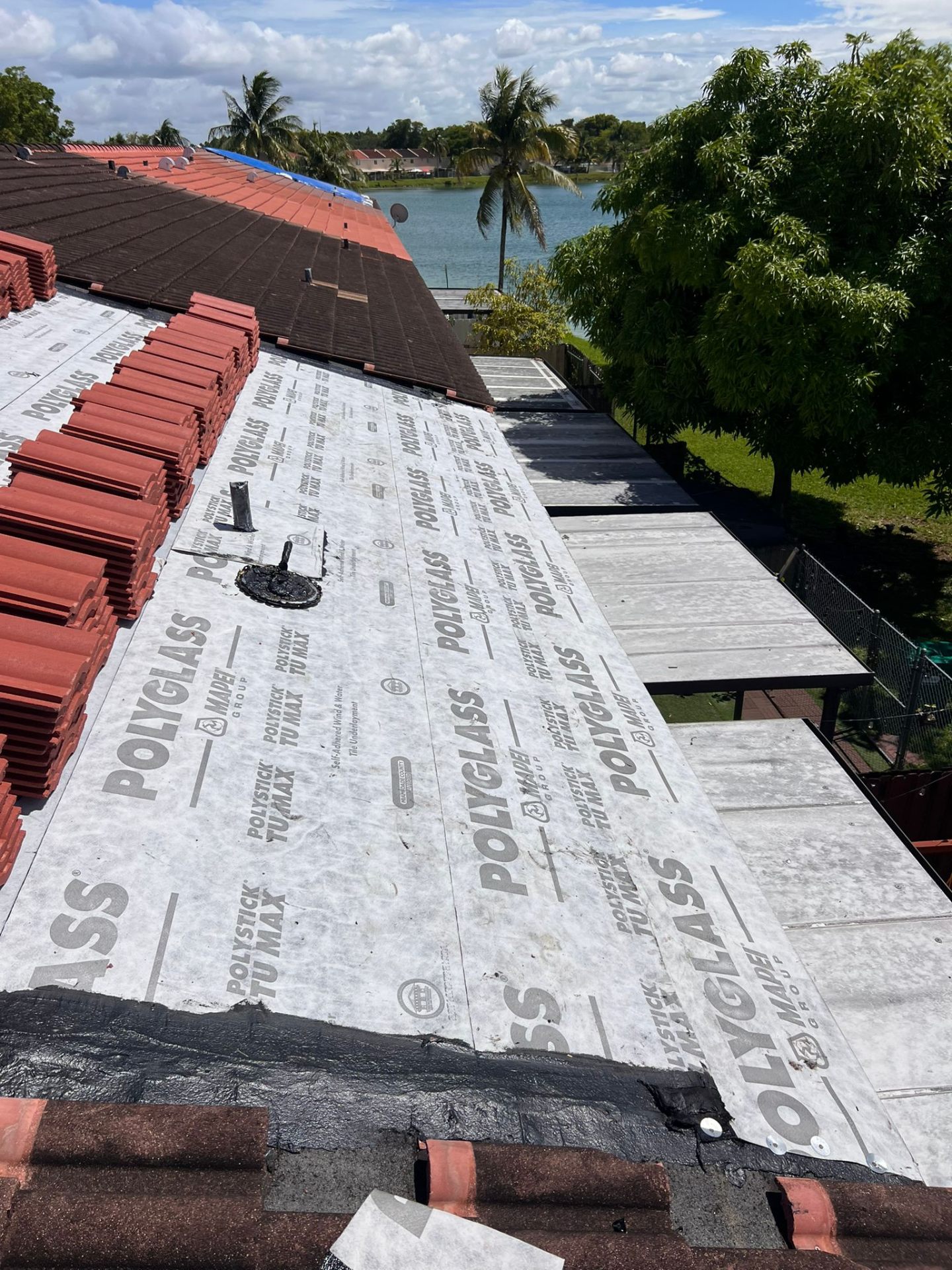
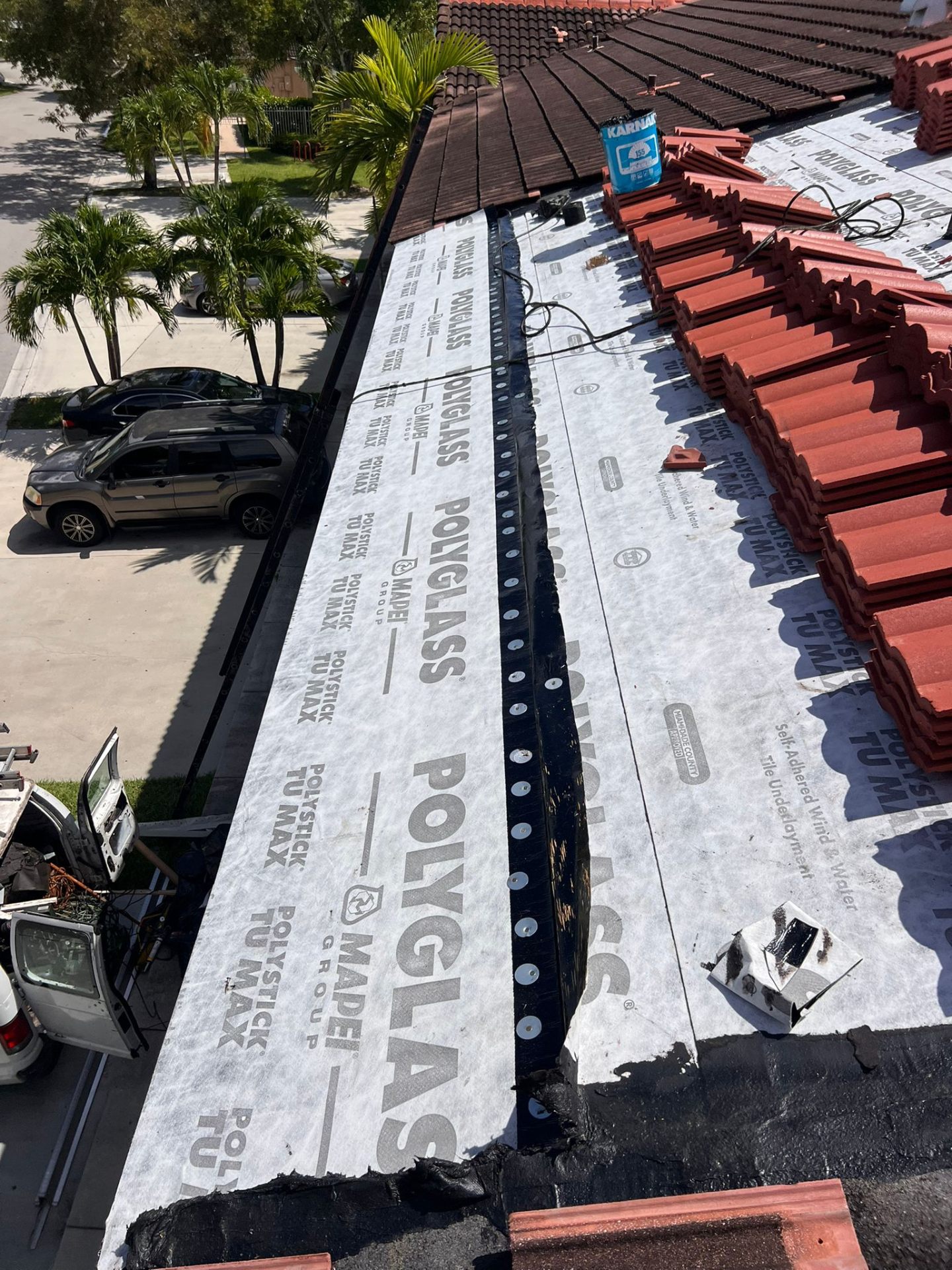
- Exposed underlayment or missing coverings. The membrane is a temporary water barrier, not a roof surface. Weeks of UV exposure destroy it.
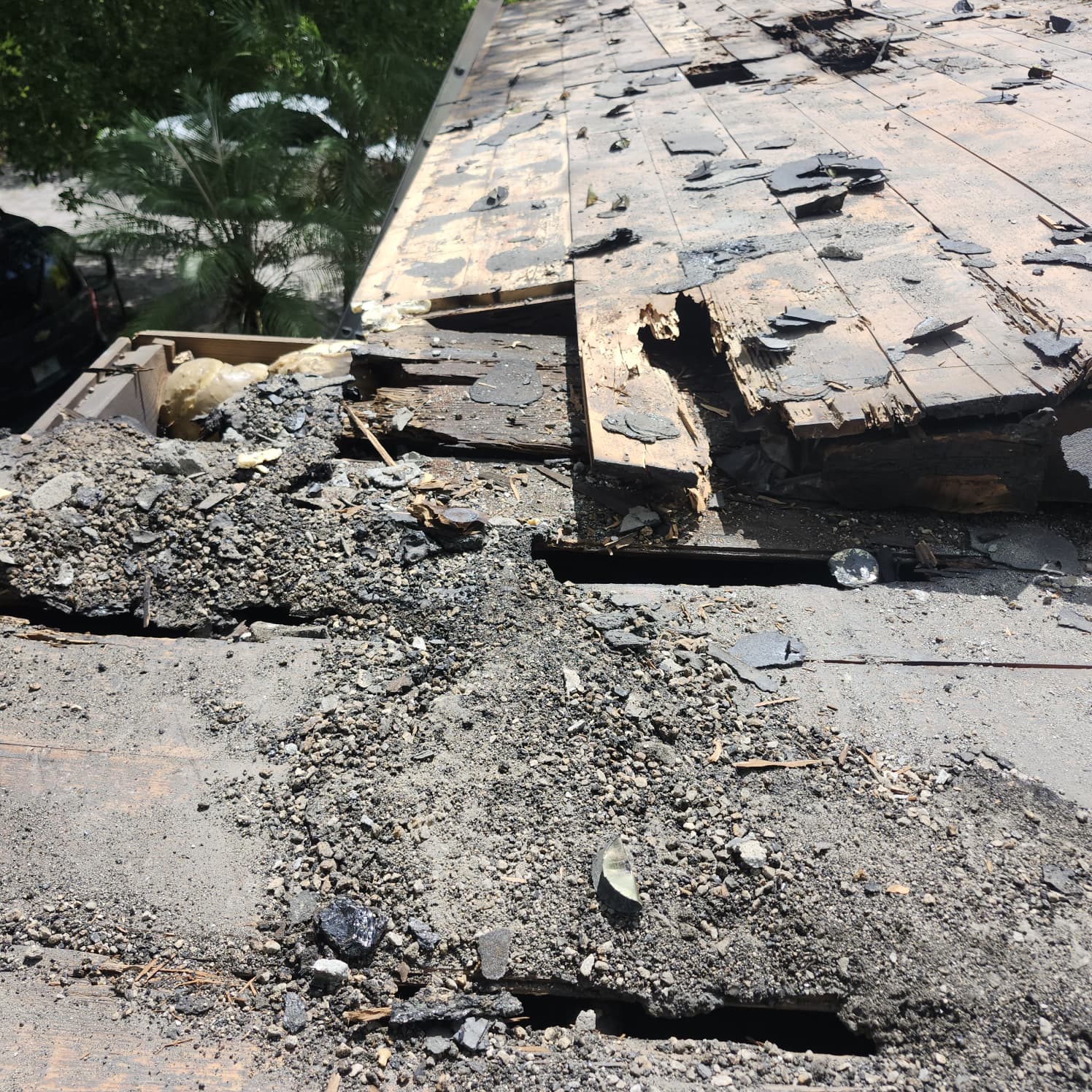
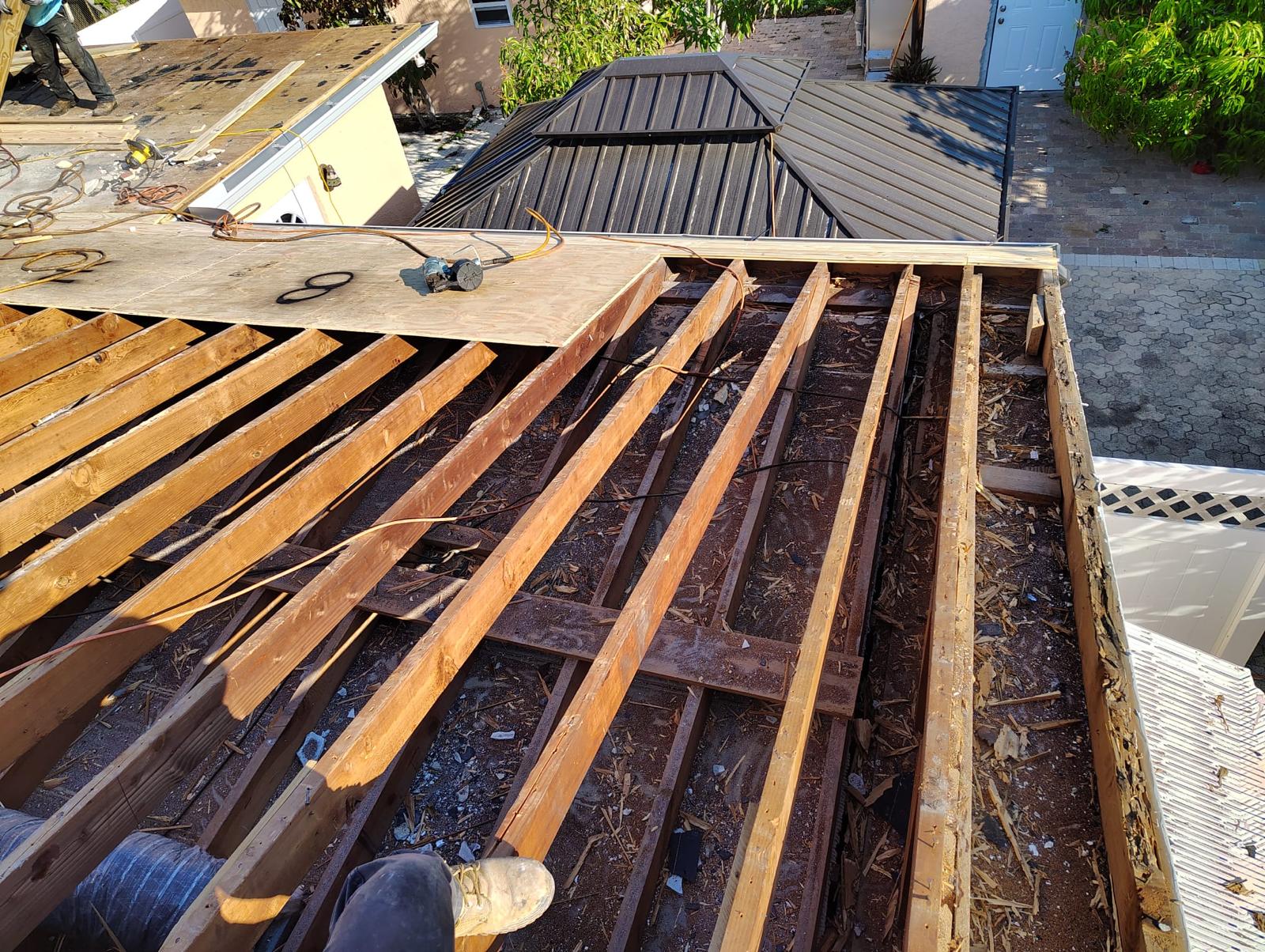
- Soft or spongy decking. Structural deterioration only accelerates, and every additional sheet of plywood is added cost.
- A named storm in the forecast. Once a watch is issued, crews shift to mitigation and tarping. If your roof is compromised, call before the forecast, not after — and if water is already entering, that is emergency roofing, not a scheduled repair.
Building the Calendar Around Storm Season
The practical rhythm for a Miami property looks like this. Inspect and document in March or April, before the season opens, so any repair happens in dry conditions with unhurried scheduling. Clear drains, valleys, and gutters in May, then again mid-season. Photograph the roof and the interior ceilings for your records before June. After any named storm, inspect again and document immediately, whether or not you see interior damage — the documented pre-storm condition is what makes a later claim defensible.
Annual documented service also supports wind mitigation credits with many Florida carriers, which is one of the few maintenance activities that pays for itself in premium reductions.
Maintenance Myths That Shorten Roof Life
"Pressure washing keeps the roof healthy."
High-pressure washing strips granules from shingles, cracks tile, and drives water under coverings. It is also an explicit warranty exclusion in most policies. Low-pressure softwash cleaning with the correct solution removes algae and stains without damaging the assembly.
"A little ponding on a flat roof is normal."
Water standing longer than about 48 hours after rain is a drainage defect, not a characteristic. It adds dead load, degrades the membrane, and is one of the most reliably denied insurance items because carriers treat it as maintenance.
"Sealant is a repair."
Caulk over deteriorated flashing hides a leak for one dry season while water continues moving through the deck. When it resurfaces, the affected area is larger and the plywood is softer. Ask any quote whether the underlayment in the repair area is being replaced — that layer, not the tile or shingle, keeps water out of the house.
"The gutters have nothing to do with the roof."
Overflowing or undersized gutters push water back at the fascia, soffit, and roof edge, which is exactly where wind-driven rain already attacks. Functional gutter installation is part of keeping a repair intact.
"If there is no stain inside, there is no problem."
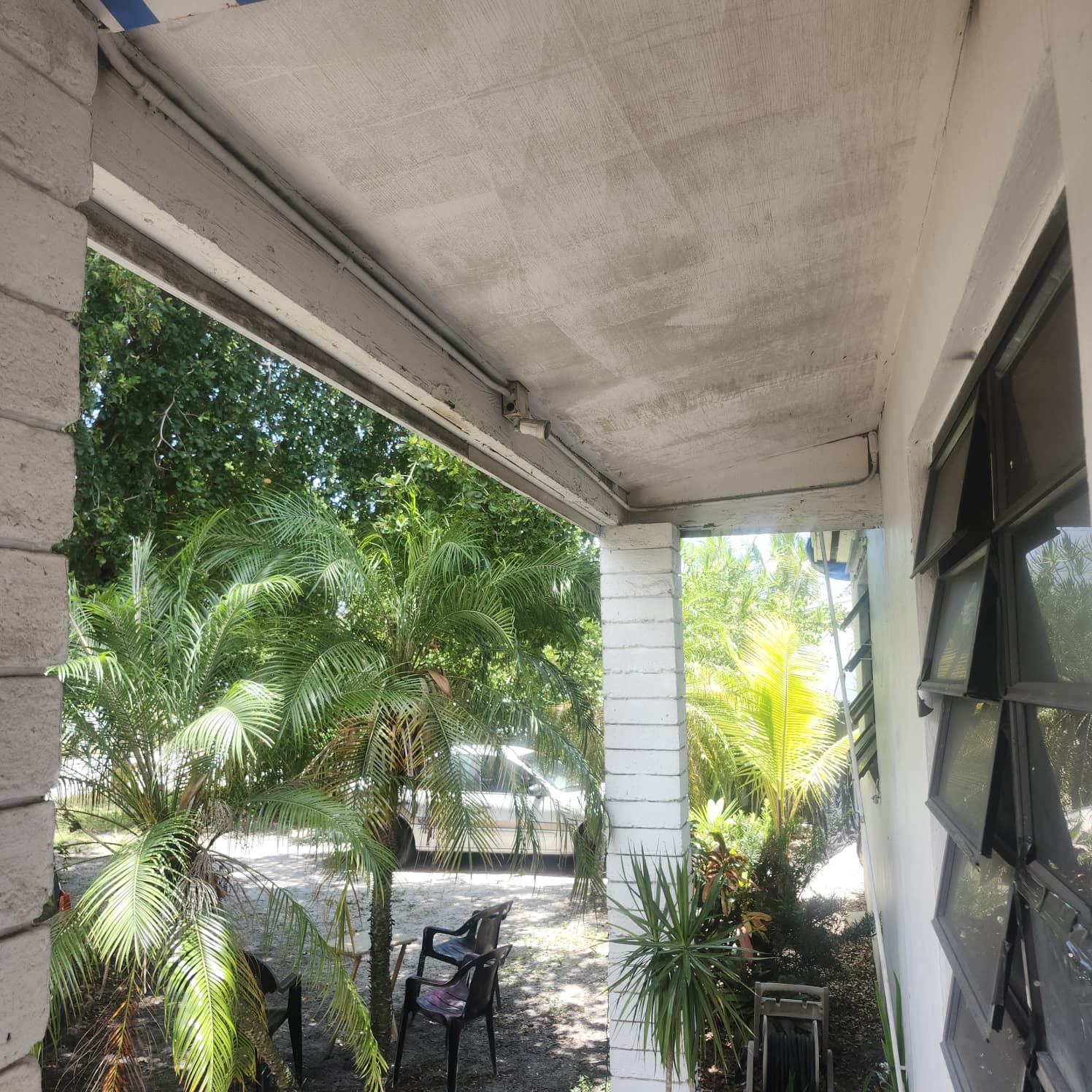
By the time drywall stains, water has usually been in the assembly for a while. Lifted tiles, split pipe boots, corroded flashing, and exposed fasteners are all visible before any interior evidence appears.
Frequently Asked Questions
Can roof repair be done during the rainy season at all?
Yes, and much of the year's work is. Crews sequence the job around morning dry windows and dry in every open section before the afternoon. It simply takes longer and requires flexibility on scheduling.
Is roof repair cheaper in winter in Miami?
Somewhat, though not for weather reasons. Dry-season pricing tends to be more competitive because demand is lower and crews complete full days without rain loss.
Should I wait until after hurricane season to repair a functioning but old roof?
If nothing is leaking and no coverings are missing, addressing it in the dry season is reasonable and usually cheaper. If the roof has open or damaged areas, waiting through the season is the more expensive choice — and at that point the conversation may be about roof replacement rather than repair.
How often should a Miami roof be serviced?
Once a year at minimum, plus after every named storm. Keep dated photographs and written reports; they support both warranty and insurance positions.
Get on the Calendar Before the Next Storm Window
Whether you have an active leak or a repair you have been putting off until the rain stops, the useful first step is a documented assessment with a written scope and a realistic schedule. PSR Roofing Company Of Miami performs permitted, HVHZ-compliant repairs and emergency response across Miami-Dade, year-round.
Call (786) 889-4090 or schedule a roof repair assessment.
Visit us: 1811 NE 142nd St, Miami, FL 33181 — view on Google Maps
Need help with Roof Repair?
PSR Roofing is Miami's licensed & insured expert for roof repair. Free estimates, honest pricing, and 24/7 emergency response.