
Roof Replacement Cost in Miami: A Complete Guide for North Miami Homeowners
Replacing a roof in North Miami is not the same as replacing one in Ohio or Arizona. South Florida's hurricane codes, intense UV exposure, and year-round humidity create a set of requirements that directly shape what you pay and what you get. This guide walks through every factor that drives the cost of a new roof in Miami, so you can evaluate quotes confidently and avoid surprises on your final invoice.
Why Roof Replacement Costs More in South Florida Than Most of the Country
Hurricane Wind-Load Requirements
Florida's Building Code, shaped heavily by lessons from past major storms, sets some of the strictest wind-resistance standards in the nation. Every roofing material installed in Miami-Dade County must meet the Florida Product Approval requirements, and many products must pass the Miami-Dade Notice of Acceptance (NOA) testing protocol. Those tested, approved materials cost more to manufacture and more to source than standard products sold elsewhere. That premium is unavoidable, and any contractor skipping it is cutting a corner that could leave your home unprotected during a storm.
Permitting and Inspection Fees
North Miami requires a permit for virtually every full roof replacement. The permit process involves a plan review, at least one inspection (often two or three), and a final sign-off. These fees vary by municipality and project scope, but they are a legitimate, non-negotiable line item. Be skeptical of any quote that does not include permitting, because pulling permits protects you legally, keeps your homeowner's insurance valid, and ensures the work meets code.
Labor in a High-Demand Market
South Florida has no shortage of roofing work, especially after active hurricane seasons. Skilled, licensed roofers in the Miami area command competitive wages, and that reflects in labor costs. Crews experienced with Miami-Dade NOA products and familiar with local inspection requirements are worth the premium over crews who are not.
The Biggest Factors That Determine Your Specific Roof Replacement Cost
Roof Size and Complexity
Roofing is priced by the square (one square equals 100 square feet of roof surface). A larger home costs more simply because there is more surface to cover. But raw square footage is only part of the equation. A roof with multiple hips, valleys, dormers, skylights, or steep pitches takes significantly more labor and material than a simple gable roof of the same square footage. Every penetration, every valley, and every change in slope adds time and material.
Material Choice
This single decision has the largest impact on your total investment. Here is a qualitative comparison of the most common options for North Miami homes:
| Material | Relative Cost | Typical Lifespan in South FL | Key Consideration |
|---|---|---|---|
| Asphalt Shingles (impact-rated) | Lower upfront | 15, 20 years | Must carry Miami-Dade NOA; degrades faster in intense UV |
| Concrete Tile | Mid to higher | 30, 50 years | Very common in South FL; heavy, requires adequate roof structure |
| Clay Tile | Higher | 40, 50+ years | Excellent longevity; premium aesthetic; heavier than concrete |
| Metal Roofing (standing seam or metal tile) | Mid to higher | 40, 70 years | Excellent wind resistance; energy-efficient; growing in popularity |
| Flat / Low-Slope (modified bitumen, TPO) | Varies by system | 15, 25 years depending on system | Common on Miami CBS homes; proper drainage is critical |
Tile roofs dominate North Miami's residential landscape for good reason: they handle heat, humidity, and wind exceptionally well. Metal roofing is gaining ground because of its longevity and energy performance. Asphalt shingles are the most affordable entry point but require more frequent replacement in South Florida's climate compared to northern states.
Tear-Off and Decking Condition
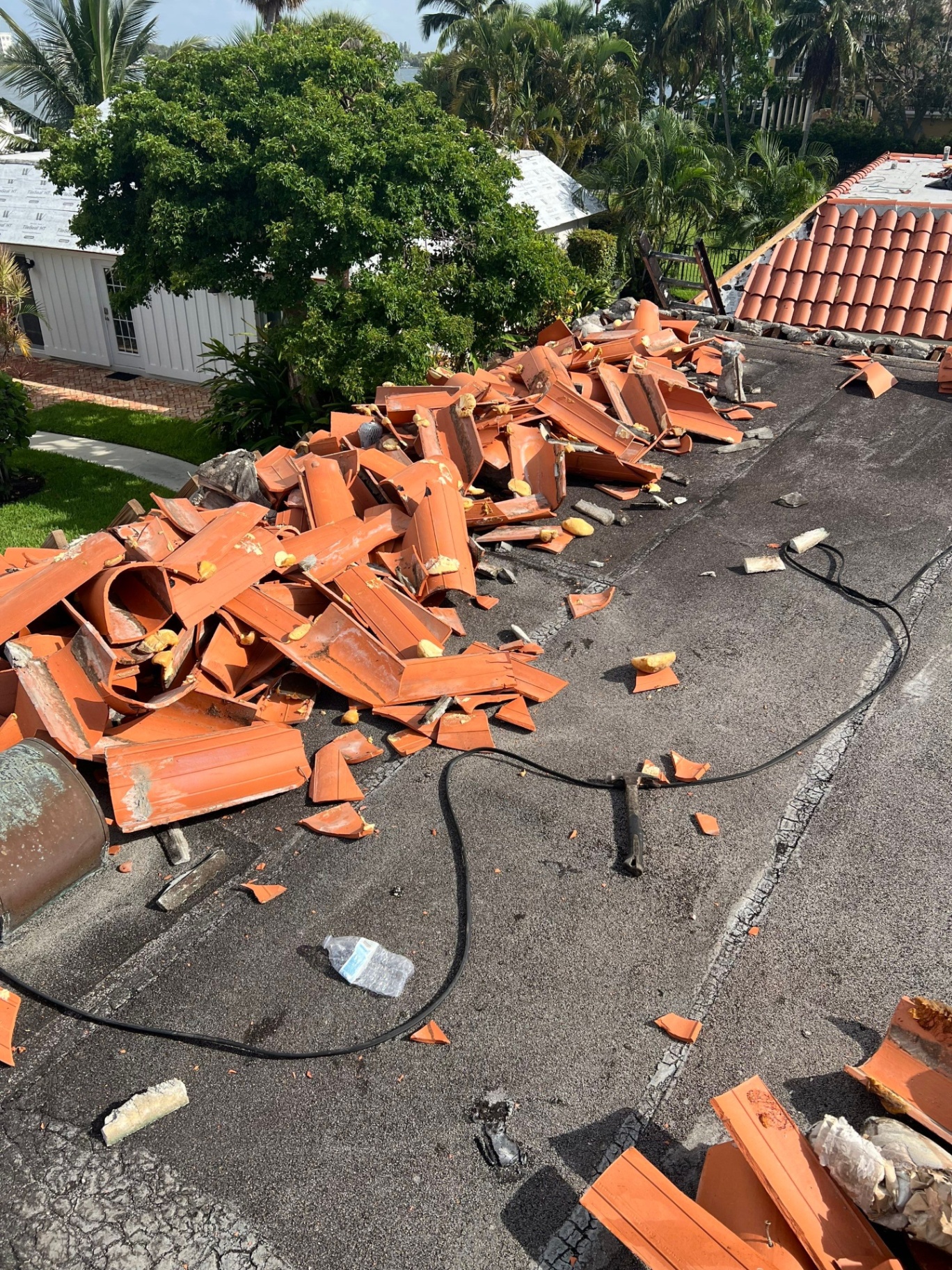
Before new material goes on, the old roof comes off. Florida code generally does not allow multiple layers of roofing material to remain, so a full tear-off is standard. Once the deck is exposed, the crew inspects the sheathing for rot, soft spots, or damage. Replacing deteriorated decking adds material and labor costs that cannot be known until the old roof is removed. A thorough pre-project roof inspection can give you a better idea of what to expect, but some surprises only appear after tear-off.
Underlayment and Secondary Water Barrier
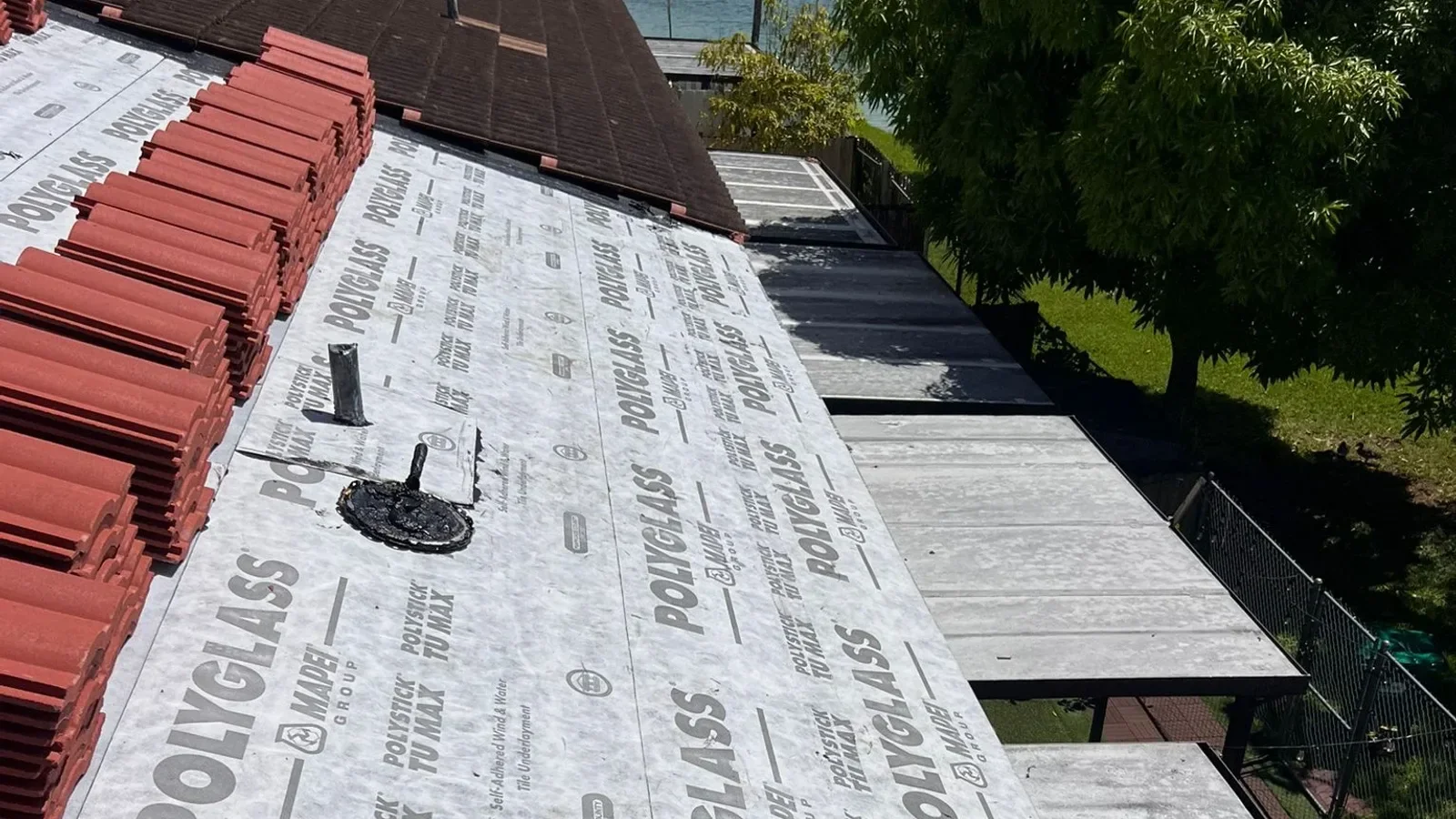
Florida Building Code requires a secondary water barrier on most residential roofs. This is the layer that protects your home if the primary roofing material is damaged in a storm. Self-adhering modified bitumen underlayment is the most common compliant product. This is not optional in Miami-Dade County, and it adds meaningful material cost. Skipping or skimping on underlayment is a code violation and a serious risk to your home.
Permitting in North Miami: What Homeowners Often Overlook
Who Pulls the Permit Matters
The licensed contractor is responsible for pulling the permit, not the homeowner. If a contractor asks you to pull your own permit as the owner-builder, understand that doing so shifts legal liability for code compliance onto you and can complicate insurance claims. A legitimate roofing contractor handles permitting as part of the project.
The Inspection Timeline
North Miami's permitting office schedules inspections that must pass before work proceeds to the next phase. A secondary water barrier inspection typically happens before tiles or shingles go on. A final inspection closes the permit. This process adds days to the project timeline, but it is the mechanism that guarantees your roof was built to code. Factor this into your scheduling expectations, especially if you are replacing a roof after storm damage when inspection backlogs can be longer.
Insurance Implications of Permitted Work
Florida homeowners' insurance carriers increasingly require documentation of permitted, code-compliant roof work when you renew your policy or file a claim. A roof replaced without a permit can be a basis for claim denial. Permitted work also typically resets the roof's age in insurer records, which can meaningfully affect your premium. This is a financial argument for doing the job right, not just a regulatory one.
Counterintuitive Truth: The Cheapest Quote Often Costs More Long-Term
What Gets Cut When a Bid Comes in Unusually Low
A significantly lower bid usually means something is missing. Common omissions include the permit fee, proper underlayment, a full tear-off of the existing material, or the use of non-approved products that will not pass inspection. Some low bids assume no decking replacement, which becomes a change order once the deck is exposed. Comparing quotes line by line, not just the bottom number, is the only way to make a meaningful comparison.
Longevity Math in South Florida
Choosing a material based purely on the lowest upfront cost can be expensive over time. An impact-rated asphalt shingle roof in South Florida may need replacement in 15 to 20 years, while a concrete tile roof on the same home might last 40 years or more. When you spread the total cost over the expected lifespan, a more durable material often delivers better value per year of protection. PSR Roofing Company of Miami walks clients through this comparison so the decision reflects the homeowner's actual priorities and budget horizon.
Warranty Coverage and What It Actually Covers
Roofing warranties come in two forms: the manufacturer's material warranty and the contractor's workmanship warranty. Material warranties vary widely in duration and what voids them (improper installation being the most common voiding condition). Workmanship warranties cover the contractor's labor. Ask specifically what each warranty covers, for how long, and whether it is transferable if you sell the home. A transferable warranty can be a genuine selling point.
How to Evaluate and Compare Roof Replacement Quotes in Miami
What a Complete Quote Should Include
A thorough written quote for a North Miami residential roof replacement should itemize: the specific materials with product names and NOA numbers, the scope of tear-off and disposal, underlayment type and installation method, permit fees, estimated decking replacement allowance or a clear process for handling it, cleanup and haul-away, and the warranty terms for both materials and labor. Vague quotes with a single lump sum give you no basis for comparison and no protection if the scope changes.
Questions Worth Asking Every Contractor
Are you licensed in Florida and insured for general liability and workers' compensation?
Will you pull the permit, or are you asking me to?
Which specific products are you proposing, and do they carry Miami-Dade NOA?
How do you handle unexpected decking damage found during tear-off?
Who will be on my roof, your employees or subcontractors?
What does your workmanship warranty cover, and for how long?
Red Flags to Watch For
Be cautious when a contractor requests a large cash deposit upfront before any work begins, cannot produce a current Florida contractor's license number, discourages you from waiting for the permit before starting, or is vague about which specific products they plan to install. Post-storm, be especially careful of out-of-state crews without Florida licensing who appear after a hurricane, as they may not be familiar with local code requirements.
Additional Cost Factors Specific to North Miami Homes
Concrete Block Construction and Roof-to-Wall Attachments
Most North Miami homes are CBS (concrete block structure) construction. The method used to attach the roof structure to the walls, and the condition of those connections, matters for both code compliance and wind resistance. During a replacement, contractors may identify areas where hurricane straps or clips need upgrading to meet current code. This is not a scam; it is a real requirement that can affect both the permit approval and your insurance rating.
Gutters and Drainage
A new roof is a natural time to assess your gutter system. South Florida's intense rainfall puts heavy demand on gutters, and old or undersized gutters can cause water to back up against the new fascia and soffit. PSR Roofing Company of Miami also offers seamless gutter installation as part of a complete roofing project, which means you can address both the roof and drainage in a single coordinated scope of work.
Solar Panels or Rooftop Equipment
If your home has solar panels, satellite dishes, HVAC equipment, or other rooftop installations, those need to be removed before the roof is replaced and reinstalled after. This work is typically coordinated with the respective trade (solar installer, HVAC contractor) and adds time and cost to the overall project. Factor this in when setting your timeline and budget.
Frequently Asked Questions
How long does a roof replacement take in North Miami?
Most residential replacements take one to three days of active installation once materials are delivered and the permit is approved. The full project timeline, including permitting and inspections, typically runs two to four weeks from contract signing to final inspection sign-off, though this can vary based on permit office workload and material availability.
Does homeowners insurance cover roof replacement in Florida?
It depends on the cause of damage and your policy terms. Sudden damage from a covered peril (like a named storm) is generally covered, subject to your deductible. Wear, age, and lack of maintenance are typically not covered. Florida law has changed in recent years regarding how insurers handle roof claims, so review your specific policy and speak with your insurer before assuming coverage.
Can I stay in my home during a roof replacement?
In most cases, yes. Roof replacement is noisy and involves vibration throughout the structure, but it does not typically require you to vacate. If the project uncovers significant structural damage or if interior work is needed, that assessment changes. Your contractor should let you know upfront if they anticipate any conditions that would affect occupancy.
How do I know if I need a full replacement versus a repair?
A professional roof inspection is the most reliable way to answer that question. Age, the extent of damage, the condition of the decking, and the remaining useful life of the existing material all factor in. A roof that has widespread granule loss, multiple failed areas, or is near the end of its expected lifespan in South Florida's climate is usually a better candidate for replacement than repeated repairs.
What is the Miami-Dade NOA and why does it matter?
The Miami-Dade Notice of Acceptance is a product approval issued after rigorous wind and impact testing. Products with an NOA have been independently verified to meet Miami-Dade County's strict requirements. Using NOA-approved products is required for code compliance in this area, and it ensures the materials on your roof have been tested to perform in South Florida conditions, not just standard building environments.
Does a new roof increase my home's value in North Miami?
A new, permitted, code-compliant roof is a meaningful asset when selling a home in South Florida. Buyers and their agents routinely ask about roof age and condition. A recently replaced roof can reduce buyer hesitation, support your asking price, and in many cases positively affect the buyer's insurance quote, which makes the home more attractive to finance.
Ready to Get a Clear Picture of Your Roof Replacement Cost?
Every North Miami home is different, and the only way to get an accurate cost is to have a licensed professional assess your specific roof, structure, and material options in person. PSR Roofing Company of Miami has built its reputation in North Miami on transparent, fully permitted replacements that meet South Florida's demanding building standards. Schedule your free roof replacement estimate with our team today and get a detailed, itemized quote you can actually use to make a confident decision.
Need help with Roof Replacement?
PSR Roofing is Miami's licensed & insured expert for roof replacement. Free estimates, honest pricing, and 24/7 emergency response.